

Dhilmar Mining Key Takeaways
The latest Dhilmar Mining Australian coal agreement is attracting attention because it ties regional jobs, export revenue and energy security into a single, high‑stakes deal.
- The new project places Dhilmar Mining at the centre of Dhilmar Mining Australian coal deal discussions about jobs, royalties and long‑term energy planning.
- Communities near major coal basins could see fresh investment, but also renewed debate over emissions, water use and mine rehabilitation.
- How government, industry and local residents respond will help shape the broader Australian coal industry over the next decade.
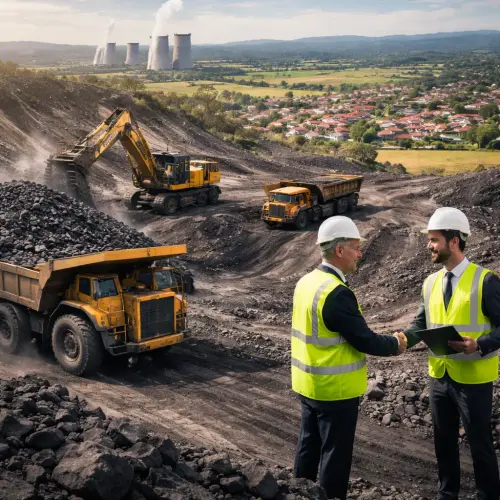
Why the Dhilmar Mining Australian coal deal is making headlines
Australians are paying attention to the latest Dhilmar Mining announcement because it sits at the crossroads of three big national priorities: stable export income, regional employment and credible climate action. Whenever a large coal transaction is signed, questions immediately follow about how it will affect household bills, local towns and Australia’s international reputation. For a related guide, see Air India Faces Attention After Latest Aviation Developments.
This new Dhilmar Mining Australian coal deal is no exception. The scale of the project, the length of the supply contracts and the involvement of government regulators mean that the outcome will reach far beyond the mine gate. For many in regional Queensland and New South Wales, the story is ultimately about whether coal can continue to support local prosperity while Australia gradually shifts towards cleaner energy.
Background: how Dhilmar Mining fits into the Australian coal industry
To understand why the deal matters, it helps to place Dhilmar Mining within the broader Australian coal industry. Australia is one of the world’s largest exporters of metallurgical coal used in steelmaking and thermal coal used in power generation, particularly to customers in Asia. Coal royalties and company taxes remain a significant source of revenue for state and federal budgets.
Within this landscape, Dhilmar Mining news Australia usually centres on the company’s strategy of acquiring and developing long‑life assets in established coal basins. That approach allows the business to leverage existing rail and port infrastructure, while negotiating long‑term offtake agreements with overseas buyers who value Australian coal’s consistency and reliability.
Industry analysts see Dhilmar Mining as part of a cohort of resource companies trying to balance short‑term demand for coal with long‑term decarbonisation trends. The company’s moves are therefore watched closely as an indicator of confidence in the sector and of how global energy markets are evolving. For a related guide, see Military Aircraft Trends Surge Across Australia Amid Global Tensions.
Key details of the Dhilmar Mining Australian coal deal
While commercial details remain confidential, several features of the Dhilmar Mining Australian coal deal help explain why it is front‑page news for investors and regional communities alike.
Location and project footprint
The transaction is focused on a large coal tenement in one of Australia’s established mining regions, with access to existing rail lines and export terminals. That means the project can plug into current logistics chains that already move coal to ports serving key markets such as Japan, South Korea and India.
The footprint includes both operational zones and planned expansion areas, along with associated infrastructure like wash plants, haul roads and water management facilities. For local councils, this footprint has implications for planning approvals, road use and long‑term land rehabilitation.
Scale, production and partners
The deal is structured around multi‑year production volumes, positioning Dhilmar Mining as a significant supplier within the Australian coal industry. It involves supply commitments to major international utilities and steelmakers, backed by take‑or‑pay arrangements that help underwrite new investment. For a related guide, see Airbus A380 Makes Stunning Comeback in Global Aviation.
On the Australian side, the company will need to coordinate with rail operators, port authorities and service contractors. Internationally, counterparties will be focused on coal quality, delivery reliability and adherence to environmental and safety standards throughout the supply chain.
Timeframe and development milestones
The project is expected to roll out over a long horizon, with staged development in line with regulatory approvals and market demand. Early milestones include securing remaining permits, completing detailed environmental management plans and finalising infrastructure upgrades.
For local workers and businesses, that staged approach matters because it determines when new jobs, contracts and training opportunities will come online. It also sets the tempo for community consultation and environmental monitoring obligations.
Economic implications for Australians from the Dhilmar Mining coal project
Behind the headlines, Australians want to know what the Dhilmar Mining Australian coal deal means for jobs, household budgets and regional resilience. The impacts are complex, but several themes stand out.
Jobs, skills and local business opportunities
Major coal projects are labour‑intensive to build and operate, spanning mining, engineering, logistics, environmental science and support services. For towns close to the project, the Dhilmar Mining expansion could open up apprenticeships, traineeships and skilled roles across multiple trades.
Local businesses stand to benefit from contracts in areas such as earthmoving, equipment maintenance, catering, accommodation, transport and professional services. Councils often negotiate local procurement targets to channel a share of project spending into nearby communities.
Royalties, taxes and regional infrastructure
Coal royalties paid to state governments form an important part of public revenue, helping to fund health, education and infrastructure. The larger and longer‑term the Dhilmar Mining project, the more predictable those revenue streams can be for budget planners.
In some cases, governments and companies agree on infrastructure packages that might include road upgrades, water infrastructure or community facilities. These investments can leave a legacy that extends beyond the life of the mine, provided they are well planned and maintained.
Energy security and export earnings
Although Australia is rapidly expanding its renewable energy capacity, coal still contributes to domestic power generation and is a major export commodity. By committing to long‑term export contracts, the Dhilmar Mining Australian coal deal can reinforce Australia’s role as a reliable supplier during the global energy transition.
Export earnings support the national current account and contribute to the value of the Australian dollar. At the same time, policymakers are working to ensure that revenue from resources is used to help diversify the economy and invest in emerging industries.
| Impact Area | Potential Positive Outcome | Key Risk to Manage |
|---|---|---|
| Employment | New direct and indirect jobs in mining regions | Over‑reliance on coal jobs without transition planning |
| Public revenue | Increased royalties and company tax receipts | Budget exposure to commodity price swings |
| Local business | More contracts for regional suppliers and services | Cost‑of‑living pressures from rapid population growth |
| Environment | Funding for rehabilitation and monitoring programs | Long‑term land and water impacts if poorly managed |
Environmental and regulatory considerations around Dhilmar Mining
Any major coal project in Australia is shaped by detailed environmental and regulatory requirements. The Dhilmar Mining agreement will be scrutinised through this lens by governments, independent experts and local communities.
Climate policy and emissions obligations
Australia’s climate commitments under the Paris Agreement, and policies such as the Safeguard Mechanism, put a spotlight on emissions from large industrial facilities. While exported coal emissions are accounted for in importing countries, Australians increasingly expect resource projects to minimise their own operational footprint.
This expectation is reflected in guidance from organisations like the Climate Change Authority, which provides independent advice on emissions pathways. In practice, this can mean investments in more efficient equipment, methane capture, renewable power for mine operations and robust offset strategies.
Land, water and biodiversity protections
Projects of the scale associated with the Dhilmar Mining Australian coal deal must address potential impacts on groundwater, surface water, local ecosystems and agricultural land. Environmental impact assessments consider factors such as dust, noise, vegetation clearing and rehabilitation plans.
Common conditions include comprehensive water monitoring, controlled blasting schedules, habitat offsets and progressive rehabilitation of disturbed land. Regulators draw on guidance from bodies like Australia’s Department of Climate Change, Energy, the Environment and Water when setting approval conditions.
Community consultation and social licence
Beyond formal approvals, resource projects increasingly depend on a strong “social licence to operate”. For Dhilmar Mining news Australia, community engagement will be watched closely: how the company listens to concerns, responds to feedback and supports local initiatives can strongly influence long‑term acceptance.
Good practice includes regular community forums, transparent reporting on environmental data, grievance mechanisms and support for local education, health and cultural programs. Poor engagement, by contrast, can trigger delays, protests and reputational damage.
Reactions to Dhilmar Mining news Australia: who supports and who is cautious?
Reaction to the Dhilmar Mining Australian coal deal is far from uniform across Australia. Different stakeholders bring different priorities and values to the discussion.
Local communities and regional leaders
Many local councils and business chambers emphasise the upside: construction jobs, new training pathways and extra spending in town. They often call for clear commitments on hiring locally, supporting local suppliers and investing in community infrastructure.
At the same time, some residents raise concerns about dust, noise, traffic and long‑term rehabilitation. Farmers may focus on water availability and land use, while younger residents might question whether coal offers the right long‑term path for the region.
Industry analysts and investors
For analysts, the Dhilmar Mining project is a test of how coal assets are valued in a decarbonising world. They examine the cost base, remaining reserves, transport links and exposure to future carbon pricing or trade measures.
Investors typically look for evidence that the company has stress‑tested its assumptions against different demand and policy scenarios. That includes the possibility of faster‑than‑expected shifts to renewables and more stringent emissions rules in key export markets.
Government and policy commentators
State and federal governments tend to balance short‑term economic benefits against long‑term climate and environmental targets. Supporters emphasise jobs and revenue, while critics question whether new coal projects are compatible with net‑zero emissions timelines.
Policy commentators use Dhilmar Mining news Australia as a case study in how well regulation is keeping pace with global climate policy, investor expectations and community standards. Their analyses often influence future reforms.
Future outlook: what this deal could mean for Dhilmar Mining and Australia
Looking ahead, the trajectory of Dhilmar Mining in Australia will depend on how successfully it manages economic, environmental and social expectations at the same time. The current Australian coal deal is both an opportunity and a test.
If the project delivers strong local employment, transparent environmental performance and constructive community partnerships, it may be seen as a model for managing legacy coal assets during the transition. That would reinforce Australia’s reputation as a stable and responsible supplier.
Conversely, if stakeholder concerns are not addressed, the project could feed calls for tighter regulation or faster phase‑downs of coal. Australians will be watching closely to see how benefits and risks are shared, and how revenue from coal is used to build a more diversified, future‑ready economy.
For households and businesses, the most tangible effects of the Dhilmar Mining Australian coal deal will show up in regional job markets, local service demand and the resilience of state budgets. As the national conversation on climate and energy continues, deals like this will shape how Australia navigates the path from a resource‑rich present to a lower‑emissions future.
Useful Resources
For Australians wanting to explore the context around the Australian coal industry and climate policy in more depth, these independent resources are a solid starting point:
- Climate Change Authority – independent advice on Australia’s climate policy
- Department of Climate Change, Energy, the Environment and Water – environmental regulation and reporting
Frequently Asked Questions About Dhilmar Mining
Why is Dhilmar Mining ’s latest Australian coal deal getting so much attention?
The new agreement is making waves because it combines large export volumes, long‑term contracts and significant regional investment at a time when Australia is also pursuing ambitious climate goals, so it has implications for jobs, public revenue and emissions policy all at once.
How could the Dhilmar Mining deal affect jobs in regional Australia?
The project is expected to create construction and operational roles in mining, logistics and services, while also generating indirect employment through local supply contracts for trades, transport, accommodation and professional services in nearby towns.
What does this coal deal mean for Australia’s export earnings?
By locking in multi‑year supply commitments to overseas buyers, the deal can help sustain export revenue from coal in the medium term, supporting Australia’s trade balance while demand remains strong in key Asian markets.
Will the Dhilmar Mining project increase my household power bills?
Most of the coal from this kind of export‑focused project is sold overseas rather than into the domestic market, so any direct impact on household electricity bills is likely to be limited compared with broader factors like wholesale power prices and network costs.
How does this deal fit with Australia’s net zero emissions targets?
The project sits within a transition period where Australia is expanding renewables while still exporting coal, so regulators and policymakers are focused on minimising operational emissions, improving efficiency and ensuring that long‑term climate targets remain achievable.
What environmental approvals does Dhilmar Mining need for this project?
The company must secure and comply with state and federal approvals that typically cover land disturbance, water use, biodiversity impacts, air quality, noise and rehabilitation, with conditions enforced through environmental authorities and regular reporting.
How are local communities consulted about Dhilmar Mining ’s plans?
Consultation usually involves public notices, community information sessions, stakeholder meetings and opportunities to provide written submissions, with feedback feeding into environmental impact assessments and social impact management plans.
What benefits might local businesses see from the coal project?
Local suppliers may gain contracts for goods and services such as fuel, equipment hire, maintenance, catering, cleaning, transport and accommodation, especially if the company adopts local procurement targets and transparent tender processes.
Are there risks for regional towns that rely heavily on coal projects?
Yes, towns that become highly dependent on coal can face challenges if prices fall or projects wind down, so many regional leaders now emphasise diversification, skills development and planning for post‑mining land uses alongside new investments.
How does Dhilmar Mining manage land rehabilitation?
Like other major operators, the company is expected to implement progressive rehabilitation, reshaping landforms, replacing topsoil and re‑establishing vegetation during the life of the mine, backed by bonds or financial assurances required by regulators.
Will the Dhilmar Mining Australian coal deal affect water resources?
The project may interact with groundwater and surface water systems, so approvals generally require detailed hydrogeological studies, monitoring programs and management plans to protect water quality and availability for other users.
What role do environmental groups play in projects like this?
Environmental organisations often review environmental impact statements, lodge submissions, commission independent expert reports and sometimes pursue legal challenges, all of which can influence conditions placed on the project or public debate about its merits.
How are First Nations communities involved in Dhilmar Mining projects?
Where projects intersect with Traditional Owners’ land or cultural heritage, companies typically negotiate agreements that can include cultural heritage protections, employment and training opportunities, business partnerships and financial benefits.
Could stronger global climate policies reduce demand for this coal?
Yes, faster adoption of renewables, carbon pricing and stricter emissions targets in importing countries could reduce long‑term demand, which is why analysts assess the project’s resilience under different climate policy scenarios.
How does this deal compare to other recent Australian coal projects?
While each project differs, this agreement stands out for its combination of scale, contract duration and timing amid intense scrutiny of new fossil fuel investments, placing it firmly in the national conversation about energy transition.
What transparency can the public expect from Dhilmar Mining ?
Australians can typically access approval documents, environmental reports and some performance data through government portals, while many companies also publish sustainability reports and community updates outlining project progress and impacts.
Will this project create opportunities in renewable energy as well?
In some cases, mining companies invest in on‑site solar or wind power and explore repurposing infrastructure or land for renewables over time, so there is potential for synergies if long‑term planning incorporates clean energy options.
How long is the Dhilmar Mining project expected to operate?
The operational life will depend on reserves, market conditions and regulatory settings, but large coal projects often plan for multiple decades, subject to periodic reviews and updated approvals as circumstances evolve.
What can regional residents do to stay informed about the project?
Residents can follow local council channels, attend community information sessions, monitor state and federal government project registers, and subscribe to company newsletters to receive updates on approvals, timelines and consultation opportunities.
How might this coal deal influence Australia’s broader energy transition?
The project underscores that coal will remain part of Australia’s export mix in the near term, which increases the importance of using resource revenues to invest in new industries, grid upgrades and skills that support a smooth shift towards lower‑emissions energy.