

China New Home Sales Drop Key Takeaways
The China New Home Sales Drop is more than a local property story – it is a signal about the health of the world’s second‑largest economy and a potential headwind for Australia.
- The latest China New Home Sales Drop highlights deeper weakness in China’s property sector, a long‑time engine of growth.
- Sustained property stress in China could weigh on global growth, commodity prices and financial markets.
- For Australia, the risks centre on exports, jobs in mining and services, the Australian dollar and investor confidence.
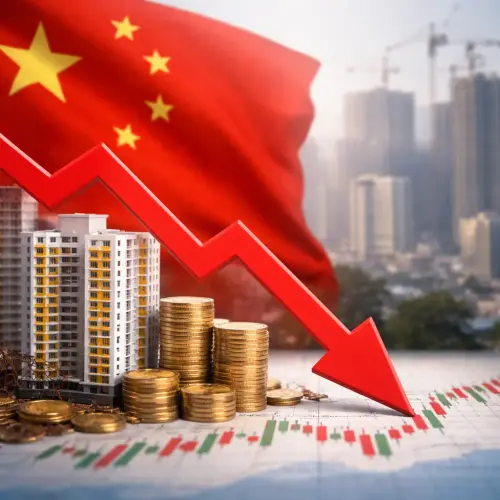
Why Australia Should Care About the China New Home Sales Drop
When Chinese developers report another sharp China New Home Sales Drop, it quickly becomes a global story. Property and construction have accounted for a significant share of China’s GDP, steel and cement consumption, and local government revenue. Any prolonged downturn in that engine inevitably spills over borders. For a related guide, see Australian Strategic Materials Share Price Update and Market Outlook.
For Australians, the link is direct. China is our largest export market for iron ore, coal, LNG and agricultural products, and a key source of international students and tourists. A weaker Chinese property sector can change the demand profile for our commodities, shift capital flows and influence the value of the Australian dollar.
This article unpacks what is driving the slowdown in China’s housing market, what it means for China’s economy, and how the ripple effects could influence Australian businesses, policymakers and individual investors over the next few years.
Main Drivers Behind the China Housing Market Slowdown
To understand the risks, it helps to unpack why China’s property market is under pressure. The current phase reflects both cyclical weakness and deeper structural changes.
Policy tightening and the end of easy leverage
For years, Chinese developers relied heavily on debt to fund land purchases and construction. In recent years, Beijing introduced so‑called “three red lines” policies to limit leverage and curb speculative activity. These measures were aimed at long‑term financial stability, but they have also squeezed developers’ balance sheets and reduced their ability to roll over debt or start new projects.
As financing dried up, some developers struggled to complete pre‑sold apartments, eroding buyer confidence. That loss of trust is a major factor behind the China housing market and Australian economy narrative now playing out in markets.
Demographics and changing housing demand
China’s population is ageing and, in some regions, already shrinking. Urbanisation, once a powerful driver of new housing demand, is slowing. In many smaller cities, inventories of unsold apartments remain elevated. These demographic and regional trends mean demand for new homes is no longer as strong or as broad‑based as in the past.
Household sentiment and income pressures
Weaker labour market conditions, slower wage growth and lingering uncertainty after COVID disruptions have made households more cautious. Property has long been the main savings vehicle for Chinese families; when prices stagnate or fall, the perceived wealth effect reverses. That feeds into lower consumption and softer new home purchases.
Local government finances and land sales
Local governments in China depend heavily on land sales to developers. As developers pull back, land sale revenue falls, constraining local budgets for infrastructure and public services. This feedback loop can amplify the impact of China property slowdown on Australia by dampening broader Chinese growth.
Economic Implications of the China New Home Sales Drop for China
The property sector sits at the crossroads of construction, manufacturing, local government finance and household wealth. A sustained slowdown has wide‑ranging consequences for China’s economy.
Growth and demand for raw materials
Construction of new homes is highly commodity‑intensive. When new home sales fall, developers cut back on new projects, reducing demand for steel, copper, cement and other materials. For China, this means slower fixed‑asset investment and lower overall GDP growth.
Analysts at organisations like the International Monetary Fund and the World Bank have already flagged China’s property adjustment as a key downside risk to its medium‑term growth outlook. Lower growth in China often translates into softer global trade and weaker commodity prices.
Employment and consumer confidence
Property and related sectors employ millions of Chinese workers – from construction labourers and engineers to furniture retailers and real estate agents. As projects stall or are cancelled, employment opportunities can shrink, particularly in regional cities heavily reliant on construction.
Job insecurity and declining property values weigh on consumer confidence. Chinese households may save more and spend less, which not only affects domestic retailers but also reduces demand for imported goods and services.
Financial stability and developer stress
Major developers have faced liquidity crises and, in some cases, defaulted on offshore debt. While Chinese authorities have tools to manage systemic risk, ongoing stress in the sector raises questions about banks’ balance sheets, trust product exposures and the health of the shadow banking system.
According to commentary from the International Monetary Fund on China’s real estate risks, a disorderly adjustment could have larger global spillovers through financial channels and confidence effects.
How the China Real Estate Downturn Affects the Australian Economy
Once you connect the dots from construction to commodities and confidence, it becomes clearer how a property slump in China can influence the China housing market and Australian economy relationship.
Commodity demand and Australian exports
Iron ore, metallurgical coal and LNG are among Australia’s biggest exports to China. When construction and heavy industry slow, China’s demand for steel and power can ease, influencing volume demand and, crucially, prices. This is the core channel for the China real estate downturn effect on Australian exports.
Lower commodity prices reduce national income (the “terms of trade”), which can weigh on government revenues, company profits and wages in mining regions like Western Australia and Queensland.
The Australian dollar and financial markets
The Australian dollar is often seen as a proxy for China’s growth and global commodity demand. When markets become nervous about Chinese property and growth, the Aussie dollar tends to weaken. This can be a double‑edged sword: it supports exporters and tourism but raises the cost of imports and can feed into inflation.
Equity markets also react. Shares of Australian miners, energy producers and some industrials can become more volatile as investors reassess earnings prospects linked to China.
Services exports and people flows
Beyond iron ore and coal, Australia exports education, tourism and professional services to China. If a weaker property market drags on incomes and confidence, some Chinese households may delay or scale back overseas study, holidays or investment, indirectly affecting Australian universities, tourism operators and real estate markets.
Policy and business planning implications
Policymakers at the Reserve Bank of Australia and Treasury monitor China’s property data closely. As the impact of China property slowdown on Australia becomes clearer, it can influence forecasts for growth, employment and the budget, shaping interest rate decisions and fiscal planning.
| Risk Signal from China Property | Channel into Australia | Potential Impact |
|---|---|---|
| Falling new home sales | Lower Chinese construction activity | Softer demand and prices for iron ore and coal |
| Developer debt stress | Global risk sentiment and credit markets | Higher volatility in AUD and ASX resources stocks |
| Weaker household confidence | Reduced demand for overseas study and travel | Pressure on education and tourism exports to China |
| Local government revenue squeeze | Reduced Chinese infrastructure spending | Broader drag on Chinese GDP and trade volumes |
What the China New Home Sales Drop Means for Australian Businesses and Investors
For Australians, the key is not to panic but to be realistic about how closely our fortunes are tied to China, and to plan accordingly. Different groups face distinct opportunities and risks.
Australian businesses: stress‑testing China exposure
Exporters, especially in resources and agriculture, should review customer concentration and contract structures. Businesses heavily reliant on China might consider:
- Diversifying markets where feasible, including into Southeast Asia, India and other fast‑growing regions.
- Re‑examining pricing assumptions and hedging strategies in case commodity prices or the AUD move sharply.
- Building more scenario analysis around Chinese policy shifts and demand trends.
Services businesses – from universities to tourism operators – may need contingency plans for fluctuations in demand from Chinese customers, including more targeted marketing to other international segments.
Policymakers: balancing risk and resilience
For Australian policymakers, the China New Home Sales Drop underscores the importance of economic diversification and robust risk frameworks. Treasury, DFAT and Austrade will likely place even more emphasis on broadening trade relationships while maintaining strong ties with China.
On the monetary policy side, the Reserve Bank will continue to weigh the external drag from China against domestic inflation and employment trends. Public commentary from institutions like the Reserve Bank of Australia Bulletin often highlights China as a key risk factor in outlook assessments.
Individual investors: practical portfolio considerations
For Australian investors, the property downturn in China is a reminder to look under the bonnet of portfolios:
- Review exposure to China‑sensitive sectors such as large miners, energy companies and some cyclicals.
- Consider diversification – across sectors, asset classes and geographies – rather than relying on a single driver like Chinese demand.
- Be cautious about reacting to headlines; markets often price in bad news well before retail investors act.
None of this means avoiding China‑linked assets altogether; rather, it is about understanding the specific ways the China real estate downturn effect on Australian exports can flow into earnings and valuations.
Forward Outlook: How Long Could the China Property Adjustment Last?
Property cycles are typically long and uneven. In China’s case, authorities are trying to engineer a gradual adjustment from a property‑heavy model to one driven more by consumption, technology and services. That transition is unlikely to be smooth, and periods of renewed stress in the sector are possible.
For Australia, the base case over the next few years is a China that grows more slowly than in the past but remains a major economic force. That suggests more moderate, and possibly more volatile, demand for our exports, along with periodic swings in the Australian dollar and resources stocks tied to news about Chinese housing.
Australians do not control what happens in Beijing or Shanghai, but we can control how prepared we are. Understanding the channels of risk, building resilience into business models and portfolios, and keeping an eye on reliable economic analysis will be crucial.
In summary, the China New Home Sales Drop is one of several signals that China’s growth model is changing. For Australia, the challenge is to manage the risks while remaining open to the opportunities that a more balanced, services‑oriented Chinese economy could still offer.
Useful Resources
For readers who want to dive deeper into the data and analysis behind these trends, these resources are a solid starting point:
- International Monetary Fund country page on China – regular reports on China’s economic outlook and financial risks.
- Reserve Bank of Australia speeches and analysis – insights on how global developments, including China, feed into the Australian outlook.
Frequently Asked Questions About China New Home Sales Drop
Why does a China New Home Sales Drop matter for Australia?
It matters because China is Australia’s largest trading partner and its property sector is a major consumer of commodities like iron ore and coal. When new home sales fall, construction slows, reducing demand for these exports, which can affect Australian company profits, government revenues and employment in mining regions.
How does the China property slowdown affect Australian iron ore demand?
Chinese developers and infrastructure projects use large volumes of steel, which is made from iron ore. A property slowdown means fewer new projects and potentially lower steel output, which can lead to reduced demand for Australian iron ore and pressure on prices, even if some demand is offset by other sectors.
Could the China real estate downturn trigger a recession in Australia?
On its own, a China real estate downturn is unlikely to automatically trigger an Australian recession, but it is a significant risk factor. If falling Chinese demand sharply cuts export income and investors lose confidence at the same time as domestic demand is weak, the combined impact could materially slow Australian growth.
Which Australian sectors are most exposed to China’s housing market?
The most exposed sectors include mining (iron ore, coal, base metals), energy, some engineering and construction services, and parts of logistics. Indirectly, education and tourism can also be affected if weaker Chinese household finances and confidence reduce spending abroad.
How might the China New Home Sales Drop influence the Australian dollar?
Markets often treat the Australian dollar as a proxy for Chinese growth and global commodity demand. When investors worry about China’s property sector and growth outlook, they may sell the Aussie dollar, causing it to depreciate. A weaker currency can help exporters but makes imports more expensive for Australian households and businesses. For a related guide, see BHP Share Price Today: Why Investors Are Watching BHP Closely.
What does the slowdown mean for Australian mining jobs?
If Chinese demand and commodity prices fall significantly and stay low, mining companies may scale back investment, delay new projects or reduce operational spending. That could put some mining and related service jobs at risk, particularly in regions heavily reliant on resource projects, although the impact will depend on how sharply demand changes.
How are Chinese government policies affecting the property downturn?
Chinese authorities have tightened rules on developer borrowing and speculative buying to reduce financial risks, contributing to the current adjustment. They are now trying to balance financial stability with growth by selectively easing some restrictions, supporting unfinished projects and encouraging reasonable housing demand without reigniting a speculative bubble.
Is the China housing slowdown likely to be temporary or long term?
Many analysts see the slowdown as part of a longer‑term structural shift rather than a short‑lived dip. Demographic changes, high existing housing stock in some cities and the government’s focus on reducing leverage suggest that property will play a smaller role in China’s growth model over time, even if there are cyclical upswings along the way.
What can Australian exporters do to manage risks from China’s property market?
Exporters can diversify their customer base, use hedging strategies to manage price volatility, and build more robust scenario planning into their business strategies. Investing in productivity and cost efficiency can also make operations more resilient if commodity prices fluctuate due to changes in Chinese demand.
Does the China property downturn affect Australian residential property prices?
The link is indirect. A weaker Chinese economy can influence Australian property through several channels: changes in foreign buyer demand, shifts in interest rate expectations, and impacts on employment and income in sectors tied to China. However, local factors like supply, population growth and domestic credit conditions play a larger role in Australian housing prices.
How might the China New Home Sales Drop influence Australian interest rates?
If China’s slowdown significantly drags on global growth and commodity prices, it could reduce inflationary pressures in Australia and weigh on domestic growth. In that scenario, the Reserve Bank of Australia might be more inclined to cut or hold interest rates than raise them, although any decision would still depend on local inflation and labour market data.
What signs should Australians watch to gauge the impact of China’s property market?
Key indicators include Chinese new home sales data, property price trends, steel production and imports, developer default news, and official growth targets. In Australia, movements in iron ore prices, the Australian dollar and resource company earnings guidance can also provide clues about the real‑world impact.
Are Australian universities at risk from a China housing downturn?
Australian universities with a high concentration of Chinese students could face risks if a weaker Chinese economy and property downturn reduce families’ willingness or ability to fund overseas study. Many institutions are actively diversifying their international student base to mitigate this concentration risk.
Could weaker Chinese property demand help reduce global emissions?
Slower construction activity in China can lower demand for emissions‑intensive steel and cement in the short term, which may reduce some emissions growth. However, the longer‑term climate impact depends on how China reallocates investment – for example, toward green infrastructure, renewables and energy efficiency – rather than simply on the level of property activity.
How exposed are Australian banks to the China property downturn?
Australian banks have limited direct exposure to Chinese property developers, but they are indirectly exposed through the domestic economy. If a China‑driven shock significantly hits Australian growth, employment or property markets, it could affect credit quality and loan growth, although current regulatory settings aim to keep banks well capitalised.
Should Australian retail investors avoid China‑related shares entirely?
Avoiding all China‑related shares may be too blunt an approach, as many companies have diversified revenue streams and strong balance sheets. A more nuanced strategy is to understand each company’s specific China exposure, stress‑test scenarios and ensure your overall portfolio is diversified rather than overly reliant on one country or sector.
How does the China property slowdown interact with geopolitical tensions?
Economic strains can sometimes amplify geopolitical tensions, and vice versa, although the relationship is complex. For Australia, this means that trade and investment with China could be influenced by both economic factors, like the property downturn, and political dynamics, underscoring the importance of careful risk management and diplomacy.
Can increased Chinese government stimulus solve the housing problem quickly?
Targeted stimulus can stabilise parts of the market and prevent a disorderly collapse, but it is unlikely to fully reverse structural headwinds like demographics and high debt levels. Authorities appear focused on supporting reasonable housing demand and completing unfinished projects rather than simply reigniting a speculative boom.
What opportunities might arise for Australia from China’s shift away from property‑led growth?
As China seeks to rely more on consumption, green technology and high‑value manufacturing, opportunities may grow in areas like food and agri‑business, renewable energy inputs, critical minerals, professional services, education and healthcare. Australian businesses that track these shifts and invest in innovation and capability may benefit from the new pattern of demand.
How often should Australian investors reassess China‑related risks in their portfolios?
It is sensible for investors to review portfolio risks at least annually, and more frequently if there are major news events or large market moves related to China. Regularly revisiting your risk tolerance, diversification and long‑term goals can help ensure that changes in China’s property market, or any other single factor, do not unduly derail your investment strategy.