

Cholesterol Key Takeaways
Cholesterol is a fatty substance your body needs in small amounts, but high levels can quietly raise your risk of heart attack and stroke.
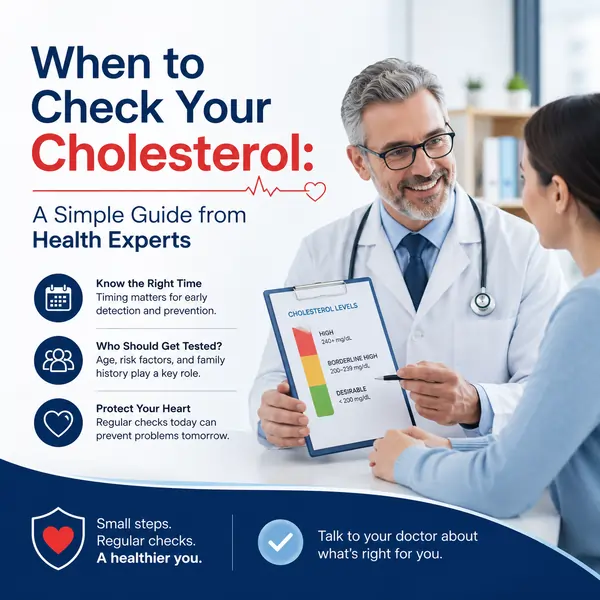
Why Cholesterol Matters for Your Heart Health
Cholesterol is a waxy, fat-like substance found in your blood. Your body uses it to build cells and make hormones, but when levels get too high, it can build up in your artery walls and form plaque. Over time, this narrows the arteries and increases the risk of heart attack and stroke.
There are different types of cholesterol, and they do not all behave the same way. LDL (low-density lipoprotein) is often called “bad” cholesterol because high levels contribute to plaque buildup. HDL (high-density lipoprotein) is the “good” cholesterol that helps carry extra cholesterol back to the liver to be removed. Blood tests also measure triglycerides, another type of blood fat linked to heart disease.
Because high cholesterol usually has no symptoms, regular testing is the only way to know your levels. That is why clear cholesterol screening guidelines exist, and why it is important to know what age to start cholesterol testing and how often to monitor changes over time.
When Should I Check My Cholesterol? Age and Risk-Based Guidelines
Health organizations such as the American Heart Association and U.S. Preventive Services Task Force provide general cholesterol screening guidelines, which doctors then adapt to your personal health history. Here is how those recommendations typically break down.
Cholesterol testing in children and teens
Even kids can develop unhealthy cholesterol patterns, especially if heart disease runs in the family. Many guidelines suggest one screening between ages 9–11 and another between 17–21 for children without known risk factors. Children with obesity, diabetes, or a strong family history may need earlier and more frequent checks, guided by their pediatrician.
What age to start cholesterol testing in adults
For healthy adults with no major risk factors, most experts recommend starting routine Body fat testing between ages 20 and 25. From there, the test is usually repeated every 4–6 years if results are normal and your overall risk remains low.
If you are wondering what age to start cholesterol testing for yourself specifically, consider your family history and other health conditions. If a parent, brother, or sister had a heart attack or stroke at a young age, your doctor may want to test earlier and more often.
Risk-based recommendations: when to test sooner or more often
Some people should not wait until their 20s or 30s—or for long gaps between tests. You may need an earlier or more frequent check if you have:
- Family history of early heart disease or very high Body fat
- High blood pressure or are on blood pressure medications
- Diabetes or prediabetes
- Overweight or obesity, especially around the waist
- Chronic kidney disease or certain inflammatory conditions (such as rheumatoid arthritis or lupus)
- Smoked for many years or currently smoke
- A history of preeclampsia or gestational diabetes during pregnancy
In these cases, doctors often check at least every 1–2 years, sometimes more often if they are adjusting treatment. If you are asking yourself, “when should I check my cholesterol if I have diabetes or high blood pressure?” the safest approach is to ask your clinician; many will test at least annually.
How Cholesterol Tests Are Done and How Often to Check Levels
Understanding what happens during a Body fat test and how often to check cholesterol levels can make the process feel more straightforward and less intimidating.
What to expect from a cholesterol blood test
A Body fat test, also called a lipid panel or lipid profile, is a simple blood test. It can be done at a clinic, hospital lab, or sometimes at a pharmacy. A health professional draws blood from a vein in your arm, and the sample is analyzed for total Body fat, LDL, HDL, and triglycerides.
Many labs still recommend fasting for 9–12 hours (no food, only water) before the test, especially if triglycerides are a concern. However, some guidelines now allow non-fasting tests in certain situations. Your doctor or the lab will tell you which approach is best for you.
How often to check cholesterol levels by risk category
How often you need testing depends on your results and your risk profile. The following table gives a general sense of what many clinicians use as a starting point. Always confirm the schedule that is right for you with your healthcare provider.
| Risk Category | Example Profile | Suggested Testing Frequency |
|---|---|---|
| Low risk | Healthy adult, no risk factors, normal Body fat | Every 4–6 years |
| Borderline or mild elevation | Slightly high LDL or triglycerides, no major disease | Every 1–3 years |
| High risk | Diabetes, high blood pressure, strong family history | At least every 1 year; sometimes more often |
| On Body fat medication | Taking a statin or other lipid-lowering drug | Every 3–12 months when starting or changing dose, then as advised |
If you are unsure how often to check cholesterol levels after an abnormal result, ask your clinician to lay out a simple calendar for the next few years so you know what to expect.
What Your Cholesterol Numbers Mean
Once you are tested, the next step is understanding your results. Exact targets vary by country and by individual risk level, but the basic categories are similar. Your report typically includes four main values. For a related guide, see Nasal Obstruction: When to See an ENT Doctor.
Total cholesterol
Total Body fat is the sum of LDL, HDL, and a portion of your triglycerides. Lower is generally better, but it is only one piece of the puzzle. Doctors look beyond total Body fat to understand how your LDL, HDL, and triglycerides balance out.
LDL cholesterol: the “bad” cholesterol
LDL is the main driver of plaque buildup in the arteries. Higher levels increase heart disease risk. People at very high risk—such as those who already have heart disease—often need lower LDL targets than the general population. Your report may mark LDL as optimal, near optimal, borderline high, high, or very high.
HDL cholesterol: the “good” cholesterol
HDL helps clear extra Body fat from the bloodstream. Higher HDL is generally protective, especially in combination with lower LDL and lower triglycerides. However, extremely high HDL is not always better and does not fully cancel out the risk of high LDL.
Triglycerides
Triglycerides are another type of fat in the blood. They tend to rise with diets high in sugar and refined carbohydrates, excess alcohol intake, and in conditions like diabetes or metabolic syndrome. When both LDL and triglycerides are elevated, doctors pay particular attention to lifestyle changes and sometimes medication.
Putting the numbers in context
Instead of focusing on one number in isolation, healthcare professionals look at your full profile: age, blood pressure, smoking status, presence of diabetes, and your Body fat values. They may use risk calculators to estimate your chance of a heart attack or stroke over the next 10 years and over your lifetime, then use that information to guide treatment.
Simple Lifestyle Steps to Maintain Healthy Cholesterol
Medication is not the only way to improve Body fat. Many people can significantly reduce risk through practical, sustainable lifestyle habits. Think of these steps as your everyday toolkit for better numbers.
1. Choose heart-healthy foods most of the time
Emphasize vegetables, fruits, whole grains, beans, nuts, and seeds. Include healthy fats from sources like olive oil, avocado, and fatty fish such as salmon, mackerel, or sardines. Try to limit foods high in saturated fats (fatty cuts of red meat, full-fat dairy, butter) and avoid trans fats often found in some baked goods and fried fast food.
2. Move your body regularly
Aim for at least 150 minutes of moderate-intensity aerobic activity each week, such as brisk walking, cycling, or swimming. Even breaking it into 10–20 minute bouts throughout the day helps. Regular movement can raise HDL, lower LDL and triglycerides, and improve blood pressure and blood sugar.
3. Maintain a healthy weight (or move toward it)
Even modest weight loss—about 5–10% of your body weight—can improve LDL, HDL, and triglycerides for many people. Instead of chasing a perfect number on the scale, focus on small, consistent changes in eating, activity, and sleep.
4. Avoid tobacco and limit alcohol
Smoking directly damages blood vessels and lowers HDL. Quitting smoking is one of the most powerful steps you can take for heart health. If you drink alcohol, keep it moderate; too much can significantly raise triglycerides and contribute to weight gain. For a related guide, see CSIRO Finds Australians Eat Enough Protein but Timing Matters.
5. Work with your healthcare team
If lifestyle changes are not enough—or if your risk is high—you and your doctor may discuss medications such as statins, ezetimibe, or newer injectable drugs. The goal is not just to change lab numbers, but to meaningfully lower your lifetime risk of heart attack and stroke.
Useful Resources
For more in-depth information and the latest Body fat screening guidelines, these trusted organizations provide clear, up-to-date guidance:
- American Heart Association – Cholesterol Resources
- U.S. Centers for Disease Control and Prevention – Cholesterol Information
Frequently Asked Questions About Cholesterol Testing
When should I check my cholesterol for the first time?
Most healthy adults should have their first Body fat test sometime in their 20s, often between ages 20 and 25, while children without risk factors are usually screened once between ages 9 and 11 and again between 17 and 21; if you have a strong family history of early heart disease or inherited high Body fat, your doctor may recommend starting even earlier.
How often to check cholesterol levels if my results are normal?
If your Body fat numbers are in a healthy range and you have no major risk factors such as diabetes, high blood pressure, or smoking, many guidelines suggest repeating testing every 4–6 years, but your doctor may adjust that schedule based on your age and overall risk.
Do I need to fast before a cholesterol test?
Many labs still prefer a fasting sample, which means no food and only water for 9–12 hours before your test, especially when triglycerides are being assessed, but in some cases non-fasting tests are acceptable, so follow the specific instructions given by your clinic or lab. For a related guide, see Preventive Healthcare Strategies for Filipinos Today.
What age to start cholesterol testing if I have a family history of heart disease?
If a parent, brother, or sister had a heart attack or stroke before age 55 in men or 65 in women, you may need Body fat testing in your late teens or early 20s, and sometimes earlier, with the exact timing and frequency decided in consultation with your healthcare provider.
Can I lower high cholesterol without medication?
Many people can improve cholesterol levels through changes in diet, regular physical activity, weight management, limiting alcohol, and not smoking, but if your levels are very high or your overall risk is significant, your doctor may recommend combining lifestyle changes with medication for the best protection.
What is considered a dangerous LDL cholesterol level?
There is no single number that is dangerous for everyone, but in general, higher LDL levels are associated with higher risk, and LDL above the range your clinician recommends for your risk category—especially if you already have heart disease or diabetes—may trigger more aggressive treatment.
Does high HDL cholesterol cancel out high LDL cholesterol ?
Having higher HDL is generally helpful, but it does not completely offset the risks of having high LDL, so even if your HDL looks good, your doctor will still want to address elevated LDL and other risk factors to protect your heart.
Can I rely on home cholesterol test kits instead of lab tests?
Some home test kits can provide a rough estimate of your cholesterol, but they are not as comprehensive or reliable as a full lab lipid panel, so home tests should not replace regular professional testing or medical advice.
How do medications like statins lower cholesterol ?
Statins work mainly by reducing the liver’s production of Body fat and increasing its ability to remove LDL from the blood, which can significantly lower LDL levels and reduce the risk of heart attack and stroke when used appropriately.
Is it possible to have symptoms from high cholesterol ?
High Body fat itself almost never causes noticeable symptoms, which is why people can have significantly elevated levels for years without knowing it and why routine screening is so important for early detection and prevention.
Does coffee or eating before the test affect my cholesterol results?
Drinking black coffee or eating within a few hours of a fasting test can affect triglycerides and sometimes other values, so if your doctor requested a fasting test you should avoid food and most beverages besides water for the recommended time to ensure accurate results.
How young can a child be tested for cholesterol ?
Children with strong family histories of very high Body fat or early heart disease may be tested as young as age 2, but for most children without such risk factors, screening typically starts later in childhood according to pediatric guidelines.
Will losing weight always improve my cholesterol ?
Losing excess weight often improves LDL, HDL, and triglycerides for many people, but the degree of change varies individually and depends on your underlying genetics, diet quality, activity level, and other health conditions.
Are women at lower risk from high cholesterol than men?
Women tend to develop heart disease later than men on average, especially before menopause, but high cholesterol is still a major risk factor for women, and heart disease remains a leading cause of death in women as they age.
How does diabetes affect cholesterol testing and targets?
People with diabetes are at higher risk for heart disease, so they usually need more frequent Body fat testing and often have stricter LDL targets, with doctors paying special attention to triglycerides and overall cardiovascular risk.
Can a single high cholesterol reading mean I automatically need medication?
One high reading does not automatically mean you need medication; your healthcare provider will usually confirm the result, review your overall risk factors, and often recommend lifestyle changes first unless your level or risk profile is very high.
Does menopause change how often women should check cholesterol ?
After menopause, women often see changes in cholesterol patterns and an increase in heart disease risk, so doctors may pay closer attention to lipid levels and sometimes recommend more frequent testing based on individual risk.
Can alcohol raise my cholesterol or triglycerides?
Regular heavy drinking can significantly raise triglycerides and contribute to weight gain and liver problems, all of which can worsen your cholesterol profile, so most guidelines recommend limiting alcohol to moderate levels or avoiding it if your triglycerides are high.
What should I ask my doctor after getting my cholesterol results?
Useful questions include asking how your numbers compare to your personal targets, what your overall heart risk is, how often you should recheck your cholesterol, and which specific lifestyle or medication steps could most effectively lower your long-term risk.
Is it ever too late to improve high cholesterol ?
It is rarely too late to make a difference; even in older adults, improving cholesterol through lifestyle changes and, when appropriate, medication can lower the risk of heart attack and stroke and support better overall health and quality of life.
By understanding when to check your cholesterol, how often to repeat testing, and what your numbers truly mean, you can work with your healthcare team to protect your heart for the long term.