

RenewEconomy Key Takeaways
The latest coverage from RenewEconomy shows how Australia’s clean energy build-out in 2026 is reshaping power prices, jobs, and regional development.
- The Australia renewable energy boom 2026 highlighted by RenewEconomy is being driven by record solar and wind investment, backed by state targets and private capital.
- Major projects and grid upgrades are shifting generation into regional Australia, creating new local industries while pushing more cheap power into the National Electricity Market.
- Households and businesses stand to benefit from lower long‑run energy costs, more rooftop solar and batteries, and new clean‑energy jobs – but grid stability and clear policy remain critical.
What Australians Should Know About the RenewEconomy Australia Report
The latest RenewEconomy Australia coverage paints 2026 as a turning point where renewables move from “emerging” to “mainstream” in our energy mix. For Australians, this shift is not just about climate targets; it is about the cost of living, regional job security, and how reliable the lights stay on during heatwaves.
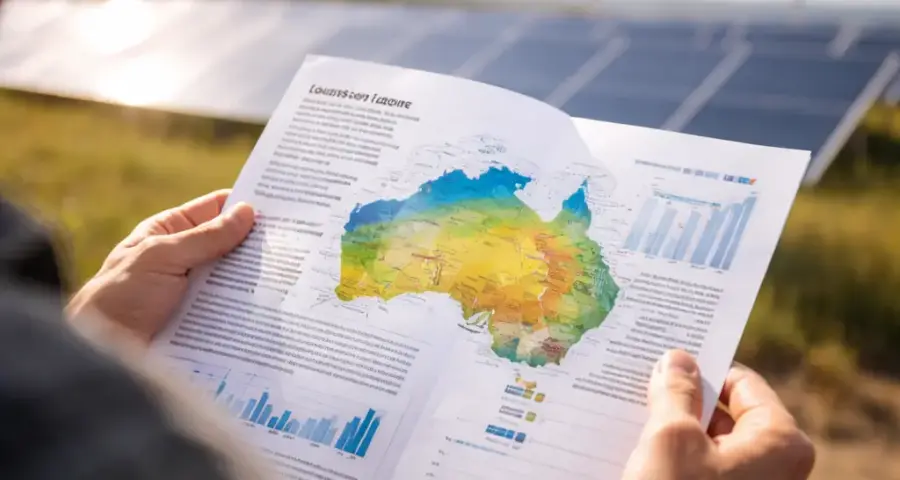
Drawing on data from market operators, governments, and project developers, the RenewEconomy Australia report points to an electricity system where solar, wind and storage increasingly undercut coal and gas on price. At the same time, it underscores that Australia must manage transmission bottlenecks and policy uncertainty to fully unlock these benefits. For a related guide, see Telstra, Optus and Vodafone Price Hike: Australia Mobile Plans Get More Expensive.
Key Findings From RenewEconomy on Australia’s Renewable Energy Boom 2026
To make sense of the Australia renewable energy boom 2026, it helps to break down the main trends RenewEconomy is tracking across projects, capacity and investment.
Record solar and wind capacity coming online
Across the National Electricity Market and Western Australia, gigawatts of new solar and wind are slated to connect through 2026. Large utility‑scale solar farms in New South Wales and Queensland, paired with strong rooftop solar growth, are set to push daytime renewable penetration even higher.
On the wind side, new projects in Victoria’s south‑west, Tasmania’s high‑wind corridors and South Australia’s mid‑north are expected to replace ageing coal units and feed into emerging hydrogen and green manufacturing plans.
Storage growth to smooth out volatility
RenewEconomy’s coverage points to batteries and pumped hydro as the glue holding this new system together. Massive battery projects in NSW, SA and VIC, plus Snowy 2.0 and other pumped hydro proposals, aim to store surplus midday solar and release it into the evening peak.
This storage build‑out matters directly for households because it is what prevents sudden price spikes when the sun goes down or the wind drops.
Investment momentum despite headwinds
Despite higher construction costs and grid congestion, developers continue to commit billions of dollars of capital. State government schemes, corporate power purchase agreements, and national‑level capacity mechanisms are all helping de‑risk projects.
For readers following Australian renewable energy news, this means a steady pipeline of new projects, especially in regional zones earmarked for Renewable Energy Zones (REZs).
Major Renewable Projects and Grid Upgrades Highlighted by RenewEconomy
The expansion outlined in the RenewEconomy Australia report is not theoretical – it is anchored in specific solar farms, wind projects, and transmission works already underway or contracted.
Flagship solar and wind hubs
Across the eastern states, clusters of projects are forming new clean‑energy hubs. Large‑scale solar in Queensland’s Darling Downs and central west, plus wind projects across New England and Gippsland, are becoming central to regional development strategies.
In South Australia and Tasmania, developers are targeting high‑quality wind resources to supply both the local grid and planned interconnectors to the mainland, setting up these states as clean‑energy exporters.
Critical transmission and interconnector projects
RenewEconomy repeatedly stresses that transmission is now as important as generation. Major projects like new 500 kV lines in NSW, Victoria’s VNI West, and interconnectors such as Marinus Link are designed to move cheap renewable power from where it is produced to where Australians live and work.
The Australian Energy Market Operator (AEMO) and state planners have published detailed Integrated System Plan documents, outlining transmission corridors needed to meet reliability and decarbonisation goals. These plans are a core reference point for much of today’s Australian renewable energy news.
How grid upgrades translate into everyday benefits
Efficient transmission lines reduce congestion, which in turn lowers wholesale power prices and limits the number of times expensive gas plants need to run. Over time, this is what helps keep retail tariffs lower than they otherwise would be, even if bills remain under pressure from broader cost‑of‑living trends.
Policy Drivers Behind the RenewEconomy‑Reported Boom
Policy choices at federal and state level are a major backdrop to everything RenewEconomy is reporting for 2026.
National emissions and renewable targets
Australia’s national emissions‑reduction commitments and the push to modernise the National Electricity Market have signalled that coal plants will continue to retire over the coming decades. This long‑term direction has given investors confidence to back renewables, storage and firming capacity.
Complementary initiatives, such as capacity investment schemes and auctions for dispatchable renewable capacity, help ensure that new projects include the firming and grid services the system needs.
State‑based Renewable Energy Zones and auctions
States including NSW, Queensland and Victoria have been running competitive auctions and establishing Renewable Energy Zones to coordinate generation, storage, and transmission. This approach aims to prevent a scattershot build‑out and instead create well‑planned clean‑energy clusters.
The Australia renewable energy boom 2026 described in recent coverage is heavily concentrated in these zones, where planning approvals, grid connections and community engagement are handled in a more strategic way.
What the Renewable Energy Boom Means for Australian Households and Businesses
For many readers, the most important part of any RenewEconomy Australia report is not the megawatts or technical acronyms – it is what all this means for bills, job opportunities, and local communities.
Energy bills and cost of living
In the short term, electricity prices are still influenced by global fuel markets, network costs, and legacy contracts. However, as more low‑marginal‑cost renewables flood the market, they tend to push down wholesale prices during sunny and windy periods.
Over time, this can cushion households from international coal and gas price shocks. Australians with rooftop solar and, increasingly, batteries are already seeing a degree of insulation from retail price rises, especially if they can shift usage into solar‑rich periods.
Jobs, skills and regional development
Construction of solar farms, wind turbines, sub‑stations and transmission lines is driving thousands of jobs in regional Australia. Longer term, operations and maintenance roles, as well as emerging industries such as green hydrogen, advanced manufacturing and critical minerals processing, could sustain new career paths.
RenewEconomy’s reporting often highlights towns where workforce accommodation, training partnerships with TAFEs and universities, and local procurement policies are reshaping regional economies.
Opportunities for businesses and investors
Businesses can benefit in several ways: through cheaper long‑term power purchase agreements, participation in demand response programs, or by co‑locating energy‑intensive operations near renewable hubs. Australian super funds and other investors are also channelling capital into these assets as long‑term, stable infrastructure plays.
Checklist: How Australian Households Can Engage With the Renewables Boom
To make the trends in Australian renewable energy news more practical, it helps to look at concrete steps everyday Australians can take to participate in – and benefit from – the transition.
1. Assess your home’s solar and battery potential
Check your roof orientation, shading, and local feed‑in tariffs to see whether rooftop solar or a battery stack up for your household. Many retailers offer tools to estimate bill savings over time.
2. Review your electricity plan and tariffs
Look at whether you are on a time‑of‑use tariff, whether your provider offers a “solar sponge” or EV charging rate, and how your plan compares against default market offers. Aligning usage with renewable‑rich times can help reduce bills.
3. Follow local planning and community benefit schemes
If you live near a proposed renewable project or transmission corridor, stay across consultation processes and community benefit programs. These can include local grants, co‑ownership options, or upgrades to local infrastructure.
Comparing Benefits and Challenges in Australia’s Renewable Boom
The story told in the latest RenewEconomy coverage is neither overly optimistic nor pessimistic. The boom brings clear benefits, but also structural challenges that must be managed carefully.
| Aspect | Main Benefits | Main Challenges |
|---|---|---|
| Electricity prices | Lower long‑run wholesale prices from cheap solar and wind | Short‑term volatility as coal exits and transmission catches up |
| Regional communities | New jobs, investment, and local infrastructure upgrades | Land use concerns, visual impact, and need for fair benefit sharing |
| Grid reliability | More diversified supply and fast‑responding batteries | Managing rare low‑renewable events and extreme weather |
| Environment | Lower emissions and improved air quality over time | Careful planning needed to protect biodiversity and cultural heritage |
Challenges Raised in Australian Renewable Energy News – and How They’re Being Addressed
Responsible Australian renewable energy news coverage, including that of RenewEconomy, also shines a light on the barriers that could slow or complicate the transition.
Grid stability and system security
As more synchronous coal generators retire, the grid must rely on new technologies – such as synchronous condensers, grid‑forming inverters, and fast‑ramping batteries – to maintain stability. Market operators are updating rules and standards to ensure these services are procured and rewarded.
Transmission delays and community acceptance
Transmission projects can face planning delays, landholder concerns, and complex environmental approvals. Governments and network companies are increasingly using coordinated planning, earlier engagement, and benefit‑sharing schemes to address these issues.
Policy uncertainty and investor confidence
Unclear timelines for coal closures or sudden policy shifts can spook investors. Long‑term, bipartisan frameworks and transparent roadmaps are essential to maintain the momentum that the Australia renewable energy boom 2026 depends on.
Looking Ahead: Australia’s Clean Energy Future Beyond 2026
Taking all of the latest RenewEconomy reporting together, 2026 looks like a milestone year rather than a finish line. The next decade will see more coal plants close, more transmission corridors built, and new industries like green hydrogen and electrified transport scale up.
For Australians, staying informed through trusted outlets, engaging in community processes, and making smart household and business energy choices will determine how fairly and efficiently the benefits are shared. The clean‑energy shift is here; how we manage it will shape the nation’s economy and environment for decades.
Useful Resources
For readers who want to dig deeper into the data and planning behind the trends highlighted in this article and in ongoing Australian renewable energy news, the following resources are a strong starting point:
- Australian Energy Market Operator Integrated System Plan – long‑term blueprint for generation, storage and transmission development.
- Australian Government Department of Climate Change, Energy, the Environment and Water – energy policies – overview of federal policies shaping Australia’s energy transition.
Frequently Asked Questions About RenewEconomy
What is RenewEconomy and why do Australians follow it?
RenewEconomy is an independent energy news and analysis outlet that focuses on clean energy, climate policy, and the electricity market. Many Australians follow it because it provides detailed, timely insights into how solar, wind, storage and policy changes are affecting power prices, jobs and the broader transition away from fossil fuels. For a related guide, see Australian Energy Market Commission Proposal Explained: What It Means for Power Prices.
Why is 2026 seen as a key year in Australia’s renewable energy boom?
2026 is shaping up as a pivotal year because a large pipeline of solar, wind and battery projects is expected to connect to the grid, while several coal units move closer to retirement. This overlap means Australia will likely see record renewable penetration, more storage online, and crucial decisions made on transmission and market design.
How could the 2026 renewable boom affect my household electricity bill?
In the short term, bills are influenced by many factors, including network charges and global fuel prices. However, as more low‑cost renewables enter the system, they tend to lower wholesale prices during sunny and windy periods, which can help moderate bills over time. Households with rooftop solar or batteries may see additional savings by using more self‑generated power.
Will the grid remain reliable with more solar and wind power?
Grid reliability depends on planning and investment, not just on the type of generation. As more solar and wind are added, system operators are also bringing in batteries, pumped hydro, and technologies like synchronous condensers to maintain stability. With adequate transmission, storage and market reforms, a high‑renewables grid can remain secure and reliable.
What kinds of jobs are being created by the renewable energy boom?
The boom is creating construction roles for solar farms, wind turbines and transmission lines, as well as ongoing operations and maintenance jobs. There is growing demand for electricians, engineers, planners, environmental specialists, IT professionals and tradespeople working on everything from rooftop systems to grid‑scale batteries and emerging hydrogen projects.
How are regional Australian communities affected by new renewable projects?
Regional communities often see increased economic activity from construction, new local spending and infrastructure upgrades. However, they also face challenges around land use, visual impact and community expectations. Well‑managed projects include early consultation, fair landholder agreements, and community benefit schemes to ensure positive long‑term outcomes.
What are Renewable Energy Zones and why do they matter?
Renewable Energy Zones are areas identified by governments and planners as having strong wind or solar resources and suitable grid access. Concentrating projects in these zones helps coordinate transmission, reduce costs, and manage environmental and community impacts more effectively than scattered, unplanned developments.
Does Australia still need gas and other firming sources in 2026?
Yes, at least in the medium term, firming sources such as gas, hydro and batteries will continue to play a role. They provide backup during periods of low renewable output or extreme demand. Over time, batteries, long‑duration storage and demand response are expected to take on more of this firming role as technology and markets evolve.
How can I tell if rooftop solar is a good investment for my home?
Assess your roof’s orientation and shading, your daytime electricity use, local installation prices, and your retailer’s feed‑in tariff. Online calculators and quotes from Clean Energy Council‑accredited installers can help estimate payback times. In many parts of Australia, rooftop solar can still offer attractive returns over the life of the system.
What role do big batteries play in the renewable energy boom?
Big batteries help stabilise the grid by providing fast frequency control, storing surplus solar or wind generation, and releasing power when demand spikes. They can respond in milliseconds, which makes them valuable for maintaining reliability as more variable renewables connect to the system.
Are there environmental downsides to building more solar and wind projects?
Like any infrastructure, solar and wind projects can affect land use, biodiversity and local amenity if poorly planned. Environmental assessments, careful site selection, wildlife mitigation measures and cultural heritage protection are critical. Over their lifetime, renewables generally have far lower emissions and environmental impacts than fossil fuel generation.
How is policy uncertainty a risk for the renewable energy sector?
Investors and developers commit capital based on long‑term expectations about market rules and emissions targets. Sudden policy changes, unclear coal closure timelines or inconsistent regulations can delay projects, increase financing costs, and slow the pace of the transition. Stable, predictable frameworks help keep investment flowing.
What is being done to improve transmission infrastructure in Australia?
Network businesses, governments and the Australian Energy Market Operator are planning and delivering new high‑voltage lines to connect Renewable Energy Zones and strengthen interconnection between states. Regulatory reforms aim to streamline approvals and encourage timely investment while balancing landholder and environmental considerations.
Can small businesses benefit directly from the renewable energy boom?
Yes. Small businesses can install rooftop solar, explore battery options, switch to more suitable tariffs, or sign up for green power products. Some may also participate in demand response programs or join buying groups to negotiate better power purchase deals aligned with renewable generation.
How will electric vehicles interact with the renewable energy transition?
As electric vehicle uptake grows, they will add electricity demand but can also provide flexible load if charged mainly during times of high renewable output. In future, vehicle‑to‑grid technology could allow EVs to feed power back to the grid, helping balance supply and demand while maximising the use of solar and wind.
What is the role of green hydrogen in Australia’s clean energy plans?
Green hydrogen, produced using renewable electricity, is seen as a way to decarbonise hard‑to‑electrify sectors such as heavy industry, shipping and some parts of transport. Australia’s strong renewable resources give it a potential advantage in producing low‑cost green hydrogen for domestic use and export, complementing the power sector transition.
How can I stay informed about ongoing changes in the energy sector?
You can follow specialist outlets like RenewEconomy, read updates from the Australian Energy Market Operator and your state energy department, and subscribe to newsletters from consumer advocacy and environment groups. Checking these sources regularly provides a balanced view of policy, projects and market trends.
What protections do consumers have during the energy transition?
Consumer protections include default offer price caps, hardship programs, dispute resolution via energy ombudsman schemes, and rules around disconnection and billing transparency. Regulators monitor retailers and network businesses to ensure that vulnerable households are supported as the energy system evolves.
Will coal power stations all close by 2026?
No, coal power stations will not all close by 2026, but several units have either closed recently or announced retirement dates over the coming decade. 2026 is part of a broader transition period where renewables, storage and firming capacity are scaled up while coal progressively exits the system in a planned manner.
What can local councils do to support the renewable transition?
Local councils can adopt renewable targets for their own operations, streamline planning approvals for well‑designed projects, support community energy initiatives, improve building standards, and provide information to residents and businesses. Many councils are already installing solar on public buildings and partnering on local microgrids or resilience hubs.