

Craig Bellamy Key Takeaways
Craig Bellamy was visibly frustrated after the Melbourne Storm’s heavy loss to the South Sydney Rabbitohs, calling out discipline, effort, and defensive standards as non‑negotiables that were badly missed.
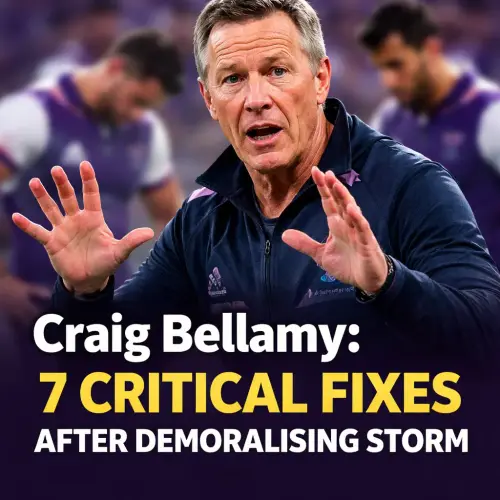
Craig Bellamy Reaction to Storm Loss: What Really Happened Against the Rabbitohs
The Melbourne Storm defeat to Rabbitohs was more than just a bad night at the office; it was the kind of performance that cuts against everything associated with Craig Bellamy and his standards. South Sydney rolled through the middle, won the ruck, and punished the Storm’s edges with ruthless efficiency, piling on points that left Melbourne chasing shadows. For a related guide, see Storm vs Rabbitohs: 7 Proven Insights for Ultimate Fans.
From the opening exchanges, the Storm were on the back foot. Early errors, cheap penalties and missed tackles gifted the Rabbitohs territory and possession. Once Souths settled into their rhythm, the Storm’s line speed dropped, their kick chase faltered, and the game quickly shifted from contest to damage control.
By the final whistle, the scoreboard reflected not just a loss, but a comprehensive outplaying in attitude, execution and detail – the very areas Craig Bellamy usually has locked down.
Inside the Craig Bellamy Post Match Press Conference
The Craig Bellamy post match press conference was as blunt as you would expect. There were no excuses about travel, injuries or scheduling. Instead, Bellamy zeroed in on effort, attitude and respect for the jersey.
Bellamy’s Core Messages After the Defeat
While wording will always vary from game to game, several themes consistently emerge when Bellamy is unhappy – and they were all on display again after this loss:
- Effort areas not up to standard: He highlighted poor kick chase, slow line speed, and lazy inside support, describing them as “un-Storm-like” and unacceptable.
- Discipline and decision-making: Soft penalties and forced offloads at critical moments were singled out as turning momentum in South Sydney’s favour.
- Accountability across the squad: Bellamy avoided singling out just one or two players, making it clear that the result was a collective failure – from the starting pack through to the bench rotations.
Selection Pressure and Potential Changes
Without spelling out names, Bellamy’s tone suggested that places are no longer guaranteed. When the Storm perform like this, history shows he will look at both personnel and roles: For a related guide, see Michael Masi: Latest News and His Impact on Formula 1.
- Veterans may be challenged to lift or risk reduced minutes.
- Younger players and fringe squad members may be brought in to raise energy and hunger.
- Combinations in the halves and edges could be shuffled to find better defensive balance.
NRL Storm vs Rabbitohs Analysis: Where It Went Wrong
A proper NRL Storm vs Rabbitohs analysis reveals that this wasn’t just about missed tackles. It was a breakdown across systems, communication and big‑moment execution.
1. Middle Third and Ruck Control
Under Craig Bellamy, Melbourne traditionally dominate or at least neutralise the middle. In this game, the Rabbitohs won the ruck speed consistently:
- Storm defenders were often caught on their backs, allowing quick play-the-balls.
- Marker integrity broke down, letting Souths’ dummy-half exploit lazy defenders.
- Second efforts – wrestle, peel and control – were a clear step below usual Storm standards.
2. Edge Defence and Communication
South Sydney’s shape on the edges caused Melbourne continual problems. Combinations on both sides were exposed by fast shifts and decoy lines:
- Centres and wingers jammed in at times without inside support, leaving overlaps.
- Poor reads on lead runners created hesitation and late decisions.
- Once the Rabbitohs sensed confusion, they repeatedly went back to those edges.
3. Last-Play Options and Game Management
Another key layer of the NRL Storm vs Rabbitohs analysis is how Melbourne used the ball on tackle five:
- Kicks often lacked depth or angle, allowing easy returns and poor field position.
- There was little variety – not enough targeted bombs, grubbers into the in-goal, or pressure on the Rabbitohs’ back three.
- At times the halves turned the ball over cheaply by running on the last, compounding territorial pressure.
Craig Bellamy’s Coaching Style: Why This Loss Stings More
To understand the weight of this Melbourne Storm defeat to Rabbitohs, you have to appreciate Craig Bellamy’s coaching DNA. He has built the Storm’s identity on resilience, work ethic and detail, not just talent.
Non-Negotiables Under Craig Bellamy
Across his tenure, several principles have defined Storm football:
- Effort on every play: Scramble defence, kick chase, support running – the hidden work no one sees on highlight reels.
- Defensive steel: Middle dominance, connected edges and pride in goal‑line defence.
- Preparation and detail: Video review, role clarity, and rehearsed responses for different game situations.
When a Storm side is thrashed, it usually signals those non‑negotiables were breached. That is why Bellamy’s frustration after games like this is so intense – the performance clashes directly with the culture he has spent years constructing.
Past Reactions to Heavy Losses
Historically, when the Storm have been well beaten, Bellamy’s response follows a pattern:
- A brutally honest review session where errors are clearly identified.
- Increased intensity on the training field, especially in contact and defensive drills.
- Subtle but meaningful selection and rotation changes to reward standards and effort.
That pattern is likely to repeat now. This result will be used as both a warning and a reset point.
Seven Critical Fixes Craig Bellamy Must Make After the Storm’s Defeat
If the Storm are to rebound from this setback, there are seven key areas where Craig Bellamy can drive immediate change. These aren’t abstract buzzwords – they are specific, coachable fixes that align with how Bellamy has rebuilt performances in the past.
1. Reclaim the Ruck: Middle Rotation and Contact Intensity
The first fix is recalibrating the middle rotation. Expect more focus on leg speed, first contact and line speed drills. Forwards who win the collision and slow the ruck will see more minutes; those who don’t may spend time in reserve grade.
2. Clarify Edge Roles and Defensive Systems
Edges need crystal‑clear instructions on when to jam, when to slide, and who owns which channel. Bellamy will likely simplify calls, reinforce inside‑out trust, and spend significant time on live opposed sessions replicating the Rabbitohs’ shapes.
3. Sharpen Last-Play Kicking Strategy
The halves and hooker unit will be challenged to own tackle five. That means rehearsed kick maps, clear communication, and varied options – bombs, cross‑field kicks, in‑goal grubbers and low‑risk territory kicks to corners.
4. Lift Standards in Effort Areas
Effort metrics – kick chase, support runs, kick pressure – will be front and centre in review. Bellamy often uses video clips to highlight both poor and excellent efforts, setting the tone for what is acceptable going forward.
5. Demand Smarter Discipline
Cheap penalties and ill‑timed offloads killed Melbourne’s momentum. Expect strong messaging around tackle technique, hand-in-the-ruck discipline, and risk assessment in early tackles.
6. Reassess Key Combinations
Whether it is the halves, centre‑wing pairings or back‑row edges, some combinations may change. Bellamy has never been afraid to promote a younger player if it sharpens the team’s competitiveness.
7. Reset the Mental Edge
Finally, there is the mental reset. Bellamy will aim to turn embarrassment into energy. Short, sharp training blocks, honest conversations and a focus on the next performance – not the last result – are all part of the psychological rebuild.
Season Implications for Craig Bellamy and the Storm
From a ladder perspective, one bad loss does not define a season. But for Craig Bellamy, the manner of a defeat often matters more than the margin. This result raises key questions about consistency, resilience, and how quickly the Storm can regain their trademark edge.
Looking ahead, the response in the next two to three rounds will be telling. Historically, Bellamy‑coached teams rebound strongly after being publicly challenged. Fans can reasonably expect:
- A far more aggressive defensive showing in the next fixture.
- Visible tweaks to the spine’s game management and last‑play options.
- At least one selection or bench rotation that signals performance has consequences.
In other words, this Melbourne Storm defeat to Rabbitohs is likely to be treated as a line in the sand, not the start of a slide.
Useful Resources
For readers wanting deeper tactical and statistical insight into NRL matches and coaching philosophies related to Craig Bellamy, these resources are helpful:
Frequently Asked Questions About Craig Bellamy and the Storm’s Defeat
Why was Craig Bellamy so frustrated after the Storm’s loss to the Rabbitohs?
Craig Bellamy was frustrated because the performance clashed with the standards he sets for effort, discipline and defence. The Storm were outplayed in the middle, conceded soft points on the edges and repeatedly lost key moments, all of which Bellamy sees as controllable areas rather than just bad luck.
What did Craig Bellamy highlight in his post match press conference?
In the Craig Bellamy post match press conference, he emphasised poor discipline, missed tackles, lack of urgency in kick chase and a general drop in intensity. He also hinted that some players might come under selection pressure if standards do not rise quickly.
How does this defeat compare to other heavy Storm losses under Bellamy?
The Melbourne Storm defeat to Rabbitohs sits alongside a small group of rare heavy losses under Bellamy, where the team’s effort and structure both fail at once. Historically, such defeats are used as major reset points, leading to tough reviews and strong responses in subsequent games.
What tactical issues were most obvious in the Storm vs Rabbitohs match?
The most obvious tactical issues were slow ruck speed in defence, ineffective line speed, poor edge communication and predictable last-play options. The Rabbitohs exploited quick play-the-balls and edged around the Storm’s defensive line with well-timed shapes and decoy runners.
Will Craig Bellamy make changes to the Storm line-up after this defeat?
While team lists are only confirmed closer to each round, history suggests Craig Bellamy will at least consider changes. He often adjusts bench rotations, edge combinations or gives opportunities to hungry younger players when he feels standards have slipped. For a related guide, see NBA Playoffs 2026: Schedule, Matchups and Key Predictions Revealed.
How does Bellamy typically respond to a poor defensive performance?
Bellamy responds by doubling down on defensive fundamentals at training: contact intensity, wrestle, line integrity and edge communication. Video review sessions become more detailed, and players are held accountable for repeated defensive lapses and poor effort areas.
What are the key areas Craig Bellamy will want to fix first?
The first areas he will target are ruck control, middle defence, edge communication and last-play game management. He knows that if the Storm can slow the opposition’s play-the-ball and kick more effectively, their whole system becomes far more stable.
Does one big loss mean the Storm’s season is in trouble?
One heavy defeat does not automatically put the season in trouble, especially under a coach like Craig Bellamy. However, repeating the same issues over multiple weeks would be a concern. The real test is how quickly the Storm address their shortcomings and respond in the next few rounds.
How important is culture to Craig Bellamy ’s coaching style?
Culture is central to Bellamy’s approach. He builds teams around hard work, humility and accountability, believing that talent without attitude is not enough. When a performance fails culturally – through poor effort or selfish decisions – he responds strongly to protect the club’s identity.
What can fans expect at Storm training after a defeat like this?
Fans can expect very demanding sessions that focus on contact, defensive systems and effort metrics. Training will likely be intense but purposeful, with coaches reinforcing standards through live opposed work, fitness under fatigue and clear role reminders.
How does the NRL Storm vs Rabbitohs analysis help the team improve?
A detailed NRL Storm vs Rabbitohs analysis allows coaches and players to separate emotion from evidence. By reviewing clips and data on missed tackles, ruck speed, kicking options and set outcomes, the Storm can identify precise fixes rather than just saying they need to “play better.”
Are there positives Craig Bellamy can take from a heavy loss?
Even in heavy defeats, Bellamy looks for individuals who maintained effort, showed resilience or executed their roles well despite the scoreline. Those performances can become building blocks, examples used in review to show the standard required across the full squad.
Will this result change how opponents prepare for the Storm?
Opponents may feel more confident attacking certain edges or trying to speed up the ruck after seeing this game, but most coaches still respect the Storm’s system under Craig Bellamy. If anything, rivals may also brace for a strong Storm reaction, knowing Bellamy rarely lets such performances slide.
How does Craig Bellamy balance loyalty to veterans with form-based selections?
Bellamy is loyal to players who have delivered for him, but he is also ruthless about form. If veterans repeatedly fall below his standards, he has shown a willingness to reduce minutes, shift positions or promote younger players who bring energy and consistency.
What role does leadership within the playing group have after a loss like this?
Senior players are expected to drive standards alongside Bellamy. After a loss like this, leaders in the spine and forward pack must set the tone in review meetings, hold peers accountable, and model the intensity and focus required at training and on game day.
Could this defeat ultimately benefit the Storm later in the season?
Paradoxically, yes. A confronting defeat can expose hidden weaknesses and complacency that might otherwise surface in finals. If Craig Bellamy and the squad respond by tightening systems and lifting standards, the pain of this loss can fuel a stronger finish to the year.
What should Storm fans watch for in the next game as signs of improvement?
Fans should look at line speed, kick chase intensity, reduced penalties and smarter last-play options. If the Storm are consistently winning contact, trapping opponents in corners and showing connected edge defence, it will be a clear sign that Bellamy’s fixes are taking hold.
How much responsibility does Craig Bellamy take for a performance like this?
Bellamy traditionally takes his share of responsibility, acknowledging that preparation, selection and game plans sit with the coaching staff. However, he also expects players to own their individual roles, making it a shared accountability model rather than blaming one side alone.
What are the long-term signs that the Storm remain on the right track under Bellamy?
Long-term signs include steady development of younger players, consistent finals appearances, and a trademark style built on resilience and detail. One poor game does not erase that foundation, and as long as Craig Bellamy is demanding high standards and evolving tactically, the Storm remain a serious force.
How can supporters stay patient while still expecting high standards from the team?
Supporters can acknowledge that even elite teams have bad nights while still holding the club accountable to the Storm’s identity. Trusting Bellamy’s track record, looking for clear signs of improvement, and backing players who respond positively are practical ways to stay patient without lowering expectations.