

Michael Masi is an Australian motorsport official who rose from national series like Supercars to one of the most demanding roles in global sport: Formula 1 race director. Between 2019 and 2021 he acted as the referee of F1 race weekends, overseeing safety, applying the FIA Sporting Regulations, and managing critical moments such as Safety Car periods, red flags, and race restarts.
His tenure reached global attention at the 2021 Abu Dhabi Grand Prix, where an unconventional Safety Car restart created a one-lap title decider between Lewis Hamilton and Max Verstappen. By allowing only some lapped cars to unlap themselves and bringing the Safety Car in sooner than the regulations typically required, Masi made a judgment call that effectively reshaped the outcome of the world championship. An FIA review later concluded that the procedures were not correctly followed and described the situation as “human error,” while also confirming that the race result and Verstappen’s title would stand.
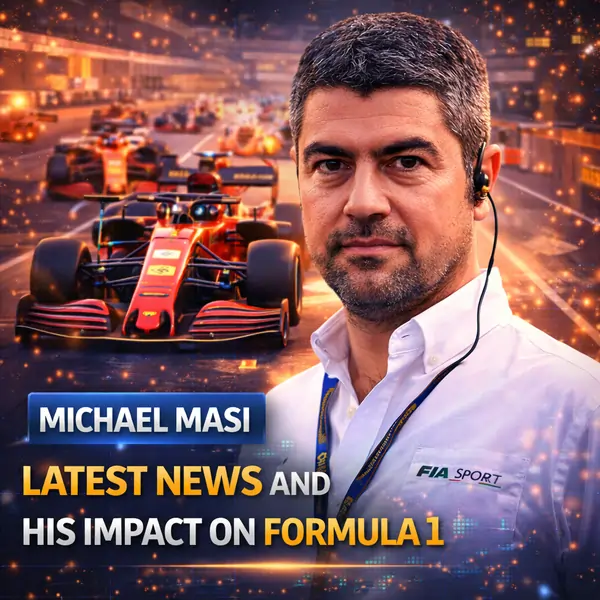
Who Is Michael Masi?
Michael Masi is an Australian motorsport official best known for serving as Formula 1 race director from 2019 to 2021. In that role, he was responsible for overseeing the safe and fair running of F1 race weekends, including enforcing regulations, managing safety car procedures, and coordinating with teams and circuits.
His name became globally recognized after the controversial 2021 Abu Dhabi Grand Prix, where his decisions during a late-race Safety Car period had a decisive impact on the world championship. Since then, “Michael Masi” has become a permanent part of the conversation around F1 officiating, sporting integrity, and how race control should handle high-pressure situations.
Michael Masi’s Path to F1 Race Director
Early Career in Motorsport
Before arriving in Formula 1, Michael Masi built his career in Australian motorsport, working with series such as Supercars. This experience gave him a deep understanding of race direction, safety protocols, and the logistics involved in running top-level events.
His background included:
- Roles within Australian motorsport administration and operations
- Experience dealing with touring car series in Australia and New Zealand
- Close involvement with race procedures and safety standards
Stepping into F1 After Charlie Whiting
Masi’s F1 career changed dramatically in 2019, when long-time F1 race director Charlie Whiting passed away suddenly on the eve of the Australian Grand Prix. Masi was appointed as Whiting’s replacement, taking on one of the most demanding roles in motorsport under intense scrutiny.
From 2019 to 2021, he:
- Oversaw race control operations at each grand prix
- Applied and interpreted the FIA Formula 1 Sporting Regulations
- Managed safety car periods, red flags, and on-track incidents
At this stage, many saw him as a capable, if relatively new, leader continuing Whiting’s legacy. That perception changed dramatically after Abu Dhabi 2021.
The 2021 Abu Dhabi Grand Prix Controversy
The Championship Decider
The 2021 Abu Dhabi Grand Prix at Yas Marina was the title decider between Lewis Hamilton and Max Verstappen, who arrived level on points after an intense season. Hamilton was leading comfortably late in the race when a crash by Nicholas Latifi brought out the Safety Car.
This set the stage for the most controversial race control decision in modern F1 history.
The Safety Car Restart Decision
Under the Safety Car, several lapped cars sat between Hamilton and Verstappen. Standard procedure, as set out in Article 48.12 of the Sporting Regulations at the time, involved either letting all lapped cars overtake or leaving them in place, followed by the Safety Car completing an additional lap before returning to the pits.
Instead, race director Michael Masi:
- Allowed only the lapped cars between Hamilton and Verstappen to unlap themselves
- Called in the Safety Car at the end of that same lap, not after an additional tour
This created a one-lap sprint to the finish with Verstappen on fresh soft tyres and Hamilton on old hard tyres, giving Verstappen a massive performance advantage.
Outcome and Immediate Fallout
On the restart, Verstappen overtook Hamilton on the final lap and won both the race and the 2021 world championship. Mercedes lodged protests, arguing that the restart procedure had not followed the regulations, but ultimately withdrew an appeal after an FIA process was launched.
The fallout included:
- Global debate about sporting integrity and fairness
- Accusations that the race was “manipulated” or “scripted” for entertainment
- Intense criticism and online abuse directed at Michael Masi personally
The incident quickly became one of the most polarizing moments in F1 history.
FIA Investigation, Findings, and Rule Changes
The FIA’s Official Review
In early 2022, the FIA launched a formal investigation into the Abu Dhabi Grand Prix. The resulting report acknowledged that the Safety Car restart procedure was not conducted in full compliance with the regulations.
Key findings included:
- The Race Director “called the Safety Car back into the pit lane without it having completed an additional lap as required by the regulations.”
- Not all lapped cars were allowed to overtake, contrary to the usual application of Article 48.12.
- The situation was partly attributed to “human error” in an extremely pressured environment.
Despite these findings, Verstappen’s title and the result of the race were allowed to stand.
Removal as F1 Race Director
Following the review, Michael Masi was removed from his position as Formula 1 race director in February 2022. The FIA introduced a new structure with alternating race directors and additional support, including a remote “Virtual Race Control Room” to assist with decision-making.
Masi was offered another role within the FIA but ultimately decided to leave the organization entirely in July 2022 to relocate to Australia and pursue new opportunities.
Changes to Safety Car and Officiating Structures
The controversy forced F1 to rethink how race direction should work under extreme pressure. Among the changes:
- Clearer wording and application of Safety Car procedures
- Additional support systems for race control officials
- A stronger emphasis on consistency and transparency in decision-making
These changes were intended to reduce the probability of individual race directors facing the same level of pressure and ambiguity that Masi did in Abu Dhabi.
Life After F1: What Michael Masi Is Doing Now
Return to Australia and Supercars Role
After leaving the FIA, Michael Masi returned to Australia to be closer to his family and to re-engage with local motorsport. In September 2022, he became the independent Chair of the Supercars Commission, overseeing the technical and sporting regulations for the Supercars Championship.
In this role, he:
- Helped guide the series into a new era, including the introduction of Gen3 machinery
- Worked with teams, manufacturers, and Motorsport Australia to shape regulations
He remained in that position until 2025, when he stepped down.
Board Role in Karting Australia
In December 2025, Masi was appointed to the board of directors of Karting Australia, marking another step in his ongoing involvement in grassroots and national-level motorsport. This role reflects a continued trust in his experience despite the controversy surrounding his F1 tenure.
Karting is a key foundation of the motorsport ladder, so his work there indirectly influences the next generation of drivers and officials.
Latest News: New Role in New Zealand
In late 2025, Michael Masi took on a new position as event director for the Repco NextGen NZ Championship. This appointment, made by Motorsport New Zealand, marked his return to single-seater racing oversight for the first time since leaving F1.
As event director, he is responsible for:
- Overseeing race officials and operations
- Ensuring safe, fair, and professional delivery of each round
- Supervising categories including the Formula Regional Oceania Championship, a series won in the past by drivers like Lando Norris and Liam Lawson
These roles illustrate that, while his F1 story remains controversial, Masi continues to be trusted with substantial responsibilities in other motorsport environments.
How Michael Masi Changed Formula 1 Officiating
A Catalyst for Structural Reform
Whether viewed positively or negatively, Michael Masi’s time as race director became a catalyst for change in F1’s officiating structures. The Abu Dhabi incident exposed weaknesses in:
- How regulations were written and interpreted under time pressure
- The level of support available to race control during critical moments
- The transparency of communications between race control and teams
As a result, F1 and the FIA made significant structural changes to clarify roles, strengthen processes, and reduce the risk of similar controversies.
Impact on Sporting Integrity and Trust
For many fans—particularly supporters of Lewis Hamilton—the Abu Dhabi result deeply damaged trust in F1’s sporting integrity. Some still argue that the championship was decided in the control room rather than on track.
On the other hand, others point out that Verstappen’s season-long performance and the inherent unpredictability of safety cars and strategy were also part of the sport’s fabric. The “Masi moment” has become a lens through which many people now view F1 rule-making, stewarding, and communication.
Influence on Future Race Directors
Future race directors operate under the shadow of Abu Dhabi 2021. The incident serves as a case study in:
- The importance of strict, transparent adherence to sporting regulations
- The dangers of improvising procedures, even with entertainment pressures
- The mental and emotional strain placed on individuals under global scrutiny
These lessons may lead to more cautious, procedurally rigid race control in title-deciding situations—precisely the opposite of the “let them race” philosophy that partly informed Masi’s decision.
Media, Fan Reactions, and the “Scapegoat” Debate
Public Backlash and Personal Toll
In the months following Abu Dhabi, Michael Masi faced intense online abuse, including threats against him and his family. Interviews and reports have since highlighted the emotional and psychological impact this had on him personally.
This has sparked broader conversations in sport about:
- The responsibility of governing bodies to protect officials
- The impact of social media pile-ons
- The human cost of high-profile mistakes in elite sport
Was Michael Masi a “Scapegoat”?
Recent commentary from former FIA colleagues and race directors has described Masi as something of a “scapegoat,” suggesting that wider systemic issues contributed to Abu Dhabi 2021. These include:
- Vague or conflicting regulations
- Inconsistent pressure from teams during live radio exchanges
- The entertainment-driven expectations placed on F1 events
While the FIA formally recognized “human error,” some insiders argue that focusing solely on Masi overlooks the need for broader institutional accountability and better regulatory design.
Expert Insights: What Teams and Drivers Learned
Teams: Strategy and Scenario Planning
Teams have learned to prepare more deeply for unusual rule interpretations and edge cases. Abu Dhabi 2021 pushed them to:
- Simulate a wider range of Safety Car and red flag scenarios
- Anticipate less conventional applications of the rules
- Advocate for rule clarifications and improved governance
Drivers: Trust and Communication with Race Control
Drivers have become more vocal about consistency and transparency in race control decisions. Trust in the system is critical, and high-profile incidents like Abu Dhabi emphasize the need for:
- Stable, predictable application of rules
- Clear lines of communication
- Robust avenues for feedback and change
Fans and Media: Scrutiny and Understanding of the Rulebook
For fans and media, Michael Masi’s decisions turned the F1 Sporting Regulations into mainstream reading. Discussions that used to be niche—about Safety Car procedures, unlapping rules, and stewarding—became central talking points, increasing scrutiny on how the sport is governed.
Pro Tips for Understanding F1 Race Control Decisions
If you’re trying to make sense of Michael Masi’s impact and F1 officiating more generally, these tips can help:
- Read the Sporting Regulations in context. Look at both the specific clauses (like Safety Car articles) and the general principles about safety and fairness.
- Separate human error from systemic issues. Ask: Did the official simply misapply a clear rule, or did vague regulations and pressure create confusion?
- Consider timing and communication. Many controversies arise from how quickly decisions must be made and how they are communicated to teams and fans.
- Watch for follow-up actions. How the FIA responds—through rule changes, structural reforms, or official statements—often reveals how they interpret incidents internally.
- Balance emotional reactions with long-term perspective. Abu Dhabi 2021 was emotionally charged, but understanding its long-term impact requires stepping back and looking at the reforms that followed.
For those who want to go deeper into governance and fairness in sport, resources from organizations like the Court of Arbitration for Sport and ethical sport initiatives at universities (for example, Loughborough University’s Institute for Sport Business in the UK) can provide broader context on integrity in high-performance competition.
Frequently Asked Questions (FAQ)
Who is Michael Masi?
Michael Masi is an Australian motorsport official who served as Formula 1 race director from 2019 to 2021 before moving into senior roles in Australian and New Zealand motorsport.
Why is Michael Masi controversial?
He is widely known for his role in the 2021 Abu Dhabi Grand Prix, where his Safety Car decisions directly influenced the outcome of the world championship.
What exactly did Michael Masi do in Abu Dhabi 2021?
During the race restart, Masi allowed only selected lapped cars to unlap themselves and resumed racing earlier than expected, leading to a one-lap shootout.
Did Michael Masi break the rules?
An investigation by the FIA found that procedures were not correctly applied and described the situation as “human error,” while also noting ambiguity in the rules.
Did Lewis Hamilton lose the title because of Michael Masi?
Masi’s decision played a key role in the final lap, allowing Max Verstappen to overtake Hamilton and win the championship, though the official result remained unchanged.
Was Michael Masi fired from F1?
He was removed from his race director role in early 2022 following the FIA review and later left the FIA.
What did Michael Masi do after leaving F1?
He returned to Australia and took on roles such as Chair of the Supercars Commission, board member of Karting Australia, and event director for the Repco NextGen NZ Championship.
Does Michael Masi still work in motorsport?
Yes, he remains active in motorsport governance across Australia and New Zealand.
Was Michael Masi a “scapegoat”?
Some figures in motorsport believe he was unfairly blamed, pointing to broader systemic and regulatory issues.
Did the FIA change the rules because of Michael Masi?
Yes, the FIA updated Safety Car procedures, restructured race control, and introduced additional support systems after the 2021 controversy.
Does Lewis Hamilton accept the outcome?
Hamilton and Mercedes expressed disappointment but chose not to pursue a legal appeal to overturn the result.
How did Max Verstappen respond to the controversy?
Verstappen maintained that he won within the rules as applied and deserved the title based on his season performance.
Did Michael Masi receive threats?
Yes, reports confirmed he received serious online abuse and threats following the race.
Is Michael Masi likely to return to F1?
There is no current indication that he will return to a Formula 1 role.
What did the FIA’s final report say about Abu Dhabi?
The FIA acknowledged rule misapplication and “human error,” introduced reforms, but did not change the race result.
How did this incident change Formula 1 for fans?
It increased scrutiny on governance, race control decisions, and fairness within Formula 1.
How does this affect future title deciders?
Race control is now expected to apply rules more strictly in high-stakes scenarios to avoid similar controversies.
Where can I read the F1 rules myself?
You can find official regulations on the FIA website and follow analysis from outlets like ESPN F1.
Conclusion and What to Watch Next
Michael Masi’s story is inseparable from one of Formula 1’s most dramatic and divisive moments, but it is not defined by that moment alone. As F1 race director, he stepped into an enormous role under sudden, difficult circumstances; as the figure at the center of Abu Dhabi 2021, he became both a symbol of human error and a catalyst for meaningful reform in how the sport is run.
In the years since, Masi has quietly rebuilt his career in Australia and New Zealand, applying his experience to Supercars, karting, and regional single-seater championships while F1 continues to refine its rules, race control structures, and approach to sporting integrity. For fans, teams, and officials, the key lesson is clear: clarity, consistency, and robust support systems are essential if the sport is to balance excitement with fairness.
As upcoming seasons produce new title showdowns and Safety Car dramas, the legacy of Michael Masi will remain a reference point—both as a warning about the risks of improvisation and as a reminder that even the most controversial episodes can drive structural improvements. At the same time, motorsport and wider sports culture keep evolving through headline events that bring in new audiences and charitable causes, such as the creator-driven football spectacle highlighted in this feature: Sidemen Charity Match 2026 Is Back With Huge Lineup News.
If you want to follow how F1 continues to evolve in the wake of Abu Dhabi, keep an eye on official FIA regulation updates, trusted motorsport news outlets, and broader governance discussions across global sport, while also exploring how fan-focused events and charity matches are reshaping what it means to be a modern sports fan.