As a part-time SEO Specialist with 3 years of experience in keyword ranking, on-page optimization, and data-driven SEO strategies, Aubrey specializes in on-page SEO—focusing on improving organic performance through well-structured content and precise optimization. By aligning content with search intent, Aubrey strengthens website foundations that lead to faster, more stable rankings.
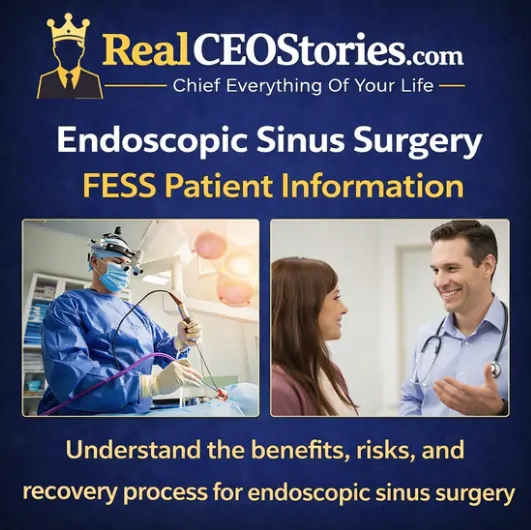
Endoscopic sinus surgery (FESS) is a surgical procedure used to treat chronic sinusitis and nasal polyps that do not respond to medical therapy. The surgeon uses a small camera (endoscope) and specialized instruments to open blocked sinus drainage pathways and remove polyps or infected tissue. Recovery time is typically 5 to 7 days off work, with full healing taking 4 to 6 weeks.
Key Takeaways
What is FESS: A minimally invasive procedure using a small camera through the nostril to open blocked sinuses.
Who needs it: Patients with chronic sinusitis or nasal polyps who have failed medical therapy (sprays, rinses, antibiotics).
Recovery time: 5-7 days off work; full healing 4-6 weeks.
Success rate: 80-90% of patients experience significant improvement.
Risks: Bleeding, infection, changes in smell (rarely, CSF leak or eye injury).
Disclaimer:This information is for educational purposes only and does not constitute medical advice. Individual results vary. Please consult a qualified health practitioner for personal advice about your condition.
What Is Endoscopic Sinus Surgery (FESS)?
Functional Endoscopic Sinus Surgery (FESS) is a surgical procedure used to treat chronic sinusitis and nasal polyps that do not improve with medical therapy.
The term “functional” means the goal is to restore normal function of the sinuses – specifically, to open blocked sinus drainage pathways so that mucus can drain properly and air can circulate.
The term “endoscopic” refers to the use of an endoscope – a thin, rigid tube with a small camera and light at the tip. The surgeon inserts the endoscope through the nostril and watches a high-definition video screen while operating.
Unlike traditional sinus surgery (which required external incisions and was more invasive), FESS is performed entirely through the nostrils with no external cuts or scars.
During FESS, the surgeon uses the endoscope to see inside the nasal passages and sinus cavities. Specialized instruments are inserted through the nostril alongside the endoscope to:
Procedure
What It Does
Uncinectomy
Removes a small hook of bone that blocks the maxillary sinus opening
Middle meatal antrostomy
Enlarges the natural opening of the maxillary sinus (cheek sinus)
Ethmoidectomy
Removes thin bone partitions to open the ethmoid sinuses (between the eyes)
Frontal sinusotomy
Opens the frontal sinus drainage pathway (forehead sinus)
Sphenoidotomy
Opens the sphenoid sinus (deep behind the nose)
Polypectomy
Removes nasal polyps
Turbinate reduction
Reduces the size of enlarged turbinates (if needed)
The specific combination of procedures depends on which sinuses are affected, as seen on the patient’s CT scan.
Who Is a Candidate for FESS?
FESS is recommended for patients who meet all three of the following criteria:
1. Confirmed Diagnosis of Chronic Sinusitis or Nasal Polyps
Symptoms lasting more than 12 weeks despite treatment
Confirmed by nasal endoscopy (pus, polyps, or blocked sinus openings)
CT scan shows sinus opacification or blocked drainage pathways
2. Failed Medical Therapy
The patient has tried optimal medical management for at least 4-8 weeks without adequate improvement, including:
Intranasal corticosteroid sprays (daily use)
Saline nasal rinses (daily or twice daily)
Prolonged antibiotics (3-4 weeks for chronic sinusitis)
Oral corticosteroids (short course for polyps)
3. Symptoms Significantly Affect Quality of Life
The patient experiences one or more of the following:
Frequent sinus infections (4+ per year)
Persistent nasal obstruction affecting sleep or daily activities
Chronic facial pain or pressure
Reduced sense of smell affecting appetite or safety
Your ENT doctor will discuss these risks before surgery. They are classified by how common they are.
Common (1-10% of patients)
Risk
Management
Bleeding
Most is minor; packing or cautery may be needed
Infection
Prevented with antibiotics; treated if occurs
Adhesions (scar tissue)
Prevented with saline rinses; may require in-office removal
Nasal congestion from swelling
Resolves with time and saline rinses
Uncommon (0.1-1% of patients)
Risk
Management
CSF leak (cerebrospinal fluid leak from brain base)
Repaired during surgery or later with lumbar drain
Eye injury (damage to eye muscle or optic nerve)
Rare; may require ophthalmology consultation
Change in sense of smell (worsening)
Rare; more common in patients with poor smell before surgery
Numbness of teeth or palate
Usually temporary (weeks to months)
Rare (<0.1% of patients)
Risk
Blindness (extremely rare, reported in medical literature)
Major bleeding requiring transfusion
Brain injury
Death (extremely rare, associated with anaesthesia, not surgery itself)
Note: The overall serious complication rate for FESS is less than 1% when performed by an experienced ENT surgeon.
Medical Management After FESS
FESS is not a “one-time cure.” Most patients need ongoing medical management after surgery to maintain results.
Post-Surgery Medications
Medication
Duration
Purpose
Saline nasal rinses
Twice daily for 4-6 weeks, then as needed
Cleanses sinuses, prevents adhesions
Nasal steroid spray
Long-term (months to years)
Prevents recurrence of inflammation
Antibiotics
1-2 weeks post-op
Prevents post-operative infection
Oral steroids
Short course if polyps recur
Reduces inflammation
Long-Term Management for Specific Conditions
Underlying Condition
Ongoing Treatment
Nasal polyps
Nasal steroid spray + possible biologic medications (dupilumab)
Allergic rhinitis
Antihistamines, allergy immunotherapy
AERD
Aspirin desensitization (specialist centre)
Asthma
Asthma management with respiratory physician
Frequently Asked Questions (FAQs)
General FAQs
Is FESS painful? The surgery is performed under general anaesthesia (no pain during). Mild to moderate discomfort during the first week of recovery is normal and managed with pain relief medication.
How long does FESS surgery take? Typically 1 to 3 hours, depending on how many sinuses are affected and whether polyps are present.
Will I have nasal packing after FESS? Some surgeons use soft silicone splints (removed at 1 week). Traditional gauze packing is less common now.
Can I blow my nose after FESS? No. Avoid nose blowing for the first 7-10 days. Blowing can cause bleeding or displace healing tissue.
When can I return to work after FESS? Office workers: 5-7 days. Physical jobs: 2-3 weeks.
Outcome FAQs
What is the success rate of FESS? 80-90% of patients experience significant improvement in symptoms after FESS.
Can chronic sinusitis come back after FESS? Yes, especially if underlying conditions (polyps, allergies, AERD) are not managed with ongoing medical therapy.
Will FESS improve my sense of smell? 60-75% of patients experience improvement in sense of smell. Full improvement may take 3-6 months.
How many sinus infections will I have after FESS? Most patients have 0-1 sinus infections per year after successful FESS (down from 4-6 per year before surgery).
Will I need revision surgery? 10-20% of patients require revision FESS within 5-10 years, particularly those with nasal polyps.
Recovery FAQs
When can I exercise after FESS? Light walking: 7 days. Heavy lifting: 2-3 weeks. Contact sports: 6 weeks.
Can I fly after FESS? Avoid flying for 2-4 weeks after surgery (air pressure changes can cause bleeding or pain).
When can I swim after FESS? Wait 4 weeks to allow complete healing. Swimming earlier increases infection risk.
When can I wear glasses after FESS? Immediately, if surgery did not involve the external nose. If you had septoplasty alone, glasses are fine.
Will I have black eyes after FESS? Mild bruising around the eyes occurs in some patients (usually resolves in 7-10 days).
Medication FAQs
Do I need antibiotics after FESS? Yes. Most surgeons prescribe 1-2 weeks of antibiotics to prevent post-operative infection.
How long do I need to use nasal steroid sprays after FESS? Long-term (months to years) to prevent recurrence of inflammation, especially if you have polyps.
Can I take ibuprofen for pain after FESS? No. Ibuprofen and other NSAIDs increase bleeding risk. Use paracetamol (Panadol) or prescribed pain relief instead.
What is the purpose of saline rinses after FESS? Saline rinses clean the sinuses, remove blood and debris, prevent adhesions (scar tissue), and promote healing.
How often should I do saline rinses after FESS? 3-4 times daily for the first 2 weeks, then twice daily for 4-6 weeks, then as needed.
Summary
Endoscopic sinus surgery (FESS) is a safe and effective procedure for patients with chronic sinusitis or nasal polyps who have not improved with medical therapy. The procedure uses a small camera through the nostril to open blocked sinus drainage pathways.
Recovery time is typically 5-7 days off work, with full healing taking 4-6 weeks. The success rate is 80-90%, and serious complications are rare (<1%). Long-term medical management (saline rinses, nasal steroid sprays) is usually required to maintain results.
For specific medical advice about your condition, please consult a qualified ENT doctor in Sydney such as Dr. Brett Leavers or another registered ENT specialist.