As a part-time SEO Specialist with 3 years of experience in keyword ranking, on-page optimization, and data-driven SEO strategies, Aubrey specializes in on-page SEO—focusing on improving organic performance through well-structured content and precise optimization. By aligning content with search intent, Aubrey strengthens website foundations that lead to faster, more stable rankings.
Chronic sinusitis is inflammation of the sinus cavities lasting 12 weeks or longer despite treatment. Common symptoms include nasal congestion, facial pressure, post-nasal drip, and reduced sense of smell. Treatment options begin with medical management (saline rinses, intranasal corticosteroids, antibiotics) and may progress to endoscopic sinus surgery (FESS) for patients who do not improve with medical therapy alone.
Key Takeaways
Definition: Sinus inflammation lasting more than 12 weeks, even with treatment.
Diagnosis: Nasal endoscopy (small camera through the nostril) and sometimes CT scan.
Treatment ladder: Medical management first (sprays, rinses, antibiotics). Surgery only if medical therapy fails.
When to see an ENT doctor: Symptoms persisting despite GP treatment, recurrent infections (4+ per year), or complications.
Disclaimer:This information is for educational purposes only and does not constitute medical advice. Individual results vary. Please consult a qualified health practitioner for personal advice about your condition.
What Is Chronic Sinusitis?
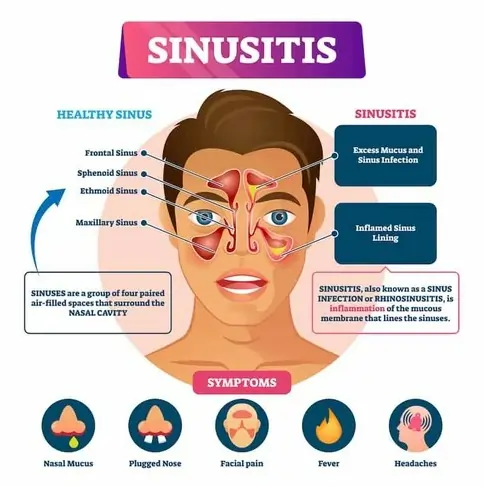
Chronic sinusitis is a condition where the sinus cavities become inflamed and swollen for 12 weeks or longer, even with appropriate medical treatment. The sinuses are air-filled spaces located in the bones of the face and skull:
Frontal sinuses: Above the eyes (forehead area)
Maxillary sinuses: Behind the cheekbones
Ethmoid sinuses: Between the eyes
Sphenoid sinuses: Deep behind the nose
In chronic sinusitis, the normal drainage of mucus from these cavities becomes blocked. This creates an environment where bacteria, viruses, or fungi can grow, leading to persistent symptoms.
Unlike acute sinusitis (which lasts less than 4 weeks and often follows a cold), chronic sinusitis persists for months and may require more intensive treatment.
Chronic Sinusitis vs. Acute Sinusitis: Key Differences
Feature
Acute Sinusitis
Chronic Sinusitis
Duration
Less than 4 weeks
More than 12 weeks
Common cause
Viral infection (cold)
Inflammation, polyps, deviated septum
Fever
Common
Rare
Facial pain
Severe, sharp
Mild to moderate, pressure-like
Nasal discharge
Thick, often coloured
Thin or thick, may be clear or coloured
Treatment
Short antibiotics (7-10 days), decongestants
Long-term medical management or surgery
Symptoms of Chronic Sinusitis
Patients with chronic sinusitis typically experience two or more of the following symptoms for at least 12 weeks:
Primary Symptoms
Nasal congestion or blockage (difficulty breathing through the nose)
Thick nasal discharge (yellow, green, or clear mucus)
Facial pressure or pain around the eyes, cheeks, or forehead
Reduced sense of smell (hyposmia) or complete loss (anosmia)
Secondary Symptoms
Post-nasal drip (mucus draining down the back of the throat)
Cough (often worse at night)
Bad breath (halitosis)
Ear fullness or pressure
Fatigue
Sore throat (from post-nasal drip)
Headache (dull, pressure-like)
Note: Symptoms may worsen with flying, swimming, or bending forward.
Causes of Chronic Sinusitis
Chronic sinusitis rarely has a single cause. It typically results from interacting factors that create persistent inflammation.
Common Causes
Cause
Explanation
Nasal polyps
Soft, non-cancerous growths that block sinus passages
Deviated nasal septum
The wall between nostrils is bent, blocking drainage
Enlarged turbinates
Bony structures inside the nose become too large
Allergic rhinitis
Allergies cause chronic nasal inflammation
Aspirin-exacerbated respiratory disease (AERD)
Aspirin sensitivity with asthma and polyps
Immune system disorders
Conditions like HIV or common variable immunodeficiency
Cystic fibrosis
Genetic disorder (more common in children)
Dental infections
Upper tooth infections spreading to maxillary sinuses
Fungal sinusitis
More common in patients with immune problems
Risk Factors
Asthma (present in 20-40% of chronic sinusitis patients)
Smoking or exposure to second-hand smoke
Frequent colds or viral infections
Swimming or diving (exposure to bacteria in water)
Structural abnormalities (narrow sinus passages)
Diagnosis of Chronic Sinusitis
An ENT doctor in Sydney will diagnose chronic sinusitis using the following approaches:
Past medical history (asthma, allergies, immune disorders)
Smoking history and occupational exposures
2. Nasal Endoscopy
This is the gold standard diagnostic procedure. The doctor passes a thin, flexible tube with a small camera and light through the nostril. It takes 1-2 minutes and causes mild discomfort but is not painful.
What the doctor looks for:
Pus or mucus in the sinus openings
Nasal polyps
Swollen or inflamed nasal lining
Structural abnormalities (deviated septum)
3. CT Scan of the Sinuses
A CT scan provides detailed, cross-sectional images of the sinuses. It is typically used when:
Surgery is being considered
Medical therapy has failed
Complications are suspected (infection spreading beyond sinuses)
The scan shows:
Blocked sinus openings
Thickened sinus lining
Fluid levels in the sinuses
Bone anatomy for surgical planning
4. Allergy Testing
If allergies are suspected, the doctor may recommend skin prick testing or blood tests (specific IgE) to identify triggers.
5. Swab for Culture
If the doctor sees pus during nasal endoscopy, a swab may be taken to identify the specific bacteria or fungus causing the infection.
Treatment Options for Chronic Sinusitis
Treatment follows a stepwise approach – starting with medical management and progressing to surgery only if medical therapy fails.
These symptoms may indicate a serious complication such as infection spreading to the eye, brain, or surrounding tissues.
Frequently Asked Questions (FAQs)
General FAQs
What is the main difference between acute and chronic sinusitis? Acute sinusitis lasts less than 4 weeks and often follows a cold. Chronic sinusitis lasts more than 12 weeks despite treatment.
Can chronic sinusitis go away on its own? Unlikely. Chronic sinusitis typically requires medical management or surgery to resolve.
Is chronic sinusitis contagious? No. The inflammation is not contagious, though the underlying cold or viral infection that triggers it may be.
Can allergies cause chronic sinusitis? Yes. Allergic rhinitis (hay fever) causes chronic nasal inflammation, which can lead to chronic sinusitis.
How is chronic sinusitis diagnosed? ENT doctors use nasal endoscopy (a small camera through the nostril) and sometimes CT scan.
Treatment FAQs
Can chronic sinusitis be cured without surgery? Yes. Many patients improve with medical management alone (saline rinses, nasal steroid sprays, antibiotics).
How long does medical treatment take to work? Nasal steroid sprays take 4-8 weeks for full effect. Antibiotics for chronic sinusitis are given for 3-4 weeks.
What is the success rate of sinus surgery? Studies show 80-90% of patients experience significant improvement after FESS.
Does private health insurance cover sinus surgery? Hospital cover typically covers most of the surgical fee. Check your policy for exclusions and gap payments.
Can chronic sinusitis come back after surgery? Yes, especially if underlying conditions (allergies, polyps, AERD) are not managed with ongoing medical therapy.
Lifestyle FAQs
Does smoking make chronic sinusitis worse? Yes. Smoking damages the cilia (hair-like cells) that clear mucus from the sinuses.
Can swimming cause sinusitis? Diving or swimming in chlorinated pools can irritate the sinuses. Bacteria in natural water bodies may cause infection.
Is chronic sinusitis linked to asthma? Yes. 20-40% of patients with chronic sinusitis also have asthma. Treating sinusitis often improves asthma control.
Can diet affect chronic sinusitis? No strong evidence. Staying hydrated helps thin mucus. Some patients report dairy worsens congestion, but evidence is mixed.
What is the best sleeping position for sinus drainage? Sleep with your head elevated (extra pillow) to promote mucus drainage from the sinuses.
Summary
Chronic sinusitis is persistent inflammation of the sinus cavities lasting more than 12 weeks. Symptoms include nasal congestion, facial pressure, post-nasal drip, and reduced sense of smell. Diagnosis involves nasal endoscopy and sometimes CT scan.
Treatment begins with medical management (saline rinses, intranasal corticosteroids, prolonged antibiotics) and may progress to endoscopic sinus surgery (FESS) for patients who do not improve with medical therapy alone.
For specific medical advice about your condition, please consult a qualified ENT doctor in Sydney such as Dr. Brett Leaversor another registered ENT specialist.