

Enhanced Games Results Key Takeaways
The latest Enhanced Games Results from Las Vegas have pushed swimming performance into uncharted territory, with Kristian Gkolomeev rewriting what is possible in the pool.
- Headline Enhanced Games Results show Kristian Gkolomeev shattering a Las Vegas sprint freestyle record under an openly enhanced framework.
- The format removes traditional anti-doping rules, intensifying global debate about safety, ethics and what counts as a legitimate sporting record.
- Australian reaction is deeply mixed, balancing our pride in clean competition with curiosity about performance science and athlete choice.
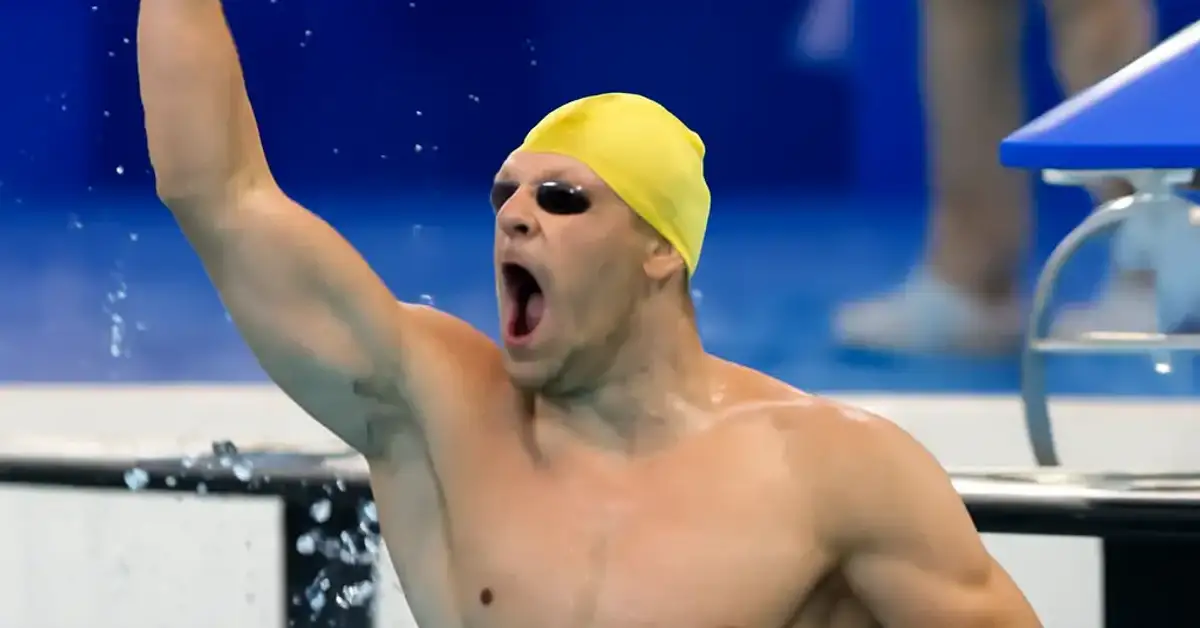
What Australians Should Know About Enhanced Games Results in Las Vegas
The inaugural wave of Enhanced Games Results from Las Vegas has landed like a bombshell in the sports world. In swimming, the standout headline is the Kristian Gkolomeev record in Las Vegas, where the Greek-born sprint specialist clocked a time that would eclipse conventional world records and reset expectations around human performance in the 50m freestyle.
Unlike traditional meets sanctioned by bodies such as World Aquatics or the International Olympic Committee, the Enhanced Games openly permit performance-enhancing methods that are banned elsewhere. That context is crucial when interpreting the Enhanced Games Las Vegas results, particularly for Australian viewers raised on a strong anti-doping culture through Swimming Australia and the Australian Sports Anti-Doping Authority (Sport Integrity Australia).
How the Enhanced Games Concept Changes the Meaning of Results
To understand why these Las Vegas performances matter, Australians first need clarity on what the Enhanced Games are aiming to do. They position themselves as a rival to the Olympics, promising no anti-doping testing, free use of medical and technological enhancement (within event rules), and a data-driven, entertainment-first product.
The central idea behind Enhanced Games Results
In theory, the Enhanced Games seek to answer one provocative question: how fast, strong or powerful could athletes be if the primary constraint was risk management rather than bans? That is the philosophical backdrop to the eye-watering times in the pool and on the track in Las Vegas, including Gkolomeev’s sprint breakthrough.
The organisers argue that transparency about enhancement is better than the cat-and-mouse game that has long dogged traditional sport. Critics counter that removing bans may normalise dangerous drug use, distort youth sport, and erode trust in any performance data that emerges from the competition.
Why these results feel different for Aussie fans
Australians have lived through our share of anti-doping controversies across swimming, NRL, AFL and athletics. Years of education campaigns and testing programs mean that fans here tend to equate “records” with carefully policed fairness. Against that backdrop, Enhanced Games Results from Las Vegas are less about who “won” and more about what kind of sporting world we want to support with our attention, money and kids’ aspirations. For a related guide, see NBA Schedule 2026: Full Fixtures, Game Times and Match Updates.
Breaking Down Kristian Gkolomeev’s Record in Las Vegas
Although the exact numbers and event conditions from Las Vegas are still being dissected, the core story is clear: the Kristian Gkolomeev record in Las Vegas in the 50m freestyle pushed beyond the official world-record range. For comparison, the long-standing men’s 50m freestyle world record in traditional competition sits at 20.91 seconds (César Cielo, 2009 super-suit era), with most recent elite times hovering just above 21 seconds.
Context for Gkolomeev’s performance
Gkolomeev is no unknown quantity. He has been a World Championships medallist and a 50m specialist on the conventional circuit. What makes the Las Vegas swim controversially compelling is that the Enhanced Games allow pharmacological and technological support tools that World Aquatics currently bans. So while the stroke rate, start reaction and underwater phase are impressive, they must be interpreted within that altered ruleset.
A comparison of Las Vegas and traditional records
For Australian readers trying to calibrate what this means, it helps to see the performance in relative terms, not as a direct one-to-one with Olympic marks. The table below offers a simplified snapshot of how to think about it.
| Record Type | Approximate Time Range (Men’s 50m Free) | Key Conditions |
|---|---|---|
| Traditional world record (World Aquatics) | ~20.9 seconds | Strict anti-doping, equipment regulations, testing before/after. |
| Recent Olympic-level finals | 21.0–21.4 seconds | Similar to world record framework, deep field, high pressure. |
| Gkolomeev Las Vegas record (Enhanced Games) | Faster than existing official world record | Open enhancement policy, alternative medical oversight, new event brand. |
This doesn’t invalidate the Enhanced Games Las Vegas results, but it does change how we log them mentally. Instead of “new human limit under standard rules”, they sit more in the category of “new frontier under a different ruleset”.
Five powerful performance highlights from Las Vegas
From an Australian high-performance perspective, five elements of Gkolomeev’s race and the broader meet stand out.
1. Start explosiveness
Reaction time and block power have always been central to 50m success. Footage and split data from Las Vegas indicate that Gkolomeev’s start was at the very top end of elite norms, suggesting targeted work on neuromuscular firing and strength development, whether enhanced or otherwise.
2. Stroke rate and efficiency
Even with the clock running faster than ever, stroke mechanics remained tidy. For swim coaches in Australia, this is a reminder that no amount of enhancement negates the fundamentals of technique, line and catch.
3. Underwater phase
The dolphin kicks off the start looked aggressive but controlled, maximising speed through the breakout. Enhanced strength or recovery tools may support that explosiveness, but the technical precision still reflects years of coaching and repetition.
4. Recovery between rounds
One of the most interesting aspects of the Enhanced Games Results is how athletes manage recovery across heats, semis and finals. Reports from Las Vegas described athletes using advanced recovery modalities and supplementation protocols in full view, providing a live case study in what open enhancement looks like in practice.
5. Psychological freedom and pressure
Several athletes, Gkolomeev included, have hinted that competing in an environment without traditional testing created a different mental state. Whether that translated to performance gains is hard to quantify, but it adds another variable to how we interpret this new record.
What Enhanced Games Results Could Mean for Sport and Performance Debates
The most important impact of these Las Vegas performances, including the Gkolomeev sprint, may be what they do to the wider conversation. Records are numbers; their meaning is negotiated socially, especially in countries like Australia where sporting identity is tightly bound to notions of fairness and “having a crack”.
Ethics, safety and informed consent
The Enhanced Games claim to rely on medical supervision and informed consent to manage risk. However, research summarised by organisations like the World Anti-Doping Agency shows that many performance-enhancing drugs can have long-term cardiovascular, hormonal and psychological impacts that are not always fully understood by athletes at the time of use.
For Australian policymakers and sports doctors, the question is whether an openly enhanced model can ever be genuinely safe, especially when it inevitably exerts pressure on younger athletes to keep up. Those concerns echo long-running debates in sports medicine journals and at conferences hosted by groups such as the Sport Integrity Australia.
Legitimacy and record-keeping
Another contested area is how to treat Enhanced Games Results in record books. Should Gkolomeev’s Las Vegas sprint sit in the same conversation as world records set under strict anti-doping bans? Many federations and statisticians will likely treat Enhanced Games times as a separate category, similar to how “super-suit” era swims are recorded with an asterisk or contextual note.
Commercial and media consequences
If Enhanced Games broadcasts gain traction, traditional federations may feel pressure to loosen rules or emphasise technology and spectacle in their own events. That could influence everything from swimsuit regulations to how much biometric data is shared on live TV. Australian broadcasters, who already jostle for rights across NRL, AFL, cricket and Olympic coverage, may eventually face decisions about whether to showcase enhanced competitions alongside conventional ones.
Australian Reaction to Enhanced Games: Culture, Values and Future Pathways
The Australian reaction to Enhanced Games is far from uniform. Among athletes, coaches, fans and parents, there are at least four distinct camps emerging.
1. The purists
This group sees Las Vegas as a line that should not be crossed. For them, our proud history of “clean” champions—from Ian Thorpe and Susie O’Neill to Ariarne Titmus and Emma McKeon—represents something worth defending. In this lens, the Enhanced Games Las Vegas results are more science experiment than sport.
2. The curious pragmatists
Some Australian high-performance professionals are watching closely, not because they want to adopt open enhancement, but because the data may shed light on what different interventions actually do. They see value in observing Gkolomeev’s splits, recovery metrics and season-long health outcomes, even if they reject the competition model.
3. The libertarians
A smaller but vocal camp argues that adults should be free to choose their own risk profile. For these Australians, the key is transparency, regulation and medical oversight. They frame the Enhanced Games Results as a new category of sport, coexisting with but clearly distinct from the Olympics or Commonwealth Games.
4. The next generation
Perhaps the most important group is young athletes and parents watching from suburban pools and school ovals. Their perceptions of what it takes to “make it” will shape participation and wellbeing for decades. If enhanced records become the norm on social media highlight reels, pressure on juniors could intensify, even if Australian systems remain officially “clean”.
How Enhanced Games Results Might Influence Australian Sport
Whether or not Australian athletes ever compete at the Enhanced Games in large numbers, the Las Vegas outcomes will likely ripple through our sporting ecosystem.
Impacts on coaching and high-performance programs
Elite Australian programs in swimming, cycling and athletics will study Las Vegas data to refine training. Not to copy enhancement regimes, but to see which aspects of the performances might be achievable through legal means—better strength periodisation, smarter recovery, or more individualised nutrition.
Governance and integrity frameworks
Local sporting bodies may respond to Enhanced Games Results by tightening their own education campaigns and clarity around banned substances. Expect renewed emphasis on transparent supplement use, clear communication of testing protocols, and stronger support for whistleblowers who flag doping concerns.
Fan engagement and broadcast choices
Australian broadcasters and streaming platforms will be watching audience reaction to Gkolomeev’s record and similar performances. If young viewers flock to enhanced content, rights deals and sponsorship dollars could gradually follow. Conversely, if the majority of fans reject the premise, Enhanced Games coverage may remain a niche product in this market. For a related guide, see DeAaron Fox News Today: Latest Game Reactions and Updates.
Looking Ahead: The Future of Enhanced Games Results and Australian Sport
Gkolomeev’s stunning sprint in Las Vegas might be remembered as a turning point, not only for the Enhanced Games but for how we think about human limits in general. For Australians, the key is to engage with the data and debate without losing sight of the health, fairness and community values that underpin our sporting culture.
Future Enhanced Games Results will almost certainly push performance even further. The question for Australia is not just whether we recognise those marks as records, but whether we want our athletes, kids and competitions to be part of that experiment. For now, the safest approach is to treat the Kristian Gkolomeev record in Las Vegas as a powerful case study—an impressive feat inside a different ruleset that can inform our thinking, without dictating our direction.
Useful Resources
For readers who want to dive deeper into the ethics and science around performance enhancement and anti-doping, these independent resources are a solid starting point:
- World Anti-Doping Code overview by WADA – explains how traditional sport defines and enforces anti-doping rules worldwide.
- Sport Integrity Australia anti-doping resources – outlines Australia’s framework, education tools and support services.
Frequently Asked Questions About Enhanced Games Results
Are Enhanced Games Results officially recognised world records?
No. At this stage, Enhanced Games Results are not recognised as official world records by traditional governing bodies like World Aquatics, World Athletics or the International Olympic Committee. Those organisations maintain their own record lists based on strict anti-doping rules, so Enhanced Games performances are generally treated as a separate category.
How fast was Kristian Gkolomeev in the Las Vegas 50m freestyle?
Reports from Las Vegas indicate that the Kristian Gkolomeev record in Las Vegas over 50m freestyle was faster than the existing official men’s world record benchmark of 20.91 seconds. Exact timing details and verification protocols are still being reviewed, but the key point is that his swim pushed beyond the conventional world-record range.
Why are Enhanced Games Las Vegas results so controversial?
The Enhanced Games Las Vegas results are controversial because the event removes traditional anti-doping bans and allows open enhancement under medical oversight. Critics say this could normalise risky drug use and distort ideas of fairness, while supporters argue it is more honest than the current cat-and-mouse doping environment in some sports.
Can Australian athletes compete at the Enhanced Games?
In principle, Australian athletes could choose to compete at the Enhanced Games if invited or selected, but doing so could create conflicts with their national federations or the Australian Olympic Committee. Many governing bodies may see participation as incompatible with their integrity policies, so athletes would need to consider eligibility consequences for traditional events.
Do Enhanced Games provide anti-doping testing at all?
No, the core premise of the Enhanced Games is to remove anti-doping bans as they exist in traditional sport. Instead, they emphasise medical supervision and informed consent. This is a major reason why sport integrity agencies, including those in Australia, are cautious about how these events might affect athlete wellbeing.
How should Australian fans interpret Enhanced Games swimming times?
Australian fans should view Enhanced Games swimming times as impressive performances achieved under a different ruleset, rather than as direct equivalents to Olympic or World Championships results. They can be interesting for understanding what might be possible with open enhancement, but they sit in a separate conceptual category from records set in tested competitions.
Could Enhanced Games Results influence junior sport in Australia?
There is concern that high-profile Enhanced Games Results could indirectly influence junior sport by shifting perceptions of what is “normal” for elite performance. Even if Australian junior pathways remain strictly anti-doping, social media highlights from enhanced events could create unrealistic expectations or pressure around body image, size and speed.
What safety measures do Enhanced Games claim to have in place?
The Enhanced Games say they rely on medical screening, ongoing monitoring and full disclosure of enhancement methods to manage risk. However, independent experts point out that long-term effects of many performance-enhancing drugs are not fully understood, and there is limited public information on exactly how these safety protocols operate in practice.
Will Australian broadcasters show Enhanced Games events?
Australian broadcasters have not made firm public commitments about airing Enhanced Games competitions. Decisions will likely depend on viewer interest, commercial viability and alignment with network values. If ratings and streaming numbers look strong internationally, some local platforms may test the waters with highlights or delayed coverage.
How might Enhanced Games Results affect traditional record progression?
Traditional records will continue to be tracked within existing anti-doping frameworks. However, spectacular Enhanced Games Las Vegas results could psychologically reframe what coaches and athletes believe is possible, potentially inspiring more aggressive but still legal approaches to strength, recovery and technique in conventional sport.
Are Enhanced Games legal in Australia?
Hosting or promoting an Enhanced Games-style event in Australia would need to comply with local laws around medications, controlled substances, occupational health and safety, and advertising. While there is no specific “Enhanced Games law”, authorities would likely scrutinise any event that appears to normalise the non-medical use of performance-enhancing drugs.
Could Enhanced Games create a separate category of sport long-term?
It is possible that Enhanced Games will evolve into a stable, separate category of competition, similar to how combat sports or motorsport accept higher risk profiles. Whether that happens will depend on sustained athlete participation, fan interest, financial backing and the ability to demonstrate credible safety and governance over time.
What is the Australian reaction to Enhanced Games so far?
The Australian reaction to Enhanced Games is mixed. Many athletes and fans express strong opposition on ethical and safety grounds, while a minority are cautiously curious about the scientific and performance insights. Sporting organisations and integrity bodies have generally emphasised their ongoing commitment to clean, tested competition.
Do Enhanced Games Results affect Olympic qualification or selection?
Enhanced Games performances currently do not count toward Olympic qualification or national selection standards. Most selection policies, including those used by Australian federations, only recognise times or distances recorded at approved, tested events that comply with international governing body rules.
How should parents talk to young athletes about Enhanced Games?
Parents can frame Enhanced Games as one experiment in sport, emphasising that Australia’s official pathways remain grounded in health, fairness and long-term wellbeing. It helps to highlight role models who have succeeded without enhancement and to discuss potential risks of performance drugs in age-appropriate, evidence-based terms.
Could Enhanced Games push traditional sport to relax anti-doping rules?
Most experts think it is unlikely that mainstream sport will dramatically relax anti-doping rules in response to Enhanced Games Results. Instead, traditional bodies may double down on education, testing and transparency to reinforce the value of clean competition, even as they monitor what happens in enhanced environments.
What role might sports science in Australia play in this debate?
Australian sports scientists are well placed to provide nuanced commentary, separating hype from evidence. They can analyse Enhanced Games data, explain the probable impact of different substances or technologies, and propose safer, legal ways to optimise performance in conventional programs without crossing ethical lines.
Are there historical precedents for split sporting systems like this?
Yes. Sport has long accommodated parallel systems with different risk and rules—think of professional boxing vs. amateur boxing, or fuel and speed regulations in motorsport. The Enhanced Games could become another example of a high-risk, high-spectacle branch, while traditional federations maintain stricter standards.
What should Australian clubs do if members express interest in Enhanced Games?
Australian clubs should be ready with clear policies and education. That means explaining the organisation’s stance on enhancement, outlining potential eligibility impacts for traditional competitions, and directing athletes to credible health and integrity resources. Open, non-judgemental conversations are more effective than silence or stigma.
How might insurance and liability work for Enhanced Games athletes?
Insurance and liability are complex because many performance drugs carry known health risks. Policies may exclude coverage for harm resulting from non-prescribed or performance-only use of substances. Athletes considering enhanced competition should seek independent legal and medical advice before signing contracts or waivers.