

Papua New Guinea Chiefs Key Takeaways
Papua New Guinea Chiefs are cultural anchors and political influencers whose voices increasingly shape debates on governance, land, resources, and social services. Listening to their views reveals how national policies affect everyday village life.
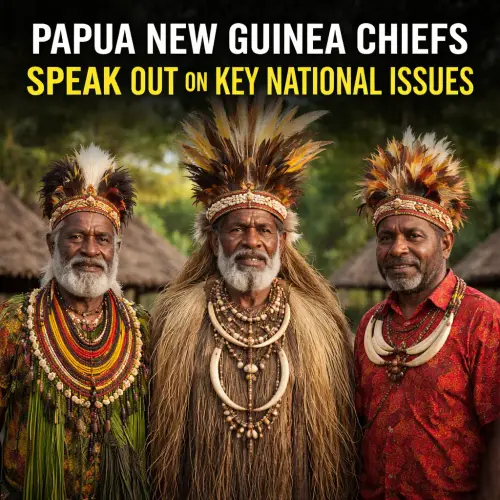
Why Papua New Guinea Chiefs Still Matter in Today’s National Debate
Across Papua New Guinea’s villages and towns, Papua New Guinea Chiefs remain the first point of contact for conflict resolution, community planning, and cultural guidance. While the modern state operates through parliament, courts, and public service, chiefs carry moral authority and deep knowledge of customary law. For a related guide, see Rugby League 2026: Key Matches, Results, and Breaking News.
When Papua New Guinea chiefs perspectives on national issues are taken seriously, policies on land, resource extraction, education, and health tend to be more practical and more widely accepted. Ignoring these voices, on the other hand, often leads to mistrust, disputes, and project delays on the ground.
Governance and Leadership: Papua New Guinea Chiefs on Accountability
In many regions, chiefs describe governance not just as elections and laws, but as a relationship of trust between leaders and people. They often contrast customary leadership duties with the behavior of some modern politicians.
Customary authority versus political power
Several chiefs interviewed in highlands and coastal areas have stressed that a chief’s authority is earned through service, fairness, and respect for clan consensus. They argue that national leaders should be guided by similar principles, highlighting that in traditional settings, a chief who repeatedly abuses power can lose standing or be replaced. For a related guide, see NBA Playoffs 2026: Schedule, Matchups and Key Predictions Revealed.
One widely expressed view is that stronger cooperation is needed between local-level governments and traditional leaders. Chiefs want clear roles in district and provincial planning processes, not just ceremonial participation. For a related guide, see Michael Masi: Latest News and His Impact on Formula 1.
Calls for transparency and anti-corruption
Many chiefs openly criticize corruption and misuse of public funds, saying these practices undermine community trust. They favor public reporting of district funds, inclusive ward meetings, and better oversight of local contractors. In their view, transparent governance mirrors traditional expectations where community wealth and land are managed for the collective good, not individual gain.
Land Rights and Customary Ownership: Core Concerns of Papua New Guinea Chiefs
Land is at the heart of Papua New Guinea chiefs perspectives on national issues. With over 90% of land under customary ownership, chiefs see themselves as caretakers of ancestral territory for future generations.
Defending customary land from exploitation
Chiefs frequently speak out about the risks of long-term land leases, unclear contracts, and missing consent from landowners. They highlight cases where communities signed documents they did not fully understand, leading to loss of control or environmental damage.
Many chiefs advocate for stronger legal safeguards around Free, Prior, and Informed Consent (FPIC), insisting that all clans with rights to the land must be consulted and properly informed in accessible language before any agreement is signed.
Balancing development and clan obligations
At the same time, chiefs recognize the need for roads, schools, and jobs. They often propose joint-venture models and landowner companies where benefits are shared more fairly among clans. Several have urged government agencies to provide neutral legal advice to landowning groups so they can negotiate with multinational companies on a more equal footing.
Resource Extraction: How Papua New Guinea Chiefs View Mining, Gas, and Forestry
From major mining projects to logging and gas development, resource extraction is one of the most sensitive areas where Papua New Guinea Chiefs are speaking more loudly.
Royalties, benefits, and fair distribution
Chiefs in resource-rich areas frequently argue that royalty payments and development levies do not reach all affected landowners. They call for more transparent benefit-sharing agreements, with clear lists of beneficiary clans and regular public reporting of payments.
Some chiefs advocate for direct community funds managed by representative committees under customary oversight, rather than relying entirely on intermediaries or distant administrators.
Environmental protection and long-term impacts
Chiefs often draw on traditional ecological knowledge to explain why rivers, forests, and reefs must be protected. They emphasize that tailings disposal, deforestation, and pollution threaten not only livelihoods but also spiritual and cultural sites.
Many chiefs support stronger environmental monitoring and independent impact assessments, suggesting that customary leaders should sit on local environment or project monitoring committees so that community concerns are heard early and consistently.
Cultural Preservation: Papua New Guinea Chiefs as Guardians of Identity
With more than 800 languages and countless cultural groups, Papua New Guinea Chiefs see themselves as guardians of diverse identities. They worry that rapid modernization and urban migration are eroding traditional practices.
Language, ceremony, and custom
Chiefs often stress the importance of maintaining local languages, initiation rites, traditional courts, and compensation practices. They argue that these cultural systems support peace, social cohesion, and respect for elders.
Many call for cultural education in schools, support for community festivals, and documentation of oral histories. In their view, development is only meaningful if it strengthens, rather than replaces, local identity.
Media, technology, and youth
Chiefs are increasingly aware of the influence of social media, television, and global culture on young people. Some welcome the opportunities for learning and connection, but they also warn about the loss of respect for elders and local norms.
They encourage partnerships between schools, churches, and traditional leaders to help youth navigate both modern and customary worlds, rather than being forced to choose one over the other.
Education and Health: Chiefs Linking Services to Everyday Realities
On education and health, Papua New Guinea chiefs perspectives on national issues are grounded in what they see and experience daily in villages and settlements.
Education: access, quality, and relevance
Chiefs consistently raise concerns about school fees, teacher shortages, poor infrastructure, and long walking distances. Many argue that education policy must consider local realities such as seasonal work, gardening, and customary obligations.
They often propose community partnerships for building and maintaining classrooms, while asking the state to supply trained teachers, materials, and transparent funding. Chiefs also support the inclusion of local history, environmental knowledge, and language in school curricula.
Health: rural clinics and traditional knowledge
Chiefs emphasize the need for functioning aid posts, reliable medicine supplies, and outreach programs on maternal health, malaria, tuberculosis, and immunization. They report that long travel distances and transport costs often prevent sick people from reaching health facilities in time.
Many chiefs advocate for respectful collaboration between biomedical services and traditional healers, arguing that both systems can complement one another when patients are properly informed and protected.
Climate Change and Environmental Stewardship: A Growing Focus for Papua New Guinea Chiefs
Climate change, once a distant concept, is now a daily reality for coastal, island, and highlands communities. Papua New Guinea Chiefs describe changes in weather patterns, sea-level rise, and shifting agricultural seasons.
Sea-level rise, disasters, and displacement
Island and coastal chiefs in particular speak about saltwater intrusion, erosion, stronger storms, and the slow loss of village land. They worry about where their people will move, how land disputes will be resolved, and how to maintain cultural ties to ancestral sites that may become uninhabitable.
They call for structured relocation plans led by both government and traditional leaders, with clear agreements about land, housing, and compensation for affected families.
Customary conservation and climate resilience
Many chiefs draw links between traditional conservation practices—tabu areas, seasonal bans, and clan-managed forests—and modern climate resilience. They argue that empowering customary management systems can protect biodiversity, stabilize local microclimates, and safeguard food security.
Chiefs often support locally driven reforestation, mangrove planting, and sustainable fishing rules, insisting that these efforts work best when rooted in local leadership and knowledge.
What These Chiefs’ Perspectives Mean for Papua New Guinea’s Future
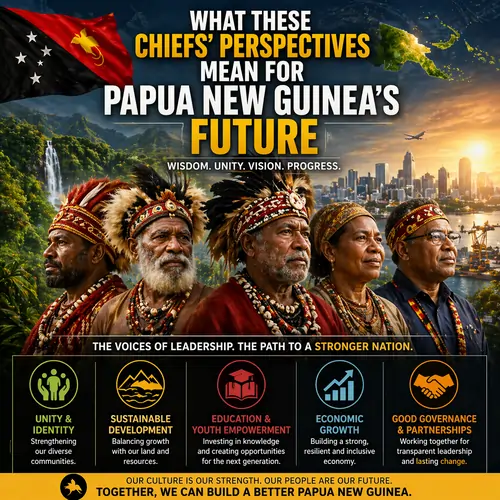
Across governance, land, resources, services, and climate, a common thread in Papua New Guinea chiefs perspectives on national issues is the desire for genuine partnership. Chiefs are not rejecting modern institutions; they are asking to co-lead development in a way that respects both constitutional law and kastom (custom).
For policymakers, this means designing consultation processes that are real rather than symbolic, recognizing customary authorities in planning and monitoring structures, and providing legal and technical support that empowers communities rather than sidelines them.
When the voices of Papua New Guinea Chiefs are integrated into national dialogue, policies gain cultural legitimacy, disputes can be resolved more peacefully, and development is more likely to reflect local priorities. The country’s future stability and prosperity may depend on how well state and traditional systems learn to work together.
Useful Resources
For readers seeking more background and data on governance, land, and traditional leadership in Papua New Guinea, the following resources offer useful context:
- World Bank country overview for Papua New Guinea – background on economic trends, development programs, and governance challenges.
- UN resources on indigenous peoples and customary governance – broader context on indigenous leadership, land rights, and participation in policy processes.
Frequently Asked Questions About Papua New Guinea Chiefs
Who are Papua New Guinea Chiefs and how are they chosen?
Papua New Guinea Chiefs are traditional leaders who gain authority through clan lineage, demonstrated wisdom, conflict resolution skills, and community respect. In some areas leadership is largely hereditary, while in others it is more performance-based, with elders and clan groups informally selecting those who best uphold custom and serve community interests.
What role do chiefs play in modern governance in Papua New Guinea?
Chiefs often mediate disputes, coordinate community projects, and represent village interests to local-level governments and district administrations. While they may not hold formal state positions, their endorsement or opposition can strongly influence whether government programs, elections, or development projects are accepted by communities.
How do Papua New Guinea chiefs influence land decisions?
Because most land is held under customary ownership, chiefs and clan leaders are central to decisions about leasing land, hosting projects, or resolving boundary disputes. They help identify rightful landowners, facilitate clan meetings, explain agreements in local language, and ensure that any proposed use of land is debated within the appropriate customary structures.
Why do Papua New Guinea Chiefs emphasize cultural preservation?
Chiefs see language, ceremonies, and customary law as the foundation of identity and social order. They believe that when cultural practices erode, communities face more conflicts, mistrust, and youth disconnection. By preserving culture, chiefs aim to maintain cohesion, respect for elders, and moral guidance even as communities engage with modern education and markets.
What concerns do chiefs have about resource extraction projects?
Chiefs commonly worry about unequal benefit sharing, long-term environmental damage, and the loss of control over customary land. They want clear agreements, transparent royalty payments, and credible monitoring of environmental impacts. Many also stress that all affected clans must be involved in negotiations, not just a few individuals or outside agents.
How are chiefs involved in resolving community conflicts?
Chiefs use customary law, mediation techniques, and compensation practices to manage disputes over land, marriages, injuries, and other local conflicts. They convene meetings, listen to all sides, and guide the community toward a collectively accepted settlement. This approach tends to focus on restoring relationships rather than punishing individuals.
Do Papua New Guinea Chiefs support formal education for children?
Most chiefs strongly support access to quality schooling, seeing education as essential for navigating modern life, employment, and leadership roles. At the same time, they want schools to respect local languages and customs, and they encourage curricula that integrate local history, environmental knowledge, and cultural values alongside national standards.
What do chiefs say about health services in rural areas?
Chiefs frequently report shortages of medicine, staff, and functioning infrastructure in rural clinics and aid posts. They call for more consistent supplies, better roads for emergency transport, and regular outreach by health workers. Many also advocate for dialogue between health staff and traditional healers to build trust and encourage patients to seek timely care.
How is climate change affecting the priorities of Papua New Guinea Chiefs ?
Climate change has pushed chiefs, especially in coastal and island communities, to focus on sea-level rise, erosion, and saltwater intrusion. They are increasingly involved in planning for relocation, disaster response, and environmental conservation. Chiefs use their customary authority to organize mangrove planting, protect vulnerable areas, and negotiate land for displaced families.
Are traditional chiefs formally recognized by the Papua New Guinea government?
Recognition varies by region and legal framework. Some provinces have mechanisms that acknowledge traditional leaders in local-level government structures or advisory councils, while elsewhere chiefs are influential mainly through custom and community consent. Many observers argue that clearer legal recognition could improve coordination between state and customary systems.
How do Papua New Guinea chiefs view corruption and misuse of public funds?
Chiefs often condemn corruption as a betrayal of community trust and a violation of both Christian and customary values. They argue that leaders who misuse funds weaken services and fuel resentment. Many chiefs call for public meetings to explain budgets, stronger oversight bodies, and the involvement of respected elders in monitoring local projects and spending.
Can women be recognized as chiefs in Papua New Guinea?
In some matrilineal societies and specific regions, women hold significant customary authority and may be recognized as chiefs or senior clan leaders. In other areas leadership roles are more male-dominated, though influential women often guide decisions behind the scenes. There is a gradual increase in recognition of women’s formal and informal leadership across both customary and state structures.
How do chiefs communicate community views to national leaders?
Chiefs use multiple channels, including meetings with local members of parliament, participation in provincial forums, engagement with churches and civil society, and occasional national conferences or submissions. They also work with NGOs, researchers, and media to highlight community experiences and influence broader policy debates.
What challenges do Papua New Guinea Chiefs face in the modern era?
Chiefs face pressures from rapid social change, urban migration, cash economies, and shifting values among youth. Competing power centers such as businesses, political patrons, and external organizations can undermine traditional authority. Chiefs must also navigate conflicts of interest when they are involved in resource projects, trying to balance community welfare with new economic opportunities.
How do chiefs help manage disputes over royalties and resource benefits?
Chiefs help map out which clans hold rights to land and resources, convene meetings to discuss distribution formulas, and mediate disputes when some members feel excluded. They may create or support landowner associations and ensure that benefit-sharing arrangements align with customary principles of fairness and recognition of all legitimate claimants.
In what ways do chiefs support youth and employment opportunities?
Chiefs often encourage youth to pursue education, vocational training, and small business opportunities, while also involving them in community work and cultural events. They may negotiate with companies or government programs to secure apprenticeships, local hiring commitments, or training schemes that give young people pathways into formal employment.
Do Papua New Guinea Chiefs engage with churches and religious leaders?
Yes, chiefs frequently collaborate with pastors and church organizations, as churches provide education, health services, and spiritual guidance across much of the country. Chiefs and religious leaders often coordinate on community priorities, conflict resolution, and social issues such as violence, alcohol abuse, and youth outreach.
How do chiefs view the relationship between kastom and national law?
Many chiefs see kastom and national law as complementary but sometimes poorly aligned. They prefer solutions that respect both systems, such as using customary mediation before formal courts or incorporating recognition of customary rights into legislation. When conflicts arise, they advocate for dialogue and legal reforms that better reflect local realities and historical land use.
Why is it important to include Papua New Guinea chiefs perspectives on national issues in policy making?
Including chiefs in policymaking enhances legitimacy, improves local implementation, and reduces the risk of disputes or project failure. Chiefs bring deep knowledge of land, culture, and community dynamics that technocratic plans may overlook. When Papua New Guinea Chiefs are genuinely heard, policies are more likely to be culturally appropriate, sustainable, and supported by the people they aim to serve.
How can citizens and organizations respectfully engage with Papua New Guinea Chiefs ?
Respectful engagement starts with recognizing local protocols, seeking introductions through community members, and allowing enough time for collective decision-making. Visitors and organizations should provide clear information in accessible language, listen actively to concerns, and avoid pressuring chiefs into rushed agreements. Building long-term relationships based on trust and transparency is essential.