

Jack Purcell Meats Enters Liquidation Key Takeaways
When Jack Purcell Meats Enters Liquidation after 70 years of trading, it sends a clear warning signal to family-owned food producers and local suppliers everywhere.
- The Jack Purcell Meats Enters Liquidation story reveals how rising costs, tighter margins, and slow adaptation can undermine even trusted regional meat processors.
- Employees, livestock suppliers, logistics partners, and local retailers all face immediate disruption and potential financial losses.
- Similar family-run meat businesses should treat this case as a prompt to stress-test finances, modernise operations, and diversify customer channels.
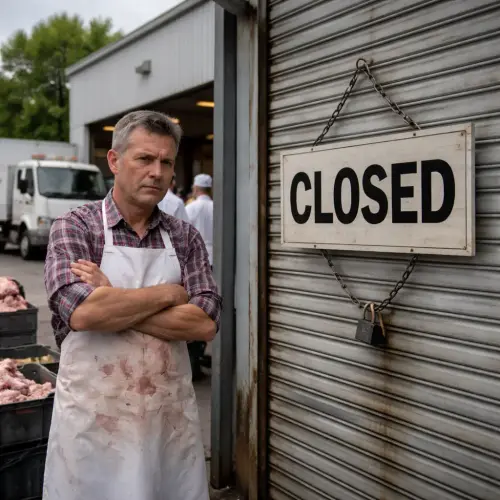
What Readers Should Know About Jack Purcell Meats Enters Liquidation
The news that Jack Purcell Meats has entered a formal insolvency process marks the end of an era for a business that helped supply meat to local butchers, hospitality operators, and households for decades. For many in the regional food chain, Jack Purcell Meats liquidation news is more than a headline; it is a real disruption to jobs, supply contracts, and long-standing business relationships.
While each insolvency case is unique, the closure of a business with 70 years in business Jack Purcell Meats behind it offers practical lessons. It shows what can go wrong when market conditions shift faster than a traditional processing business can adapt its cost base, product mix, and routes to market.
How Jack Purcell Meats Built Its Reputation Over 70 Years in Business
To understand why Jack Purcell Meats Enters Liquidation matters, it helps to step back and look at how the company positioned itself over time. Established in the post-war era, the company reportedly grew from a small, locally focused operation into a recognised regional supplier of fresh and processed meat products. For a related guide, see A.H. Beard Administration: 5 Powerful Insights on Job Cuts.
Over those seven decades, Jack Purcell Meats typically played several roles in the supply chain: sourcing livestock from nearby farms, processing carcasses to wholesale standards, and supplying butchers, caterers, supermarkets, and foodservice operators. In many communities, businesses like this form a key link between primary producers and end consumers.
The historical role of regional meat processors
Regional meat processors like Jack Purcell Meats have traditionally offered three main benefits:
- They give small and medium farms a reliable outlet for livestock at negotiated prices.
- They provide local retailers with flexible, often custom, cuts and pack sizes.
- They help keep more of the food value chain – and associated employment – within the local economy.
It is precisely because of this central role that the announcement that Jack Purcell Meats Enters Liquidation is being followed so closely by producers, retail buyers, and employees.
Key Pressures That Likely Drove Jack Purcell Meats Enters Liquidation
While exact financial details are typically disclosed through formal insolvency filings, several well-known industry pressures help explain why a long-standing company might reach the point where Jack Purcell Meats Enters Liquidation becomes unavoidable.
| Pressure Area | How It Affects Meat Processors | Risk Lesson for Similar Businesses |
|---|---|---|
| Input costs | Higher livestock, feed, energy, and transport costs compress margins. | Lock in supply contracts where possible and review pricing more frequently. |
| Labour and compliance | Rising wages, training, and regulatory compliance costs increase overheads. | Invest in efficiency and digital compliance tools to reduce manual burden. |
| Consumer trends | Shifts to plant-based, leaner cuts, or premium provenance can change demand patterns. | Diversify product lines and respond quickly to changing consumer preferences. |
| Customer concentration | Dependence on a small number of major wholesale or retail accounts raises exposure. | Spread risk across multiple customer types and sales channels. |
| Debt and cash flow | High leverage and late payments can trigger liquidity crises. | Stress-test debt levels and keep robust cash-flow forecasting. |
Rising operating costs and squeezed margins
Meat processing is capital-intensive and margin-sensitive. In recent years, many operators have faced sharp increases in livestock prices, energy, refrigeration, and transport costs. Industry analyses from organisations such as the UK Agriculture and Horticulture Development Board (AHDB) and the OECD-FAO Agricultural Outlook (FAO/OECD) note the volatility in global meat prices and input costs.
If a business cannot pass these increased costs on to customers through higher prices or improved efficiency, profitability can erode quickly. For a firm like Jack Purcell Meats, a sustained period of compressed margins could be a key factor leading to the point where Jack Purcell Meats Enters Liquidation becomes the last resort.
Changing consumer habits and product demand
Consumer purchasing has shifted noticeably in the past decade. More shoppers are:
- Reducing overall meat consumption, or trading down to cheaper cuts.
- Seeking out premium, fully traceable, or organic meat products.
- Experimenting with plant-based or blended protein alternatives.
Operators that do not adapt their offer – for example by improving provenance labelling, expanding into value-added products like marinated or ready-to-cook lines, or targeting niche segments – can see legacy product ranges lose relevance. If 70 years in business Jack Purcell Meats brought stability, it may also have made rapid pivots more difficult.
Customer concentration and credit risk
Many regional processors depend heavily on a few large accounts. If one major supermarket, hospitality chain, or distributor renegotiates terms, switches supplier, or pays slowly, cash flow can be destabilised. When trade credit insurance is tightened or overdraft facilities are reduced, the ability to absorb delayed receipts shrinks.
In that environment, a business like Jack Purcell Meats could face a squeeze in working capital, leading from overdue invoices to creditor pressure, and eventually, to the reality that Jack Purcell Meats liquidation news must be formally announced.
Five Risky Lessons From Jack Purcell Meats Enters Liquidation
The case of Jack Purcell Meats Enters Liquidation offers several practical risk lessons for owners, managers, and lenders in the meat and broader food-processing sector.
1. Longevity is not a safety net
Being in operation for decades creates brand value and know-how, but it does not shield a business from structural change. The fact that there were 70 years in business Jack Purcell Meats before this point shows that even long-established firms must continue to reassess their business model, margin structure, and capital needs.
2. Watch the margin, not just the top line
Food producers sometimes chase volume to keep plants running at capacity, hoping to spread fixed costs over more output. If contracts are priced too aggressively, however, volume growth can deepen losses instead of covering overheads. Regulators and insolvency practitioners frequently flag under-priced contracts as a silent risk factor when they review failed processors.
3. Diversify both products and customers
Putting too much reliance on a narrow product range or a small cluster of wholesale buyers can be dangerous. The story behind Jack Purcell Meats liquidation news underlines the importance of:
- Serving multiple customer segments (retail, foodservice, export, online direct-to-consumer).
- Balancing commodity products with higher-margin, value-added lines.
- Exploring co-packing or private-label manufacturing to use spare capacity.
4. Keep compliance and reputation tightly managed
Meat businesses operate under intense scrutiny for hygiene, animal welfare, labelling accuracy, and environmental impact. Any regulatory breach or reputational issue can rapidly damage customer confidence and trigger costly remedial actions. Investing in robust quality-control systems, traceability, and staff training can make the difference between a manageable setback and a serious commercial shock.
5. Act early when financial stress appears
Many owners wait too long to seek advice from turnaround specialists, lenders, or insolvency professionals. Early action can sometimes secure time-to-pay arrangements with tax authorities, renegotiate banking covenants, or sell non-core assets. Once trade creditors withdraw support and cash runs critically low, as appears to have happened before Jack Purcell Meats Enters Liquidation, options narrow sharply. For a related guide, see Australia Cash Out Day: 7 Powerful Positive Trends Revealed.
Impact of Jack Purcell Meats Enters Liquidation on Jobs, Suppliers, and the Community
When a regional processor like Jack Purcell Meats closes, the effects ripple outward. The immediate concern is staff, but the consequences go much further across the local economy.
Employees and local skills base
Direct employees face redundancy, unpaid overtime or commission, and uncertainty about future work. Meat processing requires specialist skills – from butchery to food safety and logistics coordination – and these workers may or may not be able to find equivalent roles nearby.
Local training providers and colleges that collaborate with employers in the sector may also see apprenticeship opportunities drop, weakening the future skills pipeline.
Farmers, livestock suppliers, and contractors
Suppliers who relied on Jack Purcell Meats for regular livestock purchases or processing services must now quickly identify alternative outlets. For smaller farms, switching to new abattoirs or processors can involve longer transport, different grading standards, and new contract terms.
Ancillary service providers – from hauliers to maintenance contractors – may face unpaid invoices and lost future business, adding extra strain to rural economies already dealing with volatility.
Retailers, hospitality, and end customers
Independent butchers, caterers, and hospitality venues that purchased from Jack Purcell Meats must adjust sourcing at short notice. That may mean:
- Higher prices from alternative suppliers.
- Changes to product specification or pack sizes.
- Temporary shortages of certain cuts or processed items.
Over time, end consumers may notice changes in the origin of their meat, menu pricing, or the availability of locally branded products that previously originated from the Jack Purcell Meats facility.
What Happens Next in the Jack Purcell Meats Enters Liquidation Process?
Once administrators or liquidators have been appointed, the Jack Purcell Meats Enters Liquidation process typically follows a structured path aimed at maximising returns to creditors and, where possible, preserving value.
Asset realisation and possible business sale
In many food-sector insolvencies, practitioners first explore a going-concern sale: transferring the business, stock, and some or all of the workforce to a new owner. If that proves unviable, assets such as plant, machinery, vehicles, and property are sold separately.
Prospective buyers – including competitors, investors, or management teams – may see an opportunity to revive parts of the operation under a leaner cost base or different strategy, but there is no guarantee of such an outcome.
Creditor claims and priorities
Creditors will be invited to submit claims, which are then ranked according to insolvency law. Secured lenders, employees (for certain entitlements), HMRC or equivalent tax authorities, and unsecured trade creditors may each see different recovery levels. Detailed information usually emerges via statutory reports issued by the appointed insolvency practitioners.
Signals for similar businesses in the meat and food sector
For other owners and boards, Jack Purcell Meats liquidation news should be treated as a signal to review risk exposure. Key actions might include:
- Running downside cash-flow scenarios based on lower volumes or higher input costs.
- Revisiting pricing and contract structures with major accounts.
- Benchmarking operational efficiency against industry peers.
- Planning for succession and leadership renewal where founders are nearing retirement.
The overarching message is that proactive change is usually cheaper – and far less disruptive – than forced restructuring through insolvency.
Useful Resources
For readers wanting deeper context on industry pressures and insolvency processes in the food sector, these independent resources are helpful starting points:
- UK Government guidance on what happens when a company becomes insolvent – clear, official explanations of liquidation, administration, and creditor rights.
- IFC and World Bank resources on agribusiness risk and finance – broader analysis of the structural challenges facing agricultural and food-processing enterprises.
Frequently Asked Questions About Jack Purcell Meats Enters Liquidation
Why did Jack Purcell Meats enter liquidation after so many years in business?
While full financial details are disclosed only in formal insolvency filings, the decision for a long-established company like Jack Purcell Meats to enter liquidation typically reflects a mix of factors: sustained cost pressures, margin erosion, potential loss or change of key customers, and limited access to fresh capital or banking support. When these pressures converge and cash flow cannot meet creditor demands, directors may have no realistic alternative but to place the company into liquidation to protect creditors’ interests.
What does it mean in practice when Jack Purcell Meats enters liquidation?
When Jack Purcell Meats enters liquidation, control of the company’s affairs passes from the directors to appointed insolvency practitioners, often called liquidators. Their role is to secure and realise the company’s assets, investigate the circumstances of the failure, distribute funds to creditors in the correct legal order, and ultimately wind up the company. Trading may cease immediately or continue briefly if doing so preserves value for a potential buyer.
Will employees of Jack Purcell Meats lose their jobs?
In many liquidations, most or all employees are made redundant unless a buyer quickly acquires the business as a going concern. Staff at Jack Purcell Meats can usually claim certain entitlements, such as redundancy pay and unpaid wages or holiday, from government-backed schemes where local law provides them. The exact outcome will depend on whether parts of the business are sold and whether any buyer agrees to take on existing staff. For a related guide, see Microsoft Share Price Analysis: Trends, Risks, and Opportunities.
How are local farmers and livestock suppliers affected by the liquidation?
Farmers and livestock suppliers who sold animals or services to Jack Purcell Meats may find themselves as unsecured creditors for any unpaid invoices. They also need to secure alternative outlets for future livestock, which can mean longer journeys, new grading arrangements, and potentially different prices. For some smaller farms, the sudden loss of a familiar buyer can put considerable pressure on cash flow and long-term planning.
Can customers still receive orders from Jack Purcell Meats after liquidation starts?
Once liquidation begins, continued trading is only possible if liquidators decide that fulfilling limited orders will increase the return to creditors, for example by clearing perishable stock at a reasonable value. In many cases, however, normal supply arrangements are disrupted or stopped altogether. Retailers and caterers that relied on Jack Purcell Meats should plan for alternative sourcing as soon as possible.
Is there a chance that Jack Purcell Meats will be rescued or restarted under new ownership?
There is sometimes a possibility that parts of a business in liquidation will be sold to a new owner who chooses to continue trading, potentially retaining some staff and assets. Whether that happens in the case of Jack Purcell Meats depends on the attractiveness of the underlying operations, assets, customer relationships, and brand, as well as the interest of potential buyers. Liquidators will evaluate and pursue any credible offers that could improve returns to creditors.
What can similar meat processors learn from Jack Purcell Meats liquidation news?
Other meat processors can treat the Jack Purcell Meats liquidation news as a prompt to scrutinise their own resilience. Lessons include the importance of monitoring margins closely, diversifying both customers and product lines, managing debt levels conservatively, and responding quickly to cost spikes. Early engagement with lenders, advisors, and turnaround specialists when stress emerges often creates more options than waiting until liquidity is exhausted.
How does changing consumer behaviour contribute to these kinds of closures?
Shifts in consumer behaviour can be decisive for processors with traditional product mixes. Trends such as reducing meat intake, preferring premium provenance, or switching to plant-based alternatives can weaken demand for certain cuts or formats. Businesses that do not adapt with new product development, clearer traceability, or different branding may see volumes and prices decline, making it harder to cover fixed processing costs.
What happens to outstanding orders and contracts with Jack Purcell Meats ?
Once liquidators are appointed, they review outstanding contracts and orders to decide which, if any, are beneficial to complete. Many contracts are effectively terminated as the company ceases normal trading, and counterparties become unsecured creditors if they have paid deposits or suffered losses. Customers and suppliers usually receive formal notification and should seek specific professional advice on their contractual position if large sums are involved.
Are directors personally liable when a company like Jack Purcell Meats goes into liquidation?
In most jurisdictions, directors of limited companies are not personally liable for company debts if they have acted lawfully and responsibly. However, liquidators are required to review director conduct, and if they find evidence of wrongful or fraudulent trading, preferences, or other breaches of duty, they may pursue claims or report matters to regulators. Whether any such issues arise in the Jack Purcell Meats case will depend on the findings of the formal investigation.
How long does a liquidation usually take to complete?
The length of a liquidation can vary widely depending on the complexity of the business, the nature of its assets, any disputes with creditors, and regulatory investigations. Simple cases might be substantially completed within a year, while more complex ones can run for several years. Creditors of Jack Purcell Meats will receive periodic reports outlining progress and estimated timeframes.
What options did Jack Purcell Meats potentially have before entering liquidation?
Before liquidation, a company typically has several restructuring options, such as negotiating time-to-pay deals with tax authorities, seeking fresh equity or debt investment, attempting a company voluntary arrangement, or selling parts of the business. Whether any of these were explored at Jack Purcell Meats will emerge from insolvency reports, but the general lesson for other businesses is to investigate such routes early, while there is still headroom to manoeuvre.
How will the liquidation affect prices for meat in the local area?
The immediate impact on meat prices depends on how easily local retailers and caterers can switch to alternative suppliers. If replacement supply is readily available, price changes may be modest. However, if Jack Purcell Meats was a major local player, its exit could reduce competition and increase logistics costs, which may slowly feed through into higher prices or altered product ranges for consumers.
Can small suppliers recover unpaid invoices from Jack Purcell Meats ?
Small suppliers become creditors in the liquidation and can submit claims for unpaid invoices. Unfortunately, unsecured trade creditors often recover only a fraction of what they are owed, depending on how much money is realised from asset sales after higher-priority creditors have been paid. It is important for affected suppliers to respond promptly to communications from the liquidators and seek independent advice if the sums involved are significant.
What steps can similar family-owned meat businesses take to avoid a similar fate?
Family-owned meat businesses can reduce risk by maintaining up-to-date financial data, stress-testing profit margins under different cost scenarios, modernising equipment to improve efficiency, and developing multiple sales channels, including online and direct-to-consumer where appropriate. Building strong relationships with lenders and advisors, and embracing transparent governance and succession planning, also helps create resilience against shocks like those that contributed to the Jack Purcell Meats liquidation.
Does the liquidation of Jack Purcell Meats signal wider problems in the meat industry?
The closure of a single company does not, by itself, prove systemic failure, but it does reflect real pressures that many meat processors face, including cost volatility, regulatory demands, and changing consumer tastes. Trade bodies and analysts have been warning about consolidation and margin pressure in the sector for some time, so the Jack Purcell Meats case should be seen in that broader context of structural challenge and the need for adaptation.
How might the community respond to the loss of Jack Purcell Meats ?
Communities often respond to the loss of a major local employer with a mix of practical and symbolic action: supporting affected workers, lobbying officials for retraining or investment, and encouraging remaining local producers and retailers. Over time, new businesses may emerge to fill some of the gap Jack Purcell Meats leaves, but the transition can be painful. Local authorities and development agencies may be able to assist in attracting replacement investment to the area.
What should retailers and caterers do if they relied heavily on Jack Purcell Meats ?
Retailers and caterers that relied on Jack Purcell Meats should immediately review their supply risk, engage with multiple alternative suppliers, and communicate transparently with customers about any temporary disruptions or product changes. It is also wise to review contract terms, such as delivery windows and payment periods, with new partners to ensure they align with the business’s cash-flow needs and contingency plans.
Where can interested parties find official updates on the Jack Purcell Meats liquidation?
Official updates on the Jack Purcell Meats liquidation will usually be available through notices from the appointed insolvency practitioners, filed with the relevant national corporate registry or insolvency service. Creditors and stakeholders often receive direct correspondence, and reputable business or local news outlets may also report on significant developments, such as asset sales or partial business transfers.
What long-term changes might this liquidation trigger in local meat supply chains?
In the longer term, the Jack Purcell Meats liquidation may accelerate consolidation in local meat supply chains, with fewer but larger processors serving a wider geographic area. It could also encourage more direct relationships between farmers and retailers, including cooperative models or on-farm processing in some cases. For policy makers and industry groups, the event may stimulate renewed debate about how to maintain resilient, competitive regional food infrastructure.