

Fertilizer Shortage Key Takeaways
The current Fertilizer Shortage is reshaping Australian agriculture, lifting production costs and forcing difficult decisions about planting and inputs.
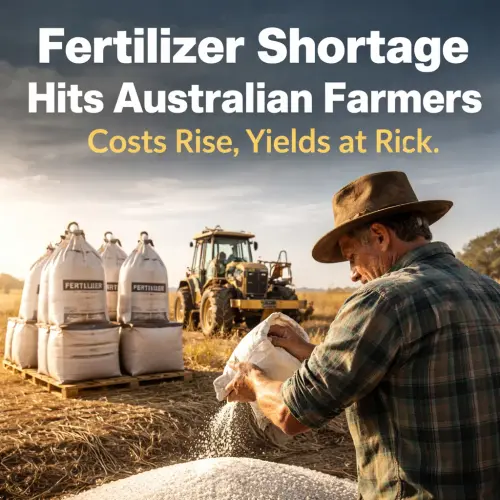
What Readers Should Know About the Fertilizer Shortage in Australia 2024
The fertilizer shortage in Australia 2024 comes after several years of global supply volatility. Nitrogen, phosphorus, and potassium products (N, P, K) have all faced price spikes, with urea and DAP in particular trading well above long‑term averages according to public data from organisations such as the International Fertilizer Association and the World Bank.
Australian grain, cotton, sugar and horticulture producers rely heavily on imported nutrients. When global supplies tighten or freight costs surge, local prices react quickly. Even where product is technically available, delivery delays and tighter credit terms are forcing many farmers to rethink their fertiliser programs.
Global Drivers Behind the Current Fertilizer Shortage
To understand the fertilizer shortage on Australian farms, it helps to start with the international factors pushing prices higher and limiting availability.
Energy markets and nitrogen fertilizer prices
Nitrogen fertilisers such as urea, UAN and ammonia are closely tied to natural gas prices. When gas prices rise sharply in key producing regions, production can be curtailed, and export availability shrinks. This has been evident over the last few years as energy markets became more volatile.
For Australian growers who depend on imported nitrogen, these upstream shifts have translated into higher landed prices and, at times, shorter supply. Some importers have rationed product or prioritised long‑term customers, tightening the market further.
Geopolitics, trade measures and shipping bottlenecks
Geopolitical tensions and trade restrictions have periodically disrupted flows of phosphate and potash from major exporters. Sanctions, export quotas and changed shipping routes have all reduced predictability in the market. For a related guide, see China–Australia Beef Trade Rebounds as Demand Surges.
Shipping disruptions and container shortages have added another layer of cost. Longer transit times and higher freight rates mean that even when fertiliser is available on the global market, it can arrive late or at a significant premium into Australian ports.
Local constraints on storage and distribution
Australia’s domestic fertiliser production capacity is limited compared with overall demand. This makes the country more exposed to imports and to any disruption at key ports or terminals.
When demand surges ahead of planting, storage and logistics networks can become congested. This contributes to the perception of a fertilizer shortage in Australia 2024 even when national stock levels might be adequate on paper.
How Rising Fertilizer Costs Are Hitting Australian Farmers
The most immediate impact of the current situation is on farm budgets. Rising fertilizer costs for Australian farmers are changing how they plan, plant, and manage risk.
Production costs and cash‑flow pressure
Fertiliser is often one of the top three variable costs in broadacre cropping and intensive pasture systems. When prices double or even increase by 30–50%, total production costs can jump by tens or hundreds of dollars per hectare.
Mixed farmers who buy large volumes in a narrow pre‑planting window can face acute cash‑flow pressure. Some are spreading purchases through the year, while others are relying more heavily on supplier credit or bank facilities, increasing financial risk if seasonal conditions disappoint.
Planting decisions and crop rotations
High fertiliser prices influence what crops get planted and on how many hectares. Growers may shift away from highly nitrogen‑hungry crops such as canola or maize and favour legumes or lower‑input cereals instead.
In some regions, advisers report more conservative rotations, with farmers extending pasture phases or using pulse crops like lentils, lupins and faba beans to biologically fix nitrogen. While this can be positive for soil health, it may reduce short‑term gross margins compared with a more aggressive cropping program in years of lower fertiliser prices.
Application rates and agronomic compromises
One of the clearest impact of fertilizer prices on crop yields in Australia is the tendency to trim application rates. Farmers may cut back on top‑dressing or delay in‑season applications until they have more certainty about rainfall.
Strategic reductions can make sense when supported by soil tests and variable‑rate technology, but indiscriminate cuts raise the risk of nutrient deficiencies, hidden hunger, and lower grain protein. Over multiple seasons, consistent under‑application can also mine soil nutrient reserves, undermining long‑term productivity.
Illustrative case examples from the paddock
In higher rainfall zones, consultants report clients shifting from blanket urea applications to more targeted programs focusing on their best paddocks and higher‑yielding varieties. In lower rainfall areas, some growers are simply accepting lower yield targets to contain upfront spending.
Livestock producers are also affected, especially dairy and intensive grazing operations that depend on regular nitrogen and phosphorus inputs to maintain pasture growth. Higher fertiliser bills can force herd reductions or increased reliance on purchased feed, both of which change profitability.
Impact of Fertilizer Prices on Crop Yields in Australia and Beyond the Farm Gate
The impact of fertilizer prices on crop yields in Australia does not stop at the farm boundary. It has flow‑on effects for food prices, export volumes, and rural communities.
Yield risk, quality, and long‑term soil fertility
Under‑fertilising key macronutrients can reduce yield potential and end‑use quality. For example, low nitrogen often results in lower wheat protein levels, which can downgrade grain and reduce prices received by growers.
Over several seasons, inadequate replacement of phosphorus and potassium can draw down soil reserves, making future production more dependent on external inputs just when they are expensive and uncertain. This is a key concern for advisers focused on long‑term soil capital.
Food prices and consumer budgets
Lower yields or higher production costs ultimately influence retail prices. When grain, oilseed, fruit, and vegetable production is constrained, processors and retailers face higher input costs, some of which are passed on to consumers.
This contributes to broader food inflation, particularly in products heavily reliant on fertiliser‑intensive commodities, such as bread, meat, dairy, and packaged foods.
Export markets and Australia’s reputation
Australia is a major exporter of wheat, barley, canola, cotton, and other agricultural products. Consistently high fertiliser costs and any reduction in yields can affect exportable surplus and price competitiveness.
While global tightness can sometimes support commodity prices, unpredictable production volumes make it harder for exporters and overseas buyers to plan. In a competitive global market, reliability matters as much as price.
Rural communities and regional economies
When margins are squeezed by input price shocks, farm businesses often scale back investment in machinery, infrastructure, and labour. This reduces turnover for local machinery dealers, agronomy firms, transport companies and regional service providers.
Over time, prolonged pressure from a fertilizer shortage can contribute to slower regional growth, reduced employment opportunities, and additional stress for farming families and communities already managing climate variability.
How Farmers and Industry Can Respond to the Fertilizer Shortage
While no single measure can fully offset the fertilizer shortage in Australia 2024, a combination of policy support, industry innovation and on‑farm strategies can reduce risk and improve resilience.
Government and policy responses
Governments can play a role by supporting transparent market information, facilitating investment in domestic production where viable, and ensuring port and rail infrastructure efficiently supports fertiliser imports.
Targeted grants or low‑interest loans for soil testing, precision agriculture tools, and on‑farm storage can also help businesses use fertiliser more efficiently and manage timing and price risk.
Industry adaptations and supply chain innovation
Fertiliser manufacturers, importers, and distributors are exploring diversified sourcing, long‑term offtake agreements, and better forecasting tools. Improved data sharing between suppliers and grower groups can reduce surprises in peak demand periods.
Some industry players are investing in value‑added services such as tailored blends, decision‑support software, and agronomic advisory packages that help growers match nutrients more closely to crop and soil requirements.
Alternative fertilizers and biological options
In response to rising fertilizer costs for Australian farmers, interest is growing in alternatives such as manures, composts, digestate from anaerobic digestion, and biological products designed to improve nutrient use efficiency.
While these options are not a complete substitute for conventional N‑P‑K, they can complement mineral fertilisers, particularly in mixed farming systems with access to livestock manures or organic by‑products.
Practical steps farmers can take now
Farmers cannot control global markets, but they can adjust management decisions. The checklist below summarises practical actions that many Australian producers are considering.
| Action Area | Practical Step | Potential Benefit |
|---|---|---|
| Soil information | Undertake targeted soil testing and use existing soil data | Avoid over‑ or under‑application, focus inputs where returns are highest |
| Timing and procurement | Stagger purchases, consider forward contracts where appropriate | Reduce exposure to price spikes and last‑minute shortages |
| Rate management | Prioritise responsive paddocks and high‑value crops | Optimise yield and quality on best‑performing land |
| Technology | Use variable‑rate application and yield maps | Improve nutrient use efficiency and lower waste |
| Rotations | Integrate legumes and deep‑rooted crops | Enhance nitrogen fixation and soil structure over time |
| Risk management | Stress‑test budgets for high input price scenarios | Clarify break‑even yields and protect cash‑flow |
Looking Ahead: Managing Fertilizer Shortage Risk in the Years to Come
The current Fertilizer Shortage has highlighted how exposed Australian agriculture is to international energy markets, trade disruptions and freight costs. While prices will eventually move through their cycle, many analysts expect more volatility rather than a simple return to past norms. For a related guide, see Fuel Crisis Drives Up Fish and Chips Prices Ahead of Good Friday.
For growers, resilience will come from a mix of better information, smarter use of technology, thoughtful rotations, and strong relationships with suppliers and advisers. For industry and government, the focus will be on maintaining reliable access to nutrients while encouraging efficient, sustainable use.
By planning ahead and investing in long‑term soil health, Australian farmers can continue to produce high‑quality food and fibre, even in an era of tighter fertiliser markets and higher input cost risk.
Useful Resources
FAO report on global fertilizer markets and outlook
Australian Government information on innovative and efficient farming practices
Frequently Asked Questions About Fertilizer Shortage
What is causing the current fertilizer shortage in Australia?
The current fertilizer shortage in Australia is being driven by a combination of high global energy prices, disruptions to major exporting regions, shipping bottlenecks, and limited domestic production capacity, all of which restrict supply and push up landed costs for local farmers. For a related guide, see Airline Flight Cancellations Surge as Jet Fuel Costs Rise.
How are rising fertilizer costs affecting Australian farmers’ profits?
Rising fertilizer costs significantly increase per‑hectare production costs, forcing farmers to either absorb lower margins, reduce application rates, change crop mixes, or seek higher prices, and any combination of these responses can squeeze profitability and cash‑flow.
Will fertilizer shortage in Australia 2024 reduce crop yields?
Fertilizer shortage in Australia 2024 may reduce crop yields where farmers are forced to cut nutrient rates below agronomic recommendations, particularly for nitrogen and phosphorus, although careful targeting and soil testing can help minimise losses in many situations.
Which fertilizer products are most affected by the shortage?
Nitrogen fertilizers such as urea and UAN, along with key phosphorus products like DAP and MAP, have experienced some of the strongest price rises and availability issues, although impacts vary by region, supplier, and timing of purchase.
How can farmers manage fertilizer risk when prices are volatile?
Farmers can manage fertilizer risk by using soil tests to refine rates, spreading purchases over time, considering forward contracts where appropriate, prioritising high‑response paddocks, and integrating legumes or organic amendments to support long‑term nutrient supply.
Are there viable alternatives to synthetic fertilizers for broadacre crops?
Alternatives such as manures, composts, digestate, and some biological products can supplement synthetic fertilizers and improve soil health, but in most broadacre systems they are complements rather than complete substitutes due to logistics, nutrient density, and consistency constraints.
How does fertilizer price impact Australia’s export competitiveness?
Higher fertilizer prices raise production costs for Australian exporters, potentially narrowing margins relative to competitors in regions with cheaper inputs, and if they also constrain yields, exportable surpluses can decline, affecting reliability and pricing in key overseas markets.
Can precision agriculture help reduce fertilizer use without hurting yields?
Precision agriculture tools such as yield mapping, variable‑rate application, and zonal soil sampling can significantly improve nutrient use efficiency by matching fertilizer inputs more closely to crop demand, allowing some farmers to reduce total use while maintaining or even improving yields.
Should farmers cut fertilizer rates or reduce cropped area in a shortage?
Whether to cut rates or reduce cropped area depends on each farm’s soils, climate, crop options, and finances, but many advisers recommend maintaining adequate nutrition on the best paddocks and highest‑return crops rather than spreading limited fertilizer thinly across all land.
How long is the fertilizer shortage expected to last?
The duration of the fertilizer shortage is uncertain and tied to global energy prices, geopolitical developments, and new production capacity, but most analysts expect ongoing volatility rather than a quick return to the very low prices seen in past decades.
What role can legumes play in managing fertilizer costs?
Legumes such as lupins, lentils, field peas, and faba beans fix atmospheric nitrogen through symbiotic bacteria, adding organic nitrogen to the system and reducing synthetic nitrogen requirements in following crops, which can moderate fertilizer costs over a rotation.
Is it worth storing fertilizer on farm to hedge against shortages?
On‑farm fertilizer storage can provide flexibility and some protection against short‑term supply disruptions, but it requires suitable infrastructure, safety management, and capital, so growers need to weigh carrying costs and risks against potential savings from buying early.
How does the fertilizer shortage affect livestock and dairy producers?
Livestock and dairy producers feel the fertilizer shortage through higher costs for pasture fertilization and fodder production, which can lead to lower carrying capacity, increased reliance on purchased feed, and tighter profit margins in already competitive markets.
Can better soil testing reduce fertilizer bills during a shortage?
Yes, regular and targeted soil testing helps identify paddocks with adequate nutrient reserves and those needing investment, allowing farmers to avoid unnecessary applications and focus limited fertilizer where it generates the best economic and agronomic return.
What government support is available to address fertilizer challenges?
Government support typically focuses on broader programs such as grants or loans for precision agriculture, innovation funding, and infrastructure upgrades, rather than direct fertilizer subsidies, so farmers should check current federal and state initiatives relevant to input efficiency and resilience.
How does fertilizer shortage intersect with climate and sustainability goals?
The fertilizer shortage highlights the need to use nutrients more efficiently, which aligns with climate and sustainability goals by reducing nitrous oxide emissions, runoff, and waste, while also encouraging practices like legumes and organic amendments that build soil health.
Are small farms affected differently by rising fertilizer costs?
Small farms often have less bargaining power and limited storage, which can make them more exposed to retail price spikes, but some can adapt by using diversified enterprises, direct marketing, and closer integration of livestock and cropping to recycle nutrients.
What long-term strategies can reduce dependence on imported fertilizers?
Long‑term strategies include improving nutrient recycling from manures and organic waste, investing in domestic production where feasible, enhancing soil organic matter, using legumes strategically, and adopting precision technologies that squeeze more value from each unit of nutrient applied.
How should farmers prioritise which nutrients to apply in a tight year?
In a tight year, farmers should base priorities on soil tests, crop removal rates, and yield targets, typically ensuring adequate phosphorus and sulfur on deficient soils, targeting nitrogen to the best paddocks and seasons, and avoiding mining potassium where reserves are already low.
What conversations should farmers have with their agronomists about fertilizer shortage ?
Farmers should discuss realistic yield targets, soil test results, rotation plans, product options, timing of applications, and risk scenarios with their agronomists so they can design a fertilizer strategy that balances agronomic needs, budget limits, and supply uncertainties.