

Chengdu J-10 Fighter Jet Key Takeaways
The Chengdu J-10 Fighter Jet is a cornerstone of China’s modern air force and increasingly relevant to Australia’s security outlook in the Indo-Pacific.
- The Chengdu J-10 Fighter Jet is a highly agile, single‑engine Chinese fighter aircraft designed for both air‑to‑air and air‑to‑ground missions.
- It now serves as a workhorse PLA Air Force fighter jet , deployed widely across China’s coastal and border regions, including areas close to Australia’s key sea lanes.
- Comparisons such as J-10 vs F/A-18 and J-10 vs F-35 highlight why Australia continues investing in fifth‑generation capability and deeper regional partnerships.
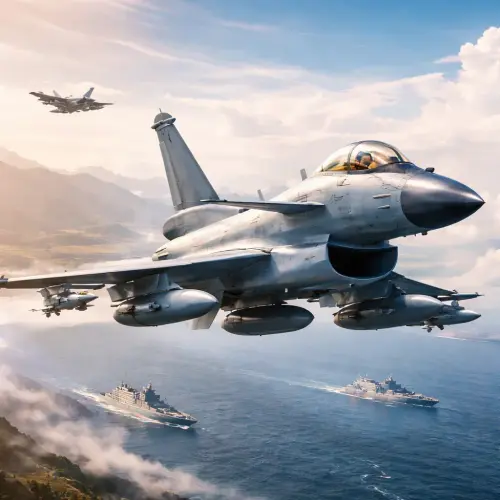
Why the Chengdu J-10 Fighter Jet Matters to Australia’s Indo-Pacific Security
From Darwin to Perth, Australian defence planners increasingly factor in the Chengdu J-10 when they assess Indo-Pacific air power. This China multirole fighter is now one of the most numerous modern jets in the People’s Liberation Army Air Force (PLAAF), frequently seen in exercises over the South China Sea and near Taiwan—areas linked to Australia’s trade routes and strategic interests.
For Australians, the Chengdu J-10 Fighter Jet is not just a technical topic for aviation buffs. It is part of the backdrop to ADF exercises, Freedom of Navigation operations with partners, and the logic behind Australia’s investment in the F‑35A, AUKUS, and closer ties with Japan and India. Understanding what this aircraft can and cannot do helps put headlines about “unsafe intercepts” and rising Chinese capability into clearer perspective.
Development History of the Chengdu J-10 and Its Strategic Purpose
The Chengdu J-10 emerged from China’s drive in the 1980s and 1990s to replace ageing Soviet‑era designs like the J‑7 (a MiG‑21 derivative). Beijing wanted a home‑grown, high‑agility Chinese fighter aircraft that could compete with Western jets such as the F‑16 and regional types like the Mirage 2000. For a related guide, see Dhilmar Mining Makes Headlines After Major Australian Coal Deal.
Developed by the Chengdu Aircraft Industry Group, the jet reportedly drew on lessons from both Russian cooperation and exposure to Western designs via Israel in the early stages. The first prototypes flew in the mid‑1990s, and the type officially entered PLAAF service in the early 2000s. Over time, the platform has evolved from the early J‑10A to improved J‑10B and J‑10C variants with upgraded radar, sensors, and weapons.
Strategically, the aircraft filled a crucial gap: a modern, relatively affordable China multirole fighter that could be fielded in large numbers. It was designed to secure China’s airspace, support operations along contested borders, and project presence in key maritime zones—areas that intersect with Australia’s interests in a stable rules‑based order.
Key Chengdu J-10 Specifications Australians Should Understand
While exact figures vary by variant and source, some core Chengdu J-10 specifications give a useful sense of where the aircraft sits compared with Australian and regional jets.
| Feature | Approximate J-10C Value | Relevance for Australia |
|---|---|---|
| Role | Multirole, air superiority and strike | Can threaten both aircraft and surface targets near vital sea lanes |
| Engine | Single Russian AL-31 or Chinese WS-10 | Gives high thrust, improving climb and manoeuvrability |
| Max speed | ~Mach 1.8–2.0 | Comparable to classic 4th‑generation Western fighters |
| Combat radius | ~900–1,000 km (mission‑dependent) | Allows coverage of coastal and near‑maritime zones that intersect with Australian shipping routes |
| Hardpoints | ~11 weapon stations | Supports a mix of air‑to‑air missiles, bombs, and fuel tanks |
| Radar | Active electronically scanned array (AESA) on J‑10C | Improves detection and tracking in cluttered littoral environments |
For Australia, the key takeaway is that the latest variants, especially the J‑10C, offer credible 4.5‑generation performance. They may not match the stealth of the F‑35A, but in large numbers and backed by ground‑based radars and surface‑to‑air missiles, they still complicate any air operation in the region.
Avionics, Weapons Systems, and How the Chengdu J-10 Fights
Modern variants of the Chengdu J-10 Fighter Jet are built around digital avionics, a glass cockpit, and data‑link connectivity that let the jet operate effectively as part of a wider network—a critical element of contemporary Indo-Pacific air power.
Radar, Sensors, and Electronic Warfare
The J‑10C’s AESA radar greatly improves detection range, tracking of multiple targets, and resistance to jamming compared to earlier mechanically scanned sets. Coupled with infrared search and track (IRST) and modern defensive aids suites, this allows the jet to detect, avoid, or engage threats with more sophistication than older designs.
From an Australian perspective, this means RAAF aircraft operating near Chinese forces—in the South China Sea, or in combined exercises with partners—must assume they could be detected at longer ranges than in the past, especially if they are non‑stealth support platforms like tankers or P‑8A Poseidon patrol aircraft.
Missiles and Weapons Options
The Chinese military aircraft explained literature often highlights the modern missile suite carried by the J‑10. These include:
- Beyond‑visual‑range air‑to‑air missiles (BVR), such as the PL‑12 and newer PL‑15, intended to engage targets well before visual contact.
- Short‑range, high‑agility infrared missiles like the PL‑8 or PL‑10 for close‑in dogfights.
- Precision‑guided bombs and anti‑ship or air‑to‑surface missiles for strike missions against ground and maritime targets.
These weapons, especially when cued by over‑the‑horizon sensors and data links, help the PLA Air Force fighter jet fleet contribute to China’s broader anti‑access/area‑denial (A2/AD) strategy in its near seas.
The Chengdu J-10 in PLA Air Force Service and Regional Deployments
The Chengdu J-10 Fighter Jet is now a mainstay of frontline PLAAF units. It operates from bases across eastern and southern China, including those oriented towards Taiwan, the East China Sea, and the South China Sea—spaces that matter directly for Australian trade, energy flows, and alliance commitments.
China has also exported the J‑10C to Pakistan, where it is known as the J‑10CE. This adds another dimension to regional balance, given Australia’s interest in stability on the Indian subcontinent and in the Indian Ocean. Pakistan’s use of the jet in exercises with China and potentially in response to India’s Tejas and Rafale fleets provides useful data points on how the aircraft is likely to be employed in combat.
For Australia, the increased presence of this Chinese fighter aircraft in combined arms exercises—supported by tankers, AEW and C platforms, and surface‑to‑air missiles—shows that the PLAAF is moving beyond homeland defence toward more coordinated, expeditionary‑style operations.
How the J-10 Fits into China’s Wider Air Power Strategy
The Chengdu J-10 Fighter Jet does not operate in isolation. It sits alongside heavier fighters like the J‑11 and J‑16, and the stealth‑focused J‑20, within a layered force. In that ecosystem, the J‑10 acts as a nimble workhorse: numerous, flexible, and cheaper to field than top‑tier stealth jets.
This aligns with China’s concept of integrating air, naval, cyber, and space capabilities into a comprehensive A2/AD posture. By filling out squadron numbers with capable 4.5‑generation jets, China can saturate airspace, escort bombers or maritime patrol aircraft, and conduct large‑scale patrols and intercepts in contested areas. That influences how Australia and its partners design exercises, posture assets in northern Australia, and invest in long‑range strike and survivable basing.
Comparing the Chengdu J-10 to the F/A-18, F-35 and Tejas
Australians tend to benchmark regional capabilities against familiar platforms like the classic Hornet, Super Hornet, and the F‑35A. The J-10 vs F/A-18, J-10 vs F-35, and J‑10 vs India’s Tejas comparisons offer a practical way to gauge where this China multirole fighter fits.
J-10 vs F/A-18
In aerodynamic terms, the J‑10 and F/A‑18 both sit in the agile 4th‑generation category, with good manoeuvrability and multi‑role flexibility. The J‑10C’s modern AESA radar and BVR missiles likely outclass the older systems on the now‑retired Australian classic Hornet, but the RAAF’s F/A‑18F Super Hornet fleet remains competitive with advanced sensors, weapons, and integration with the wider ADF network.
Crucially, Australia’s training, joint integration with US and Japanese forces, and battle‑proven command and control frameworks are force multipliers that a one‑to‑one jet comparison often overlooks.
J-10 vs F-35
When discussing J-10 vs F-35, the gap becomes more pronounced. The F‑35A offers low observability (stealth), sensor fusion, and highly networked situational awareness that give RAAF pilots a significant first‑shot advantage. While the J‑10C’s AESA radar and long‑range missiles are serious, the aircraft still has the radar cross‑section of a conventional fighter.
This means that in many scenarios, an F‑35 force could detect and target J‑10s long before the reverse is true, especially when backed by AWACS, space‑based sensors, and robust electronic warfare support. That asymmetry is a big part of why Australia has embraced the F‑35A as its primary combat aircraft.
J-10 vs India’s Tejas
India’s Tejas is a light fighter, generally smaller and with less payload than the J‑10. While both are indigenous projects representing national technological progress, the J‑10 typically fields a more powerful engine, higher payload, and a longer development trajectory with multiple upgraded variants in service.
For Canberra, the significance lies less in who “wins” on paper and more in how both China and India are building sovereign aerospace industries. That long‑term industrial capability will shape the balance of Indo-Pacific air power beyond any individual aircraft model.
What the Chengdu J-10 Means for Australia’s Defence Planning and Public Debate
The growing presence of the Chengdu J-10 Fighter Jet in the skies around China and Pakistan has direct implications for Australia’s security outlook. It adds capacity to Chinese air operations near key maritime choke points and increases the complexity of any future crisis where the ADF might operate alongside partners.
In practical terms, this reinforces several trends already visible in Australian defence policy:
- Investment in high‑end capability: The F‑35A, long‑range strike missiles, and advanced ISR assets help offset the numerical advantage of aircraft like the J‑10.
- Emphasis on partnerships: Closer ties with the US, Japan, India, and ASEAN states provide broader situational awareness and shared burden in deterring coercion.
- Public understanding of risk: As reports of unsafe intercepts and close air encounters grow, Australians benefit from informed discussion about what aircraft like the J‑10 can do and why professional aircrew behaviour on all sides matters.
Ultimately, the Chengdu J-10 is one piece of a much larger puzzle. It does not make conflict inevitable, but it does underscore the need for steady diplomacy, robust rules of the air, and a credible, well‑integrated ADF able to operate safely in a more crowded and contested Indo‑Pacific sky.
Useful Resources
For readers who want technical depth and official perspectives on the Chengdu J-10 Fighter Jet and regional air power, these sources are a solid starting point:
- IISS Military Balance reports for detailed regional air order of battle data
- RAND Corporation analysis on air warfare and Indo-Pacific air power trends
Frequently Asked Questions About Chengdu J-10 Fighter Jet
What is the Chengdu J-10 Fighter Jet and what role does it play in China and #39;s air force?
The Chengdu J-10 Fighter Jet is a single-engine, multirole combat aircraft developed by China to perform both air-to-air and air-to-ground missions, and it now serves as one of the core workhorse fighters of the People’s Liberation Army Air Force, operating alongside heavier and stealthier platforms.
How does the Chengdu J-10 compare to older Chinese fighter aircraft like the J-7?
Compared with legacy types like the J-7, the Chengdu J-10 offers far superior avionics, radar, weapons integration, range, and pilot survivability, effectively moving the PLAAF from upgraded Soviet-era designs into the modern 4th and 4.5-generation category.
Is the Chengdu J-10 considered a fourth-generation or fifth-generation jet?
The Chengdu J-10 is generally classified as a fourth or 4.5-generation fighter, with the latest J-10C variant featuring advanced radar and weapons, but it lacks the low observable stealth characteristics and deep sensor fusion that define fifth-generation aircraft such as the F-35.
Why is the Chengdu J-10 relevant to Australia and #39;s defence planning?
The Chengdu J-10 is relevant to Australia because it is widely deployed near key maritime approaches and contested areas in the Indo-Pacific, meaning it is a likely contact aircraft in any crisis or close air encounter involving Australian or allied forces operating in the region.
What are the main Chengdu J-10 specifications Australians should know?
Key Chengdu J-10 specifications include a single high-thrust engine, maximum speed approaching Mach 2, a combat radius around 900–1,000 kilometres depending on loadout, and approximately 11 hardpoints for missiles, bombs, and fuel tanks, making it a flexible multirole platform.
Does the Chengdu J-10 have an AESA radar system?
The most modern variant, the J-10C, is widely reported to carry an active electronically scanned array (AESA) radar, which significantly improves target detection, multi-target tracking, and resistance to jamming compared to earlier mechanically scanned radar systems.
How does J-10 vs F-35 capability differ in a real conflict scenario?
In a J-10 vs F-35 comparison, the F-35 would likely enjoy a decisive edge thanks to its stealth, integrated sensors, and information advantage, allowing it to detect and engage J-10s from longer ranges and with better situational awareness, especially when supported by a wider allied network.
How does J-10 vs F/A-18 stack up from an Australian perspective?
From an Australian viewpoint, the J-10C’s modern radar and missiles make it broadly comparable to a contemporary 4.5-generation jet, but the RAAF’s F/A-18F Super Hornets benefit from strong integration with US and allied systems, high pilot training standards, and robust maintenance and logistics support.
Where is the Chengdu J-10 typically based and deployed?
The Chengdu J-10 is typically based at airfields across eastern, central, and southern China, including locations oriented towards Taiwan, the East and South China Seas, and it is also deployed with Pakistan, expanding its footprint across the broader Indo-Pacific region.
Has the Chengdu J-10 been exported outside China?
Yes, Pakistan has acquired the export variant known as the J-10CE, integrating it into its air force to complement or counterbalance India’s growing fleet, making the aircraft a factor in South Asian and Indian Ocean security dynamics that Australia closely watches.
What types of missiles can the Chengdu J-10 carry?
The Chengdu J-10 can carry a variety of air-to-air missiles, including beyond-visual-range weapons like the PL-12 and PL-15 and short-range infrared missiles such as the PL-8 or PL-10, alongside precision-guided bombs and air-to-surface or anti-ship missiles for strike missions.
How does the Chengdu J-10 contribute to China and #39;s anti-access/area-denial strategy?
The J-10 contributes to China’s anti-access/area-denial strategy by providing numerous, agile fighters that can defend airspace, escort bombers, threaten surface ships, and complicate the operations of foreign air forces within contested zones, especially when paired with long-range missiles and ground-based air defences.
Is the Chengdu J-10 superior to India and #39;s Tejas fighter?
On paper, the J-10 generally offers more payload, range, and maturity than the lighter Tejas, but both aircraft reflect their countries’ industrial priorities and doctrinal needs, and their overall impact depends on training, support systems, and integration rather than raw specifications alone.
What does the Chengdu J-10 mean for Australia and #39;s F-35 fleet?
The Chengdu J-10 reinforces the logic of Australia’s investment in the F-35, because facing large numbers of advanced but non-stealth fighters pushes the RAAF to rely on superior situational awareness, low observability, and advanced networking to maintain a credible deterrent and operational edge.
How might Australians encounter the Chengdu J-10 in news or defence reporting?
Australians are likely to see the Chengdu J-10 mentioned in coverage of unsafe intercepts, maritime patrols in the South China Sea, regional exercises, and analyses of air power balances in the Indo-Pacific, particularly when discussing Chinese activity near allied aircraft and ships. For a related guide, see Military Aircraft Trends Surge Across Australia Amid Global Tensions.
Does the Chengdu J-10 pose a direct threat to Australian territory?
By itself, the Chengdu J-10 does not currently pose a direct day-to-day threat to Australian territory due to range and basing considerations, but it does enhance China’s ability to project power and influence in surrounding regions and sea lanes that are vital to Australia’s security and economy.
How important is pilot training compared with Chengdu J-10 hardware performance?
Pilot training, tactics, and integration with wider command and control networks often matter as much as hardware performance, meaning the overall effectiveness of the J-10 depends not only on its specifications but on how well PLAAF crews are trained to exploit its capabilities in complex scenarios.
Can the Chengdu J-10 operate effectively over the ocean?
Yes, the Chengdu J-10 is capable of operating over maritime environments, especially when supported by tankers and airborne early warning aircraft, and it is regularly seen in exercises and patrols over the South China Sea and other coastal areas of strategic interest.
What is the likely future of the Chengdu J-10 as China fields more stealth fighters?
Even as China fields more J-20 stealth fighters, the J-10 is likely to remain in service for many years as a numerically significant multirole jet, gradually upgraded and integrated into mixed formations where stealth aircraft spearhead operations while J-10s provide mass and flexibility.
How should Australian citizens think about the Chengdu J-10 in the broader security context?
Australian citizens can view the Chengdu J-10 as one visible symbol of rising regional military capability, underscoring the importance of balanced defence investment, strong alliances, and sustained diplomacy to manage competition and prevent misunderstandings in increasingly busy Indo-Pacific airspace.