

CSIRO Key Takeaways
The latest CSIRO research shows most Australians get enough total protein each day, but much of it is eaten at night. Shifting some protein to breakfast and lunch can improve muscle health, energy, weight management, and healthy ageing.
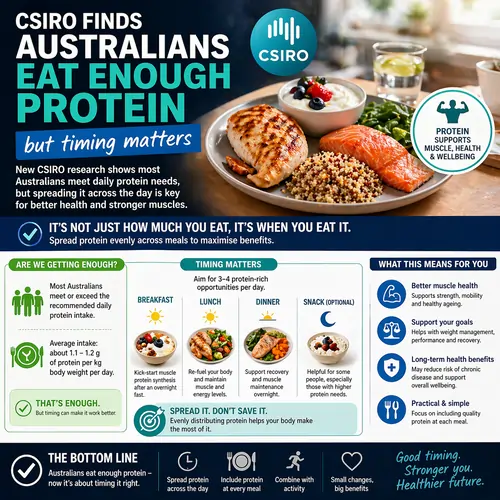
The latest CSIRO findings on protein distribution show that while Australians generally meet daily protein needs, they eat too little at breakfast and lunch and too much at dinner. A better pattern is roughly 20–40 g of protein at each main meal, using foods like eggs, yoghurt, dairy, fish, meat, legumes, and tofu to support muscle, weight management, and healthy ageing.
Understanding the CSIRO protein study timing findings
The Commonwealth Scientific and Industrial Research Organisation, better known as CSIRO, is Australia’s national science agency and a global leader in nutrition and health research. Its scientists have helped shape dietary advice on issues like obesity, heart health, and now how we consume protein across the day. For a related guide, see Robotics Industry in Australia | 2026 National Strategy.
In recent work, often referred to as the CSIRO protein study timing research, scientists analysed what Australians are actually eating and when they are eating it. Using large national food intake surveys and dietary records, they tracked how much protein Australians consume at breakfast, lunch, dinner, and snacks, and compared this with what is considered optimal for health and function.
The core finding is subtle but important: most Australians easily meet or exceed minimum daily protein requirements, but their Australians protein intake CSIRO data shows the bulk of that protein is pushed into the evening meal. This uneven pattern means many people miss out on the full benefits that protein can offer for muscle maintenance, appetite control, and long-term health.
How much protein Australians eat according to CSIRO
From a total amount perspective, the CSIRO findings on protein distribution are reassuring. On average, Australian adults get enough grams of protein per day to meet the recommended dietary intake (RDI), which is around 0.8 g per kilogram of body weight for generally healthy adults. Many people, especially men, exceed this minimum.
However, hitting the minimum is not the same as eating for optimal health and function. Emerging research suggests that slightly higher intakes (around 1.0–1.3 g per kilogram of body weight per day, depending on age, activity, and health status) and a smarter spread across the day can deliver more benefits, particularly for muscle protection and weight management.
Where Australians tend to fall short is not in total grams but in how those grams are distributed across meals. According to the CSIRO protein study timing work, protein intake over the day typically looks something like this:
- Breakfast: very low protein
- Lunch: modest protein
- Dinner: large protein load
This uneven pattern means that long stretches of the day go by with too little protein to maximally support muscle repair, appetite control, and other important processes.
CSIRO findings on protein distribution across breakfast, lunch, and dinner
To get more out of the same total protein, CSIRO findings on protein distribution point toward a more even pattern: roughly 20–40 g of high-quality protein at each main meal for most adults. That range is enough to strongly stimulate muscle protein synthesis (the process of building and repairing muscle) several times per day.
What CSIRO-style balanced protein looks like at breakfast
Breakfast is where many Australians miss the mark, often favouring toast, cereal, or pastries with very little protein. To align with CSIRO guidance, consider these practical examples of 20–30 g of protein at breakfast:
- 2 eggs on wholegrain toast with a side of Greek yoghurt
- High-protein Greek yoghurt (200 g) with muesli and berries
- Protein-enriched oats made with milk plus a sprinkle of nuts
- Cottage cheese on grainy toast with tomato and avocado
- Tofu scramble with vegetables and a slice of sourdough
Each of these options shifts breakfast from being heavy in refined carbohydrates toward a more balanced, protein-rich start.
Lunch ideas that reflect CSIRO protein study timing advice
Lunch often provides a moderate amount of protein, but many popular choices still fall short of the optimal CSIRO protein study timing range. To reach 20–40 g at lunch, try:
- Chicken or tofu salad with plenty of mixed vegetables, beans, and a grain like quinoa
- Wholegrain sandwich or wrap with tuna, egg, or lean beef plus salad fillings
- Lentil or mixed bean soup served with wholegrain bread and cheese or yoghurt
- Brown rice bowl with grilled salmon, edamame, and mixed vegetables
- Leftover chilli made with lean mince and kidney beans over barley or brown rice
The goal is for protein to be the anchor of the meal, not a small side.
Dinner: Adjusting typical Australian plates to CSIRO guidance
Dinner is where many Australians overcompensate, piling large amounts of meat or other protein sources onto the plate. The Australians protein intake CSIRO data suggests that while dinner is important, it does not need to carry almost all of the day’s protein.
Examples of balanced, CSIRO-aligned dinners include:
- 150 g grilled chicken breast with roasted vegetables and a small serve of brown rice
- Firm tofu or tempeh stir-fry with mixed vegetables and soba noodles
- Grilled fish with sweet potato and steamed greens
- Beef and bean chilli served over steamed vegetables and a modest amount of grain
- Mixed legume and vegetable curry with a side of yoghurt and basmati rice
These meals still feel substantial but recognise that breakfast and lunch should also carry meaningful protein loads.
Health impacts of CSIRO-style protein distribution
The timing pattern highlighted in the CSIRO findings on protein distribution is not just academic. It has practical effects on how your body feels and functions across the day and over the years.
Muscle maintenance and strength across the lifespan
Muscles rely on regular doses of amino acids (from protein) to repair and rebuild. Research, including work referenced by CSIRO and international studies, shows that evenly distributing protein across meals enhances muscle protein synthesis compared with front-loading or back-loading protein at a single meal.
This is particularly important as we age. From about our 30s onwards, we gradually lose muscle mass, a process called sarcopenia. Ensuring around 20–40 g of protein at breakfast, lunch, and dinner helps counter this loss, supporting strength, balance, and independence later in life.
Weight management and appetite control
Protein is the most satiating macronutrient, meaning it helps you feel fuller for longer. When you concentrate protein at dinner and have low-protein breakfasts and lunches, you are more likely to experience mid-morning or mid-afternoon hunger, snacking, and cravings.
The CSIRO protein study timing insights suggest that lifting protein at breakfast and lunch can support better appetite control, more stable energy, and potentially assist with weight management when combined with an overall healthy eating pattern and appropriate energy intake. For a related guide, see 2 Easy Eating Habits That May Help You Lose Weight for Good.
Healthy ageing, energy, and metabolic health
Beyond muscle and weight, a more even protein pattern has broader health benefits. Regular doses of protein can help stabilise blood sugar swings, especially when meals combine protein with fibre-rich vegetables and wholegrains.
For older adults, the Australians protein intake CSIRO data is a reminder that maintaining strength, mobility, and functional independence is not just about total protein but about having enough at each meal to trigger muscle-building signals multiple times per day. This underpins healthy ageing, reduced fall risk, and a better quality of life.
Practical daily pattern: applying CSIRO protein guidance
Putting the CSIRO findings on protein distribution into practice does not mean eating more and more protein overall. Often, it is about redistributing what you already eat so that each main meal contains a meaningful protein serve.
A sample day that reflects CSIRO protein study timing
| Meal | Example menu | Approx. protein |
|---|---|---|
| Breakfast | 2 eggs on wholegrain toast + 150 g Greek yoghurt | 25–30 g |
| Lunch | Wholegrain wrap with 100 g chicken, salad, cheese | 25–30 g |
| Dinner | 150 g grilled fish, vegetables, small serve brown rice | 30–35 g |
| Snacks | Handful of nuts, piece of fruit, milk or soy drink | 10–15 g |
This pattern sits squarely within the approach suggested by CSIRO, with each meal containing enough protein to support muscle and appetite, while snacks top up intake as needed.
Simple checklist to improve your protein timing
To align your intake with the CSIRO protein study timing insights, use this quick checklist:
- Does each main meal contain at least one clear protein source (e.g. eggs, yoghurt, lean meat, fish, tofu, tempeh, legumes, dairy, high-protein grains)?
- Are you aiming for roughly 20–40 g of protein at breakfast, lunch, and dinner?
- Can you shift some protein from a very large dinner into a more substantial breakfast or lunch?
- Do your snacks include some protein (nuts, yoghurt, milk, cheese, hummus) rather than being purely sweet or refined?
- Are you choosing mostly whole, minimally processed protein foods rather than relying solely on powders?
Actionable tips: adjusting your eating pattern with CSIRO guidance
Small, consistent changes often work better than dramatic overhauls. Based on the CSIRO findings on protein distribution, here are practical ways to shift your daily pattern.
Step 1: Upgrade breakfast with a protein focus
Start by adding at least one protein-rich food to the breakfast you already enjoy. If you currently have toast and coffee, add eggs, baked beans, or cottage cheese. If you prefer cereal, switch to a higher-protein option and use milk or yoghurt instead of water.
Step 2: Make lunch a balanced, protein-anchored meal
Look at your usual lunch and ask where the protein is coming from. If it is minimal, add a protein component: tinned tuna to a salad, extra legumes to a soup, or tofu to a stir-fry. Aligning with CSIRO means treating protein as a must-have, not an optional extra.
Step 3: Right-size dinner protein and boost plants
Rather than a very large steak or big slab of meat, aim for a palm-sized portion of protein and fill the rest of the plate with vegetables and wholegrains. This still respects the Australians protein intake CSIRO data about adequate total protein, while avoiding unnecessary excess at night.
Step 4: Use snacks strategically, not reflexively
If you experience energy dips, reach for a protein-containing snack first. Options like yoghurt, nuts, hummus with carrot sticks, or a glass of milk or soy drink help stabilise appetite and support the pattern highlighted in the CSIRO protein study timing research.
Step 5: Consider age, activity level, and health status
Needs can vary. Older adults, highly active people, and those recovering from illness or injury may benefit from slightly higher protein intakes and closer attention to distribution. When in doubt, consider personalised advice from an Accredited Practising Dietitian who can interpret CSIRO research in the context of your situation.
Useful Resources
For more on protein and healthy eating patterns, explore these evidence-based resources alongside the CSIRO protein study timing research:
- Australian Dietary Guidelines – Eat for Health
- Nutrient Reference Values for Australia and New Zealand – Protein
How the Latest CSIRO Protein Research Fits Into Everyday Australian Life
Research can sound abstract until you see how it plays out in real homes and routines. The recent CSIRO findings on protein distribution are especially relevant for Australians juggling work, family, and social commitments. The good news is that you do not need a perfect diet or a gym obsession to benefit from better protein timing.
Busy professionals and shift workers
Many Australians rely on coffee and toast in the morning, a rushed lunch, and then a large, protein-heavy dinner. According to the CSIRO protein study on timing, that pattern leaves your muscles “undernourished” for much of the day, even if your total daily protein looks fine on paper.
For office workers and shift workers, a more effective approach could be:
- A protein-rich breakfast before or during your shift
- A balanced lunch with at least one substantial protein source
- A moderate, not oversized, dinner that still includes quality protein
This pattern aligns your protein intake with when you move, think, and work, rather than loading it when you are winding down.
Older Australians and healthy ageing
Healthy ageing is a major focus of CSIRO nutrition research. Ageing muscles respond better when they receive regular, meaningful doses of protein. Spreading protein across meals can help older Australians maintain independence, strength, and balance, making everyday activities like climbing stairs, carrying groceries, or gardening easier for longer.
For retirees, incorporating protein at breakfast (such as yoghurt, eggs, or baked beans) is often the biggest opportunity for improvement, as many grew up with very light, carb-based morning meals.
Families and growing kids
Parents often focus on getting enough fruit and vegetables into children, but the CSIRO work highlights the value of offering a source of protein at every main meal. This supports growth, concentration at school, and better appetite control between meals.
Simple family-friendly changes include:
- Adding yoghurt or milk to breakfast instead of just juice
- Including lean meat, cheese, hummus, or eggs in lunchboxes
- Serving beans, lentils, tofu, or meat with dinner pasta or rice dishes
Top 7 Practical Tips Inspired by the CSIRO Protein Findings
- Start your day with 20–30 g of protein — Build breakfast around foods like eggs, Greek yoghurt, cottage cheese, or high-protein milk to better mirror the patterns recommended in CSIRO research.
- Anchor each meal with a protein “hero” — Plan meals by choosing a core protein first (fish, tofu, beans, lean meat, lentils, eggs) and then adding vegetables and whole grains around it.
- Upgrade your snacks, don’t just add more — Use snacks strategically to “top up” towards a balanced daily distribution of protein rather than mindless nibbling. Nuts, cheese, hummus with veggie sticks, or edamame are good options.
- Swap some refined carbs for protein — Instead of adding extra bread, rice, or crackers at meals, replace a portion of them with beans, lentils, or extra chicken, fish, or tofu to match the CSIRO approach to satiety and weight control.
- Spread protein rather than saving it for dinner — If dinner is currently your biggest protein hit, consciously shift some protein into breakfast and lunch, aiming for a more even pattern.
- Use food labels to check protein per serve — When choosing yoghurts, breads, or snack foods, compare protein content per 100 g and per serve to pick options that help you reach the amounts used in CSIRO studies.
- Plan protein around your activity — If you exercise in the morning or at lunchtime, build a protein-rich meal or snack soon after to support muscle repair and growth.
Comparing Typical Australian Eating Patterns With CSIRO-Informed Protein Timing
Many Australians eat in a pattern that the CSIRO research suggests is not ideal for muscle health and appetite management. The table below highlights the difference between common habits and a more balanced protein distribution.
| Eating Pattern | Pros | Cons |
|---|---|---|
| Typical Australian pattern (low protein at breakfast, moderate at lunch, high at dinner) |
|
|
| CSIRO-aligned pattern (moderate protein at breakfast, lunch, and dinner) |
|
|
| High-protein diet with poor timing (excessive shakes and evening protein) |
|
|
Using CSIRO Insights to Build a Protein-Friendly Meal Plan
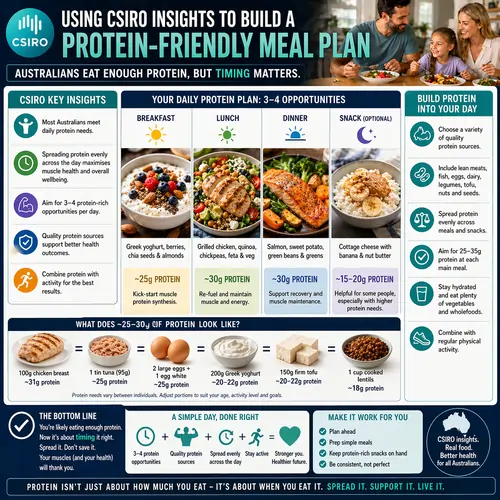
You do not need a complex diet plan to make the most of the new CSIRO findings on protein distribution. A simple weekly framework helps you repeat good choices without overthinking every meal.
Simple one-day example meal pattern
This sample shows how an everyday Australian might align with the CSIRO focus on even protein spread while still enjoying familiar foods.
- Breakfast: Two eggs on wholegrain toast with a glass of milk or a tub of Greek yoghurt.
- Morning snack (optional): A handful of nuts or a small tub of cottage cheese with fruit.
- Lunch: Wholegrain salad wrap with chicken, tuna, tofu, or falafel, plus salad and hummus.
- Afternoon snack: Carrot sticks and hummus, or cheese and wholegrain crackers.
- Dinner: Grilled fish, lean meat, tofu, or lentil-based dish served with vegetables and a moderate portion of rice, pasta, or potatoes.
This type of day does not change total calories dramatically but reshapes when protein arrives, in line with what the CSIRO protein study on timing suggests for better outcomes.
Common Misconceptions About the CSIRO Protein Research
As the CSIRO work on protein spreads through the media, a few misunderstandings have emerged. Clearing these up can help you make sensible, evidence-based changes instead of extreme ones.
“I need to eat huge amounts of protein”
The research does not say that most Australians are deficient in total protein. In fact, many already consume enough. The key message is to distribute what you already eat more evenly, not to dramatically inflate your overall intake.
“Only gym-goers need to worry about protein timing”
While athletes and people who lift weights benefit from smart protein timing, the CSIRO findings apply to everyday Australians as well. Muscle strength, balance, and healthy ageing matter whether or not you go to a gym. For a related guide, see Smart Farming Technology in Australia | 2026 AgTech Guide.
“Supplements are the only way to meet the recommendations”
Protein powders and bars can be useful, but the CSIRO research focuses primarily on whole foods. Most Australians can meet timing and distribution goals using common foods like dairy, eggs, legumes, fish, poultry, meat, tofu, and nuts.
How CSIRO Protein Insights Complement Other Healthy Eating Guidelines
The emphasis on protein timing does not replace general nutrition advice; it adds another layer. The CSIRO approach fits neatly alongside national dietary guidelines, which encourage variety, plenty of plant foods, and mostly minimally processed choices.
Balancing protein with carbohydrates and fats
Spreading protein across the day should happen within a balanced plate. That means:
- Keeping vegetables and fruit as major components of meals
- Choosing wholegrain carbohydrates for lasting energy
- Including healthy fats from foods like olive oil, avocado, nuts, and seeds
Adding protein at the expense of all other food groups can backfire. The research from CSIRO is about using protein intelligently, not obsessively.
Frequently Asked Questions About CSIRO Protein Research and Timing
What did CSIRO discover about how Australians eat protein?
CSIRO research found that while most Australians reach or exceed their daily protein requirements, they eat very little at breakfast, a modest amount at lunch, and a large amount at dinner. This uneven pattern means many people miss the full benefits of protein for muscle maintenance, appetite control, and healthy ageing.
Why does the timing of protein intake matter according to CSIRO ?
CSIRO and other research groups show that muscles respond best when protein is spread reasonably evenly across the day. Consuming around 20–40 g at each main meal triggers muscle repair and building several times daily, which is more effective for long-term muscle health than concentrating most protein into a single large meal.
How much protein per day does CSIRO suggest for most adults?
CSIRO aligns with national guidelines suggesting about 0.8 g of protein per kilogram of body weight as a minimum for healthy adults, with emerging evidence supporting 1.0–1.3 g/kg for optimal muscle and metabolic health in many people. The key is not only total grams but also distributing that intake across breakfast, lunch, and dinner.
What is an ideal amount of protein per meal based on CSIRO findings?
Based on CSIRO findings on protein distribution and broader literature, many adults benefit from roughly 20–40 g of protein at each main meal. The specific target within that range depends on body size, age, and activity, but this range consistently supports muscle protein synthesis and appetite management.
How can I increase protein at breakfast following CSIRO guidance?
To increase breakfast protein, add foods like eggs, Greek yoghurt, cottage cheese, baked beans, tofu scramble, or nut butters to what you already eat. For example, swap plain toast for eggs on toast with yoghurt, or replace sugary cereal with high-protein yoghurt and muesli, bringing breakfast into the 20–30 g protein range.
Does CSIRO recommend protein supplements or whole foods?
CSIRO generally emphasises whole, minimally processed foods for meeting protein needs, such as dairy, lean meats, fish, eggs, legumes, nuts, and soy products. Protein powders can be useful in specific situations, but for most people, adjusting meals with whole foods is enough to meet timing and quantity goals.
Is it bad to eat most of my protein at dinner?
Eating most of your protein at dinner is not inherently harmful, but it is less efficient for supporting muscle and appetite across the day. CSIRO research indicates that spreading protein more evenly—rather than loading it into one meal—delivers better benefits for muscle maintenance, satiety, and metabolic health.
How does age affect protein needs according to CSIRO research?
As people age, they typically require more protein per kilogram of body weight to maintain muscle and function. CSIRO-related research supports higher intakes and careful timing for older adults, often suggesting they aim toward the upper end of the 20–40 g per meal range and avoid low-protein meals, especially at breakfast.
What types of protein does CSIRO consider high quality?
High-quality protein sources provide all essential amino acids in good proportions and are well absorbed. CSIRO recognises foods like eggs, dairy, lean meats, fish, and soy products as high-quality proteins, while also highlighting legumes, nuts, and wholegrains as valuable contributors to total protein intake and overall diet quality.
Can a vegetarian or vegan diet meet CSIRO protein timing recommendations?
Yes, vegetarian and vegan diets can meet CSIRO-style protein timing goals with careful planning. Plant-based eaters can use tofu, tempeh, legumes, lentils, chickpeas, nuts, seeds, and fortified plant milks to reach 20–40 g of protein at each meal by combining different plant sources and paying attention to portion sizes.
How does spreading protein help with weight management?
Spreading protein across meals improves satiety, reduces blood sugar spikes, and can help prevent overeating later in the day. Following CSIRO findings on protein distribution, a protein-rich breakfast and lunch make it easier to control snacking and portion sizes at dinner, supporting long-term weight management when combined with an appropriate overall energy intake.
Does CSIRO say athletes need different protein timing?
Athletes and very active people generally have higher protein needs and may benefit from more precise timing around training. While CSIRO’s population-level advice focuses on balanced daily distribution, active individuals often aim for protein at each meal plus additional servings around workouts, still keeping the principle of regular, evenly spaced protein doses.
How can I estimate my own protein needs using CSIRO guidance?
You can roughly estimate your daily protein requirement by multiplying your body weight in kilograms by 0.8 for the minimum, and up to around 1.2–1.3 if you are older or more active. Then, divide that total across three main meals aiming for 20–40 g each, which follows the pattern highlighted by CSIRO research.
What role do snacks play in CSIRO ’s protein timing approach?
Snacks are optional top-ups rather than the main focus. CSIRO-style timing prioritises getting sufficient protein at breakfast, lunch, and dinner first. If you snack, choosing foods that contain some protein, such as yoghurt, nuts, or hummus, can help maintain satiety and keep daily intake aligned with your goals.
Are there risks to eating too much protein if I follow CSIRO advice?
Most healthy adults can tolerate the protein levels discussed in CSIRO research without issues, especially when sourced from a variety of whole foods. Very high intakes, especially from supplements, may not provide extra benefit and could be problematic in people with certain kidney or metabolic conditions, so individual medical advice is important if you have existing health concerns.
Does CSIRO mention protein timing for people with diabetes?
While CSIRO’s population research is broad, the principles of spreading protein across meals can be especially helpful for people with diabetes, as protein-rich meals slow digestion and blunt blood glucose spikes. Anyone with diabetes should, however, work with a healthcare team to tailor CSIRO-style advice to their medication and blood glucose targets.
How quickly can I notice benefits from changing my protein timing?
Many people notice improved satiety and more stable energy within days to weeks of increasing protein at breakfast and lunch. Measurable changes in muscle mass or strength take longer and depend on activity levels, but consistent CSIRO-aligned protein timing, combined with resistance exercise, supports gradual, sustainable improvements over months.
Do I need to count grams of protein precisely to follow CSIRO research?
You do not need to count grams obsessively. Instead, aim for a rule of thumb that each main meal clearly includes a substantial protein source and feels more balanced than before. Using the CSIRO guidance, most people can approximate 20–40 g per meal simply by anchoring meals around one or two protein components rather than tracking every gram.
Where can I read more about CSIRO ’s work on protein and diet?
You can explore CSIRO’s official website and publications for detailed reports on nutrition, as well as national resources like the Australian Dietary Guidelines and Nutrient Reference Values. These sources expand on the evidence behind protein quantity, quality, and timing, and place CSIRO’s protein research in the wider context of a healthy eating pattern.
What is the main takeaway from CSIRO protein research for everyday Australians?
The key message from CSIRO’s protein work is that most Australians already eat enough protein overall, but they will get more health benefits by redistributing it. Aim for a decent serving of protein at breakfast, lunch, and dinner, use mostly whole foods, and let snacks top up your intake as needed. This simple shift supports muscle, weight control, energy, and healthy ageing.
In summary, the latest CSIRO research makes one thing clear: it is not just how much protein Australians eat, but when they eat it that matters. By spreading your protein intake more evenly across breakfast, lunch, and dinner, you can turn an already adequate intake into a more effective tool for supporting muscle health, appetite control, and long-term wellbeing.