

Peptides Key Takeaways
Peptides are short chains of amino acids used in medicine, research, skincare, and performance settings, and they are increasingly affected by evolving U.S. Food and Drug Administration (FDA) oversight. Understanding how FDA peptide regulations are changing is critical for consumers, prescribers, and clinics. The new landscape focuses on safety, product quality, and limiting unapproved drug-like claims.
Peptides are short amino acid chains that can act like miniature proteins, influencing hormones, cell repair, immune responses, and skin health. In the U.S., many therapeutic and injectable peptides are regulated as drugs, not supplements, so FDA peptide regulations restrict how they are compounded, marketed, and sold. Consumers should use medically supervised products, avoid unapproved online vials, and follow evolving peptide therapy regulations to stay safe and compliant.
What Are Peptides and Why the FDA Cares
Before looking at peptides and FDA rule changes, it helps to understand exactly what are peptides. Peptides are short chains of amino acids, typically 2–50 units long, that act as signaling molecules throughout the body. Many hormones, growth factors, and signaling compounds are actually peptides.
Because they can strongly influence biological processes, many peptide products behave like drugs, even when sold as cosmetics or “research chemicals.” That is why the FDA increasingly treats many peptides as regulated medications rather than ordinary supplements.
Fact 1: Peptides Are Natural Molecules With Drug-Like Effects
Peptides occur naturally in the body, but when manufactured and sold in concentrated form they can have potent effects on metabolism, inflammation, healing, or muscle growth. Examples include insulin (a peptide hormone), GLP‑1 analogs for blood sugar control, and cosmetic peptides for skin firmness.
Practical implication: Just because something is “natural” does not mean it is automatically safe without supervision. If a peptide changes hormone levels, growth signals, or immune activity, the FDA is likely to treat it as a drug instead of a casual supplement.
Fact 2: Different Types of Peptides Fall Under Different Rules
Not all peptides are regulated the same way. Topical cosmetic peptides in over-the-counter creams may be treated differently from injectable peptides used in clinics. Peptides that mimic or modify hormones, or that claim to treat disease, fall squarely in the drug category.
Practical implication: The same peptide can be treated as a cosmetic or a drug depending on claims and route of administration. If a product claims to “treat” or “cure” anything, it is likely subject to full FDA peptide regulations, regardless of how it is marketed.
Peptides in Health, Fitness, and Anti-Aging
Many people encounter peptides first through fitness forums, anti-aging clinics, or skincare products. These uses are exactly where the question “are peptides FDA approved?” matters most.
Fact 3: Very Few Popular Performance Peptides Are FDA Approved
Only a limited number of peptide drugs are officially approved for specific medical conditions. High-profile examples include insulin, certain GLP‑1 analogs (like semaglutide), and a handful of cancer or autoimmune therapies. By contrast, many trending “performance” peptides, such as growth hormone–releasing peptides, are not FDA approved for muscle gain, fat loss, or anti-aging. For a related guide, see Nasal Polyps: Symptoms, Diagnosis, and Treatment Approaches.
Practical implication: If you see an injectable peptide promoted for gym gains, sexual performance, or general longevity, there is a good chance it is not FDA approved for that purpose. Using such compounds outside of regulated clinical trials or approved prescriptions can raise safety and legal concerns.
Fact 4: Peptide Supplements Safety Depends Heavily on Quality
Peptide supplements safety is a major reason FDA scrutiny is increasing. Lab testing has repeatedly found some online peptide vials contaminated, mislabeled, under‑dosed, or spiked with other substances. Unlike approved drugs, these products often lack rigorous quality control, stability testing, or sterility verification.
Practical implication: Safety depends on source, testing, and oversight. If you are considering peptides, prioritize products dispensed by licensed pharmacies or prescribed by clinicians, and be wary of anonymous online vendors offering “for research only” vials with drug-like claims.
How FDA Peptide Regulations Are Changing
The landscape for peptides and FDA rule changes is evolving quickly. The FDA’s main goal is to ensure that potent peptide products meet the same safety, purity, and evidence standards as other drugs.
Fact 5: New FDA Rules on Peptides Target Compounded Products
One of the most important new FDA rules on peptides concerns compounding pharmacies. The FDA has been narrowing which bulk drug substances pharmacies can use to prepare customized peptide medications. Peptides not on specific allowed lists, or lacking sufficient clinical evidence, may no longer be compounded for routine use.
Practical implication: Clinicians and patients may lose access to certain compounded peptide formulas they previously relied on, especially for off-label wellness or performance purposes. Legal access may shift toward FDA-approved peptide drugs or clinical trials rather than broad custom compounding.
Fact 6: Marketing Claims and “Research Only” Labels Are Under Scrutiny
Many peptide websites market products as “not for human consumption” or “research chemicals” while clearly implying fitness or anti-aging benefits. The FDA has increasingly acted against companies that make unapproved drug claims, even when they attempt to hide behind research-only disclaimers.
Practical implication: A disclaimer does not override drug law. If a site sells peptides and simultaneously promotes them for treating disease, boosting hormones, or altering body composition, regulators may consider them illegal unapproved drugs. Consumers who rely on such products risk both safety problems and supply disruptions if enforcement escalates.
Fact 7: Peptide Therapy Regulations Differ by Route and Indication
Peptide therapy regulations are not one-size-fits-all. Injectable peptides that alter endocrine or immune function are usually treated as prescription drugs, while cosmetic peptides in creams may be regulated as cosmetics—as long as they make only appearance-related claims. When products cross into disease treatment claims, full drug requirements apply.
Practical implication: Patients using peptide injections through wellness clinics should assume they are in drug territory, not simple supplementation. Clinics should track FDA guidance, state medical board rules, and pharmacy board expectations to avoid running afoul of evolving standards.
Nine Essential Facts About Peptides and FDA Rule Changes
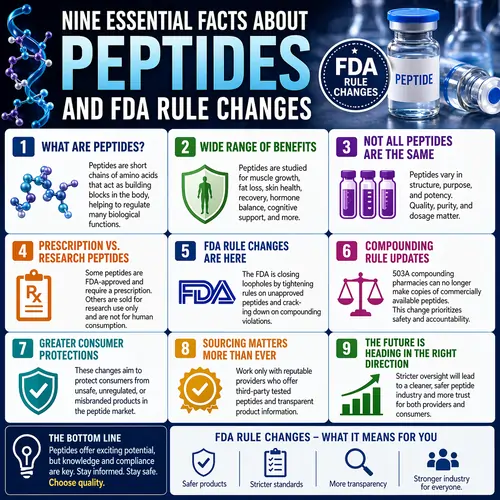
The following nine facts bring these themes together so you can understand where peptides stand today and how to navigate the changes responsibly.
Fact 1: Peptides Are Regulated Based on Function, Not Hype
The FDA looks at what a product does and what claims are made, not just the label on the bottle. If a peptide claims to treat disease, modify physiology, or impact structure and function of the body, it is usually classified as a drug, even if marketed as a supplement or cosmetic.
Implication: Calling something a “supplement” does not shield it from FDA peptide regulations. Consumers should be cautious when labels and advertising seem to downplay medical effects while influencers emphasize them.
Fact 2: FDA-Approved Peptide Drugs Exist, But They Are Narrowly Defined
When people ask, “are peptides FDA approved?” the accurate answer is: some are, most are not. Approved peptide drugs go through rigorous trials for specific conditions and dosages. They have standardized manufacturing, safety monitoring, and clear labeling.
Implication: If you need a peptide to treat a medical condition, ask your healthcare provider about approved options first. This typically offers more predictable quality and clearer evidence than experimental or unregulated alternatives. For a related guide, see Endoscopic Sinus Surgery (FESS): Information for Patients.
Fact 3: New FDA Rules on Peptides May Limit Compounding Options
As the FDA refines bulk substance lists and enforces the requirement that compounded drugs be based on clinical need and evidence, some customized peptide blends may no longer be available. Pharmacies may stop offering certain peptides if they fall outside permitted categories.
Implication: Patients who rely on compounded peptides should discuss backup plans with their prescribers now. That may mean transitioning to approved drugs, enrolling in trials, or reassessing whether the therapy is essential.
Fact 4: Online Peptide Vials Are a Regulatory Red Flag
Unapproved injectable peptides sold online often bypass FDA oversight entirely. They may be manufactured overseas or in unverified facilities and can be misbranded under “lab use only” disclaimers. FDA warnings have repeatedly cited quality, contamination, and false claims in this space.
Implication: If a peptide is sold without prescription, promised as a shortcut to muscle growth or fat loss, and shipped in an unlabeled or lightly labeled vial, it is almost certainly outside FDA approval pathways. The safety risk is substantial, and supply is vulnerable to sudden enforcement actions.
Fact 5: Peptide Supplements Safety Depends on Evidence, Not Just Anecdotes
Testimonials and online reviews rarely reveal long-term safety or rare adverse events. For many trending peptides, published human data are limited or restricted to very specific patient populations, not broad wellness use.
Implication: Evaluate peptide safety the same way you would evaluate any medication: by looking for peer-reviewed studies, regulatory assessments, and professional society guidance, not just marketing or influencer stories.
Fact 6: Cosmetic and Skincare Peptides Have a Different Risk Profile
Topical cosmetic peptides used in serums and creams generally carry lower systemic risk than injectables, because they act locally and are used at lower doses. However, if a cosmetic product claims to “treat” skin disease or alter physiology beyond appearance, it can still be treated as a drug.
Implication: For many people interested in peptides for anti-aging, high-quality topical products from reputable cosmetic brands may be a safer first step than experimenting with unapproved injections.
Fact 7: Clinicians Must Track Evolving Peptide Therapy Regulations
Physicians, nurse practitioners, and clinic owners are on the front lines of peptide therapy regulations. They must balance patient interest in cutting-edge therapies with federal law, state board guidance, and professional ethics.
Implication: If your clinician offers peptide therapy, ask how they stay current on FDA peptide regulations, whether products come from licensed pharmacies, and how they monitor safety. A clear, thoughtful answer is a good sign.
Fact 8: Patients Need Informed Consent and Realistic Expectations
Because many peptides are used off-label or without long-term data, informed consent is essential. Patients should understand that perceived benefits may be based on small studies or early evidence, and that regulatory status can change as more data emerge.
Implication: Expect a candid conversation about potential risks, benefits, regulatory status, and alternatives before starting any peptide therapy. If that conversation is missing, consider it a red flag.
Fact 9: Staying Compliant Means Choosing Evidence, Oversight, and Transparency
Ultimately, safe and legal peptide use depends on three pillars: evidence-based indications, appropriate medical oversight, and transparent sourcing from regulated pharmacies or brands.
Implication: To remain compliant as peptides and FDA rule changes evolve, prioritize therapies with published data, work with licensed clinicians, and avoid gray-market peptide vendors whose primary selling point is bypassing regulations.
Practical Checklist for Using Peptides Responsibly
To help you navigate this evolving space, use this simple checklist before starting or continuing any peptide product.
| Checklist Item | What to Look For | Why It Matters |
|---|---|---|
| Regulatory status | Is there an FDA-approved version or clear guidance? | Helps distinguish established therapies from experimental use. |
| Source of product | Licensed U.S. pharmacy or reputable cosmetic brand | Reduces contamination, mislabeling, and quality risks. |
| Prescribing oversight | Qualified clinician with peptide experience | Supports safety monitoring and proper dosing. |
| Evidence base | Human clinical data, not just animal or anecdotal | Improves confidence in both safety and effectiveness. |
| Marketing claims | Realistic, balanced, avoids miracle promises | Signals a more trustworthy, compliant provider. |
Useful Resources
For readers who want to go deeper on peptides and regulatory status, these official resources are a strong starting point:
- FDA Center for Drug Evaluation and Research (CDER) – Official hub for drug approvals, safety communications, and regulatory guidance.
- National Institutes of Health Office of Dietary Supplements – Evidence-based information on supplements, safety, and regulation.
Frequently Asked Questions About Peptides and FDA Rule Changes
What are peptides in simple terms?
Peptides are short chains of amino acids, the same building blocks that make up proteins. Because of their size and structure, they can act as chemical messengers, signaling cells to perform specific actions such as releasing hormones, repairing tissue, or modulating immune responses.
Are peptides considered drugs or supplements by the FDA?
The FDA classifies a peptide as a drug when it is intended to diagnose, treat, cure, or prevent disease, or when it significantly affects the structure or function of the body. Some peptides may be used in dietary supplements or cosmetics, but once drug-like claims are made, they fall under drug regulations.
Are peptides FDA approved for anti-aging or performance?
Very few peptides are FDA approved for broad anti-aging or performance enhancement. Most approved peptide drugs target specific medical conditions, such as diabetes or certain cancers. Popular “performance” peptides marketed online are generally not FDA approved for muscle gain, fat loss, or longevity claims.
Why is the FDA increasing regulation of peptides now?
The FDA is responding to rapid growth in unapproved peptide products, especially injectable vials sold online and compounded formulas used in wellness clinics. Concerns about contamination, mislabeling, exaggerated claims, and limited human safety data are driving more focused oversight and rule updates.
What are the new FDA rules on peptides for compounding pharmacies?
The FDA is refining which bulk peptide substances compounding pharmacies can legally use, emphasizing clinical need and available evidence. Peptides not included on specific allowed lists, or those deemed unsafe or insufficiently studied, may no longer be compounded for routine patient use, limiting access to certain custom formulations.
Is it legal to buy peptide vials labeled “for research only” online?
Buying “research only” peptide vials online occupies a gray and often risky area. If products are effectively intended for human use and marketed with drug-like claims, the FDA may treat them as unapproved drugs, making their distribution illegal. Consumers also face quality, sterility, and dosing uncertainties with such products.
How can I tell if a peptide product is high quality?
Look for sourcing from licensed pharmacies or reputable cosmetic brands, clear labeling, batch or lot numbers, and, ideally, evidence of third-party testing. Products prescribed by qualified clinicians and dispensed by regulated pharmacies generally offer better assurances of purity and dosing than anonymous online vendors.
Are topical peptide skincare products regulated differently?
Yes. Topical peptide skincare products are usually regulated as cosmetics as long as they make appearance-related claims such as smoothing or firming skin. If they claim to treat diseases like eczema or psoriasis, they may be treated as drugs and require approval. Topical use generally carries less systemic risk than injections.
What risks are associated with injectable peptides ?
Injectable peptides can carry risks of infection, contamination, incorrect dosing, immune reactions, and unintended hormonal or metabolic effects. Using unapproved or poorly manufactured injectables increases the chance of adverse events and offers little recourse if something goes wrong, especially when purchased without medical supervision.
Do peptides show up on drug tests for athletes?
Some peptides, particularly those that influence growth hormone or erythropoietin (EPO), are banned by sports organizations and may be detectable in anti-doping tests. Athletes should consult their sport’s regulatory body and medical team before using any peptide product to avoid sanctions or health risks. For a related guide, see ENT Care for Children: What Parents Should Know.
Can my doctor legally prescribe peptides ?
A doctor can prescribe FDA-approved peptide drugs for their labeled indications and may sometimes prescribe them off-label when supported by evidence and professional standards. Prescribing unapproved or compounded peptides is more complex and must comply with federal law, state medical board rules, and pharmacy regulations.
How do peptide therapy regulations affect wellness clinics?
Wellness clinics offering peptide therapy must navigate evolving FDA guidance, state regulations, and professional ethics. They need to source products from compliant pharmacies, avoid unapproved drug claims, secure informed consent, and maintain accurate records. Failure to do so can trigger regulatory or disciplinary actions.
Are peptide supplements safe to take without a prescription?
Safety varies widely. Some oral or topical peptide-containing supplements may be reasonably safe when produced by reputable manufacturers, but many products lack robust human data or consistent quality control. It is best to discuss any peptide supplement with a healthcare professional before use, especially if you have medical conditions or take medications.
Can peptides interact with medications I already take?
Yes, certain peptides can influence hormones, blood sugar, blood pressure, or immune function, potentially interacting with existing medications. For example, a peptide affecting insulin or cortisol could alter the effects of diabetes or steroid therapies. Always review potential interactions with a clinician or pharmacist before starting peptide products.
How will future FDA rule changes impact access to peptides ?
Future rule changes may further limit compounding of specific peptides, tighten enforcement against unapproved online sellers, and encourage development of more fully evaluated peptide drugs. Access is likely to shift toward products with stronger evidence and regulatory oversight, while gray-market options may become scarcer or legally riskier.
What should I ask a clinic before starting peptide therapy?
Ask where the peptides are sourced, whether they are FDA approved or compounded, what evidence supports their use, and what side effects or interactions to watch for. You should also ask how your progress will be monitored, what lab tests are needed, and what happens if peptides and FDA rule changes affect product availability.
Can I use peptides during pregnancy or breastfeeding?
Most experimental or non-essential peptide therapies are not recommended during pregnancy or breastfeeding because safety data are limited. Even for some approved peptide drugs, special precautions apply. Pregnant or breastfeeding individuals should consult their obstetrician or specialist before using any peptide-containing product.
How do I stay updated on peptide regulations?
You can follow FDA announcements, professional medical society guidance, and updates from your prescribing clinic or pharmacy. Many regulatory changes are posted on the FDA website, and reputable clinicians will communicate significant shifts in FDA peptide regulations that affect ongoing therapies.
Are there safer alternatives to experimental peptide therapies?
Often, yes. Depending on your goal—such as improving blood sugar, reducing inflammation, or enhancing skin appearance—there may be well-established medications, lifestyle interventions, or cosmetic treatments with stronger evidence and clearer regulatory status than experimental peptides. Discuss these alternatives with your healthcare provider before opting for higher-risk options.
What is the bottom line on peptides and FDA rule changes?
The bottom line is that peptides can be powerful therapeutic tools, but they are increasingly treated as drugs rather than casual supplements. As peptides and FDA rule changes evolve, safe and legal use will depend on choosing regulated products, working with knowledgeable clinicians, and prioritizing evidence-based decisions over hype or convenience.
In summary, peptides sit at the intersection of exciting medical innovation and tightening regulatory oversight. By understanding the basics, following evolving FDA peptide regulations, and choosing evidence-driven care, consumers and practitioners can make the most of peptide therapies while staying safe, compliant, and well informed.