

Panasonic Lumix L10 Key Takeaways
The Panasonic Lumix L10 is a mid-2000s DSLR that today sits firmly in "classic" territory, but it can still make sense for some Australian shooters.
- For the right buyer, a well-priced Panasonic Lumix L10 in Australia can still deliver pleasing images and a unique shooting experience.
- Its limitations in low light, autofocus and video mean it is no longer a good all-rounder compared with modern budget mirrorless bodies.
- In the Australian used market, it only makes sense if you specifically want a cheap Four Thirds DSLR for learning, tinkering or nostalgic shooting.
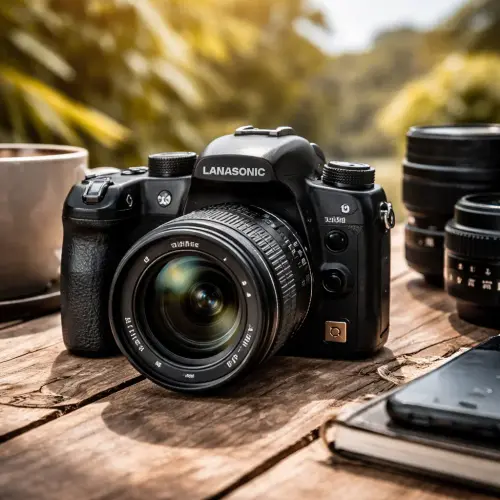
What Australian Photographers Should Know About the Panasonic Lumix L10
This Panasonic Lumix L10 review is written with Australian shooters in mind: people browsing Gumtree, Facebook Marketplace or CEX, wondering whether this older DSLR is a bargain or a dead end. The L10 was Panasonic’s second DSLR, built around the original Four Thirds system and launched in 2007, long before Micro Four Thirds and mirrorless took off.
On paper, a 10-megapixel sensor, live view and a flip-out screen still sound serviceable for casual use. But the digital camera world has moved a long way, and you can now find modern mirrorless bodies used for only a bit more money. So, is the Panasonic Lumix L10 still worth it for shooters in Australia today? Let’s break it down by build, features, image quality and real-world value. For a related guide, see Best Graphics Settings for Cyberpunk 2077 in 2026.
Build, Handling and Classic DSLR Ergonomics of the Panasonic Lumix L10
The Panasonic Lumix L10 feels very much like a mid-2000s enthusiast DSLR. It was built in partnership with Olympus and uses the Four Thirds mount, so it shares some DNA with cameras like the Olympus E-510.
Body quality and size
The body is mostly plastic but reasonably solid. It’s lighter than many contemporary DSLRs, roughly comparable in heft to an entry-level Canon EOS or Nikon D3000-series body. There’s no real weather sealing, so Aussie shooters should be careful around coastal spray, bush dust and summer storms.
Controls and usability
The control layout is actually one of the camera’s strong points. Dedicated buttons for ISO, white balance and metering make it quicker to adjust settings than on many cheap modern compacts. The rear control dial plus top buttons give it a more “enthusiast” feel, which can be appealing if you’re learning manual control.
That said, the menu system and responsiveness are noticeably dated. If you’re used to a modern mirrorless from Panasonic, Sony or Canon, the lag and slower navigation will feel clunky.
Viewfinder, Articulated Screen and Live View on the Lumix L10
One of the selling points of the Panasonic Lumix L10 Australia-market release was its fully articulated LCD screen and live view, both relatively new ideas in its era.
Optical viewfinder limitations
The L10’s optical viewfinder is a smaller Four Thirds pentamirror design. It’s usable but relatively dim and tunnel-like compared with modern APS-C DSLRs or mirrorless EVFs. Manual focus is not particularly enjoyable through it, and glasses wearers may find it cramped.
Articulated LCD and live view
The 2.5-inch vari-angle LCD is genuinely handy for low-angle and overhead shooting. For vlogging it is not ideal (limited video quality and no face AF), but for stills it makes creative compositions much easier.
Live view itself is primitive by today’s standards: autofocus in live view is slow, and there’s a noticeable delay. However, for tripod work, product shots, or basic macro photography, it’s still a useful feature once you accept its speed limitations.
Image Quality: How the Panasonic Lumix L10 Holds Up in 2026
Any honest Panasonic Lumix L10 review has to acknowledge that sensor technology has improved dramatically over the past 15+ years. The L10 uses a 10.1MP Four Thirds CCD sensor with a native ISO range of 100–1600.
Colour and detail
At low ISO, the L10 can still produce surprisingly attractive images. Colours are rich and slightly warm, with that classic CCD look some photographers find pleasing. At base ISO for daylight landscapes, city shots around Sydney or Melbourne, or casual portraits, the files are perfectly usable for web, small prints and photo books.
Dynamic range and noise
The real weakness is dynamic range and high-ISO noise. Push the files at ISO 800–1600 and noise becomes coarse, colour shifts appear, and shadows fall apart much more quickly than on even entry-level modern cameras. For indoor shooting under Australian home lighting, school events or dim pubs, you’ll hit the sensor’s limits fast.
If most of your shooting is outdoors in good light, the L10 can still deliver nice results. If you want an all-round camera for day and night, there are better budget options.
Autofocus, Performance and Real-World Speed of the Panasonic Lumix L10
A major question in any classic DSLR camera review is whether the autofocus system can keep up with real-world use. On the L10, the answer is “only for slower subjects”.
AF system and accuracy
The Panasonic Lumix L10 uses a 9-point phase-detect AF module. For static subjects, single-shot AF is reasonably accurate with the kit lens, particularly in decent light. For kids running around at the park, pets or casual sports, it starts to struggle, especially as the light drops.
There’s no modern subject detection, eye AF or reliable continuous tracking, so your keeper rate for action will be lower than with a used mirrorless body from the past five to eight years.
Continuous shooting and responsiveness
Burst shooting tops out at around 3 frames per second, and the buffer is shallow, especially with RAW files. This is fine for capturing a couple of quick shots but not for serious action sequences. Startup time and shutter lag are acceptable but not instant by current standards.
Lens and System Compatibility for Panasonic Lumix L10 Australia Buyers
When considering is the Panasonic Lumix L10 still worth it, lens availability in Australia is a crucial factor. The L10 uses the original Four Thirds mount, not the newer Micro Four Thirds (MFT) mount used by Panasonic G-series and Olympus/OM System mirrorless cameras.
Native Four Thirds lens options
Native Four Thirds lenses (Panasonic/Leica and Olympus) can be lovely, especially the premium zooms and primes, but they’re becoming harder to find. In Australia, your realistic options are the second-hand market and occasional import from Japan via sites like eBay.
The good news: Four Thirds lenses are often cheaper than equivalent modern lenses. The bad news: they’re rarer locally, and there’s always some risk buying older gear sight-unseen.
Cross-compatibility with Micro Four Thirds
You cannot mount modern Micro Four Thirds lenses directly on the L10. The system is effectively a dead end if you want to grow into a modern mirrorless setup. Instead, most Australian shooters are going the other way: using a Four Thirds-to-MFT adapter to mount old Four Thirds lenses on new mirrorless bodies, where possible.
So, if you start with an L10, be aware that upgrading later to a Micro Four Thirds mirrorless may require a body and new lenses, or at least an adapter plus different ergonomics.
Video and Extra Features on the Panasonic Lumix L10
In 2026, many Aussies expect even cheap cameras to double as decent video tools. The Panasonic Lumix L10 predates that era, and it shows. For a related guide, see PlayStation Plus Free Games May 2026: What to Expect This.
Video capability (or lack of it)
The L10 does not offer modern HD or 4K video modes. Any video features it has are extremely limited and not up to current expectations, especially compared with budget Panasonic Lumix G-series mirrorless bodies that offer excellent video performance.
Other features and limitations
Expect no Wi‑Fi, Bluetooth or in-camera apps. Image stabilisation depends on the lens rather than the body. Battery life is acceptable for casual day use, but genuine batteries are now older, and third-party replacements vary in quality. USB charging is not available, so you’re tied to the original-style charger.
Real-World Use in 2020s Australia: Who Actually Enjoys the Panasonic Lumix L10?
In practical 2020s conditions across Australia, the Panasonic Lumix L10 lands in a small niche. For serious work, it’s outclassed. But for specific use cases, it can still be fun and functional.
Scenarios where the L10 still works
- Daylight street photography around Brisbane, Perth or Adelaide, where low ISO and small prints or web use are fine.
- Learning exposure and manual control without the distraction of dozens of modern features.
- Nostalgic shooting for photographers who enjoy the feel of a classic DSLR and that early-digital CCD look.
Scenarios where you’ll quickly hit its limits
- Indoor sports, concerts, school events or dim pubs and restaurants, where high ISO and fast AF matter.
- Hybrid photo/video content creation for social media or YouTube.
- Serious wildlife, surf or motorsports work where tracking AF and high burst rates are essential.
Pros and Cons of the Panasonic Lumix L10 for Australian Buyers
To make this Panasonic Lumix L10 review practical, here’s a clear pros and cons breakdown for Aussie shooters considering one in 2026.
Advantages
- Very low purchase price on the Australian used market if you’re patient.
- Pleasing colour at low ISO, with a distinctive early-digital look.
- Fully articulated LCD useful for creative stills and tripod work.
- Simple, direct controls that are good for learning exposure and manual shooting.
- Four Thirds lenses can sometimes be found cheaply and offer good optical quality.
Disadvantages
- Poor high-ISO performance compared with even older APS-C DSLRs from Canon and Nikon.
- Slow autofocus and limited continuous shooting: not ideal for action or kids sport.
- No modern video features, connectivity, or convenience tools like Wi‑Fi.
- Four Thirds mount is effectively discontinued, making lens hunting and long-term system growth difficult.
- Repairs, batteries and accessories in Australia are getting hard to source.
Value for Money: Panasonic Lumix L10 Australia Pricing vs Budget Alternatives
Value is where this classic DSLR camera review really matters for Australians. On local used sites, the Panasonic Lumix L10 Australia-market units often show up bundled with a kit lens for a very low price, sometimes under $150 AUD, depending on condition.
How it compares to other budget options
| Camera Option | Typical Used Price (AU) | Key Pros vs Lumix L10 |
|---|---|---|
| Panasonic Lumix L10 | ~$80–$150 (body + kit lens) | Cheapest entry, articulating screen, unique CCD look |
| Used Canon EOS 600D / 650D | ~$150–$250 (with kit) | Better high ISO, stronger AF, wider lens ecosystem |
| Used Nikon D3200 / D3300 | ~$180–$280 (with kit) | More resolution, cleaner files, more modern handling |
| Used Panasonic G5 / G6 (Micro Four Thirds) | ~$150–$250 (body or basic kit) | Mirrorless, better video, active lens ecosystem |
In many cases, spending just $50–$100 more on a used Canon, Nikon or Micro Four Thirds mirrorless body will give you a far more flexible and future-proof system. The L10 only represents good value if:
- It’s significantly cheaper than these alternatives, and
- You specifically want the Four Thirds DSLR experience and can live with its limitations.
Import and availability considerations
Some Australians source the Panasonic Lumix L10 from Japan via eBay, where stock can be more plentiful. Keep in mind import shipping costs, potential GST on higher-value imports, and the lack of local warranty or support. For a very old body, paying for international shipping usually cancels out any savings unless you’re a collector.
For general shooters in Australia, it usually makes more sense to buy locally, inspect the gear in person where possible, and focus on systems with better lens and service support.
Final Verdict: Is the Panasonic Lumix L10 Still Worth It in Australia?
So, is the Panasonic Lumix L10 still worth it for Australians in 2026? For most people, no. For a small group of enthusiasts, collectors and tinkerers, possibly yes.
If you are a beginner wanting an affordable way to learn photography, a used Canon or Nikon DSLR or a Micro Four Thirds mirrorless body will give you better performance, easier lens access and a much smoother path to upgrading. If you are a hybrid creator needing video, the L10 is simply the wrong tool.
However, if you’re an enthusiast who enjoys older digital cameras, wants to experiment with a discontinued Four Thirds DSLR, or finds an L10 plus lens kit at a very low price, the camera can still be fun and capable in good light. For that niche audience in Australia, this quirky classic can still deliver satisfying images—so long as you walk in with realistic expectations.
Useful Resources
For detailed historical specs and background on the Panasonic Lumix L10, it’s worth checking the original manufacturer information and independent lab tests.
- DPReview Panasonic Lumix DMC-L10 review and specs
- Panasonic global archive page for the Lumix DMC-L10
Frequently Asked Questions About Panasonic Lumix L10
Is the Panasonic Lumix L10 still usable for photography in 2026?
Yes, the Panasonic Lumix L10 is still usable for basic photography in 2026, especially in good light and for casual shooting, but it is limited by its older sensor, slower autofocus and lack of modern features, so it is best suited to enthusiasts who understand and accept those compromises.
Who is the Panasonic Lumix L10 best suited for in Australia?
In Australia, the Panasonic Lumix L10 is best suited to hobbyists who enjoy classic digital cameras, learners who want a very cheap way to understand manual exposure, and collectors or tinkerers who are specifically interested in the old Four Thirds DSLR system.
How does the Panasonic Lumix L10 image quality compare to modern entry-level cameras?
Compared to modern entry-level cameras, the Panasonic Lumix L10 delivers decent colour and detail at low ISO but falls significantly behind in dynamic range and high-ISO performance, meaning contemporary APS-C DSLRs and mirrorless bodies produce cleaner, more flexible files in most conditions.
Is the Panasonic Lumix L10 good for low-light photography?
The Panasonic Lumix L10 is not ideal for low-light photography, as its older 10MP Four Thirds sensor produces noticeable noise and reduced dynamic range at higher ISO settings, so you will need fast lenses, careful exposure and a willingness to accept grainy results in darker scenes.
Can I use Micro Four Thirds lenses on the Panasonic Lumix L10 ?
No, you cannot directly use Micro Four Thirds lenses on the Panasonic Lumix L10 because it uses the older Four Thirds mount, and while there are adapters to mount Four Thirds lenses on Micro Four Thirds bodies, the reverse path does not exist for practical use.
What lenses are compatible with the Panasonic Lumix L10 ?
The Panasonic Lumix L10 is compatible with Four Thirds mount lenses from Panasonic, Leica and Olympus, including various kit zooms and some high-quality pro zooms and primes, but these lenses are now mostly found on the second-hand market and can be harder to source in Australia.
Does the Panasonic Lumix L10 shoot video?
The Panasonic Lumix L10 has extremely limited or effectively no modern video capability by current standards, lacking HD or 4K modes, and it should not be considered a viable option for people who want to shoot quality video or create content for YouTube and social media.
How much should I pay for a used Panasonic Lumix L10 in Australia?
In Australia, a fair price for a used Panasonic Lumix L10 with kit lens is typically in the range of about $80 to $150 AUD depending on condition and accessories, and it generally only makes sense if it is clearly cheaper than more modern used DSLRs or mirrorless cameras.
Is it easy to find spare batteries for the Panasonic Lumix L10 ?
Spare batteries for the Panasonic Lumix L10 can still be found through third-party suppliers online, but genuine Panasonic batteries are rare, and buyers should be prepared for variability in quality and possibly shorter lifespans from generic replacements.
How reliable is the Panasonic Lumix L10 after so many years?
The long-term reliability of a Panasonic Lumix L10 now depends heavily on how it has been stored and used, as electronics, shutters and rubber components can age, so it is wise to thoroughly test any used body, check for sensor issues and budget for the possibility that repairs may not be economical.
Is the articulated screen on the Panasonic Lumix L10 still useful today?
Yes, the articulated screen on the Panasonic Lumix L10 is still useful for low-angle and overhead composing, macro and tripod work, even though the display resolution is modest and live view autofocus is slow compared with modern standards.
Does the Panasonic Lumix L10 have image stabilisation?
The Panasonic Lumix L10 itself does not have in-body image stabilisation, so any stabilisation you get will depend on whether the attached Four Thirds lens includes optical stabilisation, which means performance may vary from lens to lens.
Is the Panasonic Lumix L10 good for beginners learning photography?
The Panasonic Lumix L10 can be good for beginners who specifically want a very cheap DSLR to learn manual settings and don’t mind its age, but in most cases a slightly newer used Canon, Nikon or Micro Four Thirds camera will be more forgiving and offer a better long-term system.
Can I still get the Panasonic Lumix L10 serviced in Australia?
Official servicing options for the Panasonic Lumix L10 in Australia are very limited now that the camera is long discontinued, so any repairs usually rely on independent technicians, parts cameras or self-servicing, making it risky to invest heavily in a worn or faulty unit.
How does the Panasonic Lumix L10 compare to a used Canon 600D?
Compared to a used Canon 600D, the Panasonic Lumix L10 generally offers inferior high-ISO performance, slower autofocus, weaker video capabilities and a far more limited lens ecosystem, making the Canon a better all-round choice for most Australian photographers despite being slightly newer.
Is the Panasonic Lumix L10 suitable for travel photography?
The Panasonic Lumix L10 can handle basic travel photography in bright conditions, but its older sensor, limited high ISO performance, lack of connectivity and the challenge of finding additional lenses make it less convenient than compact modern mirrorless systems for most travellers.
Can I shoot RAW with the Panasonic Lumix L10 ?
Yes, the Panasonic Lumix L10 supports RAW shooting, and working with RAW files in modern editing software can help you maximise the limited dynamic range and fine-tune colour, although the files will not offer the same flexibility as those from newer sensors.
Does the Panasonic Lumix L10 have Wi‑Fi or Bluetooth?
No, the Panasonic Lumix L10 does not have Wi‑Fi or Bluetooth, so images must be transferred via memory card or cable, which is slower and less convenient than the wireless transfer options on modern cameras and smartphones.
Is the Panasonic Lumix L10 worth buying as a backup camera?
The Panasonic Lumix L10 can work as a backup camera for hobbyists who already own Four Thirds lenses and understand the system, but for most photographers, a backup that shares batteries, lenses and menus with their main modern camera will be more practical.
Are there any unique benefits to using the Panasonic Lumix L10 today?
The main unique benefits of using the Panasonic Lumix L10 today are its distinctive CCD colour rendering at low ISO, the tactile classic DSLR experience and the low cost of entry, all of which can appeal to experimental shooters and camera enthusiasts who enjoy working within constraints.