

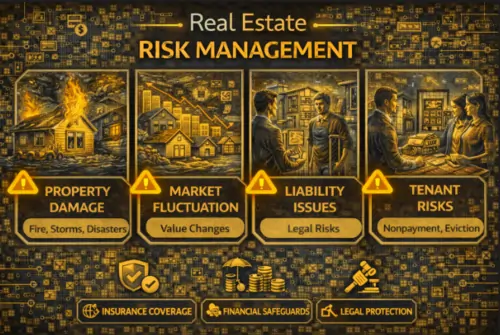
Introduction
Real estate is often viewed as one of the most stable and rewarding investment opportunities. However, like any financial venture, it comes with certain uncertainties. Economic shifts, property damage, legal disputes, and market fluctuations can all affect the success of a real estate investment. Because of these potential challenges, understanding real estate risk management is essential for property owners, investors, and developers.
Real estate risk management involves identifying possible threats to property investments and implementing strategies to minimize their impact. Effective risk management helps investors protect their assets, maintain financial stability, and make better decisions in uncertain market conditions.
For anyone involved in the real estate market, learning how to evaluate and manage risks can make the difference between long-term success and costly setbacks.
Why Real Estate Risk Management Matters
Real estate investments typically require significant financial commitments. Unlike other assets, properties involve ongoing costs such as maintenance, taxes, insurance, and loan repayments.
Without proper planning, unexpected problems can quickly reduce profits or even lead to financial loss. Real estate risk management helps investors anticipate potential challenges before they become serious issues.
For example, understanding local market trends can help investors avoid overpaying for properties. Insurance policies can protect against damage from natural disasters. Legal safeguards can prevent disputes related to property ownership or contracts.
By identifying risks early and preparing for them, investors can safeguard their investments and maintain long-term profitability.
Types of Risks in Real Estate
Market Risk
Market risk refers to changes in property values caused by economic conditions, interest rates, or shifts in supply and demand.
During economic downturns, property values may decline and rental demand may weaken. Investors who rely heavily on property appreciation may experience financial pressure if the market slows.
Understanding market trends is a key component of real estate risk management, allowing investors to anticipate potential fluctuations and plan accordingly.
Financial Risk
Financial risk occurs when investors rely heavily on borrowed capital or face unexpected expenses.
Mortgage interest rates, loan terms, and repayment obligations can affect profitability. If rental income decreases or property expenses increase, investors may struggle to maintain positive cash flow.
Careful financial planning, realistic budgeting, and maintaining reserve funds are important strategies to manage financial risk.
Property and Physical Risk
Properties may face risks related to structural damage, natural disasters, or aging infrastructure.
Examples include:
- fire or flood damage
- structural issues
- environmental hazards
- maintenance failures
Regular inspections and property insurance are essential tools in real estate risk management to address these risks.
Legal and Regulatory Risk
Real estate transactions must comply with local laws, zoning regulations, and property ownership rules.
Legal risks can arise from:
- unclear property titles
- contract disputes
- zoning violations
- tenant disputes
Ensuring proper documentation and seeking professional legal advice when necessary can help reduce these risks.
Liquidity Risk
Real estate is generally considered a less liquid investment compared to stocks or bonds. Selling property may take time, especially in slow markets.
Investors who need quick access to funds may face challenges if their assets are tied up in property investments.
Diversifying investments and maintaining emergency funds can help manage liquidity risk.
Key Strategies for Real Estate Risk Management
Conduct Thorough Market Research
Understanding local market conditions is one of the most important steps in managing real estate risk.
Market research should include analysis of:
- property demand
- neighborhood development plans
- employment growth
- population trends
Investors who study these factors can identify emerging opportunities and avoid markets with declining demand.
Diversify Property Investments
Diversification is a widely used strategy in real estate risk management. By investing in different types of properties or locations, investors reduce their exposure to a single market risk.
For example, an investor may diversify by owning:
- residential properties
- commercial spaces
- short-term rental units
- properties in different cities or regions
Diversification helps stabilize income streams and reduce the impact of localized market downturns.
Maintain Adequate Insurance Coverage
Insurance plays a critical role in protecting real estate investments.
Common insurance types include:
- property insurance
- liability insurance
- landlord insurance
- natural disaster coverage
These policies help protect property owners from financial losses caused by damage, accidents, or legal claims.
Perform Regular Property Inspections
Routine inspections help identify maintenance issues before they become serious problems.
Regular inspections may reveal:
- structural weaknesses
- plumbing issues
- electrical problems
- roof damage
Addressing these issues early can prevent costly repairs and maintain property value.
Build a Financial Safety Buffer
Unexpected expenses can arise at any time. Successful investors often maintain reserve funds to cover emergency repairs, temporary vacancies, or market downturns.
Financial reserves are an important part of real estate risk management because they provide stability during uncertain periods.
The Role of Technology in Real Estate Risk Management
Technology has become increasingly important in managing real estate risks.
Property management platforms, data analytics tools, and real estate market research software help investors track performance, monitor property conditions, and analyze market trends.
Digital tools can also improve communication between property managers, tenants, and investors, making it easier to address issues quickly.
As technology continues to evolve, it is expected to play an even greater role in risk assessment and property management.
When Professional Advice Is Necessary
While many investors manage properties independently, certain situations require professional guidance.
Real estate professionals who can assist with risk management include:
- real estate attorneys
- financial advisors
- property managers
- licensed appraisers
These experts can help investors evaluate legal documents, analyze market conditions, and ensure compliance with local regulations.
Seeking professional advice when necessary can reduce uncertainty and improve investment outcomes.
Conclusion
Real estate remains a valuable investment opportunity, but it also carries risks that must be managed carefully. Effective real estate risk management involves understanding market conditions, protecting assets with insurance, maintaining financial reserves, and staying informed about legal requirements.
By identifying potential risks early and implementing appropriate strategies, investors can protect their investments and maintain stable returns over time.
With careful planning and informed decision-making, real estate investors can navigate challenges and build long-term financial success.
FAQ
What is real estate risk management?
Real estate risk management is the process of identifying, evaluating, and minimizing risks associated with property investments.
Why is risk management important in real estate?
Risk management helps protect investments from financial losses, legal issues, market fluctuations, and property damage.
What are the main risks in real estate investing?
Common risks include market fluctuations, financial risks, property damage, legal disputes, and liquidity challenges.
How can investors reduce real estate risks?
Investors can reduce risks by conducting market research, diversifying investments, maintaining insurance coverage, and keeping financial reserves.
Is real estate a safe investment?
Real estate can be a stable investment, but it still involves risks that must be carefully managed through proper planning and analysis.