

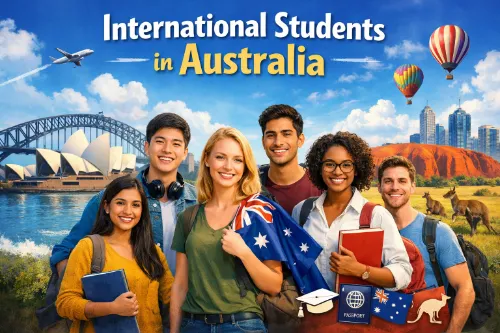
International Students in Australia: Study, Life, and Future Trends
International students are a core part of Australia’s education system and economy, with more than 830,000 overseas learners enrolled across schools, VET, higher education, and English‑language colleges in 2025. Even with new enrolment caps and visa changes, recent policy updates show that Australia intends to remain one of the world’s most welcoming destinations for international education, especially for students from Southeast Asia.
Australia’s official Study Australia portal positions the country as a destination that offers world‑class qualifications, a high standard of living, and a multicultural environment where students can build global networks and careers.
1. How many international students are in Australia?
The Australian Government’s Department of Education publishes detailed data in its International student monthly summary and data tables. For the year to October 2025, these tables show:
- 833,041 international students were enrolled in Australia across all sectors.
- This figure represents a 0.3% decrease compared to the same period in 2024, but remains close to record highs.
A companion dataset, International student numbers by country, state and territory, confirms this total and breaks it down by source country and destination state.
Statista’s “Australia: number of international students by country”, based on 2023 data, shows that China, India and Nepal are the top three source countries, jointly accounting for nearly half of total enrolments.
The Australian Bureau of Statistics information paper Recording of international students in the balance of payments highlights that international education generated about AUD 53.6 billion in export income in 2024–25, underscoring its importance to the broader economy.
2. New caps and policy settings for 2025–2026
To manage migration, housing, and infrastructure pressures, Australia has introduced caps on new international student enrolments.
An update from IDP Philippines, “Australia prioritises SEA students, raises 2026 cap”, explains that:
- The initial 2025 cap was set at 250,000 new student places.
- On 4 August 2025, the government raised the 2026 cap to 295,000, a 9% increase and about 25,000 more places than in 2025.
- The policy explicitly prioritises students from Southeast Asia, signalling a strategic focus on regional partnerships.
Sector coverage such as Koala News’ report on 2025 allocations notes that the sector effectively used 102% of its 2025 allocation, demonstrating continued demand and system flexibility.
The Department of Home Affairs’ study visa statistics provide up‑to‑date figures on student and graduate visa lodgements, grants, and processing times, which help contextualise how these caps translate into actual visas.
3. Why international students choose Australia
Australia’s official Study Australia education system overview outlines a system structured around the Australian Qualifications Framework (AQF), ensuring that qualifications are nationally consistent and internationally recognised. The companion page on universities and higher education highlights:
- A wide choice of universities and non‑university providers.
- Clear pathways from English‑language and foundation programs into degrees.
- Research‑intensive institutions in the world’s top rankings.
The long‑running InternationalStudent.com “Study in Australia” guide adds that Australian degrees are particularly valued in fields such as business, engineering, IT, and health, and that graduates benefit from strong post‑study work options in many disciplines.
Sydney Institute of Higher Education’s “Study in Australia: International Student Guide” points to additional reasons students choose Australia:
- Modern, well‑equipped campuses and research facilities.
- A multicultural, English‑speaking society that’s relatively safe and politically stable.
- Strong student support services for academic success, career development, and wellbeing.
Individual universities also market directly to overseas students. The University of Sydney’s international students page, for example, highlights pathway arrangements, English‑language programs, and credit transfer agreements with partner institutions worldwide.
4. Visa requirements and work rights for international students
Most international students study in Australia on the Student visa (subclass 500).
The official Study Australia visa application process guide summarises the main steps:
- Obtain a Letter of Offer and Confirmation of Enrolment (CoE) from a CRICOS‑registered provider.
- Satisfy the Genuine Student (GS) requirement by demonstrating genuine study intentions and appropriate background.
- Provide evidence of financial capacity, English proficiency, and Overseas Student Health Cover (OSHC).
- Lodge the visa application online via the Department of Home Affairs, uploading all supporting documents and paying the visa fee.
The University of Queensland’s article “6 essential steps for study in Australia” notes that subclass 500 visas usually allow full‑time study, stays of up to five years, and part‑time work rights: as of 2025, most student visa holders can work up to 48 hours per fortnight during teaching periods and unlimited hours during official holidays.
The Department of Home Affairs’ study visa statistics page provides further detail on visa types, grant rates, and processing times, helping prospective students plan when to apply.
5. Cost of living and financial requirements
Cost of living is a key factor for international students when choosing where and how to study in Australia.
Study Australia’s living and education costs guide lists typical expenses such as accommodation, food, transport, utilities, and study materials, and notes that the Department of Home Affairs sets minimum financial capacity requirements for student visa applicants.
Vedantu’s “Cost of Living in Australia for International Students 2025” estimates that:
- Average monthly living expenses (excluding tuition) are roughly AUD 1,500–2,500, depending on city and lifestyle.
- Annual living costs fall between AUD 24,000–27,000 for many students.
- As of late 2025, the minimum required amount for student visa financial evidence is approximately AUD 29,710 per year.
Accolade Student’s guide to living expenses for international students in Australia similarly reports that the Department of Home Affairs requires at least AUD 29,710 per year in living funds for a single student, with higher figures for dependants. They also break down typical costs for on‑campus housing versus shared rentals, as well as utilities, transport, and groceries.
These figures help students budget realistically, and are crucial when preparing proof of funds for visa applications.
6. Academic experience and support for international students
International students enrol across all sectors—schools, VET, higher education and English‑language courses—but universities host the majority.
Study Australia’s universities and higher education page explains that Australian universities offer qualifications from bachelor degrees through to doctorates and often embed work‑integrated learning, placements and internships into programs. These degrees are structured under the Australian Qualifications Framework, ensuring consistency and international recognition.
Sydney Institute’s international student guide highlights common support services for international learners:
- Orientation programs to help with academic and cultural transition.
- Academic support units offering study skills, writing help and tutoring.
- Careers and employability services, including CV checks and internship support.
- Counselling and wellbeing services, often at low or no extra cost.
The University of Sydney’s international students page emphasises pathway options, English‑language courses, and foundation studies delivered via partner colleges, which help students meet entry requirements and adapt to Australian academic expectations.
7. Life in Australia: culture, community, and work
Life outside the classroom is a major part of the international student experience.
Study Australia’s living and education costs page describes typical student accommodation options—on‑campus residences, homestays, and shared rentals—and notes that many states offer public transport concessions for full‑time students.
Sydney Institute’s guide describes Australia as a “vibrant multicultural environment” where students can join clubs, societies and community organisations to build friendships and networks. The InternationalStudent.com Study in Australia guide similarly highlights lifestyle advantages such as outdoor culture, beaches, and diverse cities, and notes that many students work part‑time in sectors like hospitality, retail or tutoring alongside their studies.
As mentioned earlier, the University of Queensland’s “6 essential steps” article points out that most Student visa (subclass 500) holders can work up to 48 hours per fortnight during teaching periods, plus unlimited hours during scheduled breaks, giving students opportunities to gain local experience and supplement their income.
8. Future outlook for international students in Australia
Recent statistics and policy signals suggest that international education will remain central to Australia’s economic and diplomatic strategy, albeit under more managed settings.
- The ABS information paper confirms that international education exports have rebounded to over AUD 53.6 billion, exceeding pre‑pandemic levels and contributing significantly to the balance of payments.
- Department of Education data show that total international enrolments in 2025 are still very high, even with a slight year‑on‑year decline.
- The decision to raise the 2026 cap to 295,000 new student visas, as explained in IDP’s cap update, reflects a desire to keep the sector growing while addressing domestic concerns about housing and infrastructure.
The Department of Home Affairs’ study visa statistics will continue to reveal how policy tweaks affect visa grant rates and processing times, while ongoing reviews of work rights and post‑study options may shift the landscape for future cohorts. For now, official messaging and sector investment indicate that Australia intends to stay highly competitive in the global market for international students.