

The top remote worker skills for career growth include strong communication, self-discipline, time management, digital literacy, AI tool proficiency, emotional intelligence, adaptability, problem-solving, collaboration, and continuous learning. Mastering these skills helps remote professionals stand out, earn promotions, and build long-term career success from anywhere in the world.
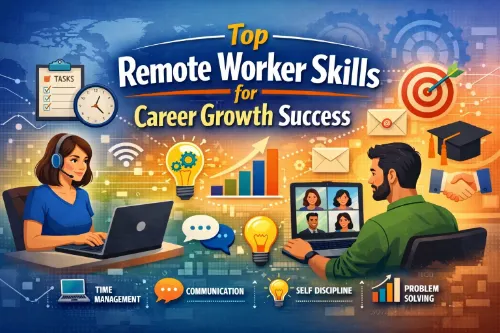
Remote work is no longer a temporary arrangement or a workplace perk — it is the new standard for millions of professionals worldwide. According to FlexJobs’ 2025 Remote Work Report, remote job postings across multiple industries grew by at least 19% throughout 2025, and competition for these roles has never been fiercer.
The question is no longer whether remote work is here to stay. The real question is: do you have the skills to thrive and grow your career remotely?
Whether you are just starting out or looking to level up, this remote worker guide covers the top remote worker skills that drive real career growth in 2026 and beyond. Make sure to also read our remote worker career guide to build the full roadmap for advancement.
What Skills Do Remote Workers Need to Grow Their Careers?
According to Splashtop’s 2026 Remote Work Trends Report, remote workers need a distinct combination of technical know-how, soft skills, and behavioral habits. These are not just qualities that help you survive working from home — they are what separate average remote employees from those who get promoted, hired, and recognized.
If you are serious about skills for career growth, understanding what employers actually look for in distributed teams is the first step.
1. Advanced Communication Skills
Communication is the lifeblood of remote work. Without a shared office, every misunderstanding costs time, trust, and momentum.
Strong remote communicators know how to:
- Write clear, concise emails and messages that do not require follow-up for clarification
- Speak confidently and professionally in video meetings
- Choose the right communication channel for each type of message
- Practice active listening during virtual meetings and respond thoughtfully
According to a NACE Job Outlook 2025 Survey, written communication is consistently ranked among the top three skills employers look for. Combine strong communication with a structured productive remote work routine and you will already be ahead of most remote professionals.
2. Self-Discipline and Intrinsic Motivation
Remote work requires you to be your own accountability partner. Gallup research consistently finds that remote workers who maintain structured routines outperform those with a loose, reactive mindset.
Self-discipline also means knowing how to set boundaries when you work from home so that personal life does not bleed into work hours — and vice versa.
3. Time Management and Prioritization
Mastering remote work time management is non-negotiable for anyone serious about career growth. According to Forbes’ 2026 remote skills feature, cognitive flexibility and efficient time use are now baseline expectations — not bonus traits.
Strong time management pairs naturally with the right productivity tips for remote workers — together these two habits compound your output significantly over time.
4. Digital Literacy and Technical Proficiency
St. John’s University’s 2026 Skills Report identifies digital fluency as one of the most critical competencies for modern professionals. The right tools for remote workers can dramatically accelerate your digital fluency and signal to employers that you can operate independently at a high level.
5. AI Literacy and Automation Skills
Oxford Home Study College’s AI Skills 2026 report states clearly: “Using AI to enhance productivity is no longer an optional skill — it is a foundational requirement.” Daily AI use in workplaces rose 23% in frequent use, according to Gallup.
AI literacy is now one of the most valuable high-income skills available to remote professionals — and workers who leverage it are far better positioned to increase their income as a remote worker.
6. Emotional Intelligence (EQ)
The World Economic Forum identifies emotional intelligence as one of the top skills for workplace leaders globally. High EQ connects directly to practicing strong wellness tips for better mental health and knowing the right tips to avoid burnout while working before fatigue becomes a career setback.
7. Adaptability and Cognitive Flexibility
Adaptability is one of the most underrated skills for career growth in remote work. It directly determines your ability to take on new responsibilities — which is exactly what leads to getting promoted remotely.
8. Proactive Problem-Solving
CNBC’s reporting on FlexJobs’ 2026 data notes that top remote employers want candidates who can “work independently with minimal oversight.” Workers who demonstrate strong initiative are also the ones who land the best remote jobs for long-term career stability and growth.
9. Virtual Collaboration and Teamwork
Apply the best focus tips for remote workers to stay sharp during collaborative tasks and deep work sessions alike. A distracted remote worker is a burden to the team — a focused one is an asset.
10. Continuous Learning Mindset
Continuous learners position themselves to develop multiple income streams over time — because each new skill opens a new earning opportunity. The best side hustles for remote workers are almost always built on skills that were deliberately developed.
Bonus: Healthy Habits and Work-Life Balance
High-performing remote professionals who prioritize healthy habits consistently report better focus and lower burnout rates. Sustainable success also requires strong work-life balance tips to keep you energized for the long haul.
How to Turn These Skills Into Career Growth
Get promoted remotely. Master how to get promoted remotely by building a track record that speaks for itself.
Optimize your resume. Apply these resume tips to get hired fast online to stand out in crowded applicant pools.
Negotiate your worth. Use proven strategies to negotiate higher pay in a remote job with confidence.
Build multiple income streams. Start building multiple income streams now to add security and accelerate wealth creation.
Explore side hustles. Discover the best side hustles for remote workers that complement your primary role.
Conclusion
The ten skills covered in this guide — communication, self-discipline, time management, digital literacy, AI proficiency, emotional intelligence, adaptability, problem-solving, collaboration, and continuous learning — are the foundation of a high-performing remote career. Start with the skills you feel least confident about. Invest consistently. Apply what you learn. The remote career you want is built one skill at a time.
FAQs
1. What skills are essential for remote workers in 2026?
Remote workers need a mix of technical skills, communication ability, self-discipline, and adaptability to succeed in a global work environment.
2. Why are communication skills critical in remote work?
Because remote teams rely on clear written and verbal communication to avoid misunderstandings and maintain workflow efficiency.
3. How does self-discipline impact remote work success?
Self-discipline allows remote workers to stay productive, meet deadlines, and maintain consistency without direct supervision.
4. What is the role of time management in remote careers?
Time management helps prioritize tasks, improve output, and maintain balance between work responsibilities and personal life.
5. Why is digital literacy important for remote workers?
Digital literacy enables workers to use tools efficiently, collaborate effectively, and adapt to evolving workplace technologies.
6. What is AI literacy and why does it matter?
AI literacy refers to the ability to use AI tools to improve productivity, automate tasks, and increase overall work efficiency.
7. How does emotional intelligence help remote workers?
It improves communication, teamwork, and conflict resolution while supporting mental well-being.
8. Why is adaptability important in remote work?
Adaptability allows workers to adjust to new tools, workflows, and responsibilities in a rapidly changing digital environment.
9. What is proactive problem-solving in remote jobs?
It means identifying issues early and resolving them independently without waiting for instructions.
10. How can remote workers improve collaboration?
By staying engaged in communication channels, participating actively in meetings, and maintaining clarity in shared tasks.
11. What does a continuous learning mindset mean?
It involves regularly upgrading skills, learning new tools, and staying informed about industry trends.
12. How do skills influence remote career growth?
Stronger and more relevant skills increase your chances of promotion, better job opportunities, and higher income.
13. Can remote workers succeed without technical skills?
While some roles require minimal technical knowledge, most remote careers benefit greatly from digital and technical proficiency.
14. How can remote workers develop new skills?
Through online courses, hands-on projects, certifications, and consistent practice in real work scenarios.
15. What are high-income skills for remote workers?
Skills like AI, software development, digital marketing, data analysis, and UX design offer strong earning potential.
16. How do skills affect income potential in remote work?
Specialized and in-demand skills allow remote workers to command higher salaries and freelance rates.
17. Why is focus important during remote collaboration?
Maintaining focus ensures productivity, reduces errors, and improves team outcomes during shared tasks.
18. How do healthy habits support remote work performance?
Good sleep, exercise, and mental wellness improve concentration, energy levels, and long-term productivity.
19. What is the connection between skills and promotions?
Employees with strong skills and consistent performance are more likely to be recognized and promoted.
20. How can remote workers future-proof their careers?
By continuously learning, adapting to new technologies, and developing skills aligned with market demand.