

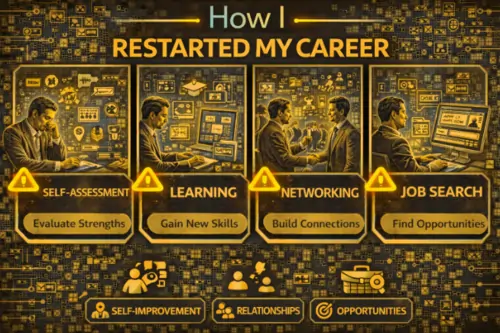
Introduction
Career setbacks can happen to anyone. Job loss, industry changes, personal challenges, or unexpected life events may force individuals to pause and rethink their professional path. While these moments can feel overwhelming, they can also create opportunities for reinvention and growth.
The story of how I restarted my career is not simply about returning to work—it is about rebuilding confidence, learning new skills, and discovering a new direction for the future. Many professionals who restart their careers eventually find more fulfilling opportunities than they had before.
Restarting a career requires courage, adaptability, and a willingness to embrace change. By reflecting on past experiences and building new strategies, individuals can turn career disruptions into powerful turning points.
Recognizing the Need for a Career Restart
Sometimes career change happens suddenly. Other times, it develops gradually as individuals realize their current job no longer aligns with their goals or circumstances.
Common reasons people restart their careers include:
- job loss or layoffs
- burnout or job dissatisfaction
- industry decline or technological changes
- personal or family responsibilities
- relocation or lifestyle changes
Recognizing the need for change is often the first step toward a successful career restart.
For many professionals, the realization can be difficult at first. However, acknowledging the need for a new direction allows individuals to take control of their future rather than remaining stuck in an unfulfilling situation.
Facing the Emotional Challenges
Restarting a career often involves emotional challenges. Professionals who once felt confident in their roles may suddenly feel uncertain about their future.
Common emotions during this stage include:
- self-doubt
- anxiety about financial stability
- fear of starting over
- concern about age or experience
These feelings are normal. However, they should not prevent individuals from pursuing new opportunities.
Many successful professionals emphasize that resilience and mindset are key when rebuilding a career. Instead of focusing on what was lost, it is more productive to focus on what can be created next.
Learning From Past Experiences
One of the most valuable parts of how I restarted my career involved reflecting on past experiences.
Career setbacks often reveal important lessons about:
- professional strengths
- areas for improvement
- leadership skills
- communication abilities
- industry knowledge
Instead of viewing past mistakes as failures, they can be seen as valuable experiences that shape future success.
Understanding these lessons helps individuals approach their next career phase with greater confidence and awareness.
Developing New Skills
In many cases, restarting a career requires learning new skills or adapting to evolving industries.
Technology, digital tools, and changing business practices have transformed many professions. Professionals who invest in learning remain competitive in the job market.
Examples of skills that can support career reinvention include:
- digital communication
- project management
- data analysis
- leadership development
- industry-specific technical skills
Online learning platforms, professional certifications, and training programs provide accessible ways to develop these skills.
Continuous learning not only improves employability but also increases confidence during career transitions.
Building a New Professional Network
Networking plays a major role in career recovery and growth.
When restarting a career, reconnecting with former colleagues, mentors, and industry professionals can open new opportunities. Networking helps individuals stay informed about job openings, industry trends, and potential collaborations.
Professional networking may include:
- attending industry events
- joining professional associations
- connecting with peers on LinkedIn
- participating in online communities
Strong professional relationships often lead to unexpected career opportunities.
Exploring New Career Paths
Restarting a career does not always mean returning to the same industry. Many individuals discover new passions or interests that lead them in completely different directions.
Career transitions may involve:
- switching industries
- starting a new business
- pursuing freelance or consulting work
- entering emerging sectors
Exploring new options allows individuals to align their careers with evolving interests and personal goals.
For some professionals, a career restart becomes the moment when they finally pursue work that feels meaningful and rewarding.
Taking the First Step Forward
The most difficult part of restarting a career is often taking the first step. After a setback, hesitation and uncertainty can delay progress.
However, small actions can gradually rebuild momentum.
Examples include:
- updating a resume or professional profile
- applying for new opportunities
- attending networking events
- learning a new skill
- exploring freelance projects
Each step forward builds confidence and creates new possibilities.
Over time, these small actions can lead to significant professional progress.
The Importance of Persistence
A career restart rarely happens instantly. It may take months or even years to fully rebuild momentum.
Persistence is essential during this process. Individuals who remain committed to their goals and continue learning are more likely to achieve long-term success.
Many professionals who restarted their careers eventually found opportunities that were more fulfilling than their previous roles.
Persistence transforms temporary setbacks into stepping stones toward future achievements.
Lessons From Restarting a Career
The journey of how I restarted my career offers several valuable lessons.
Adaptability Matters
The ability to adapt to changing circumstances is one of the most valuable career skills.
Continuous Learning Is Essential
Professionals who continue learning remain competitive and open to new opportunities.
Resilience Builds Confidence
Overcoming career setbacks strengthens confidence and prepares individuals for future challenges.
Opportunities Often Come From Change
Career disruptions often lead individuals toward opportunities they may not have considered before.
Conclusion
Restarting a career can feel intimidating, but it also offers a chance to redefine professional goals and pursue new opportunities. By reflecting on past experiences, developing new skills, and maintaining persistence, individuals can rebuild their careers with renewed purpose and confidence.
The journey of how I restarted my career demonstrates that setbacks do not define the future. With determination, adaptability, and continuous learning, it is possible to create a new professional path that leads to greater fulfillment and success.
FAQ
What does restarting a career mean?
Restarting a career means beginning a new professional path after setbacks, job loss, or major life changes.
Is it difficult to restart a career?
Restarting a career can be challenging, but with planning, learning, and persistence, many individuals successfully rebuild their professional lives.
What is the first step in restarting a career?
The first step is evaluating past experiences, identifying transferable skills, and exploring new opportunities.
Can you restart a career later in life?
Yes. Many people successfully restart their careers later in life by gaining new skills and exploring different industries.
How long does it take to restart a career?
The timeline varies depending on the individual, industry, and available opportunities. Persistence and learning help speed the process.