

GoogleBooks Key Takeaways
GoogleBooks is playing a growing role in how Australians discover, sample, and read digital books online, especially free titles.
- Used well, GoogleBooks can help Australians quickly find free classics, previews, and study material without paying for every title.
- Recent GoogleBooks trends in Australia show strong interest in study guides, genre fiction, and accessible online reading on mobile devices.
- Understanding licensing, region locks, and library integrations is essential so Australian readers can tell what is truly free to read.
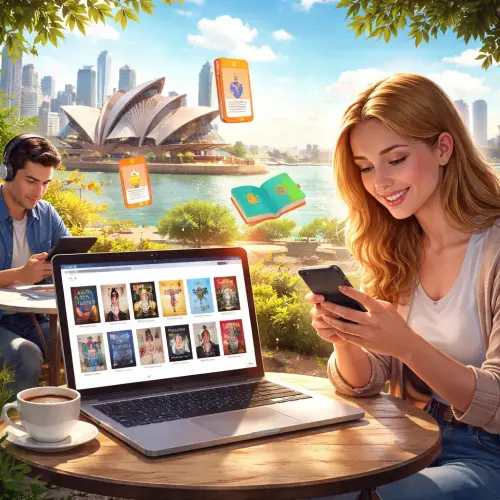
How GoogleBooks Fits Into Australia’s Shift to Digital Reading
Across Australia, more people now read on their phones during the commute, on tablets at home, and on laptops between uni lectures. Bookshops and libraries remain popular, but digital platforms have become part of everyday reading, especially when budgets are tight and shelf space is limited. This is where Google Books quietly slips into the mix for many Aussie readers. For a related guide, see Gemini AI Just Changed the Game: You Can Now Generate Files.
Rather than being a full replacement for Kindle, Apple Books, or local library apps, GoogleBooks online reading acts like a huge searchable catalogue of books from around the world. For Australians, that means fast discovery: you can search, preview chapters, and often access free public-domain titles legally, all through a browser or the Google Play Books app. For a related guide, see Google Outage Australia: Search Engine Not Working.
With inflation and rising living costs, the ability to legally access free or low-cost digital reading is particularly appealing. Students, parents, and casual readers are using GoogleBooks free books Australia searches to stretch their reading budget further.
What Google Books Is and How It Works for Australian Readers
Google Books is Google’s massive online index of books and magazines, built from publisher submissions and library-scanned collections. It lets you search inside millions of titles, preview pages, and, in some cases, read entire books for free or purchase them via Google Play Books. For a related guide, see 22 AI Driven Search Changes Every SEO Must Track Now.
How Australians Can Access GoogleBooks
For Australian readers GoogleBooks access is straightforward, as long as you have an internet connection:
- On desktop or laptop: visit Google Books in your browser, signed into your Google account.
- On Android devices: open the Google Play Store app, then use the Google Play Books section (often installed by default).
- On iPhone or iPad: install the Google Play Books app and sign in with your Google account.
Once you’re in, you can search by title, author, subject, ISBN, or even keywords like suburb names, legal topics, or historical events relevant to Australia.
Availability and Regional Differences in Australia
A key point for how to use Google Books in Australia is understanding availability. What you see in results can differ from what a reader in the US or UK sees because of licensing:
- Public domain titles (for example, Jane Austen, Charles Dickens, early Australian novels) are usually fully readable and downloadable.
- In-copyright titles often offer a limited preview of selected pages, with a link to buy or borrow elsewhere.
- Some books show only basic metadata (title, author, snippets) due to rights restrictions in Australia.
The system uses your location to decide how much you can view. If you travel outside Australia, availability might temporarily change based on the country you’re in.
Devices and Reading Experience
GoogleBooks online reading works well on common devices used in Australia:
- Smartphones: quick searches, previews, and short reading sessions (great on public transport).
- Tablets: more comfortable for long-form reading and study, with better page layout.
- Laptops/desktops: best for research; you can open multiple tabs and copy citations for assignments.
Anything you purchase or add to your library in Google Play Books syncs across devices, but free previews and public-domain full views are usually accessible without any purchase at all.
Current GoogleBooks Trends Among Australian Readers
Looking at how Australians are using the platform reveals several emerging GoogleBooks trends that line up with local reading habits, education patterns, and lifestyle changes.
Trend 1: Study and Exam Support
High school and uni students in Australia increasingly use GoogleBooks as a research shortcut. Instead of tracking down every academic text physically, they search for key terms and scan pages online:
- Searching textbooks and reference works for specific theories or case studies.
- Checking older editions or out-of-print titles that are hard to find locally.
- Finding commentary on Australian history, law, and policy in global publications.
This trend is especially strong around HSC, VCE, QCE, and uni exam periods, when students look for quick clarification and alternative explanations.
Trend 2: Genre Fiction and Escapist Reading
Another clear pattern is casual readers turning to GoogleBooks online reading to explore genre fiction:
- Romance, crime, and thrillers for commuters on Sydney, Melbourne, and Brisbane train lines.
- Young adult (YA) fiction popular among high school and early uni readers.
- Science fiction and fantasy series sampled chapter-by-chapter before buying.
Many Aussies use free digital titles GoogleBooks previews as a way to decide whether a book is worth buying on Google Play, Kindle, or in paperback from a local bookstore.
Trend 3: Australian Content and Local History
There is steady demand for Australian-focused content: out-of-print local histories, travel guides for domestic tourism, Aboriginal and Torres Strait Islander studies, and titles about Australian politics and environment. Sometimes, older or niche material is easier to locate on GoogleBooks than in a physical shop, especially for regional Australians.
Trend 4: Mobile-First Discovery
With high smartphone penetration, many Aussies first encounter GoogleBooks via a casual Google search on mobile, then tap into the book preview without even realising they’re using a separate Google service. That mobile-first behaviour is shaping how often short previews and snippets are consumed on the go.
Practical Guide: Discovering Free Digital Titles on GoogleBooks in Australia
To truly benefit from GoogleBooks free books Australia options, it helps to know a few targeted search and filtering techniques. These can quickly surface titles that are fully readable or at least offer generous previews.
Step 1: Use Advanced Search Filters
After searching for a topic or author, click on the “Tools” or “Search tools” options (desktop) or the filter menu (on mobile browser). Look for options like:
- Full view: shows books available to read in full (usually public domain or publisher-approved full access).
- Preview available: shows books with partial access, useful for research and sampling.
Filtering by “Full view” is one of the fastest ways to uncover free digital titles GoogleBooks that you can read legally from start to finish in Australia.
Step 2: Target Public Domain and Classic Works
Many classic works are freely available because their copyright has expired. For Aussie readers, that includes international classics and some early Australian works. Try search patterns like:
- “classic Australian literature full view”
- “public domain poetry full view”
- “Federation of Australia” full view” for historical documents.
These searches often reveal complete works you can read in the browser or sometimes download as a PDF or EPUB via Google Play Books.
Step 3: Combine Keywords Smartly
When learning how to use GoogleBooks in Australia, keyword combinations make a big difference. Useful approaches include:
- Topic + “guide” + “preview” (for example, “Australian contract law guide preview”).
- Subject + “introduction” (for quick overviews and textbooks).
- Region + topic (e.g. “Queensland environmental history full view”).
This strategy helps you zero in on accessible material without scrolling through pages of restricted listings.
Step 4: Integrate With Library and Study Workflows
While GoogleBooks itself doesn’t fully replace Aussie library apps like BorrowBox or Libby, it complements them well:
- Use GoogleBooks to preview and evaluate a title before placing a library hold.
- Copy citations or page numbers for academic work, then track down full access via your university library.
- Check older editions online to understand how a subject has evolved over time.
For many Australian students and researchers, GoogleBooks online reading now forms the “front door” of their research, with local library databases providing deeper access.
Step 5: Build a Personal Digital Reading Habit
To actually finish what you start, try treating GoogleBooks as part of a weekly reading routine:
- Bookmark a few full-view classics and read a chapter each morning or evening.
- Use previews to decide on your next purchase from a local indie bookstore.
- Save interesting titles in your Google Play Books library so they sync across phone, tablet, and laptop.
This turns casual browsing of free digital titles GoogleBooks into a sustainable habit rather than a one-off search.
Benefits and Limitations of GoogleBooks for Australian Users
Like any digital reading platform, GoogleBooks has both strengths and constraints, especially once licensing and regional issues are taken into account for Australian readers.
Key Benefits for Aussies Using GoogleBooks
| Benefit | What It Means for Australian Readers | Typical Use Case |
|---|---|---|
| Fast discovery | Search millions of titles by keyword and instantly see relevant pages. | Students scanning for theories, professionals checking references. |
| Free access to classics | Public domain books are often fully readable online at no cost. | Budget-conscious readers catching up on classics. |
| Preview before purchase | Try before you buy via Google Play Books or local retailers. | Readers deciding whether a novel or textbook is worth buying. |
| Cross-device reading | Access on phone, tablet, or laptop with a Google account. | Commuters reading on the train, then continuing at home. |
| Research efficiency | Search inside books for specific names, cases, or quotes. | Uni assignments, legal research, policy work. |
Important Limitations for Australian Readers
At the same time, Australians should be mindful of several limitations when relying on Google Books too heavily:
- Licensing and region locks: Some titles visible in search results may only show snippets or a limited preview in Australia due to rights agreements.
- Incomplete access: Even with previews, key chapters may be hidden, making it risky to rely solely on Google Books for critical study content.
- Internet dependence: In regional and remote areas with patchy connectivity, continuous online access for reading can be a challenge.
- Reading comfort: Long-form reading on laptop or small phone screens can be tiring compared to dedicated e-readers or printed books.
Recognising these limitations helps Australian readers GoogleBooks users choose when the platform is ideal (discovery, sampling, classics) and when they should pivot to local libraries or paid e-book services.
The Future of Digital Reading in Australia and the Role of Google Books
Digital reading in Australia is unlikely to replace print entirely, but it will continue to expand alongside bookstore culture and public libraries. For many Aussies, the reality is hybrid: a mix of physical books, library apps, subscription services, and discovery via Google Books.
As more Australian publishers digitise their backlists and as connectivity improves in regional areas, GoogleBooks trends are likely to tilt further toward serious research, local history, and specialised non-fiction. Schools and universities will keep pointing students towards online search tools, with GoogleBooks remaining a useful first step for finding sources.
For now, the smartest approach for Australian readers GoogleBooks fans is to treat the platform as a powerful search and sampling tool: use it to explore, read free classics, and preview new titles, then borrow or buy the books that matter most to you. Blending discovery on GoogleBooks with local libraries and Aussie bookshops gives you the best mix of convenience, depth, and support for the local publishing ecosystem.
Useful Resources
To deepen your understanding of digital reading and access options in Australia, these resources are helpful starting points:
- National Museum of Australia Digital Classroom Library – for Australian history and education-focused digital content.
- State Library Victoria eBooks and Online Resources – an example of how Australian libraries provide digital book access that complements GoogleBooks.
Frequently Asked Questions About Google Books
Is GoogleBooks free to use in Australia?
Yes, accessing and searching Google Books is free for users in Australia, and many public-domain titles are fully readable at no cost. However, some books only provide previews, and if you choose to buy the full e-book via Google Play Books or another retailer, that purchase is paid. The platform itself works like a free discovery and sampling tool with optional paid reading.
How can I find completely free books on Google Books in Australia?
To locate free titles on GoogleBooks, search for your topic or author, then use the filter for “Full view” where available. This typically shows public-domain or publisher-authorised books that you can read cover to cover online. Combining this with keywords such as “public domain” or “classic” also helps reveal more GoogleBooks free books Australia options.
Can I download Google Books titles to read offline in Australia?
Some public-domain titles and books you purchase through Google Play Books can be downloaded for offline reading in the Google Play Books app. For free full-view titles, you may see options to download as PDF or EPUB. However, not all GoogleBooks online reading content is downloadable, especially limited previews that must be viewed while connected to the internet.
Are all books on Google Books available in Australia?
No, not every book indexed by GoogleBooks is fully available in Australia, because access depends on publishing rights and licensing in each region. You might see a book listed but only get a snippet view or no preview at all. This is normal and reflects copyright agreements for Australian territories rather than a technical issue with your account.
Do I need a Google account to use Google Books ?
You can browse and preview many titles on GoogleBooks without signing in, but a Google account improves the experience. With an account you can add books to your library, sync reading progress across devices, and buy e-books via Google Play Books if you choose. For Australian readers GoogleBooks users, a single Google account works across desktop, Android, and iOS.
How does GoogleBooks compare to my local Australian library apps?
Google Books is strongest for discovery, previewing, and accessing public-domain titles, whereas Aussie library apps like BorrowBox or Libby are better for borrowing current e-books and audiobooks in full. Many Australians use GoogleBooks to evaluate a book, then borrow it via their library for complete reading, combining the strengths of both systems.
Can I use GoogleBooks for school or university assignments?
Yes, Google Books is widely used by Australian high school and university students to locate sources, read relevant sections, and gather citations. However, you should verify page numbers, editions, and copyright, and not rely solely on previews if your assignment requires full-text study. It is best used as a starting point alongside your institution’s library databases.
Is it legal to read books on GoogleBooks in Australia?
Reading books through GoogleBooks is legal because access levels are controlled based on copyright and territorial licensing. Google shows Australian users only the pages and features that rightsholders have approved for this region. You should not try to bypass these controls with unauthorised downloads, but normal browsing and reading within GoogleBooks is legitimate.
Why can I only see a few pages of some books on GoogleBooks ?
Limited page views happen because the publisher or rightsholder has allowed only a partial preview in GoogleBooks. This is common for newer or commercially active titles. The preview is meant to let you sample the content before buying or borrowing the full version elsewhere. It isn’t a technical error; it is a licensing decision that applies to Australia as well as other regions.
Can I print pages from GoogleBooks for personal study?
Whether you can print pages from GoogleBooks depends on the specific title and access level. Some public-domain or PDF-downloadable books allow printing, while many preview-only titles restrict it. If printing is available, use it sparingly for personal study or classroom use, and always respect copyright guidelines, especially for in-copyright material.
Does GoogleBooks have many Australian authors and publishers?
Yes, many Australian authors and publishers are represented on GoogleBooks, particularly through commercial arrangements and library digitisation initiatives. You will find local fiction, non-fiction, and academic titles, although access may be limited to previews for newer books. For full access, it is often best to combine GoogleBooks with Australian libraries or book retailers.
How can I search only Australian-related content on GoogleBooks ?
While GoogleBooks doesn’t offer a dedicated “Australia only” filter, you can refine results by adding words like “Australia”, state names such as “Victoria” or “Queensland”, or specific cities and regions. For example, “Australia environmental history full view” or “Sydney architecture preview” can surface more locally focused material relevant to Australian readers.
Is GoogleBooks good for reading on a smartphone?
Many Australians comfortably use GoogleBooks online reading on smartphones for shorter sessions, such as commuting or waiting between appointments. Text is readable, and search is convenient. However, for long study sessions or extended reading, a tablet or laptop is often more comfortable due to larger screen size and easier navigation.
Can I sync my GoogleBooks reading between devices?
If you are using Google Play Books with your Google account, your library, purchases, and progress typically sync across Android, iOS, and web. Pure browser-based previews on GoogleBooks may not always record your exact last page, but saved titles and purchased e-books stay linked to your account so you can resume reading on another device.
Does GoogleBooks offer audiobooks in Australia?
GoogleBooks itself focuses on text-based content, but Google Play Books, which is integrated with it, offers audiobooks to Australian users. You can discover a title through GoogleBooks and then follow purchase links to Google Play Books if an audiobook version is available. Availability depends on publisher deals and may vary by region.
How accurate is the search inside books on GoogleBooks ?
The search inside texts on GoogleBooks is generally accurate because it relies on optical character recognition (OCR) and publisher-supplied digital files. For older or poorly scanned books, you may see occasional errors or missed words, but for most modern titles, keyword search is reliable. Always cross-check important quotes with another source if you are using them in formal work.
Can I use GoogleBooks if I live in a regional or remote area of Australia?
Yes, as long as you have a stable internet connection, GoogleBooks can be a valuable resource in regional and remote areas where bookshops and large libraries are scarce. The main limitation is bandwidth; image-heavy pages and large PDFs may load slowly. In those cases, downloading materials for offline reading when you have better connectivity, or focusing on text-based previews, can help.
Is GoogleBooks suitable for children’s reading in Australia?
GoogleBooks includes children’s titles, but it is not designed as a fully curated kids’ reading environment. Parents and teachers should guide children, searching for specific authors or series and checking age suitability. For younger readers, combining selected GoogleBooks previews with dedicated children’s reading apps and local library resources is usually the safest and most engaging option.
How do I cite a GoogleBooks source in my Australian assignment?
When citing a source found via GoogleBooks, follow your required citation style (APA, Harvard, etc.) and treat it as a normal book, not a website. Record author, title, publisher, year, and page number, which are usually visible in the book’s front matter or metadata section. You can note “viewed via GoogleBooks” and the URL if your style guide recommends including access details for online versions.
Will GoogleBooks replace other e-book platforms in Australia?
It is unlikely that GoogleBooks will replace other e-book platforms in Australia because its main strength is discovery and partial access rather than full-scale lending or subscription reading. Australians typically use it alongside services like Kindle, Apple Books, Kobo, BorrowBox, and local libraries. Each platform has different licensing deals and reading features, so most readers mix and match based on their needs.