

When you see Sydney Airport flights cancelled, it often reflects a mix of severe weather, air traffic control staff shortages, and airline crew or scheduling issues disrupting operations across Australia’s busiest hub. On peak disruption days, dozens of flights are cancelled and hundreds delayed, affecting tens of thousands of passengers and creating knock‑on impacts for both domestic and international routes. Travellers can reduce stress by checking official live flight boards, using airline apps for rapid rebooking, and having travel insurance in place to cover unexpected costs.
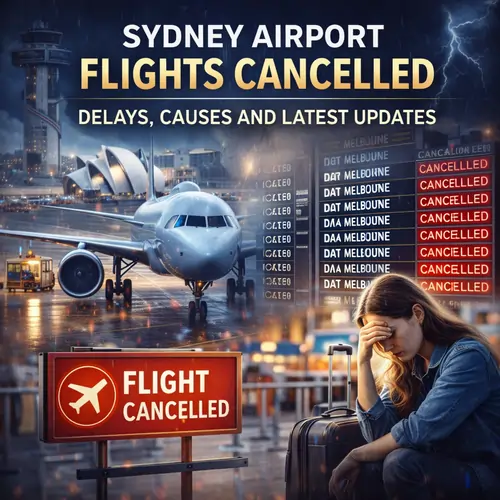
“Sydney Airport flights cancelled” flash up on the departures board, your plans can unravel in seconds. In recent months, Sydney Kingsford Smith has faced repeated waves of cancellations and delays driven by bad weather, staff shortages and air traffic control constraints, leaving thousands of passengers scrambling to rebook and reroute.
This guide explains why Sydney Airport flights are cancelled so often, what the latest disruption data shows, how to check your specific flight in real time, and what you can do—step by step—if your trip is affected. You’ll also find pro tips, traveller rights information, and a detailed FAQ so you can move from panic to a clear plan of action.
Overview: Why Sydney Airport Flights Are Being Cancelled
In 2026, Sydney Airport has repeatedly featured in headlines and disruption trackers due to waves of cancellations and heavy delays. On some days, dozens of flights in and out of Sydney have been scrapped, with hundreds more running late by an hour or longer, affecting tens of thousands of passengers across Australia’s east coast.
When you read “Sydney Airport flights cancelled” today, it’s often the result of several factors hitting at once: low cloud and cross‑winds forcing single‑runway operations, air traffic controller shortages, airline crew sickness, and knock‑on effects from international airspace rerouting. Understanding these causes helps you predict which flights are most at risk and how quickly operations might recover.
Latest Disruptions: What the Data Shows
While conditions change day by day, recent disruption snapshots give a clear sense of how serious the problem can be when Sydney Airport flights are cancelled.
- On 1 April 2026, low clouds, storms and crew shortages across Sydney, Melbourne and Brisbane led to 38 cancellations and 380 delays, impacting around 55,000 passengers, with Sydney bearing much of the early‑morning chaos.
- On the same date, a separate aviation summary counted 567 total disruptions (521 delays + 46 cancellations) across major Australian and New Zealand airports, including Sydney, Melbourne, Brisbane, Perth, Adelaide and Auckland.
- On 15 January 2026, Sydney Airport suffered “significant disruptions” when dozens of domestic flights were cancelled or delayed due to an acute shortage of air traffic controllers, with at least 30 Qantas and Jetstar flights scrapped and around 10 Virgin Australia flights affected.
Live delay monitors such as FlightStats have even flagged Sydney as being in “excessive” delay status at times, reflecting system‑level strain rather than isolated disruptions.
At a glance: recent Sydney disruption patterns
These figures show that “Sydney Airport flights cancelled” is not just a minor inconvenience; it can be part of a broader national or regional aviation crunch.
Main Reasons Sydney Airport Flights Get Cancelled
While each event has its own triggers, most large‑scale disruption days at Sydney revolve around a few core causes.
1. Weather: Cross‑winds, low cloud and storms
Sydney’s parallel runways and coastal location make it vulnerable to wind direction and low cloud. When conditions deteriorate:
- Airservices Australia can shut down one or more runways, forcing single‑runway operations.
- Strong cross‑winds and low cloud ceilings restrict arrivals and departures, reducing throughput and causing cascading delays.
In some cases, only one runway remains open, and take‑offs may be limited to one every six minutes, dramatically cutting capacity.
2. Air traffic control staff shortages
On 15 January 2026, Sydney Airport experienced major domestic disruptions when a shortage of air traffic controllers forced Airservices Australia to space arrivals and departures far more than usual.
- Last‑minute sick leave and carers’ leave reduced the number of controllers available.
- Departures were restricted to one per runway every six minutes for part of the day.
- Airlines had to cancel flights pre‑emptively because the airport simply couldn’t handle normal volumes.
This kind of staffing crunch can turn a full day’s schedule upside down even if the weather is fine.
3. Airline crew shortages and operational strain
Industry trackers and news reports note that crew shortages at airlines like Qantas, Jetstar and others have also contributed to Sydney Airport flights being cancelled, especially when combined with weather or ATC constraints.
Operational strain can be driven by:
- Crews and aircraft out of position after earlier delays.
- Tight turnarounds that leave no buffer for unexpected issues.
- Ongoing industrial or rostering challenges after the post‑pandemic rebuild of aviation.
4. Airspace rerouting and international knock‑on effects
On some days, disruptions at Sydney are linked to wider airspace issues and rerouting, especially when Middle East or other international airspace corridors are constrained. Longer routes and re‑timed flights can push aircraft and crew schedules out of alignment, leading to cancellations even far from the original issue.
How to Check If Your Sydney Flight Is Cancelled
When “Sydney Airport flights cancelled” hits the news, the very first step is to check your own flight status using official, real‑time sources.
1. Use the Sydney Airport official flight board
Sydney Airport maintains a real‑time arrivals and departures board where you can search by airline, route or flight number and see if a flight is on time, delayed, or cancelled.
- Visit the official Sydney Airport flight listing page.
- Select “Today”, “Tomorrow” or “Yesterday” and filter by arrivals or departures.
- Your flight line will display its current status (e.g., “Cancelled”, “Delayed”).
2. Check your airline’s app or website
Most airlines operating at Sydney (Qantas, Jetstar, Virgin Australia, international carriers) update their own systems first. Often:
- You’ll see change notifications inside the app before airport boards update.
- Some apps allow one‑click rebooking when a flight is cancelled.
3. Use independent live boards and trackers
Third‑party trackers can help you gauge broader disruption levels:
- Flight status dashboards (e.g., FlightStats) show Sydney’s overall delay level—recently marked “excessive” during heavy disruption.
- Live boards like this SYD online departures/arrivals board display the status of individual flights and any cancellations.
Always cross‑check third‑party data against your airline and the official Sydney Airport site before making decisions.
What To Do If Your Sydney Airport Flight Is Cancelled
When your Sydney Airport flight is cancelled, you need to move quickly but methodically.
Step‑by‑step response
- Confirm the cancellation and reason
- Contact your airline—preferably via app or web
- Use in‑app rebooking or web portals first; phone lines and counters clog quickly.
- Prioritise the earliest viable alternative that still gets you to your destination that day or the next.
- Know your entitlements
- For Australian domestic flights, compensation is largely governed by each airline’s conditions of carriage and any voluntary customer guarantees.
- In cases of airline‑caused cancellations (e.g., crew shortages), you may be offered accommodation, meal vouchers, or alternative transport.
- For international itineraries starting in the EU or UK, EU261/UK261‑style rules may apply, even if your cancellation occurs at Sydney.
- Document everything
- Save emails, app notifications, and screenshots of your flight status.
- Keep receipts for meals, accommodation and ground transport; your travel insurer may reimburse some costs.
- Contact your travel insurer (if applicable)
- Many comprehensive policies cover trip interruption or delay.
- Insurers generally require proof of cancellation and attempted airline resolution.
- Rebook accommodation and ground transport
- Notify hotels and car rental companies as soon as possible; some will waive or reduce penalties during large‑scale disruptions.
Impact on Domestic vs International Travellers

When Sydney Airport flights are cancelled, the impact differs depending on whether you’re on a domestic route or an international long‑haul itinerary.
Domestic flights (within Australia)
- Disruptions often centre on routes between Sydney, Melbourne and Brisbane, Australia’s busiest corridor.
- Staffing issues (ATC or airline crew) and weather are major drivers.
- Rebooking options can be more flexible, as multiple daily flights exist on key routes.
International flights
- International services may be consolidated or retimed when conditions limit runway operations or when crews/aircraft are out of position.
- Long‑haul cancellations can trigger complex re‑routing via other hubs, with knock‑on impacts on connecting flights and baggage.
- Passengers may have additional rights under foreign regulations (e.g., EU, UK, US rules), depending on origin and airline.
Either way, you should always verify your full itinerary (including connections) if your Sydney Airport leg is cancelled, as disruption usually ripples across the entire journey.
Expert Insights and Pro Tips
Drawing from recent Sydney disruption events and general airline operations, here are some targeted tips to minimise the pain when Sydney Airport flights are cancelled.
Pro Tip 1: Avoid the most vulnerable time windows
Weather‑driven runway restrictions and ATC staffing shortages have repeatedly caused problems during morning peaks (around 6:30–10:00 a.m.), when Sydney schedules are densest. When possible:
- Choose flights slightly later in the day, when the worst of the backlog may be cleared.
- Or take the first flight out on a lightly‑loaded route (on some days, first wave flights still depart before constraints hit).
Pro Tip 2: Build buffers into connections
If you’re connecting through Sydney:
- Allow more than the bare minimum connection time, especially when travelling during historically disruptive months or during weather‑prone seasons.
- Aim for longer layovers on separate‑ticket itineraries to avoid misconnects if Sydney Airport flights are cancelled or delayed.
Pro Tip 3: Use multiple information sources, but act through official channels
Third‑party trackers are excellent early‑warning tools, but only airlines and the airport can rebook or formally confirm your status. Use third‑party data to prompt you to check your airline app—then make changes there.
Pro Tip 4: Know the difference between “controllable” and “uncontrollable”
Airlines usually treat weather, ATC restrictions and some airspace issues as uncontrollable events, limiting their obligation to offer compensation, though they often still assist with rerouting. Crew shortages and some operational issues may be treated as more within the airline’s control, which can strengthen your case for vouchers or accommodation.
Pro Tip 5: Travel light when disruption risk is high
If severe weather or ATC constraints are forecast, travelling with hand luggage only can make same‑day rebooking and rerouting vastly easier. Checked bags can delay your departure options if they need to be offloaded from a cancelled flight and re‑tagged.
For official travel information, always cross‑check with:
- Sydney Airport’s live flight listings.
- The airport’s social channels and your airline’s service alerts.
- Government travel advisories linked from Smartraveller for Australians, or your own country’s travel advisory site.
FAQ: Sydney Airport Flights Cancelled
Why are so many Sydney Airport flights cancelled lately?
Recent disruption waves have been driven by a mix of bad weather, strong crosswinds, low cloud, air traffic control staffing shortages, and airline operational strain.
How many flights were cancelled on the worst recent days?
On 1 April 2026, reports indicated around 38 cancellations and 380 delays across Sydney, Melbourne, and Brisbane, with 46 cancellations and 521 delays across Australia and New Zealand combined.
Is Sydney the only Australian airport affected?
No. Airports in Melbourne, Brisbane, Perth, Adelaide, and Auckland have also experienced major disruptions, although Sydney often carries a significant share.
How can I check if my Sydney Airport flight is cancelled today?
Use the official Sydney Airport flight listing page, your airline’s website or app, or live flight tracking platforms.
Are air traffic control staff issues still a problem at Sydney?
Yes. Some disruptions—such as those in early 2026—were linked to short-notice air traffic controller absences, forcing reduced flight capacity and cancellations.
What should I do first if my flight from Sydney is cancelled?
Confirm the cancellation, then rebook immediately via your airline’s app or website. Expect congestion at airport counters and call centers during major disruptions.
Will the airline pay for my hotel if I’m stranded?
It depends on the cause. Weather or ATC-related cancellations are usually outside airline control, while operational issues may qualify for accommodation and meal support.
Does travel insurance cover Sydney Airport flight cancellations?
Many comprehensive policies do cover delays and cancellations, but you’ll typically need proof and must first attempt resolution with your airline.
Are international flights from Sydney more or less likely to be cancelled?
They are fewer but can be more heavily impacted when disruptions occur, especially due to aircraft and crew scheduling constraints.
Can I claim compensation like under EU261 for a cancelled Sydney flight?
Only if your journey involves EU/UK jurisdictions or carriers. Otherwise, Australian consumer protections and airline policies apply rather than a fixed compensation scheme.
How early should I arrive at Sydney Airport during disruption?
Arrive earlier than usual, as queues for check-in, baggage drop, and customer service can be significantly longer.
Are certain routes from Sydney more prone to cancellations?
High-frequency domestic routes like Sydney–Melbourne and Sydney–Brisbane are often adjusted or consolidated during disruptions.
Does severe weather always mean cancellations?
Not always. Mild weather may only cause delays, but severe winds or low visibility can force cancellations.
Why do cancellations in the morning affect flights all day?
Early disruptions can misalign aircraft and crew schedules, causing a ripple effect that lasts throughout the day.
Is it safer to fly the day before important events during peak disruption periods?
Yes. Traveling a day early provides a buffer against delays or cancellations.
Where can I see live airport conditions and delay levels?
Websites like FlightStats offer real-time airport condition dashboards, including delays and weather updates.
Does Sydney Airport close completely during these events?
Full closures are rare, but operations may be significantly reduced, leading to cancellations.
Are there any government resources for Australian travellers dealing with cancellations?
You can check Smartraveller for general advice, though airlines handle most disruption-related issues.
Can social media help during Sydney Airport disruption?
Yes. Airlines and airports post updates on platforms like X and Facebook, but always verify with official sources.
How often does Sydney experience this level of disruption?
While not constant, major disruption events occur several times a year, often during bad weather or staffing shortages.
Conclusion and Next Steps
When you see “Sydney Airport flights cancelled” in the news or on your phone, it’s usually the tip of a larger operational iceberg involving weather, staffing and network‑wide scheduling pressures. By understanding the main causes, using official live tools to check your flight, and following a structured response plan, you can significantly improve your chances of being rebooked quickly and limiting the financial and emotional impact of disruption.
Before your next trip, bookmark the Sydney Airport live flights page, sign up for your airline’s real‑time alerts, and review your travel insurance cover so you’re not starting from scratch in the middle of a crisis. For a broader view of how industry‑wide pressures are shaping reliability, you can also read this analysis on Airline Flight Cancellations Surge as Jet Fuel Costs Rise, which explores how rising fuel prices feed into schedule cuts and higher cancellation rates across global carriers.