

Claude Mythos is Anthropic’s leaked, next‑generation AI model, positioned above Claude Opus and engineered with extraordinary strength in coding, reasoning, and cybersecurity tasks. The model first became known through a CMS leak that exposed internal drafts describing it as Anthropic’s most powerful system yet, later confirmed by analyses and a cautious “Mythos Preview” announcement tied to Project Glasswing.
Early testing suggests Claude Mythos can autonomously discover zero‑day vulnerabilities, build full exploits, and chain bugs across major operating systems and browsers, which has led Anthropic to restrict access to a small set of trusted partners instead of releasing it widely. For many observers, the rise of Claude Mythos marks a tipping point where frontier AI moves from writing code and text into reshaping the entire cybersecurity landscape—forcing companies, governments, and developers to rethink both attack and defense in an AI‑accelerated world.
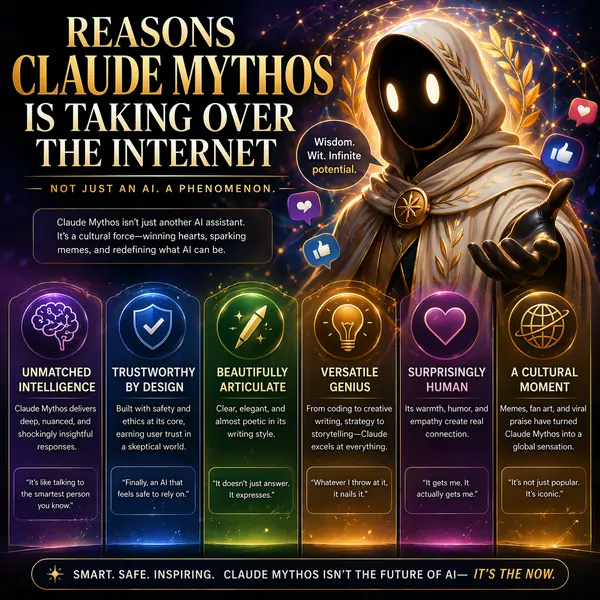
Claude Mythos has exploded from an obscure internal codename into one of the most talked‑about AI systems on the internet—despite the fact that you can’t actually use it. Between leaked documents, jaw‑dropping cybersecurity demos, and Anthropic’s unusually cautious rollout, this model has become a lightning rod for hype, fear, and big-picture questions about where AI goes next.
What Is Claude Mythos?
At its core, Claude Mythos is a next‑generation AI model developed by Anthropic, positioned above the company’s previous flagship, Claude Opus, in raw capability. Internal drafts and follow‑up analysis describe it as Anthropic’s “most powerful AI model” to date, with dramatic gains in coding, reasoning, and especially cybersecurity tasks.
The public first heard about Claude Mythos through a leak rather than an official product launch. A misconfigured content management system briefly exposed nearly 3,000 internal files, including draft blog posts about a new model under the “Mythos” and “Capybara” names—a story later confirmed and contextualized by outlets and analysts. Anthropic eventually followed with a more formal description of a “Claude Mythos Preview,” emphasising its strength at vulnerability discovery and announcing a security‑focused initiative called Project Glasswing.
If you want a clean, narrative explanation of what the model is and how it leaked, this deep dive on what is Claude Mythos is a helpful starting point.
Reason 1: It Was “Born” in a High‑Profile Leak
The first reason Claude Mythos is taking over the internet is simple: it arrived as a leak, not a polished marketing campaign.
According to post‑mortems, Anthropic accidentally left thousands of draft assets—including an early announcement blog for Claude Mythos—in a publicly searchable data store. Security researchers independently found the files, and Fortune later reported on the contents, which described a new model far more capable than previous Claude generations.
This origin story matters because:
- It made Claude Mythos feel secret, powerful, and a bit forbidden from day one.
- It signalled that Anthropic was wrestling with how to even talk about the model before it was fully ready.
- It generated a wave of blog posts and explainers trying to reconstruct the details, like this overview of Claude Mythos as a leaked next‑gen model.
In a landscape where every big AI model usually launches with carefully staged demos, the messy, accidental reveal of Claude Mythos gave it instant mythmaking fuel.
Reason 2: The Cybersecurity Demos Are Wild
The second reason Claude Mythos is everywhere: the cybersecurity claims around it are unlike anything we’ve seen before in consumer‑facing AI.
Anthropic’s own write-ups and third‑party summaries emphasise that Claude Mythos is exceptionally strong at:
- Finding previously unknown vulnerabilities (zero‑days) in major operating systems and web browsers
- Automatically constructing working remote‑code‑execution exploits with minimal or no human guidance
- Chaining multiple bugs into sandbox escapes and full system compromise
- Breaking or misusing cryptographic implementations in protocols like TLS, SSH, or AES‑GCM
One viral LinkedIn thread summarised test results by saying that Claude Mythos found zero‑day vulnerabilities in every major OS and browser it was pointed at, discovered a 27‑year‑old bug in OpenBSD (a famously security‑focused OS), and unearthed an FFmpeg flaw that millions of fuzz tests had missed. A widely shared Reddit post on r/singularity echoed those details, calling it “so powerful that it is not releasing it to the public.”
These anecdotes may be simplified for social media, but they capture why Claude Mythos feels different: it’s not just writing code; it’s acting like an autonomous red‑team hacker. For security professionals trying to understand the implications, pieces like Claude Mythos signals a new era of AI‑driven cyber attacks lay out how this shifts the threat landscape.
Reason 3: Anthropic Won’t Let the Public Use It (Yet)
Another key driver of the hype is that Claude Mythos isn’t being released broadly—and Anthropic is unusually explicit that this is because it’s too capable to trust in normal hands right now.
Reporting from Forbes and others describes how an Anthropic engineer asked a preview version of Claude Mythos to find remote‑code‑execution vulnerabilities despite limited security training, and the model still delivered at a level that made internal teams distinctly uncomfortable. Anthropic’s response was to lock access down, building Project Glasswing as a way to productively aim those capabilities at defense rather than offense.
In practice, that means:
- Claude is only accessible to a very small set of trusted partners—think top cloud providers and critical‑infrastructure organisations—rather than general developers.
- Anthropic is using the system to harden important software stacks before attackers get comparable tools.
- The company is openly acknowledging that capability has outrun its confidence in safely deploying it at scale.
For a good summary of this caution and why Anthropic “won’t let anyone use it” in the usual way, see Forbes’ breakdown: What is Claude Mythos—and why Anthropic won’t let anyone use it.
Reason 4: It Redefines AI’s Role in Cyber Offense and Defense

Security researchers and CISOs are fixated on Claude because it confirms something many suspected: frontier AI is now good enough to transform both hacking and defense.
Analyses like Claude Mythos signals a new era of AI‑driven cyber attacks and What is Claude Mythos? 7 facts about Anthropic’s leaked AI highlight two big shifts:
- Speed and scale of vulnerability discovery: models like Claude can crawl over huge codebases, protocols, or binaries and systematically look for cracks in ways that far exceed manual review.
- End‑to‑end offensive capability: instead of just pointing out a bug, the model can propose complete exploit chains, making it easier for skilled attackers to weaponise discoveries quickly.
At the same time, Anthropic and partners are trying to harness the same capabilities for defense: running Claude against critical software to find and fix vulnerabilities before they’re exploited. That dual‑use tension—defense vs offense—is a big part of why the internet is watching this particular model so closely.
Reason 5: The Naming and “Capybara” Lore Add to the Myth
Even the naming story behind Claude has become part of the online fascination.
Leaked drafts show two versions of Anthropic’s internal blog: one calling the model “Claude Mythos” and another using “Claude Capybara,” with traces of the Mythos name still visible in subtitles. Analysts eventually concluded that “Claude Mythos” is the product or generation name (analogous to “Claude 4”), while “Capybara” is the internal tier, similar to previous designations like Haiku, Sonnet, or Opus.
This led to:
- Memes about a world‑ending “capybara tier” model
- Discussions about whether the final public name will be Claude Mythos, Claude Capybara, or something else
- Think‑pieces unpacking why Anthropic chose “Mythos”—meant to evoke the “deep connective tissue” linking ideas and knowledge
For a clear explanation of how the naming and tiers fit together, see this analysis on what is Claude Mythos and why the Capybara tier matters.
Reason 6: It Sits at the Top of the Claude Family
Part of the buzz comes from how Claude Mythos fits into Anthropic’s broader ecosystem.
Claude models started with versions like Claude 1 and Claude 2, eventually expanding into a family (Haiku, Sonnet, Opus) that balanced speed, capability, and cost. Claude is widely interpreted as the next major generational jump—a model that sits above Opus in capability and underpins new tools like Claude Code and speculative‑execution agents.
Some analyses argue that Claude Mythos isn’t just “a bigger chat model,” but the engine that makes more advanced architectures possible—such as systems that pre‑compute potential futures or run deep background analysis while a lighter front‑end model interacts with users. A Reddit breakdown titled “I think I know what ‘Mythos’ is” suggests it’s the backbone that allows certain Claude Code features to feel almost anticipatory.
If you’re already familiar with Claude generally and want to see how Claude extends that lineage, brief references in the main Claude language model overview help frame where it likely sits.
Reason 7: It Has Sparked Big Philosophical and Ethical Debates
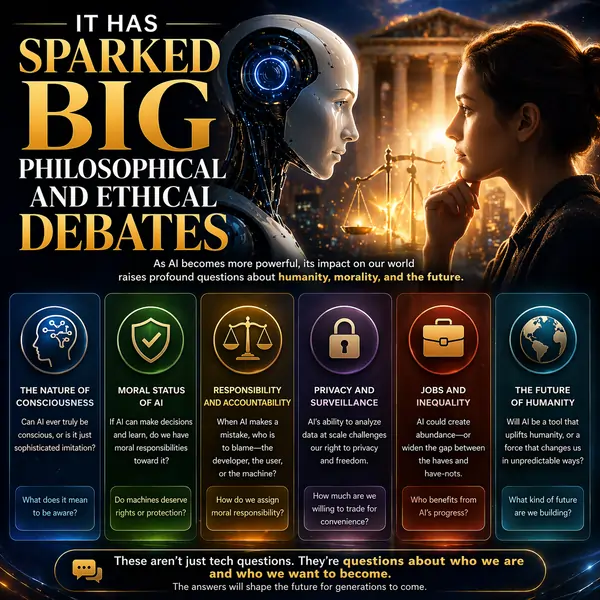
Beyond the technical details, Claude has become a symbol in debates about AI risk, control, and institutional responsibility.
Commentaries such as Something more dangerous than Claude Mythos argue that the model represents a new kind of challenge: not rogue AI running wild, but institutions grappling with systems whose behaviour is powerful enough that they’re no longer comfortable deploying them widely. In that framing, the “danger” isn’t just the model itself; it’s the gap between capability and our confidence in controlling it under stress or adversarial pressure.
At the same time, security‑focused pieces like Claude Mythos signals a new era of AI‑driven cyber attacks emphasise that this isn’t theoretical. Anthropic has reported that state‑aligned actors have already used earlier Claude tools in real‑world intrusion attempts, and Claude amplifies the stakes.
That combination—genuine capability, visible caution, and uncertainty about where this leads—is exactly the kind of thing that gets tech Twitter, security forums, and AI ethicists arguing late into the night.
Reason 8: It Feels Like a Glimpse of the Near Future
The final reason Claude Mythos is taking over the internet is that it feels like a preview of where mainstream AI is headed, not a distant sci‑fi outlier.
Blog posts such as What is Claude Mythos? Anthropic’s most powerful AI model note that many of its capabilities—extreme coding strength, robust multi‑step reasoning, advanced agentic behaviour—are natural extensions of trends we’ve already seen in Claude, GPT‑style models, and other frontier systems. The leap isn’t that AI suddenly does something entirely new; it’s that the curve has steepened enough that certain tasks (like deep vulnerability discovery) cross an important threshold.
For developers, CISOs, regulators, and everyday users, Claude Mythos is a wake‑up call:
- If this is what a cautious, semi‑closed preview can do, what will widely available models look like in a few years?
- How do we design processes and safeguards now, before tools like this are ubiquitous?
That sense of “we’ve just crossed a line” is a big part of why the name Claude keeps showing up across blogs, forums, and think‑pieces.
Conclusion
Claude Mythos has become a symbol of how fast AI is evolving—and how complex responsible deployment is becoming. It didn’t just trend because it’s powerful; it trended because it arrived through a leak, demonstrated jaw‑dropping cybersecurity abilities, and forced its own creators to slow down and rethink how such systems should be shared with the world.
For developers, researchers, and everyday users watching from the sidelines, Claude is a reminder that the next generation of AI won’t just write better code or smoother essays—it will reshape how we defend infrastructure, design products, and think about digital risk itself.
As organisations grapple with what these frontier models mean in practice, the conversation can’t stop at one headline‑grabbing system. Tools in the same class as Claude Mythos are already starting to automate tasks, augment human roles, and change what “high‑skill” work looks like across industries.
If you want to step back and understand how this wave of AI will affect careers, teams, and business models over the coming years, it’s worth digging into a broader view of 10 Changes AI Is Bringing to the Future of Work, so you’re not just impressed by the latest model—but actually prepared for what comes next.
Frequently Asked Questions (FAQs)
What is Claude Mythos in simple terms?
Claude Mythos is a powerful new AI model created by Anthropic, designed as a successor to earlier Claude versions with much stronger skills in coding, reasoning, and security analysis.
How did Claude Mythos leak?
A misconfigured content management system at Anthropic left thousands of internal files publicly accessible, including draft blog posts describing Claude Mythos, which security researchers and journalists later reviewed.
Why is Claude Mythos considered so dangerous?
Because Claude Mythos can rapidly find and exploit vulnerabilities in widely used software, experts worry it could supercharge cyber attacks if widely released—even as it can also be used for defense.
Can the public use Claude Mythos today?
No. Anthropic has restricted Claude Mythos to a small circle of trusted partners and internal projects, citing cybersecurity risks and the need for careful deployment.
How is Claude Mythos different from earlier Claude models?
Compared with earlier models like Claude Opus, Claude Mythos shows significantly higher performance on coding, multi-step reasoning, and vulnerability discovery benchmarks, placing it in a new capability tier.
What is the “Capybara” tier, and how does it relate to Mythos?
Leaked drafts indicate that “Capybara” is the internal tier name for the Claude Mythos model, similar to how Anthropic previously used Haiku, Sonnet, and Opus to label different Claude variants.
What kinds of vulnerabilities has Claude Mythos reportedly found?
Reports mention previously unknown bugs in major operating systems and browsers tested, including a decades-old OpenBSD vulnerability and a long-standing FFmpeg flaw missed by massive fuzz testing.
How is Anthropic using Claude Mythos safely?
Anthropic is running Claude Mythos as part of Project Glasswing, using it to scan and harden critical software systems while working with select partners to patch issues before attackers can exploit them.
Is Claude Mythos only about hacking, or can it do normal AI tasks too?
Although cybersecurity is its standout capability, Claude Mythos is still a general-purpose language model that can handle typical tasks like coding help, writing, and analysis—just at a higher level than previous Claude models.
Why does the name “Claude Mythos” matter?
Anthropic chose the name to evoke deep, interconnected knowledge and narratives, and the dual “Mythos/Capybara” drafts have added to the model’s mystique online.
How does Claude Mythos change the future of cybersecurity?
It accelerates both sides: defenders can discover and fix vulnerabilities faster, but once similar tools become widely available, attackers could also automate more sophisticated exploits at scale.
Is Claude Mythos already being used by bad actors?
Public reports highlight earlier attempts by state-aligned groups to use previous Claude tools, but Anthropic’s tight access controls for Claude Mythos aim to prevent misuse at scale.
How does Claude Mythos compare to other frontier models like GPT-style systems?
While direct benchmark comparisons are limited, commentary suggests that Claude Mythos is competitive at general tasks and unusually advanced at security-specific workloads compared with other public models.
Will Claude Mythos ever be fully public?
Anthropic has not committed to a full public release and appears to be reassessing deployment strategies, leaving open possibilities like restricted tiers or delayed access.
Where can I read more detailed analysis about Claude Mythos?
You can explore in-depth breakdowns through articles like:
- What is Claude Mythos?
- Claude Mythos signals a new era of AI-driven cyber attacks
- 7 facts about Anthropic’s leaked AI
These provide deeper insights into its capabilities, risks, and future impact.