

Key Takeaways
Australia is tightening tobacco and vaping rules to drive smoking rates toward near-zero and build a healthier next generation.
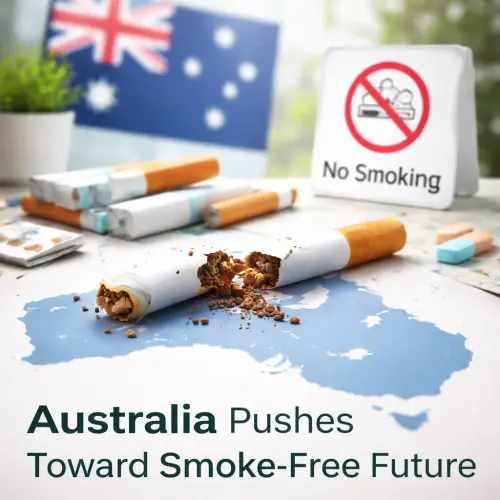
What Readers Should Know About Tobacco Regulation in Australia 2024
Australia has long been a global frontrunner in tough tobacco policy, and its latest wave of reforms continues that tradition. The federal government and states are now working toward a “smoke-free generation” using updated laws that control how nicotine products are packaged, sold, advertised, and used.
These new Australia smoke-free future policies go well beyond traditional cigarette bans. They address a rapidly changing market that includes vapes, heated products, and new nicotine devices that can hook young people before they ever touch a cigarette.
How Australia Tobacco Control Measures Evolved Over Time
To understand the latest tobacco regulation in Australia 2024, it helps to look at how the country has treated smoking in the past. Over several decades, law and public health messaging have steadily reshaped how Australians think about nicotine.
From high smoking rates to global leader
In the 1970s, smoking was common in homes, offices, and even airplanes. Since then, Australia has rolled out a series of landmark policies: comprehensive advertising bans, large graphic health warnings, smoke-free workplaces and hospitality venues, and regular excise increases that pushed prices among the world’s highest.
These measures helped cut daily smoking among adults to some of the lowest levels in the OECD. According to the Australian Institute of Health and Welfare, daily smoking among people aged 14 and over has fallen from around 24% in 1991 to under 11% in recent years, with further declines expected as new laws bite.
Plain packaging as a turning point
One of the most influential Australia tobacco control measures was the introduction of plain packaging in 2012. Australia became the first country to require all cigarette packs to use a standard dull colour, with brand logos removed and large health warnings dominating the pack.
Evidence published by the World Health Organization and peer-reviewed journals indicates that plain packaging reduced the appeal of cigarettes, increased quit attempts, and helped de-normalise smoking, especially among young adults.
New Tobacco Laws in Australia: The 7 Powerful Policy Wins
The latest new tobacco laws in Australia are designed as a package of reforms rather than a single change. Together, they aim to make smoking less attractive, less accessible, and harder to promote in any form, including vaping.
1. Stronger standardized packaging and health warnings
Building on plain packaging, the government has moved to further standardise pack designs. This includes more prominent health warnings, restrictions on variants that imply lower risk (such as “smooth” or “fresh”), and tighter rules around pack size and shape.
The goal is clear: eliminate any remaining marketing power of the pack itself so tobacco products can no longer signal lifestyle or status.
2. Tighter retail display and sales restrictions
Retailers now face stricter controls on how and where they can sell cigarettes and other nicotine products. These measures include limitations on point-of-sale visibility, requirements for products to be kept out of sight, and more rigorous age-verification obligations.
Some states are also considering caps on the number of outlets in certain areas and stronger penalties for selling tobacco to minors, further backing the national smoke-free Australia public health strategy.
3. Comprehensive vaping and e-cigarette regulation
The sharp rise in youth vaping has triggered a major reset in how Australia treats e-cigarettes. The government is moving toward a medicalised model for nicotine vaping products, with strict import controls and prescription-only access for therapeutic use.
Flavoured, disposable, and brightly packaged vapes that clearly target young people are being phased out, bringing vaping into line with other tobacco regulation in Australia 2024 that prioritises harm reduction but avoids creating a new generation dependent on nicotine.
4. Flavour, ingredient, and product design controls
Flavours like bubble-gum, candy, and soft drink have made vaping particularly appealing to teenagers. New rules are clamping down on these additives and tightening ingredient controls to reduce toxicity and youth appeal.
At the same time, Australia is watching developments in heated tobacco and novel nicotine products, ensuring regulations can adapt before these products become firmly established.
5. Expanded smoke-free and vape-free environments
Smoke-free laws that once targeted workplaces and indoor hospitality venues have gradually expanded to outdoor dining, public transport hubs, playgrounds, and many public spaces. The newer wave of regulation increasingly treats vaping in the same way as smoking.
This consistent approach supports the broader Australia smoke-free future policies by reducing social visibility of smoking and vaping and protecting people from second-hand exposure.
6. Intensified public health campaigns and cessation support
Regulation is only one side of the equation. Governments are also investing in large-scale public education campaigns that highlight the harms of tobacco and the risks of vaping, especially for teens and young adults.
Quitlines, digital tools, and primary care programs are being expanded and better integrated, so people who are pushed by higher prices or new rules to consider quitting can access practical support quickly. For a related guide, see 2 Easy Eating Habits That May Help You Lose Weight for Good.
7. Data-driven monitoring and enforcement
New laws are backed by enhanced data collection, compliance monitoring, and enforcement powers. Health agencies and regulators are tracking sales, seizures of illegal products, youth use trends, and quit rates.
This evidence base allows adjustments over time, making the smoke-free Australia public health strategy more responsive to emerging products and industry tactics.
Public Health Impacts of Australia Smoke-Free Future Policies
The expected health benefits of these reforms are substantial. Smoking remains a leading cause of preventable death and disease in Australia, driving lung cancer, heart disease, stroke, and chronic respiratory illness.
Projected reductions in smoking and disease
Modelling studies referenced by the Australian Department of Health and the Cancer Council have consistently found that tighter Australia tobacco control measures reduce smoking prevalence and improve population health. Each percentage point drop in daily smoking is associated with thousands fewer future hospitalisations and premature deaths.
By targeting both cigarettes and vapes, policymakers aim to prevent “dual use” and long-term nicotine addiction that could blunt these gains.
Protecting young people from lifelong addiction
Youth prevention is a central aim of the new laws. Adolescence is the period when most smokers and vapers first experiment and become addicted. By restricting flavours, marketing, and access, Australia seeks to ensure that younger generations see tobacco use as increasingly unusual.
Early evidence from other jurisdictions suggests that strong packaging and advertising bans reduce youth uptake. Australia’s integrated approach builds on that evidence with vaping-specific controls.
Economic, Social, and Industry Implications of New Tobacco Laws in Australia
While public health is the clear driver, the reforms also carry economic and social consequences for governments, businesses, and communities.
Health system savings and productivity gains
Lower smoking prevalence means fewer cases of cancer, heart disease, and chronic obstructive pulmonary disease over time. This can ease pressure on hospitals, reduce medication costs, and free resources for other health priorities. For a related guide, see Small Business Taxes Explained.
Reduced illness also translates into higher workforce participation and productivity, with fewer sick days and earlier returns to work after treatment.
Impacts on retailers and the illicit market
Small retailers have raised concerns about the financial impact of stricter tobacco rules, given that cigarette sales are often a steady part of their revenue. Policymakers argue that diversification, along with phased implementation, can help businesses adjust.
Another challenge is the potential growth of illicit markets in cheap cigarettes and illegal vapes. Strong border controls, enforcement, and consumer education are crucial to prevent these products from undercutting legal reforms.
Equity and support for priority populations
Smoking rates remain higher among Aboriginal and Torres Strait Islander peoples, people with mental illness, and those in disadvantaged communities. A truly effective smoke-free Australia public health strategy must therefore include targeted support, culturally safe services, and community-led initiatives. For a related guide, see ADHD Explained: Symptoms, Causes, and Treatment Guide.
Without this focus, there is a risk that overall smoking rates fall while gaps between population groups persist.
Expert Views and Evidence Shaping Tobacco Regulation in Australia 2024
Public health experts generally support the direction of Australia’s tobacco reforms, while recognising the need for careful balance around vaping and harm reduction.
Support from health organisations
Groups such as the Cancer Council, the Heart Foundation, and public health academics have long advocated for comprehensive Australia tobacco control measures. They highlight strong international evidence that multi-layered policies—taxation, plain packaging, advertising bans, and cessation support—work best together.
Reports from organisations like the World Health Organization and the Framework Convention on Tobacco Control Secretariat reinforce the value of Australia’s approach as a model for other countries.
Debate on vaping and harm reduction
Some experts argue that tightly controlling nicotine vaping products may limit a potentially less harmful alternative for established smokers. Others stress that, in practice, many vapes are used by non-smokers or young people who might never have otherwise taken up tobacco.
Australia’s current path seeks to balance these positions by allowing access under medical supervision, while blocking aggressive consumer marketing that could normalise regular vaping.
Future Outlook: Can Australia Achieve a Smoke-Free Society?
Looking ahead, the core question is whether these Australia smoke-free future policies can push daily smoking toward truly minimal levels while avoiding a surge in long-term vaping.
Next steps in the smoke-free strategy
Further reforms under discussion include continued tax increases, stronger regulation of emerging nicotine products, and more comprehensive support for quitting in primary care, workplaces, and communities.
Digital tools, data analytics, and targeted messaging are expected to play a bigger role in reaching specific high-risk groups and tailoring support.
Global influence of Australia’s tobacco model
Australia’s leadership on plain packaging has already inspired similar laws in countries such as the United Kingdom, France, and New Zealand. The newest wave of vaping regulation and integrated tobacco controls is now being closely watched by regulators worldwide.
If the package of measures delivers sizeable reductions in youth vaping and adult smoking, it is likely to accelerate similar policy debates in Europe, Asia, and the Americas.
Summary: Reinforcing the move toward a smoke-free future
Australia’s latest tobacco regulation in Australia 2024 reflects a clear national choice: to treat nicotine addiction as a major preventable health burden and to use every evidence-based tool available. Tougher packaging rules, retail restrictions, vaping controls, and strong public health campaigns form a coordinated push toward a smoke-free society.
For individuals, these changes mean fewer cues to start, more reasons to quit, and more support when they are ready. For the world, Australia offers a living case study in how determined policy can reshape the future of tobacco use in a single generation.
Useful Resources
Australian Department of Health – Smoking and Tobacco
World Health Organization – Tobacco Health Topic
Frequently Asked Questions About Tobacco Regulation in Australia
What are the main goals of Australia’s new tobacco laws?
The primary goals are to reduce smoking and vaping rates, prevent young people from starting, cut future disease and health costs, and move Australia closer to a smoke-free society by combining packaging rules, retail restrictions, vaping controls, and stronger cessation support.
How do the new laws affect cigarette packaging in Australia?
Cigarette packs must follow strict standardised designs with plain colours, large graphic health warnings, and no misleading descriptors, further limiting branding so the pack can no longer function as a marketing tool for tobacco companies.
Are vapes and e-cigarettes treated the same as tobacco in Australia?
Vapes containing nicotine are increasingly regulated under a medical model, with prescription-only access for quitting smoking and strong limits on flavours, packaging, and advertising, while non-nicotine products are also being tightened to prevent youth uptake.
Can teenagers legally buy tobacco or vapes in Australia?
No, it is illegal to sell tobacco products or nicotine vaping products to people under 18 in Australia, and new measures include tougher enforcement, higher penalties, and stronger age-verification requirements for retailers.
Will the new tobacco regulations increase black market sales?
Authorities acknowledge a risk of illicit trade, which is why the reforms are accompanied by stronger border controls, enforcement operations, and public education so that illegal products do not undermine health protections or tax policy.
How do these measures support people who want to quit smoking?
The strategy pairs tougher regulations with expanded quitlines, online tools, and support through GPs and pharmacists, so smokers facing higher prices or more restrictions can access counselling, medications, or, in some cases, supervised vaping to help them quit.
Are there specific programs for Aboriginal and Torres Strait Islander communities?
Yes, governments and community organisations fund culturally appropriate smoking cessation programs and health promotion campaigns led by Aboriginal and Torres Strait Islander health services to address higher smoking rates and support community-led solutions.
How high are tobacco taxes in Australia compared to other countries?
Australia has some of the highest tobacco excise taxes in the world, with repeated increases over the past decade making cigarettes significantly more expensive than in many comparable countries, which is intended to discourage consumption and fund health services.
Do Australia’s tobacco laws ban smoking in all public places?
Smoking is banned in most indoor workplaces and hospitality venues, and many states extend bans to outdoor dining areas, public transport stops, playgrounds, and other public spaces, though the exact rules can vary by state and territory.
What evidence supports plain packaging and warning labels?
Studies in Australia and abroad show that plain packaging and large graphic warnings reduce the attractiveness of cigarette packs, increase awareness of health risks, and encourage quit attempts, particularly among younger smokers and recent starters.
How do these laws affect small retailers and convenience stores?
Small retailers must comply with stricter display and sales rules, which can mean adjustments in how they manage stock and verify age, and while some worry about revenue impacts, governments encourage diversification and provide compliance guidance.
Is vaping safer than smoking according to Australian health authorities?
Authorities recognise that vaping may be less harmful than smoking for some existing smokers, but they stress that it is not risk-free and should not be taken up by non-smokers or young people, which is why access is tightly controlled and medically supervised.
What penalties apply for selling tobacco to minors?
Penalties include substantial fines, potential loss of retail licences, and in some jurisdictions prosecution, reflecting the seriousness with which governments treat underage access to tobacco and nicotine products.
How do Australia’s tobacco policies compare to New Zealand and the UK?
Australia, New Zealand, and the UK all use high taxes, plain packaging, and advertising bans, but Australia has taken one of the strictest stances on vaping access, whereas some other countries have adopted more consumer-focused harm reduction models.
Could Australia introduce a generational smoking ban in the future?
Some public health experts have floated the idea of banning tobacco sales to people born after a certain year, as New Zealand proposed, but while it is an active topic of debate, such a ban has not yet been adopted nationally in Australia.
What role do schools play in tobacco and vaping prevention?
Schools are key partners in prevention, using curriculum materials, health education programs, and partnerships with local health services to teach students about the risks of smoking and vaping and to identify those who may need support.
How are new nicotine products like heated tobacco being regulated?
Heated tobacco and other novel nicotine products are subject to Australia’s broader tobacco control framework, with strict rules around marketing, importation, and health claims, and regulators monitor international evidence before allowing new products onto the market.
Where can smokers find help to quit in Australia?
Smokers can contact state and territory quitlines, speak with their GP or pharmacist, access online resources from the Australian Department of Health, and use approved cessation medications or prescribed nicotine vaping products where appropriate.
How will success of the smoke-free strategy be measured?
Success will be tracked through national surveys on smoking and vaping prevalence, hospital and mortality data for tobacco-related diseases, enforcement statistics, and evaluations of public campaigns, allowing adjustments as new evidence emerges.
What does a “smoke-free Australia” actually mean in practice?
In practice, a smoke-free Australia refers to very low levels of daily smoking in the population, minimal youth uptake of nicotine products, strong protections from second-hand smoke, and a health system less burdened by tobacco-related disease, rather than an absolute zero use.