

Lifestyle plays a major role in colon cancer risk, and two of the most important Lifestyle Risk Factors Colon Cancer research highlights are what you eat and how active you are. Diets high in processed and red meat, low in fibre, combined with excess body weight and a sedentary routine, create a bowel environment that is more prone to inflammation, DNA damage and polyp formation, which can eventually progress to cancer. By shifting toward fibre‑rich, plant‑forward eating patterns and building consistent physical activity into your week, you can significantly cut your colon cancer risk—especially when these changes are paired with appropriate screening and early attention to symptoms.
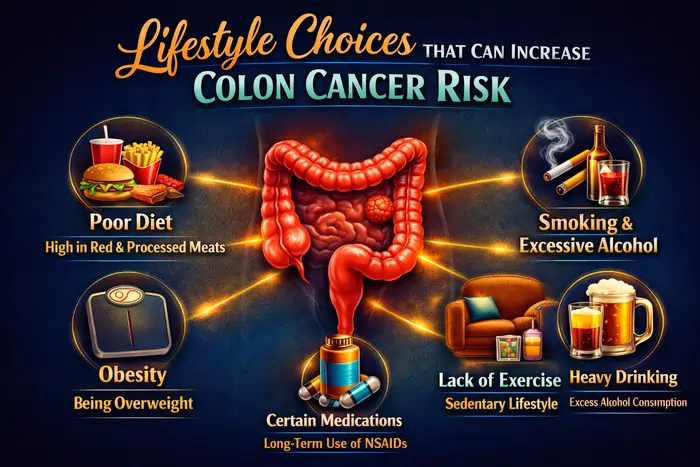
Lifestyle choices are responsible for a large share of colon cancer risk, and many of those choices are changeable. When you understand the key Lifestyle Risk Factors Colon Cancer research has identified, you can start making practical changes that significantly lower your lifetime risk.
Many colon cancers are driven more by lifestyle than by genetics alone. Diets high in processed and red meat, low fibre intake, excess body weight, physical inactivity, smoking, heavy alcohol use and other everyday habits are among the most important Lifestyle Risk Factors Colon Cancer researchers have linked to higher risk. By steadily improving what you eat, how much you move and the way you manage other lifestyle choices—while staying informed about symptoms and personal risk through resources like Colon Cancer Symptoms in Australians Under 50: Rising Concern and Who Is Most at Risk of Colon Cancer in Australia?—you can substantially cut your colon cancer risk and improve your overall health.
Why lifestyle matters so much for colon cancer
Colon cancer usually develops over many years from small polyps that gradually accumulate DNA damage and become malignant. While age, genetics and family history are crucial, international and Australian data show that modifiable lifestyle factors contribute more to colorectal neoplasms than non‑modifiable factors in many people.
Key reasons lifestyle is so important:
- Many of the biggest Lifestyle Risk Factors Colon Cancer—diet, weight, activity, smoking, alcohol—can be changed or improved at any age.
- Studies that combine several healthy behaviours (normal weight, non‑smoking, exercise, healthy diet, moderate alcohol) find up to a 40–50% lower colorectal cancer risk compared with unhealthy profiles.
- Australian and New Zealand guidance stresses that no cancer is completely preventable, but healthier living and screening together can meaningfully lower bowel cancer risk.
For a broader, non‑lifestyle view of who sits in the higher‑risk brackets (e.g., strong family history, IBD, genetic syndromes), see Who Is Most at Risk of Colon Cancer in Australia?.
The 12 Lifestyle Risk Factors Colon Cancer experts emphasise
Researchers and cancer organisations consistently highlight a similar cluster of lifestyle-related risks for colon and bowel cancer. Here are 12 major Lifestyle Risk Factors Colon Cancer to be aware of:
- Diet high in processed meat
- Excess red meat intake
- Low fibre intake
- Low intake of fruit and vegetables
- High intake of ultra‑processed foods and sugary drinks
- Excess body weight (overweight/obesity, especially abdominal fat)
- Physical inactivity and prolonged sitting
- Smoking
- Heavy or regular alcohol consumption
- Poorly controlled type 2 diabetes and metabolic syndrome
- Chronic sleep deprivation and unmanaged stress
- Likely environmental/dietary exposures such as microplastics and certain food contaminants (emerging evidence)
The first 10 are strongly established; the last two reflect newer research that may partly explain rising early‑onset bowel cancer, particularly in countries like Australia with very “Westernised” lifestyles.
1–2. Processed and red meat intake
Processed meats
Processed meats (bacon, ham, salami, sausages, hot dogs, deli meats) are among the clearest Lifestyle Risk Factors Colon Cancer researchers have identified. They typically contain:
- Added nitrites/nitrates that can form carcinogenic nitrosamines.
- Compounds generated during smoking, curing and high‑temperature cooking.
Higher processed meat intake is consistently linked with increased colorectal cancer risk in large cohort studies.
Red meat
Red meat (beef, lamb, pork) in moderation can fit in a healthy diet, but:
- Eating large amounts, especially when grilled or barbecued until charred, produces heterocyclic amines and polycyclic aromatic hydrocarbons, which can damage colon cell DNA.
- Many cancer prevention bodies recommend limiting red meat to around 350–500 g cooked weight per week and minimising processed meat.
World Cancer Research Fund guidance on preventing bowel cancer summarises the evidence and suggests practical ways to eat less processed/red meat while incorporating more fish and plant proteins.
3–4. Low fibre and low plant‑food intake
Fibre and plant foods are powerful protective factors that directly counter several Lifestyle Risk Factors Colon Cancer.
Why fibre matters:
- Increases stool bulk and speeds transit, reducing contact time between carcinogens and the bowel lining.
- Fermented by gut bacteria into short‑chain fatty acids like butyrate, which support healthy colon cells and have anti‑inflammatory effects.
- Associated with lower colorectal cancer risk in observational and mechanistic studies.
Signs you’re low on fibre:
- Rarely eat wholegrain bread, brown rice, oats or high‑fibre cereals.
- Only 0–2 serves of veggies or fruit per day.
- Legumes (beans, lentils, chickpeas) barely feature in your week.
The World Cancer Research Fund recommends a fibre‑rich diet with plenty of vegetables, fruit, wholegrains, pulses, nuts and seeds to reduce bowel cancer risk. Bowel Cancer New Zealand echoes this, highlighting vegetables, legumes, fruits and cereals (preferably wholegrain) as foundations of a risk‑reducing diet.
For younger Australians who want to understand how diet patterns intersect with early symptoms, Colon Cancer Symptoms in Australians Under 50: Rising Concern is a useful companion resource.
5. Ultra‑processed foods and sugary drinks
Modern “Western” dietary patterns characterised by ultra‑processed foods are rapidly emerging as important Lifestyle Risk Factors Colon Cancer:
Features:
- Packaged snacks, instant meals, fast food, refined baked goods.
- Sugary soft drinks and energy drinks.
- High in refined starch, sugar, unhealthy fats and additives.
These patterns are associated with:
- Weight gain and obesity.
- Poor glycaemic control and insulin resistance.
- Unfavourable changes to the gut microbiome.
A 2024 Nature paper on unhealthy lifestyle factors and colorectal cancer risk found that combined “unhealthy” behaviours—especially poor diet and low activity—substantially increased risk compared with healthier profiles.
World Cancer Research Fund’s preventing bowel cancer guidance specifically recommends reducing sugary drinks and avoiding ultra‑processed foods to support bowel cancer risk reduction.
6. Excess body weight and central obesity
Being overweight or obese—especially carrying fat around the abdomen—is a major Lifestyle Risk Factors Colon Cancer.
Mechanisms include:
- Chronic low‑grade inflammation driven by adipose tissue.
- Higher circulating insulin and IGF‑1, which promote cell proliferation and inhibit apoptosis.
- Hormonal changes and metabolic dysfunction.
Cancer Australia and Cancer Council note increased waist circumference and BMI above 25 as modifiable risk factors for bowel cancer. A New Zealand prevention guide similarly lists maintaining a healthy weight as a key strategy to lower bowel cancer risk.
Even a modest, sustained weight loss (5–10%) can improve metabolic markers and likely reduce colon cancer risk trajectory.
7. Physical inactivity and prolonged sitting
Physical inactivity, combined with long periods of sitting, is another central Lifestyle Risk Factors Colon Cancer axis.
Benefits of regular activity:
- Improves gut motility, reducing contact time between stool and the colon lining.
- Helps maintain a healthy weight and better insulin sensitivity.
- Reduces systemic inflammation and supports immune function.
Bowel Cancer Australia reports that recreational physical activity can reduce colon (not rectal) cancer risk by ~16%, recommending at least 30 minutes of activity with elevated heart rate most days, building up to 60 minutes or more as fitness improves.
World Cancer Research Fund similarly emphasises being physically active as a core way to prevent bowel cancer.
Even if you hit weekly exercise targets, long unbroken sitting stints (e.g., 10+ hours a day at a desk) still worsen metabolic health; breaking up sitting with short movement breaks is recommended.
8. Smoking
Smoking is an established risk factor for many cancers, including colorectal cancer. It contributes via:
- Direct carcinogens that enter the bloodstream and affect the colon.
- Oxidative stress and DNA damage.
- Immune and inflammatory dysregulation.
Meta‑analyses show that current smokers have significantly higher colorectal cancer risk than never‑smokers, with risk increasing with pack‑years. Quitting smoking reduces risk over time and carries broad health benefits well beyond colon cancer.
9. Alcohol
Regular, particularly heavy, alcohol consumption is another strong Lifestyle Risk Factors Colon Cancer.
Likely mechanisms:
- Ethanol metabolism to acetaldehyde, a known carcinogen.
- Production of reactive oxygen species and DNA damage.
- Folate interference and microbiome changes.
Cancer prevention guidelines generally advise:
- If you drink, keep within low‑risk national guidelines.
- From a cancer‑prevention standpoint, the safest option is to avoid alcohol or keep it to occasional, small quantities.
CAFMI and other educational sources emphasise that tobacco smoking and excessive alcohol use are key contributors to colorectal cancer risk and should be central targets in prevention strategies.
10. Poorly controlled type 2 diabetes and metabolic syndrome
Type 2 diabetes and metabolic syndrome often travel with many other Lifestyle Risk Factors Colon Cancer (poor diet, obesity, physical inactivity).
They are associated with:
- Chronic hyperinsulinaemia and increased IGF‑1.
- Systemic inflammation.
- Dyslipidaemia and fatty liver disease, all of which may influence carcinogenesis.
Better glycaemic control through diet, weight management, exercise and appropriate medication can help lower overall cancer risk and improve outcomes if cancer occurs.
11. Chronic sleep deprivation and unmanaged stress
Sleep and stress sit at the interface of lifestyle and biology:
- Chronic short sleep is associated with metabolic disturbance, obesity and insulin resistance—all part of the broader Lifestyle Risk Factors Colon Cancer pattern.
- Persistent high stress can affect dietary choices (stress‑eating), alcohol use, smoking and activity levels, and may also influence inflammatory and hormonal pathways directly.
While evidence linking sleep and stress to colon cancer isn’t as strong as that for diet or smoking, they amplify other risk factors and are important to address for overall cancer prevention and wellbeing.
12. Emerging exposures: microplastics and environmental factors
Emerging research suggests environmental exposures, including microplastics in the food chain, might play a role in rising bowel cancer rates, particularly in younger adults.
Australian media and research coverage has noted:
- Australia has among the highest rates of early‑onset bowel cancer in the world.
- Experimental data showing high microplastic levels may impair gut barrier function and promote inflammation.
These findings are still preliminary, but they may partly explain why even younger, otherwise “healthy” individuals develop bowel cancer. They don’t replace the established Lifestyle Risk Factors Colon Cancer, but sit alongside them as additional concerns.
For a symptom‑oriented view of this early‑onset trend, especially relevant to younger readers, see Colon Cancer Symptoms in Australians Under 50: Rising Concern.
How changing multiple lifestyle factors multiplies the benefit

A large European study (EPIC) created a “healthy lifestyle index” based on five modifiable factors: weight, physical activity, non‑smoking, limited alcohol and healthy diet. Findings included:
- Each individual healthy lifestyle factor was associated with lower colorectal cancer risk.
- Each additional healthy behaviour adopted reduced colorectal cancer risk by about 12%.
- About 16% of colorectal cancer cases in the cohort were attributed to non‑adherence to all five healthy behaviours.
This supports the idea that tackling several Lifestyle Risk Factors Colon Cancer together—rather than just one—is the most powerful strategy.
World Cancer Research Fund and Cancer Council both echo this multi‑factor approach, recommending: eat more fibre, limit red/processed meat, avoid tobacco, keep alcohol low, stay active and maintain a healthy weight.
Screening still matters—even if you improve your lifestyle
Even perfect lifestyle choices cannot guarantee you’ll never develop colon cancer. That’s why screening is essential alongside risk‑factor modification:
- Stool tests (like FIT) can detect hidden blood from polyps or early cancers.
- Colonoscopy can remove precancerous polyps before they turn cancerous.
- Early detection dramatically improves outcomes and treatment options.
In Australia, you can learn about screening and prevention at:
- Cancer Council: Bowel cancer – Cancer Council Australia
- Cancer Council: Bowel cancer prevention
- Cancer Institute NSW: Bowel cancer screening
To understand how lifestyle fits with age, genetics and medical history when deciding on screening, revisit Who Is Most at Risk of Colon Cancer in Australia?.
FAQs: Lifestyle Risk Factors Colon Cancer
What are the main Lifestyle Risk Factors Colon Cancer?
The biggest lifestyle drivers are diets high in processed and red meat, low fibre and plant foods, excess body weight, physical inactivity, smoking, and heavy alcohol use.
Can changing my diet really reduce colon cancer risk?
Yes. Increasing fibre-rich foods like vegetables, fruits, whole grains, and legumes while reducing processed and red meat lowers risk based on large population studies.
How much physical activity do I need to help protect my colon?
Guidelines recommend at least 150 minutes of moderate or 75 minutes of vigorous activity weekly. Regular activity can reduce colon cancer risk by around 16%.
Do I still need screening if I fix my Lifestyle Risk Factors Colon Cancer?
Absolutely. Healthy habits reduce risk but don’t eliminate it. Stool tests and colonoscopy are still essential for early detection.
Is obesity really that important for colon cancer?
Yes. Higher body weight and abdominal fat are strongly linked to increased colon cancer risk due to inflammation and hormonal effects.
Does sitting all day increase colon cancer risk even if I exercise?
Yes. Long periods of sitting are linked to higher risk. Breaking up sitting time with movement is important—even if you exercise regularly.
Are plant-based diets protective?
Generally yes. Diets focused on plant foods and low in processed and red meat are associated with lower colorectal cancer risk.
How big a role does alcohol play?
Heavy or frequent alcohol use increases colon cancer risk. Reducing or avoiding alcohol is recommended.
Is smoking a major Lifestyle Risk Factors Colon Cancer?
Yes. Smoking is linked to a higher risk of colorectal cancer and many other cancers. Quitting helps reduce risk over time.
Does type 2 diabetes increase my colon cancer risk?
Yes. Type 2 diabetes and metabolic syndrome are associated with increased risk, partly due to insulin resistance and inflammation.
Can one healthy habit make a difference if the rest of my lifestyle is poor?
Yes. Even one positive change can help, but combining multiple healthy habits provides the greatest benefit.
How quickly will lifestyle changes affect my risk?
Some health improvements happen within weeks or months, but long-term risk reduction builds over years of consistent habits.
Do microplastics and environmental exposures matter yet?
Research is ongoing. These factors may play a role, but diet and lifestyle remain the most important controllable risks.
If I’m under 50, should I still worry about Lifestyle Risk Factors Colon Cancer?
Yes. Early-onset colon cancer is increasing, and lifestyle factors may contribute significantly. Awareness is important at any age.
Where can I learn more and get a practical checklist?
Start with reliable resources like Cancer Council Australia and Bowel Cancer Australia, along with practical guides on lifestyle-related risk factors.