

Fuel prices in Australia in 2026 are front‑and‑centre for households and businesses trying to stretch every dollar as the cost of living climbs. With petrol and diesel hovering at uncomfortable levels in many capital cities, “fuel prices Australia 2026” and “how to save on fuel in Australia” have become essential questions rather than casual searches.
For a deeper dive into how global markets and inflation fears are driving demand for safe‑haven assets, you can also look at Gold Price Today 2026: Why Australian Investors are Hedging Now, which explores why so many Australians are turning to gold as a hedge.
Introduction: Why Fuel Prices Matter More Than Ever in 2026
In 2026, fuel prices are a critical part of the cost‑of‑living equation for Australian households, tradies, fleet operators and logistics businesses. The combination of elevated global oil prices, a softer Australian dollar at times, and local tax and margin dynamics means petrol prices are still placing pressure on weekly budgets, even when short‑term dips offer brief relief.
Automotive fuel has been one of the more volatile components of the inflation basket, swinging sharply as international crude benchmarks move. Against this backdrop, understanding fuel price trends in Australia 2026 and identifying top cost‑saving strategies has never been more important.
Fuel Prices Australia 2026: Where Are We Now?
To get a handle on today’s fuel environment, it helps to look at both national averages and city‑level detail. High‑level data on gasoline prices in Australia is available via sources like Australia Gasoline Prices – Trading Economics and Australia gasoline prices – GlobalPetrolPrices.com, which track per‑litre prices over time in Australian dollars.
On the ground, Australians are watching several core numbers:
- Average fuel price per litre in Australia
- Unleaded petrol price per litre 2026 (often hovering around key thresholds like $2.00 in some capital cities at peak points)
- Diesel price per litre, crucial for freight, agriculture and tradies
- The gap between regular unleaded, E10, premium 95 and premium 98
The Australian Institute of Petroleum (AIP) Pricing section explains how pump prices are constructed from import parity prices, taxes and margins, and publishes a Weekly Petrol Prices Report summarising average prices in major cities.
Historical series from Trading Economics and GlobalPetrolPrices confirm that historical fuel prices Australia have moved in waves, often spiking during oil supply shocks or conflicts and then easing as supply catches up or demand softens.
What’s Driving Fuel Prices in Australia in 2026?
Several forces sit behind fuel prices Australia 2026, and most are outside the control of individual drivers.
1. Global oil prices and geopolitical tensions
Benchmarks like Brent and WTI have been buffeted by supply cuts, production decisions and geopolitical developments. Global gasoline and oil market pages (for example, the gasoline commodity charts on Trading Economics) show how quickly prices can jump when supply fears build.
Geopolitical tensions, conflicts and shipping disruptions can feed through to higher Australian pump prices within weeks, as crude and refined product markets reprice risk.
2. Exchange rates and the Australian dollar
Because oil is priced globally in US dollars, a weaker Australian dollar means higher fuel prices in Australian dollars, even if the underlying USD oil price is stable. This currency effect is one reason Australia’s pump prices can be high even when global headlines talk about easing crude prices.
3. Local taxes, excise and margins
Fuel excise, GST, and wholesale/retail margins all play a role in the final bowser price. The AIP’s pricing breakdown explains how import parity pricing flows through to terminal gate prices and then to retail margins and taxes.
Political debates around fuel excise and temporary tax cuts—illustrated by proposals like Our Plan for Cheaper Fuel—show how fuel tax policy has become a hot point in the broader cost‑of‑living conversation.
4. Domestic supply and infrastructure constraints
Australia imports most of its refined fuels, but issues in domestic refining, logistics or regional supply can temporarily push prices higher in particular areas. Energy regulators have also flagged tight supply conditions in some gas markets, and constrained energy systems tend to keep overall energy and transport costs elevated.
City‑by‑City Snapshot: Who’s Paying the Most at the Pump?
While national averages tell part of the story, actual petrol prices Australia 2026 vary meaningfully between regions and over time.
- Sydney and Melbourne often see high‑profile spikes where regular unleaded jumps well above $2.00 per litre, especially around public holidays or when global oil surges.
- Brisbane fuel prices 2026 have been particularly newsworthy. In January, one ABC report described Brisbane recording higher fuel prices than any other capital city at certain points.
- Yet, just weeks later, ABC News explained why Brisbane’s fuel prices have been cheaper than usual, pointing to discounting cycles, competition and timing as big drivers of the swings.
In Western Australia, drivers can track monthly average fuel prices via the WA government’s FuelWatch service, which provides detailed data on daily and monthly averages across regions. This shows how regional vs metropolitan fuel price gaps play out, with some regional areas often paying more due to transport costs and less competition.
These variations underscore how important it is for drivers to understand the fuel price cycle in their city and to use information services, apps and government tools to time their fill‑ups.
Top Trends Shaping Fuel Costs in 2026
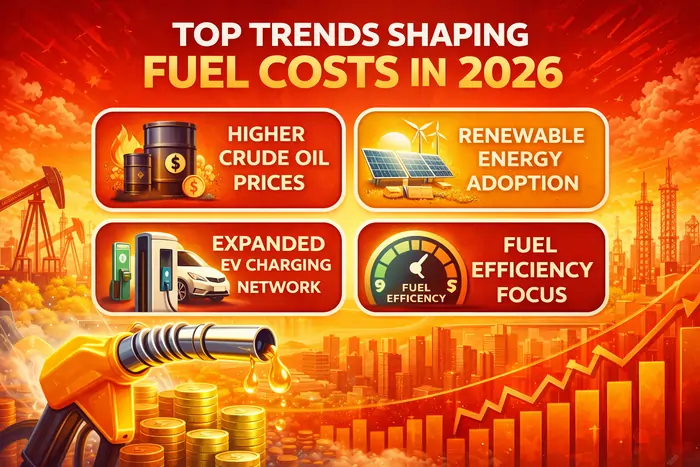
Several big trends frame the discussion on fuel prices Australia 2026 and where they might go next.
Oil market volatility and supply shocks
Oil markets remain sensitive to production decisions, conflicts and demand changes. Global analyses on gasoline and oil price volatility show that sudden spikes can happen even in a broader downtrend.
Policy changes and fuel excise debates
Following the temporary fuel excise cuts earlier in the decade, there has been persistent discussion about whether such relief should be reintroduced or made more targeted. The Liberal Party’s cheaper fuel plan is one example of policy proposals designed to ease fuel costs at the pump.
Energy transition and changing demand
Growing adoption of hybrids and EVs, plus stricter emissions standards, is gradually reshaping demand patterns. Over time, this could reduce demand growth for petrol and diesel, but in the near term most Australians still rely on internal combustion vehicles, so fuel remains a major cost centre.
Cost‑of‑living and wage dynamics
Fuel interacts with other inflation categories, influencing everything from groceries to services. This feedback loop keeps fuel firmly in the political and economic spotlight.
How Rising Fuel Prices Are Hitting Australians
High fuel prices in Australia hit households through multiple channels:
- Household budgets: Families commuting to work, school and activities see a direct hit to disposable income when petrol jumps 20–40 cents per litre.
- Mortgage stress + fuel stress: For households already grappling with higher interest rates, another $30–$60 a week in fuel costs can be significant, especially in outer suburbs with longer commutes.
- Small businesses and tradies: Utes, vans and light trucks are fuel‑intensive. Many small businesses are forced to absorb part of the increase and pass some through to customers.
- Flow‑on to prices of goods: Transport costs feed into grocery and retail prices because freight companies pass higher diesel costs on to clients and, ultimately, consumers.
Media pieces noting Australians paying more than $2 a litre for petrol and warning of possible petrol price surges (sometimes quoted up to 40 per cent in worst‑case scenarios) underline how seriously households are taking fuel costs.
Smart Ways to Save on Fuel in 2026
The good news is that drivers still have room to claw back savings with smarter habits and tools. Several Australian guides offer practical tips on how to save on fuel in Australia.
Resources like How to Save on Fuel in Australia | Easi, Summer 2026: Cut Australian Petrol Costs & Drive Smarter, Petrol Prices: Save Money on Fuel & Car Expenses and How to Get the Best Deal at the Fuel Pump highlight several key strategies:
- Drive more smoothly
Harsh acceleration and braking significantly increase fuel consumption. Keeping revs moderate, anticipating traffic and using cruise control on highways can deliver noticeable fuel cost savings. - Keep your car maintained
Correct tyre pressure, regular servicing, clean air filters and using the right oil all improve efficiency. Simple maintenance can trim fuel use by several per cent. - Compare fuel prices and fill up at the right time
Using fuel price apps and services to find the cheapest servo near you can save 10–20 cents per litre. Reports like the FuelRadar Summer 2026 fuel report show how timing fills around the price cycle in cities like Brisbane can materially lower annual fuel spend. - Use discount vouchers and loyalty programs
- Supermarket dockets from Coles and Woolworths
- Ampol, BP, Shell/Coles Express and 7‑Eleven loyalty schemes
- NRMA, RACQ and other motoring club fuel discounts
- Avoid unnecessary idling and excess weight
Removing roof racks, heavy gear and clutter, and avoiding extended idling with the engine running, all contribute to lower consumption.
Collectively, these tactics help Australians reduce unnecessary fuel use, cut petrol costs and drive smarter, even when fuel prices Australia 2026 remain elevated.
Cost‑Saving Strategies for Businesses and Fleets
For businesses and fleets, fuel is a major line item, and small percentage improvements can translate into large dollar savings.
Fuel cards and smarter purchasing
Articles like 3 ways fuel cards can help you drive down business costs in 2026 outline how fleet fuel cards can deliver:
- Volume‑based discounts
- Simplified reporting and GST tracking
- Controls on what can be purchased on the card
Larger fleets often negotiate additional rebates or use analytics from card providers to benchmark consumption and identify outliers.
Route optimisation and telematics
Using GPS and telematics to plan more efficient routes, avoid congestion and monitor driver behaviour can materially reduce fuel usage, especially for delivery and service fleets.
Driver training and behaviour programs
Training drivers to accelerate gently, avoid speeding and minimise idle time can bring fuel consumption down across an entire fleet. Combined with maintenance and better routing, this forms a powerful fuel‑management program.
Vehicle choice and maintenance
Choosing more efficient vehicles—including hybrids where suitable—and maintaining tyres and engines pays off quickly when vehicles are on the road all day.
Beyond the Bowser: Long‑Term Strategies to Cut Fuel Dependence
While short‑term tactics help, many Australians are also thinking longer term about how to reduce their dependence on high fuel prices in Australia.
- More efficient vehicles, hybrids and EVs
Switching to a more fuel‑efficient car, hybrid or full EV can dramatically reduce fuel expenditure over time, especially for high‑kilometre drivers. - Car‑sharing, public transport and ride‑sharing
For some city‑based drivers, combining public transport with car‑sharing or ride‑sharing reduces the need to own a second car—or any car at all—which eliminates fuel costs entirely for those trips. - Integrating fuel costs into long‑term budgeting
Households that treat fuel as a fixed budget line and consciously manage kilometres, trip‑planning and vehicle choice are better placed to handle fuel price shocks than those reacting month‑to‑month.
As more households think holistically about their finances, some are also weighing traditional fuels and transport costs alongside defensive assets like gold, as discussed in Gold Price Today 2026: Why Australian Investors are Hedging Now.
Conclusion: Navigating Fuel Prices in Australia in 2026
Fuel prices Australia 2026 reflect a mix of global oil markets, currency effects, tax policy and local competition, all feeding into the numbers you see at the bowser. Data‑rich sources such as Trading Economics, GlobalPetrolPrices.com and the Australian Institute of Petroleum’s pricing and weekly petrol price reports show that volatility is here to stay, even if prices occasionally dip.
At the same time, practical guides such as How to Save on Fuel in Australia, Summer 2026: Cut Australian Petrol Costs & Drive Smarter, Petrol Prices: Save Money on Fuel & Car Expenses and How to Get the Best Deal at the Fuel Pump make it clear that drivers and businesses are not powerless.
By combining smarter driving, better timing, discounts, fuel cards and longer‑term decisions around vehicles and transport—and by keeping an eye on broader financial hedges like those explored in Gold Price Today 2026: Why Australian Investors are Hedging Now—Australians can soften the blow of high fuel prices and build more resilient budgets in 2026 and beyond.