

Introduction
Access to financial services plays a critical role in economic development, poverty reduction, and financial security. However, millions of people around the world still lack access to basic financial tools such as bank accounts, savings options, credit, and insurance. This gap has led governments, financial institutions, and global organizations to develop financial inclusion initiatives aimed at expanding access to financial systems for underserved populations.
Financial inclusion focuses on ensuring that individuals and businesses—especially those in rural or low-income communities—can access affordable and responsible financial services. These services may include banking, payments, savings accounts, loans, and insurance products. The goal is to help individuals participate fully in the economy, manage financial risks, and build long-term stability.
Globally, financial inclusion has become a major development priority. While progress has been made in recent years, many people still remain excluded from the formal financial system. Understanding how financial inclusion initiatives work can help highlight their impact on economic growth and social development.
What Financial Inclusion Means
Financial inclusion refers to efforts designed to ensure that everyone has access to useful and affordable financial services that meet their needs. These services include payments, savings, credit, and insurance products delivered in a responsible and sustainable way.
The goal of financial inclusion is not only to provide access to financial institutions but also to ensure people actively use financial services to manage money, build savings, and support long-term economic resilience.
When people gain access to formal financial systems, they can:
- store money securely
- receive digital payments
- access loans for business or education
- build savings for emergencies
- manage financial risks
These benefits contribute to stronger households and more stable economies.
The Global Financial Inclusion Challenge
Despite global progress, a large portion of the population still lacks access to basic financial services. According to the World Bank, around 1.4 billion adults worldwide remain unbanked, meaning they do not have access to a bank account or similar financial service.
Although financial account ownership has increased significantly in recent years, millions of people—especially women, rural populations, and small business owners—still face barriers to financial participation.
Common barriers include:
- lack of nearby banking infrastructure
- high transaction fees
- limited financial literacy
- lack of identification documents
- limited internet access or digital connectivity
These barriers highlight why financial inclusion initiatives remain essential for economic development.
Why Financial Inclusion Initiatives Matter
Financial inclusion initiatives provide individuals and businesses with tools that support financial resilience and economic participation.
Reducing Poverty
Access to financial services allows individuals to save money, manage emergencies, and invest in opportunities such as education or entrepreneurship.
Supporting Small Businesses
Many small businesses rely on access to credit or payment systems to grow and operate effectively. Financial inclusion can help entrepreneurs expand their businesses and create jobs.
Improving Economic Stability
Inclusive financial systems help households manage financial shocks, reducing vulnerability during economic downturns or unexpected expenses.
Promoting Gender Equality
Women in many regions face greater financial barriers than men. Financial inclusion programs often focus on improving women’s access to financial services and economic opportunities.
Overall, inclusive financial systems strengthen communities and contribute to long-term economic growth.
Types of Financial Inclusion Initiatives
Governments, development organizations, banks, and technology companies use several approaches to expand financial access.
Digital Banking Programs
Digital banking allows people to open accounts, transfer money, and manage finances through mobile phones or online platforms. Digital financial services reduce costs and make financial systems more accessible to remote populations.
Mobile banking and digital wallets are especially valuable in areas with limited physical banking infrastructure.
Mobile Money Systems
Mobile money services allow users to send and receive money using mobile devices. These systems have expanded financial access in many developing regions where traditional banking services are limited.
Mobile money accounts have helped millions of people save money, pay bills, and conduct business transactions digitally.
Microfinance and Small Loans
Microfinance institutions provide small loans to individuals who may not qualify for traditional bank loans. These loans help entrepreneurs start small businesses, invest in education, or support household needs.
Microfinance programs have been widely used in developing countries to support financial inclusion.
Government Financial Programs
Governments often implement policies and programs designed to increase financial access. These programs may include:
- national financial inclusion strategies
- digital identity programs
- social benefit payments delivered through digital systems
- low-cost bank accounts
Government-led programs often partner with financial institutions to expand financial access nationwide.
Financial Literacy Programs
Financial education initiatives help individuals understand how to manage money, use banking services, and avoid financial risks.
Financial literacy is an important part of financial inclusion because access to services alone is not enough—people must also understand how to use them effectively.
The Role of Technology in Financial Inclusion
Technology has become one of the most powerful tools for expanding financial access. Innovations in financial technology (FinTech) have allowed millions of people to participate in financial systems without relying on traditional banks.
Examples of technology-driven inclusion include:
- mobile banking applications
- digital wallets
- online lending platforms
- blockchain-based financial systems
- AI-powered credit scoring tools
These technologies reduce transaction costs, improve access, and create new financial opportunities for individuals and businesses.
Technology has also enabled governments and organizations to deliver financial services more efficiently and securely.
Challenges Facing Financial Inclusion Efforts
Despite progress, several challenges continue to limit the success of financial inclusion initiatives.
Digital Divide
Access to smartphones, internet connectivity, and digital skills remains uneven across regions, particularly in rural areas.
Consumer Protection
Expanding digital finance introduces new risks such as fraud, data privacy concerns, and cybersecurity threats.
Financial Literacy Gaps
Many people who gain access to financial tools may lack the knowledge needed to use them responsibly.
Infrastructure Limitations
In some regions, limited banking infrastructure, regulatory challenges, and economic instability can slow financial inclusion efforts.
Addressing these challenges is essential to ensure financial inclusion initiatives achieve their intended goals.
The Future of Financial Inclusion
Financial inclusion continues to evolve as new technologies, policies, and partnerships emerge.
Future trends may include:
- expanded digital banking services
- stronger financial identity systems
- more inclusive credit scoring models
- growth of fintech solutions
- improved regulatory frameworks
- partnerships between governments and technology companies
These developments aim to bring financial services to even the most underserved communities.
The long-term vision of financial inclusion initiatives is to create a global financial system where everyone has the opportunity to participate and build financial security.
Conclusion
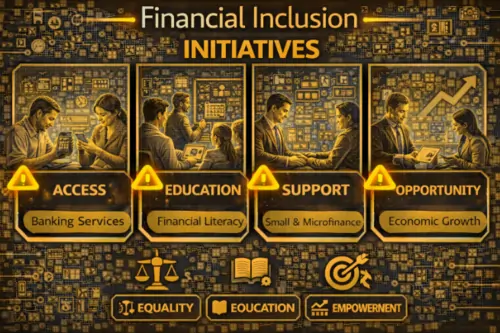
Financial inclusion initiatives are essential for creating fair and accessible financial systems. By expanding access to banking services, digital payments, credit, and financial education, these initiatives help individuals and businesses participate more fully in economic life.
Although significant progress has been made, millions of people worldwide still lack access to formal financial services. Continued innovation, policy support, and technological advancement will be necessary to close this gap.
As financial inclusion initiatives continue to expand, they have the potential to improve economic stability, reduce poverty, and create greater financial opportunities for communities around the world.
FAQ
What are financial inclusion initiatives?
Financial inclusion initiatives are programs and policies designed to provide underserved populations with access to affordable financial services such as banking, savings, credit, and insurance.
Why are financial inclusion initiatives important?
They help reduce poverty, support economic growth, improve financial security, and expand opportunities for individuals and businesses.
How does technology support financial inclusion?
Technology enables digital banking, mobile payments, and online financial services that allow people to access financial tools even without traditional banking infrastructure.
Who benefits from financial inclusion programs?
Individuals in rural communities, low-income households, women, small businesses, and entrepreneurs often benefit the most from financial inclusion efforts.
What challenges affect financial inclusion?
Common challenges include limited internet access, lack of financial literacy, regulatory barriers, and concerns about digital security.