

Rare Earth Element Market Update Key Takeaways
If you enjoy reading the odds behind a blackjack shoe, this Rare Earth Element Market Update is the same idea applied to the real-world market that powers your slots, phones, and gaming hardware.
- The biggest swing right now is how Rare Earth Element Market Update trends in magnet metals and battery materials can ripple into tech prices and casino hardware reliability.
- China still holds the dominant position in mining and processing, so any policy change there is like the house suddenly changing table limits mid-session.
- Rising demand from EVs, wind turbines, and consumer electronics adds long-term “upward pressure” to prices, similar to a progressive jackpot that keeps getting funded by every spin.
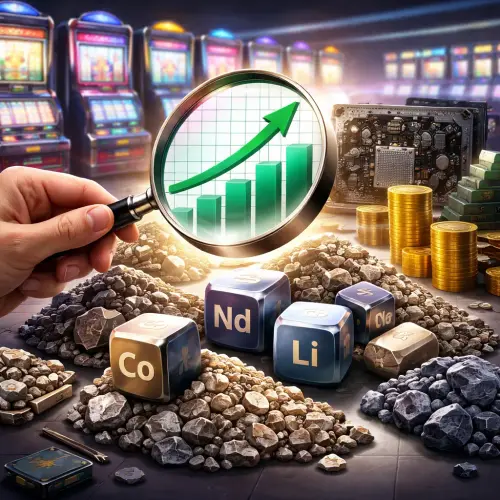
Why Casino Players Should Care About This Rare Earth Element Market Update
If you love looking at odds, variance, and hot streaks, the market for rare earth elements is basically another high-volatility game. The difference is this one quietly affects your gaming experience: from the screen on your favorite online casino, to the sound system above a live roulette wheel, to the GPU in your home rig. For a related guide, see Rare Earths Americas IPO Targets $368 Million Valuation on NYSE.
Rare earths are a group of 17 metals like neodymium, dysprosium, and terbium. They’re crucial for strong magnets, bright displays, and high-performance electronics. When rare earth prices supply and demand jump around, it can change the cost and availability of everything from smartphones and GPUs to casino slot machines and security gear.
So thinking about a Rare Earth Element Market Update is like checking how the casino finances really work. You might not change your next spin, but you’ll understand the environment you’re playing in—and that information is a subtle edge.
Recent Rare Earth Element Market Update: Price Swings Like a Volatile Slot
Over the last few years, rare earth prices supply and demand have behaved like a high-volatility slot with long cold patches and sudden monster hits. Prices spiked hard around 2010–2011, cooled off, then surged again after 2020 as EVs and green tech took off.
Today, the overall picture is mixed: some key elements have cooled from recent highs, while others stay stubbornly elevated because of tight supply or growing demand.
1. Magnet metals: Neodymium and praseodymium on a choppy streak
Neodymium and praseodymium (often traded together as NdPr) are the core of high-performance magnets used in EV motors, wind turbines, and many precision devices in casinos and gaming PCs. Their price chart looks like a slot on “turbo mode”:
- Post-2020, strong rallies as EV sales and green energy investments surged.
- Pullbacks when global growth slowed and investors took profits.
- Still above long-term historical levels, hinting at a higher “floor” thanks to structural demand.
To a player, this is like a game with higher minimum bets but also a bigger jackpot. The swings can indirectly raise costs for anything using high-end magnets—from card shufflers to VR headsets.
2. Heavy rare earths: Less volume, more variance
Heavy rare earths like dysprosium and terbium, used to make magnets stable at high temperatures, are more niche but way more volatile. Their market is thinner, so small supply disruptions cause big price jumps. For a related guide, see CBA Share Price Jumps Amid Strong ASX Momentum.
Think of these as high-limit tables with fewer players. One big whale walking away can change the mood of the whole pit. In market terms, a single new mine, policy move, or export rule can push prices sharply up or down.
3. Phosphors and display materials: Quiet but crucial
Some rare earths, like europium and yttrium, are essential for older display tech and specialized lighting. Prices here don’t grab headlines, but any cost creep matters for large display walls, signage, and lighting setups in casinos.
For players, it’s like the quiet rake in a poker game—tiny amounts, consistently collected, that shape the long-term economics of the room.
Key Supply Factors: Where the House Edge Hides in the Rare Earth Element Market Update
In any casino, the house edge is built into the rules. In the rare earth world, the “edge” comes from who controls mines, refineries, and export policies. Most rare earth market trends for investors start here.
4. China’s dominance: One big dealer at most of the tables
China controls the majority of rare earth mining and an even larger share of processing capacity. That’s like one casino owning most of the card shoes in town. When it changes rules, everyone feels it.
- Export controls can tighten supply and spike prices.
- Environmental crackdowns can shut or slow mines.
- Subsidies or policy support can boost domestic production and undercut competitors.
For players, this matters because sudden policy changes can raise hardware costs, delay new tech rollouts, or nudge manufacturers to cut corners.
5. New mines: Fresh tables opening, but with long waiting lines
Countries like the United States, Australia, and Canada are trying to bring new rare earth projects online and build refining capacity. The catch? Mines are slow to approve, expensive, and politically sensitive.
Imagine waiting for a long-promised high-limit room to open. The hype comes early, but the actual launch date keeps slipping. Until these new “tables” are fully operational, the market still depends heavily on existing suppliers.
6. Environmental and social rules: Compliance as the real minimum bet
Rare earth mining and processing can be messy: toxic waste, radiation concerns, and community impacts. Stricter rules in one region can move production elsewhere, often with different standards.
This is like one jurisdiction raising taxes on casinos. Some venues clean up their act and become more expensive; others move operations to where the rules are looser but risks are higher. In market terms, compliance adds cost and can restrict supply, contributing to long-term price support.
Demand Drivers: How EVs, Tech, and Green Energy Shape Rare Earth Market Trends for Investors
On the demand side, the story behind this Rare Earth Element Market Update is easier to read: the world wants more electronics, more green energy, and more electric vehicles. All of those are heavy users of rare earths. For a related guide, see Australian Strategic Materials Share Price Update and Market Outlook.
7. EVs and green tech: The biggest new players at the table
EV makers like Tesla, BYD, and legacy brands are major consumers of rare earth magnets for motors. Wind turbines also need powerful magnets, especially offshore designs.
To a casino player, this looks like a stream of high-rollers walking into the pit and sitting down at every table at once. Even if tech manufacturers try to thrift or redesign around certain rare earths, the overall direction is clear: structural demand is up, not down.
Consumer electronics and gaming: The quiet but constant bankroll
Phones, laptops, GPUs, consoles, sound systems, and LED displays all rely on some combination of rare earths. Every new generation of hardware tends to be more powerful, which can mean more materials per unit.
For casinos, that includes surveillance systems, cash-handling machines, server hardware, and every flashy new slot cabinet. Even when broader markets wobble, entertainment and gaming often stay surprisingly resilient, providing a steady demand “base.”
Defense and critical infrastructure: Non-negotiable demand
Defense systems and critical infrastructure use rare earths in guidance systems, radar, and specialized electronics. Governments treat this demand as “must have,” not optional.
In poker terms, this is the player who never leaves the table, no matter how the session is going. For the market, it adds a sticky layer of demand that doesn’t vanish when the economy slows.
Rare Earth Element Market Update Risk Checklist for Casino-Focused Readers
If you like thinking in terms of bankroll, risk of ruin, and house edge, you can look at the rare earth market through the same lens. Here’s a simple checklist to understand the main risks without needing a geology degree.
| Risk Type | What It Means in Rare Earths | Casino-Style Analogy |
|---|---|---|
| Supply concentration | Most mining and processing in a few countries | One big casino owning nearly all the tables |
| Policy shock | Export controls, tariffs, or environmental crackdowns | Rules changing mid-shoe in blackjack |
| Price volatility | Sharp swings on news, demand, or sentiment | A high-volatility slot with big but rare payouts |
| Technology shift | New designs that use fewer or different elements | New game variant changing what’s popular on the floor |
| Long project timelines | Years to open new mines and refineries | A promised new high-limit room that keeps getting delayed |
Using this kind of risk map, you can read any Rare Earth Element Market Update like a game report: is the house changing the rules, are more players entering, and is the variance going up or down?
Advanced Insights: How Information Becomes an Edge in Rare Earth Market Trends for Investors
Even if you’re not trading commodities, understanding rare earth market trends for investors can sharpen how you think about risk and opportunity in other areas—just like learning basic strategy in blackjack makes you a better all-around gambler.
Recognize “tilt” in the market
Markets can go on emotional streaks, just like players. Fear about export bans can push prices too high; boredom or overconfidence can send them too low when nothing fundamental changed. Spotting when the crowd is on tilt helps you avoid overreacting to headlines about chip shortages or hardware prices.
Separate one-off news from structural trends
A single mine accident is like one bad beat—painful but temporary. Structural shifts, like long-term EV adoption or major new environmental laws, are more like learning the true house edge of a game. Paying more attention to multi-year trends than one-day news gives you a clearer sense of where odds are drifting.
Connect it back to your gaming life
If you’re planning a new gaming PC, console, or VR setup, knowing that rare earths and chips are in a tight cycle can influence when you buy, what you prioritize, and how long you expect gear to last. It’s not about timing the market perfectly—it’s about having realistic expectations so you don’t chase every “limited stock” hype wave.
Useful Resources
To dig deeper into the data and big-picture forces behind any Rare Earth Element Market Update, these sources are helpful starting points:
- International Energy Agency – The Role of Critical Minerals in Clean Energy Transitions
- U.S. Geological Survey – Mineral Commodity Summaries (Rare Earths section)
Stepping back, the Rare Earth Element Market Update is like checking the pit boss’s notes before you sit down: you see where the pressure points are, which tables are hot with demand, and where the rules might change next. You may still play the same games, but you’ll understand the bigger system that supports every screen, sound, and spin you enjoy.
Frequently Asked Questions About Rare Earth Element Market Update
What are rare earth elements in simple terms?
Rare earth elements are a group of 17 metals that show up in small amounts inside many high-tech products, like magnets, screens, and electronics. They are not “rare” in the sense of being almost extinct, but they are rarely found in rich, easy-to-mine deposits, which makes getting them out of the ground and refining them complex and costly.
Why should casino players care about a Rare Earth Element Market Update ?
Casino players should care because rare earths are baked into the tech that powers slots, surveillance cameras, displays, sound systems, and home gaming rigs. When supply tightens or prices spike, it can influence hardware costs, upgrade cycles, and even the reliability of the technology you rely on for entertainment and online play.
How do rare earth prices affect gaming and casino hardware?
When rare earth prices climb, manufacturers of chips, magnets, and display components may face higher costs, which can either raise end prices or encourage cheaper designs. Over time, that can affect how quickly casinos roll out new machines, what features they offer, and how expensive high-performance gaming PCs or consoles become for individual players.
Which rare earth elements matter most for electronics and gaming?
For electronics and gaming, key rare earths include neodymium and praseodymium for strong magnets in motors and drives, dysprosium for high-temperature magnet performance, and elements like europium, terbium, and yttrium for certain displays and lighting. These materials help make devices smaller, more powerful, and more energy efficient.
Why is China so important in the rare earth market?
China dominates both mining and processing capacity for rare earth elements, giving it major influence over global supply and pricing. Decades of policy support, lower historical environmental standards, and investment in refining infrastructure have concentrated the industry there, so any shift in Chinese regulations or export policies can shake markets worldwide.
Are rare earth elements actually running out?
Geologically, rare earth elements are relatively abundant in the Earth’s crust, but high-quality, economically viable deposits are limited. The main constraints today are environmental impacts, political risk, and investment in mining and processing, not the absolute physical amount left in the ground.
How does EV growth influence rare earth prices?
Electric vehicles use powerful rare-earth-based magnets in many of their motors and systems, so as EV sales rise, demand for magnet materials such as neodymium and dysprosium also climbs. This creates long-term upward pressure on prices and makes EV trends a key part of any serious Rare Earth Element Market Update.
Can new technologies reduce dependence on rare earth elements ?
Yes, some manufacturers are exploring alternative motor designs, different magnet chemistries, or more efficient use of rare earths to lower dependence. However, many of these alternatives involve trade-offs in performance, weight, or cost, so it is likely that rare earths will remain important for high-end and demanding applications for years.
What are the main risks in the rare earth supply chain?
Key risks include heavy geographic concentration of mining and processing, potential export restrictions, environmental crackdowns on polluting operations, and long lead times to open new mines. Together, these create the potential for sudden supply shocks and price spikes when political or environmental events hit major producing regions.
How long does it take to bring a new rare earth mine online?
Opening a new rare earth mine, plus associated processing facilities, usually takes many years. Environmental studies, permitting, financing, construction, and ramp-up can easily stretch a project timeline to a decade, which means supply cannot respond quickly to sudden spikes in demand.
Is investing in rare earth companies similar to gambling?
Investing in rare earth companies involves real economic fundamentals and ownership of assets, unlike gambling, which is mathematically negative expectation over time. However, the stocks can be very volatile and headline-driven, so the emotional roller coaster may feel familiar to anyone used to big swings at the gaming tables.
How can a non-expert follow rare earth market trends?
A non-expert can follow rare earth market trends by checking periodic reports from organizations like the U.S. Geological Survey and the International Energy Agency, reading company updates from major producers, and watching for news about EV sales, green energy policies, and trade regulations that directly affect supply and demand.
Do rare earth shortages cause chip or console shortages?
Rare earth shortages are one of several factors that can contribute to chip and console shortages, alongside semiconductor capacity, logistics issues, and overall electronics demand. While rare earths are not the only bottleneck, tight supplies and higher costs can amplify stress on already strained production chains.
Can rare earth market changes impact casino operating costs?
Yes, shifts in rare earth markets can influence the cost of slot machines, surveillance systems, networking hardware, and other electronics-heavy infrastructure that casinos depend on. Over time, this can affect how quickly properties upgrade floors, adopt new game formats, or expand digital offerings.
Are there environmental downsides to rare earth mining?
Rare earth mining and processing can produce toxic waste, radioactive by-products, and long-term land and water impacts if not managed carefully. Stricter environmental rules aim to reduce these harms but usually increase production costs and can limit the number of viable projects.
How does geopolitics influence rare earth markets?
Geopolitics plays a major role because rare earth extraction and refining are concentrated in a small number of countries. Trade disputes, sanctions, export controls, and diplomatic tensions can all disrupt flows of material, triggering price spikes and forcing manufacturers to scramble for alternative supplies or redesigns.
What indicators are useful when reading a Rare Earth Element Market Update ?
Useful indicators include production and export volumes from major producers, price trends for key elements like neodymium and dysprosium, EV and wind turbine deployment statistics, and new government policies on critical minerals. Together, they give a more complete picture than price alone.
Does higher rare earth demand always mean higher prices?
Higher demand often supports higher prices, but the actual outcome depends on how quickly new supply comes online and how much efficiency or substitution occurs. If investment keeps up and technology reduces material intensity, prices can stabilize or even fall despite growing usage in some sectors.
How can understanding rare earth markets help casino players think about risk?
Understanding rare earth markets encourages players to think in terms of structural edges, volatility, and long-run trends instead of only short-term swings. This mindset transfers well to bankroll management and game selection, helping players separate noise from signal in both markets and casino sessions.
Where can I learn more about the link between rare earths and clean energy?
You can learn more from detailed reports by agencies such as the International Energy Agency, which explain how rare earths fit into wind turbines, EV motors, and other clean technologies, and by reviewing technical and policy documents from national geological surveys that assess long-term resource and demand scenarios.