

SpaceX Starship Launch Key Takeaways
The latest SpaceX Starship Launch turned into a global streaming event, and Australians were right there in the thick of it.
- The SpaceX Starship Launch showed Aussies how close we’re getting to reusable, heavy‑lift rockets that could reshape space travel.
- Social media, local news, and backyard viewing parties turned a technical test into a viral spectacle across Australia.
- Future Starship flights could link directly to Australian science, industry, and even tourism, not just distant launches in Texas.
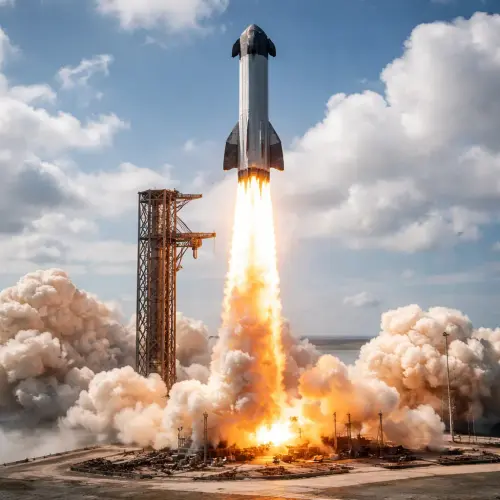
Why the SpaceX Starship Launch Had Australians Glued to the Stream
If your group chats blew up during the latest SpaceX Starship Launch, you weren’t alone. Even on the far side of the world from Texas, a huge number of Aussies stayed up late (or woke up early) to watch the world’s most powerful rocket attempt another massive test flight. For a related guide, see NSW Public Transport Ticketing: 7 Powerful Changes Commuters Love.
Part of the pull was pure spectacle: a gleaming stainless-steel giant, a roaring launch, and live commentary streamed in crisp HD. But the hype went deeper than that. For many Australians, this wasn’t just “Elon launching another rocket” – it felt like a glimpse of the next few decades of human space travel, including where Australia might fit in.
The SpaceX Starship Launch Australia reaction cut across the usual crowd of hardcore space nerds. Teachers shared live streams in class, mining engineers compared the rocket’s power to our own mega-projects, and everyday viewers jumped on social platforms to react in real time as the Starship test flight goes viral narrative took off.
What the SpaceX Starship Launch Actually Is (And Why This Test Flight Mattered)
Under all the memes and reaction clips, Starship itself is a serious piece of engineering. It’s SpaceX’s fully reusable, next‑generation rocket system, designed to carry huge payloads and eventually people to the Moon, Mars, and beyond.
A quick explainer of Starship in plain English
Starship is made up of two main stages:
- Super Heavy booster – the lower stage, packed with dozens of Raptor engines, providing the brute force to leave the pad.
- Starship upper stage – the spacecraft on top that can carry cargo and crew and (in future) land and fly again.
Unlike traditional rockets that are mostly single‑use, Starship is built to take off, land, refuel, and fly again. If SpaceX nails that, it could slash the cost per kilogram into orbit, which is a massive deal for space agencies, universities, and space‑driven industries worldwide.
Why this specific test flight was such a big deal
This wasn’t a tiny hop test – it was a full‑stack launch, the whole vehicle together. SpaceX set out to tick off some huge milestones in a single shot:
- Light up all those Raptor engines and clear the pad safely.
- Prove better control in the early phases of flight and through stage separation.
- Test re‑entry behaviour and gather data on heating, plasma, and structural loads.
- Push the hardware to failure in a controlled way to find weaknesses.
Even though Starship is still firmly in the “test, explode, learn, repeat” phase, this flight showed longer engine burns, more stable ascent, and more data than any earlier attempt. For the broader space industry, it was a loud signal: fully reusable super‑heavy rockets are no longer sci‑fi – they’re in live beta.
How Australians Reacted as the Starship Test Flight Goes Viral
Scroll through social feeds during the launch window and you could clearly see the SpaceX Starship Launch Australia reaction unfolding in real time. It wasn’t just a few science accounts; the whole thing spilled into mainstream Aussie culture.
Australians watching SpaceX Starship launch from couches, pubs, and campuses
Because of the time zones, a lot of Australians watching SpaceX Starship launch did it from the couch in trackies with a laptop perched on the coffee table. Uni clubs at places like UNSW, RMIT, and UQ organised informal viewing sessions, sometimes tying the launch into engineering and astrophysics discussions.
Some pubs with a tech or trivia crowd even put the live stream on the big screen – not quite State of Origin levels of noise, but definitely more cheering than your average YouTube live.
The social media wave: clips, memes, and hot takes
On X, TikTok, and Instagram, reaction clips flew around as the Starship test flight goes viral. Common Aussie themes included:
- Comparing liftoff to “lighting the biggest Bunnings snag burner on Earth”.
- Jokes about the rocket being “thiccer than a road train” with all that fuel mass.
- Split‑screen edits showing earlier failures versus the smoother latest ascent.
- Space nerd breakdowns explaining what each flash, flare, and engine plume meant.
Local science communicators and Aussie space podcasters jumped on live commentary, breaking down jargon and turning a complex engineering test into something more like a live sports call.
How Aussie media linked Starship to our own space ambitions
Australian outlets didn’t just run “rocket go boom” headlines. Many segments connected the SpaceX Starship Launch to:
- Australia’s role in NASA’s Artemis program via the Australian Space Agency.
- Our ground‑station heritage, from Parkes to the Canberra Deep Space Communication Complex.
- Growing local space hubs in Adelaide, Brisbane, and Perth.
By the time the dust cleared, lots of viewers who’d only vaguely heard of Starship suddenly had a sense of how it could shape jobs, research, and even future travel options for Australians.
Key Moments from the SpaceX Starship Launch: A Simple Breakdown
To make sense of what you actually watched, here’s a quick rundown of the key beats from the flight. It turns a blur of flame and smoke into a clear sequence you can follow next time a SpaceX Starship Launch goes live.
| Flight Moment | What Happened | Why It Mattered |
|---|---|---|
| Liftoff | Super Heavy booster engines ignited and Starship cleared the pad. | Showed huge thrust capability and improved pad infrastructure. |
| Ascent Phase | Rocket climbed through max‑Q (maximum aerodynamic pressure). | Tests structural strength and control under intense stress. |
| Stage Separation | Booster and upper stage separated mid‑flight. | Critical step for reusability and overall mission success. |
| Coasting and Maneuvers | Upper stage followed a planned trajectory and test profile. | Gathers data on long engine burns and attitude control. |
| Re‑entry Test | Vehicle hit the atmosphere at high speed. | Stresses heat shields and structure, vital for reuse and crewed flights. |
SpaceX’s philosophy is to “test in flight”, which means they’re happy to push hardware right up to the edge. Even when parts fail, the data feeds straight back into the next build. For Aussies used to iterative mining projects or big infrastructure rollouts, that mindset feels familiar – just with far more fireballs.
Where Australia Fits In: From Launch Spectators to Space Players
It’s easy to see Starship as an American show, but Australia has more skin in the game than most viewers realise. The scale of each SpaceX Starship Launch lines up neatly with the direction of our own space sector.
Australia’s growing space ecosystem
In the last decade, Australia has gone from “nice dishes, shame about the rockets” to a serious emerging player. The Australian Space Agency is coordinating national strategy, and states are busy building their own niches:
- South Australia positioning Adelaide as a space hub with startups and mission control facilities.
- Queensland and the NT backing launch sites and test ranges for smaller rockets.
- Universities across the country launching cubesats and developing payload tech.
As Starship ups the capacity to carry bulky gear to orbit and beyond, it potentially opens doors for big, high‑value Australian payloads that would have been too expensive to fly before.
Economic and scientific opportunities tied to Starship
Cheaper, more frequent launches unlock several angles for Australians:
- Mining and resources in space – Starship’s lift capacity aligns with the kind of heavy hardware Aussie mining firms understand.
- Earth‑observation and climate science – more satellites means deeper data on bushfires, droughts, and reef health.
- Deep‑space missions – universities and CSIRO can piggyback experiments on missions that previously would have been out of reach.
All of this depends on policy, partnerships, and funding, but the capability Starship promises is a crucial piece of the puzzle.
What Future SpaceX Starship Launches Could Mean for Everyday Aussies
Beyond the engineering and economics, there’s a clear reason the SpaceX Starship Launch Australia reaction felt different: it touched on people’s sense of possibility. The gap between “watching a rocket online” and “personally experiencing space” suddenly felt a bit smaller.
Space tourism and ultra‑fast travel dreams
SpaceX has openly floated ideas like point‑to‑point Starship flights on Earth, promising Sydney‑to‑London trips in under an hour. Whether or not that exact concept flies, the direction of travel is obvious: big, reusable rockets will drag down the costs of reaching space. For a related guide, see Qatar Airways: Latest News, Flights and Deals for Australian Travellers.
That raises real questions Australians will soon have to weigh up: would you pay for a suborbital joyride from an Aussie spaceport? How do we regulate flights that cross borders in minutes? How do we make sure the environmental footprint is genuinely worth it?
Careers and skills: not just for astrophysicists
If Starship becomes the workhorse for heavy lift missions, the global demand for space‑adjacent skills will jump. And it’s not just rocket scientists. Australia will need:
- Software engineers, data analysts, and cyber‑security specialists for mission control and satellite networks.
- Lawyers and policy experts focused on space law and international agreements.
- Tradies and advanced manufacturers building precision components and test rigs.
For students and mid‑career Aussies, every big SpaceX Starship Launch is a reminder that space is no longer a niche; it’s a mainstream industry with room for a lot of different backgrounds.
A simple checklist for Australians who want to stay involved
If you don’t want to just be a spectator next time the Starship test flight goes viral, here’s a quick, practical checklist:
- Follow reliable space news sources and local organisations like the Australian Space Agency.
- Check what your local universities or TAFEs offer in space, robotics, or data‑science courses.
- Join an Australian space or astronomy society to meet people already working in the field.
- Keep an eye on government programs that support space startups and STEM education.
With each launch, the barrier between “spectator” and “participant” gets a little lower for Australians willing to lean in.
Useful Resources
To dive deeper into the technology and Australia’s own role in space, these two resources are a solid starting point:
- SpaceX Starship overview from SpaceX – official specs, mission goals, and development updates straight from the source.
- CSIRO Space and Astronomy – detailed look at Australia’s research, tracking, and space science projects.
As future launches roll out and each new SpaceX Starship Launch pushes the envelope a bit further, Australians will have front‑row seats online and growing chances to participate directly. Whether you’re in it for the science, the careers, or just the jaw‑dropping visuals, it’s worth keeping an eye on the next launch window – because this story is only just getting started.
Frequently Asked Questions About SpaceX Starship Launch
Why did the latest SpaceX Starship Launch get so much attention in Australia?
The most recent Starship test was a full‑stack launch with major milestones on the line, and streams were widely promoted on social media and news sites that Australians already follow. The combination of dramatic visuals, real‑time commentary, and clear links to Australia’s own growing space ambitions turned it from a niche engineering event into a mainstream talking point across the country.
What makes Starship different from other rockets Australians have seen before?
Starship is designed to be fully reusable and far more powerful than previous rockets, which means it can carry much heavier payloads at a lower cost per launch. Compared to legacy systems that are mostly single‑use, Starship aims to behave more like a commercial aircraft, taking off, landing, getting refuelled, and flying again, which is a fundamental shift in how space missions can be planned and financed.
What time do SpaceX Starship Launches usually occur for Australian viewers?
Because launches take place from sites in the United States, Australians often see Starship windows fall in the late evening, early morning, or overnight depending on the day. SpaceX typically posts target times in US time zones, so Aussie viewers need to convert to AEST or local time and then watch for updates as weather and technical checks can shift the schedule.
How can Australians watch a SpaceX Starship Launch live?
Australians can watch live on the official SpaceX YouTube channel or via embedded streams on reputable news and space‑focused websites. Many science communicators and local creators also host watch‑along streams that add commentary and Q and A, which can make complex technical moments easier to follow for casual viewers who are new to rockets.
Did the latest Starship test flight count as a success or a failure?
SpaceX treats these flights as engineering tests rather than traditional pass‑fail missions, so the outcome is judged by how many objectives were met and how much data was gathered. Even when hardware is lost at the end of a flight, longer engine burns, successful stage separation, and improved control count as major progress and feed directly into safer and more capable future vehicles.
Why do Starship tests sometimes end in explosions?
Starship is being pushed hard at the edge of current engineering, and SpaceX deliberately tests full‑scale hardware under real flight conditions where failure is possible. Explosions can occur when components are stressed beyond their limits, but each incident yields detailed telemetry and physical evidence that engineers use to refine designs, similar to stress testing in other heavy industries but on a far more visible stage.
How does the SpaceX Starship Launch benefit the Australian space industry?
Repeated Starship flights promise cheaper and larger payload capacity, creating more opportunities for Australian satellites, instruments, and experiments to hitch a ride to orbit or beyond. They also raise global demand for advanced materials, software, ground operations, and research, areas where Australian companies and universities are increasingly active and able to form international partnerships.
Could Australia ever host its own Starship launches?
There are currently no public plans for Starship launchpads in Australia, as SpaceX is focused on US sites with established regulatory and infrastructure support. However, as Australia expands its domestic launch capabilities for smaller rockets, it is plausible that deeper collaborations around tracking, communication, and payload integration with Starship missions could emerge over time.
What role does the Australian Space Agency play in relation to Starship?
The Australian Space Agency does not operate Starship, but it coordinates national strategy, regulations, and partnerships that can intersect with missions using SpaceX vehicles. Through agreements with NASA and other agencies, the Australian Space Agency can help local organisations line up payloads, research projects, and collaboration opportunities that take advantage of Starship’s heavy‑lift capabilities.
Can Australian students get involved with projects that might fly on Starship?
Yes, many Australian universities run cubesat programs, robotics teams, and space engineering projects that aim to fly on commercial launch vehicles, including those operated by SpaceX. By joining student teams, pursuing relevant degrees, and partnering with industry, Australian students can work on hardware and software that stands a realistic chance of hitching a ride on future Starship or Falcon missions.
Is it safe to rely on such a large reusable rocket for future space missions?
Safety for any large rocket, especially a reusable one, is built up gradually through many test flights, structural redesigns, and strict regulatory checks by bodies like the US Federal Aviation Administration. The whole point of repeated SpaceX Starship Launch tests is to uncover weaknesses early, then harden the system until it meets rigorous human‑rated and cargo‑rated safety standards for routine missions.
How does Starship compare in power to rockets used for Apollo or the Space Shuttle?
Starship’s full stack is designed to deliver significantly more thrust than the Saturn V used for Apollo and more payload capacity than the Space Shuttle system. That means it could lift larger space station modules, heavier exploration hardware, and bulkier scientific instruments, which in turn allows more ambitious missions and potentially lowers costs per kilogram into space.
Will Starship be used for missions to the Moon and Mars?
SpaceX intends Starship to serve as a workhorse for deep‑space exploration, and NASA has already selected a variant of Starship as a lunar lander for the Artemis program. Long‑term plans call for fleets of Starship vehicles to ferry cargo and people to the Moon and, eventually, to Mars, provided that life support, refuelling infrastructure, and surface habitats can be developed and proven safe. For a related guide, see 7 Key Facts About NASA’s Moon Base and Future Lunar Missions.
What environmental impact does a SpaceX Starship Launch have?
Like any large rocket, Starship consumes significant fuel and produces emissions and noise, as well as localised impacts around the launch site. SpaceX and regulators monitor these effects and adjust operations, but the broader environmental question is whether lower‑cost access to space can enable climate and Earth‑observation projects that deliver greater benefits than the emissions they create, something scientists and policymakers continue to debate.
Why are Australians particularly keen on watching cutting‑edge space tests?
Australia has a long history of contributing to space missions through tracking stations, radio telescopes, and deep‑space communications, so there is a cultural familiarity with big milestones in spaceflight. Coupled with strong mining, engineering, and science sectors, many Australians instinctively appreciate the technical challenge and national opportunity tied to advances like Starship, which makes watching live tests feel personally relevant rather than distant.
How can I explain the Starship test flight to kids or students in simple terms?
A simple way is to describe Starship as a giant, reusable space bus that scientists are still learning how to drive safely. Each test is like a practice run where they push the bus harder, see what breaks, then rebuild it stronger so that one day it can take people and gear to the Moon, Mars, and back again without throwing the whole bus away each time.
Are there Australian companies already working with SpaceX launches?
Several Australian companies and research groups have flown payloads or technology demonstrators on SpaceX Falcon launches, and some are actively positioning themselves for future heavy‑lift opportunities. These collaborations usually involve satellites, sensors, or software rather than the rockets themselves, but they help build the expertise and relationships needed to make the most of upcoming Starship capabilities.
What skills should young Australians focus on if they want a career related to Starship?
Core skills like maths, physics, and coding are extremely valuable, but so are disciplines such as materials science, mechatronics, data analysis, and systems engineering. Beyond technical subjects, communication, project management, and teamwork are critical because modern space projects blend large, multidisciplinary teams where engineers, scientists, and policy experts have to coordinate tightly.
Will future SpaceX Starship Launches become more routine and less risky?
If Starship development continues on its current path, launches should gradually shift from dramatic experimental events to more routine transport runs, much like how early aviation evolved into today’s commercial flights. Risk will never be zero for a rocket this large, but as design stabilises, procedures are refined, and thousands of hours of test data accumulate, the overall risk profile should decline significantly and predictability should increase.
Why should everyday Australians keep paying attention to Starship flights?
Starship is more than a spectacle; it is a platform that could shape future jobs, research priorities, communications networks, climate monitoring, and even long‑distance travel options that affect Australians directly. By following each SpaceX Starship Launch as the technology matures, everyday Australians can stay informed about emerging opportunities and debates that will influence the country’s economic and scientific direction for decades.