

Introduction
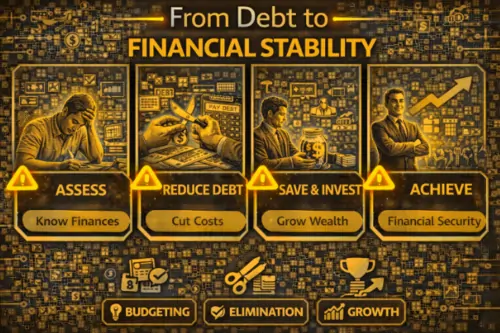
The journey from debt to financial stability is one of the most important financial transformations a person can make. Debt can create pressure in every part of life. It affects sleep, relationships, decision-making, and future planning. Whether the debt comes from credit cards, medical bills, personal loans, business setbacks, or unexpected emergencies, the weight can feel overwhelming.
Still, financial difficulty does not have to be permanent. Many people have moved from years of financial stress to a more secure and disciplined life by making practical changes, building better habits, and committing to long-term recovery. The path may not be quick, but it is possible.
Going from debt to financial stability is not only about paying balances down. It is also about learning how money works, changing financial behavior, protecting against future setbacks, and building a life with less fear and more control. That process often starts with honesty, grows through discipline, and becomes sustainable through consistent choices over time.
This article explains what financial stability means, why debt becomes difficult to escape, and what steps can help individuals move toward a stronger financial future.
Understanding the Difference Between Debt and Financial Stability
Debt itself is not always bad. Some forms of debt, such as mortgages, student loans, or business financing, may support long-term goals if managed carefully. The real problem begins when debt becomes unmanageable, expensive, or emotionally draining.
Financial stability means having enough structure and control in your finances to meet daily needs, handle normal expenses, pay obligations on time, and prepare for future goals without constant crisis. A financially stable person may still have debt, but that debt is manageable and does not dominate every financial decision.
Moving from debt to financial stability usually involves shifting from reactive money management to intentional planning. Instead of surviving month to month, individuals begin building a system that supports security, flexibility, and long-term progress.
Why Debt Becomes Overwhelming
Debt often grows gradually rather than all at once. A few missed payments, a job loss, medical costs, or repeated use of credit for everyday expenses can slowly turn into a major burden.
Common reasons debt becomes overwhelming include:
- living without a clear budget
- relying heavily on high-interest credit
- inconsistent income
- emergency expenses without savings
- overspending based on lifestyle pressure
- poor understanding of loan terms or interest rates
For many people, debt also becomes emotional. Shame, stress, and avoidance can make the problem worse. Bills are ignored, balances grow, and the situation feels harder to face with each passing month.
That is why the path from debt to financial stability usually begins with clarity. Before change is possible, the full picture has to be understood.
Step One: Face the Financial Reality
The first real step is to stop guessing and start measuring. This means listing every debt, every monthly bill, every source of income, and every major expense.
At this stage, it helps to gather:
- total debt balances
- interest rates
- minimum monthly payments
- due dates
- income from all sources
- essential living expenses
- non-essential spending patterns
This can feel uncomfortable, but it is necessary. Financial recovery becomes much easier when the numbers are clear. It is difficult to solve a debt problem that has never been fully defined.
Going from debt to financial stability requires moving from fear-based avoidance to informed decision-making. Once the facts are visible, a plan becomes possible.
Step Two: Build a Realistic Budget
A budget is one of the strongest tools in any debt recovery plan. It helps show where money is going and where adjustments can be made.
A useful budget should include:
- housing
- food
- utilities
- transport
- insurance
- debt payments
- savings
- personal spending
The goal is not to create a perfect or overly strict budget that fails after one week. The goal is to build a realistic plan that can actually be followed.
When working from debt to financial stability, budgeting helps create order. It allows individuals to reduce waste, prioritize essentials, and free up money for debt repayment and savings.
Step Three: Stop Adding New Debt
One of the biggest obstacles to recovery is continuing to borrow while trying to pay off old balances. This creates a cycle that is hard to break.
That means an important step is to reduce or stop new debt accumulation whenever possible. For many people, this involves:
- limiting credit card use
- avoiding unnecessary financing
- pausing large purchases
- separating needs from wants
- using cash or debit for daily spending
This step can be difficult, especially when money feels tight. But long-term improvement depends on preventing the debt problem from growing while recovery is underway.
The move from debt to financial stability becomes much more realistic when new financial damage stops.
Step Four: Choose a Debt Repayment Strategy
Once the budget is in place and new debt is under control, repayment can become more strategic.
Two common methods are:
Debt Snowball
This method focuses on paying off the smallest balance first while making minimum payments on everything else. Once the smallest debt is cleared, that payment amount is rolled into the next one.
This strategy can build motivation because progress is visible quickly.
Debt Avalanche
This method focuses on the highest-interest debt first while maintaining minimum payments on others. It usually saves more money over time because expensive debt is eliminated faster.
Both methods can work. The best one is the one a person can stick to consistently.
The journey from debt to financial stability does not depend on choosing the perfect system. It depends more on commitment and follow-through.
Step Five: Build an Emergency Fund
One reason many people fall back into debt is that they have no financial buffer when something unexpected happens. A small emergency fund helps prevent future borrowing for urgent costs like repairs, medical expenses, or temporary income loss.
At the beginning, the emergency fund does not need to be large. Even a modest amount can reduce panic and create breathing room. Over time, it can grow into a stronger financial safety net.
This is a major turning point in the move from debt to financial stability because it shifts financial life from fragile to more protected.
Step Six: Improve Financial Habits
Lasting stability is built through habits, not just one-time effort. That includes:
- paying bills on time
- tracking spending regularly
- saving automatically
- reviewing financial goals monthly
- avoiding emotional spending
- learning more about money management
Small habits matter. A person does not need a dramatic financial breakthrough to improve their situation. Repeated good decisions create momentum.
In many cases, the biggest success in going from debt to financial stability comes from building better routines rather than chasing quick fixes.
Emotional Recovery Matters Too
Debt is not only a math problem. It often affects self-worth, confidence, and mental health. People in financial distress may feel embarrassed, stuck, or behind in life compared with others.
That is why recovery should include emotional patience. Shame is rarely useful. What matters more is responsibility and consistency.
A healthier mindset includes:
- accepting the past without staying trapped in it
- focusing on progress instead of perfection
- celebrating small financial wins
- learning without self-punishment
- staying committed during slow months
The emotional side of going from debt to financial stability is often overlooked, but it matters deeply. A calmer and more confident mindset supports better money decisions.
Long-Term Signs of Financial Stability
As debt decreases and financial habits improve, stability becomes easier to recognize.
Common signs include:
- bills are paid on time consistently
- high-interest debt is shrinking or gone
- savings are growing
- financial emergencies feel manageable
- spending is more intentional
- future planning becomes possible
- money stress begins to decrease
Financial stability does not always mean wealth. It means control, resilience, and a stronger foundation.
That is why the move from debt to financial stability is so meaningful. It changes daily life, long-term confidence, and the ability to make better decisions without constant financial fear.
How Financial Stability Creates New Opportunities
Once debt is reduced and finances improve, people often discover new options that were difficult before.
These may include:
- saving for a home
- starting a business
- investing for the future
- changing careers
- taking care of family responsibilities
- building retirement plans
Debt often limits freedom. Stability expands it.
The true value of going from debt to financial stability is not only in paying off balances. It is in creating a future with more choices, less pressure, and stronger confidence.
Conclusion
The journey from debt to financial stability is rarely instant, but it is absolutely possible. It begins with financial honesty, grows through structured planning, and becomes sustainable through discipline and better habits.
Debt can feel like a permanent burden, but it does not have to define the future. By facing the numbers, building a workable budget, choosing a repayment strategy, avoiding new debt, and creating emergency savings, individuals can gradually rebuild control over their financial lives.
The most important thing to remember is that progress matters more than speed. Every payment made, every habit improved, and every financial decision corrected helps move life in a better direction.
Going from debt to financial stability is not just about money. It is about reclaiming peace, building confidence, and creating a stronger future.
FAQ
What does from debt to financial stability mean?
It means moving from a situation of financial stress and unmanageable debt toward a more secure financial life with better budgeting, savings, and control.
Can someone become financially stable while still having debt?
Yes. Financial stability does not always mean being debt-free. It means your debt is manageable and your finances are under control.
What is the first step in getting out of debt?
The first step is understanding your full financial situation, including all debts, income, expenses, and payment obligations.
How long does it take to recover from debt?
The timeline depends on the amount of debt, income level, interest rates, and repayment strategy. Recovery is often gradual and requires consistency.
What habits help build financial stability?
Strong habits include budgeting, saving regularly, paying bills on time, reducing unnecessary spending, and avoiding new high-interest debt.