

Introduction
Financial loss can be one of the most difficult challenges individuals and entrepreneurs face. Whether caused by business failure, investment mistakes, economic downturns, or unexpected personal circumstances, losing money can create emotional stress and uncertainty about the future.
However, history shows that many successful individuals experienced financial setbacks before rebuilding their wealth and achieving long-term success. Rising after financial loss is not only possible but often becomes a turning point for personal growth, stronger financial discipline, and better decision-making.
Financial setbacks can reveal weaknesses in strategy, planning, or risk management. At the same time, they can encourage individuals to develop more resilient financial habits and smarter investment approaches.
Understanding how people recover from financial loss provides valuable insights for anyone facing economic challenges or trying to rebuild financial stability.
Understanding Financial Loss
Financial loss occurs when individuals or businesses lose money due to failed investments, declining markets, unexpected expenses, or poor financial planning.
Common causes include:
- business closures or startup failures
- stock market losses
- real estate downturns
- job loss or income disruption
- economic recessions
- personal emergencies or medical expenses
While these events can significantly affect financial stability, they do not necessarily define a person’s long-term financial future.
Many people who experience financial loss eventually rebuild their wealth through improved strategies and disciplined financial management.
The Emotional Impact of Financial Loss
Recovering financially often begins with addressing the emotional impact of loss.
People facing major financial setbacks may experience:
- stress and anxiety
- loss of confidence
- fear of future investments
- frustration or regret
These emotional reactions are natural. However, they can also prevent individuals from taking the steps needed to rebuild their financial situation.
Learning to view financial loss as a learning experience rather than a permanent failure is an important mindset shift when rising after financial loss.
Common Causes of Major Financial Setbacks
Understanding the causes of financial loss helps individuals avoid repeating the same mistakes.
Poor Risk Management
Many financial losses occur when individuals take excessive risks without proper diversification or planning.
Investing heavily in a single asset or business venture can increase vulnerability to sudden losses.
Economic and Market Changes
Financial markets are influenced by economic conditions, interest rates, inflation, and global events. Even well-planned investments can lose value when markets shift.
Lack of Financial Planning
Without clear budgeting, savings strategies, and emergency funds, unexpected expenses can quickly create financial hardship.
Overconfidence in Investments
Investors sometimes assume that past success guarantees future performance. This can lead to risky decisions and insufficient preparation for downturns.
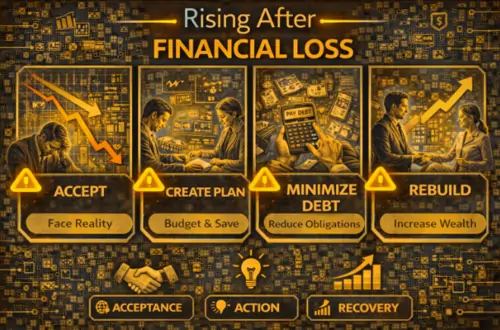
Steps to Rising After Financial Loss
Rebuilding financial stability requires patience, planning, and discipline.
Accept the Situation
The first step in recovering from financial loss is acknowledging what happened. Avoiding the problem or denying the loss can delay recovery.
Honest evaluation allows individuals to understand the causes of the setback and identify the next steps.
Analyze What Went Wrong
Carefully reviewing past decisions helps uncover valuable lessons. This analysis may involve evaluating investment choices, business strategies, or spending habits.
Learning from mistakes reduces the likelihood of repeating them in the future.
Rebuild Financial Foundations
Strong financial foundations are essential for recovery. This includes:
- creating a realistic budget
- reducing unnecessary expenses
- rebuilding savings
- managing debt responsibly
These steps help restore financial stability and reduce stress during recovery.
Start Small and Rebuild Gradually
Recovering from financial loss rarely happens overnight. Many individuals rebuild their wealth gradually by making careful investments, saving consistently, and focusing on long-term goals.
Small financial improvements can eventually lead to significant progress.
Seek Professional Advice
Financial advisors, accountants, and business mentors can provide valuable guidance during financial recovery.
Professional advice can help individuals create structured financial plans and identify opportunities for rebuilding wealth.
Famous Examples of Financial Comebacks
Many well-known entrepreneurs experienced financial loss before achieving major success.
Henry Ford
Before founding the Ford Motor Company, Henry Ford experienced several failed business ventures. His persistence eventually led to the creation of one of the most influential automobile companies in history.
Donald Trump
Donald Trump faced major financial setbacks during the early 1990s when several of his businesses struggled with debt. Despite these challenges, he later rebuilt his financial position through real estate and media ventures.
Daymond John
Before becoming a successful entrepreneur and investor, Daymond John experienced financial difficulties while building the FUBU clothing brand. Through persistence and smart business strategies, he eventually created a globally recognized company.
These examples demonstrate that rising after financial loss is possible even after major setbacks.
Financial Habits That Support Recovery
Certain habits can help individuals recover financially and build long-term stability.
Consistent Saving
Saving regularly, even in small amounts, helps rebuild financial security over time.
Diversified Investments
Diversification spreads risk across multiple investments, reducing the impact of losses in a single area.
Long-Term Financial Planning
Successful financial recovery often requires a long-term perspective rather than focusing on quick gains.
Continuous Financial Education
Understanding personal finance, investments, and market trends can help individuals make better financial decisions.
The Role of Resilience in Financial Recovery
Resilience plays a crucial role in rising after financial loss. Financial recovery often involves setbacks, slow progress, and difficult decisions.
Resilient individuals remain focused on their goals despite temporary challenges. They adapt their strategies, learn from mistakes, and maintain a long-term perspective.
Resilience also encourages individuals to remain open to new opportunities and innovative financial strategies.
Turning Financial Loss Into Opportunity
While financial loss is painful, it can also create opportunities for personal and professional growth.
Many individuals use financial setbacks to:
- rethink business strategies
- explore new industries or careers
- develop stronger financial discipline
- pursue innovative investment opportunities
These experiences often lead to improved financial decision-making and stronger long-term success.
Conclusion
Rising after financial loss is never easy, but it is possible. Financial setbacks can provide valuable lessons about risk management, financial planning, and resilience.
By acknowledging mistakes, rebuilding financial foundations, and maintaining a long-term perspective, individuals can recover from financial loss and create new opportunities for growth.
Ultimately, financial success is not determined by avoiding failure altogether but by learning how to recover, adapt, and move forward with stronger strategies.
FAQ
What does rising after financial loss mean?
Rising after financial loss refers to recovering from financial setbacks and rebuilding wealth through better financial planning and disciplined strategies.
Is it possible to recover from major financial loss?
Yes. Many individuals and entrepreneurs have successfully rebuilt their finances after experiencing significant losses.
What is the first step after financial loss?
The first step is acknowledging the situation and evaluating what caused the financial setback.
How long does financial recovery take?
Recovery time varies depending on the size of the loss, income sources, and financial strategies used.
What habits help rebuild finances after loss?
Important habits include saving consistently, diversifying investments, reducing unnecessary expenses, and improving financial education.