

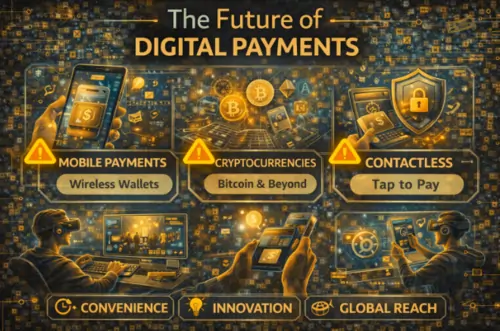
Digital payments are no longer just “paying with your phone.” In 2026, digital payments are evolving into something bigger: real-time money movement, stronger identity checks, richer payment data, and new rails that could make cross-border transfers cheaper and faster.
You can already feel this shift in everyday life. People expect transfers to arrive instantly. Small merchants accept QR payments. Subscriptions and in-app checkouts make paying almost invisible. At the same time, scams are getting more sophisticated, and trust is becoming the most important “feature” in any payment app.
In the Philippines, the change is measurable. Bangko Sentral ng Pilipinas (BSP) data reported by Inquirer shows that transactions through InstaPay and PESONet topped ₱24 trillion by the end of 2025. That scale tells you digital payments are no longer niche—they’re a default habit for many Filipinos.
This article explains what’s changing, what technologies are driving it, what risks to watch, and how consumers and small businesses can prepare.
What digital payments mean today
Digital payments are any payments made electronically instead of using physical cash. This includes:
- Debit and credit card payments
- Bank transfers (including instant transfers)
- E-wallet payments
- QR code payments
- In-app payments for shopping, food delivery, bookings, and subscriptions
Behind the scenes, payments run on “rails”:
- Card rails (networks processing card payments)
- Account-to-account rails (bank transfers, real-time payment systems)
- Wallet rails (e-wallet ecosystems)
- New digital money rails (stablecoins, tokenized deposits, CBDCs—still evolving)
The future of digital payments is mostly about improving three things:
Speed (real-time transfers),
Trust (stronger security and fraud defenses),
and Data (payments that carry better information for tracking and automation).
What’s changing in 2026
Real-time payments become the expectation
People want money transfers to work like chat messages: send now, receive now. This is why more countries are modernizing payment infrastructure and pushing instant rails. Globally, payments modernization is also tied to newer data standards like ISO 20022, which enable richer information to move with each payment.
Payments become “embedded” in the experience
More payments happen inside apps without a separate “banking moment”:
- One-click checkout
- In-app subscriptions
- Pay-by-link through messaging
- Marketplace escrow flows
That convenience is powerful—but it also means security, refund handling, and scam prevention need to be better than ever.
Security shifts from passwords to stronger identity
Passwords are weak. People reuse them. Scammers steal them. The future is moving toward:
- Passkeys and device-based login
- Biometrics (Face ID / fingerprint)
- Risk-based authentication (extra checks only when something looks suspicious)
This reduces friction for legit users while slowing down fraud.
The biggest tech trends shaping the future of digital payments
1) Real-time account-to-account rails
Account-to-account (A2A) payments are growing because they can be fast and cost-efficient, especially for local transfers. For merchants, A2A can also reduce dependency on card fees in some use cases.
In practice, expect more:
- Bank-transfer checkout buttons
- Instant payouts for gig workers and sellers
- QR-linked A2A payments for small shops
This trend is already visible in the Philippines through the growth of InstaPay and PESONet usage and value.
2) ISO 20022: payments with richer, structured data
ISO 20022 is a messaging standard that lets payments carry more structured information—like clearer payer details, invoice references, and purpose codes.
Why this matters:
- Easier reconciliation for businesses (matching payments to invoices)
- Better compliance checks
- Better fraud signals
- More automation
The timeline is real and concrete: SWIFT’s ISO 20022 cross-border coexistence has key milestones, with major deadlines around November 2025 and further milestones continuing into 2026.
For everyday users, ISO 20022 is mostly invisible. For businesses and banks, it can reduce payment errors and make back-office work much smoother.
3) AI-driven fraud detection and smarter risk controls
AI is becoming central to how payments fight fraud—spotting unusual behavior patterns, account takeovers, and scam-like transactions faster than manual review.
Deloitte highlights the merging of regulation and innovation, where ISO 20022 enables enriched data and supports advanced solutions like real-time payments and stablecoins—while AI improves automation and optimization across payments.
Important nuance: AI helps, but it doesn’t eliminate scams—especially “social engineering,” where victims are tricked into sending money themselves.
4) QR as a universal acceptance layer
QR payments are popular because they’re easy to deploy and cheap for small merchants. They can also connect different systems—wallet to wallet, wallet to bank, or bank to merchant—depending on the national setup.
For countries like the Philippines, QR adoption is a big part of scaling cashless payments beyond malls and big chains, reaching sari-sari stores and micro-businesses.
5) Tokenization, stablecoins, and CBDCs
This is where the future can sound complicated, so here’s a clear breakdown:
- Stablecoins: privately issued digital tokens meant to stay near a stable value (often pegged to a currency).
- Tokenized deposits: bank deposits represented in token form on newer infrastructure.
- CBDCs: central bank digital currency—digital money issued by a central bank (retail or wholesale).
Central banks are actively exploring CBDCs. The BIS reports that 91% of surveyed central banks (85 out of 93) were exploring retail and/or wholesale CBDCs in 2024, and that wholesale CBDC work tends to be more advanced overall.
Why it matters for payments:
- Wholesale CBDCs/tokenized settlement could speed up cross-border settlement (behind the scenes)
- Stablecoins may play a role in some remittance or B2B flows, but regulation and risk concerns are rising
The “future” here is not guaranteed. But experimentation is clearly happening at scale in the central banking world.
Cross-border payments: the problem everyone wants to fix
Cross-border payments are still often:
- slow
- expensive
- confusing (hidden fees, unclear FX rates)
The direction of travel is toward:
- faster settlement
- clearer transparency
- better interoperability (systems that connect cleanly)
This is one reason tokenization and wholesale CBDC experiments get attention: they’re often framed as infrastructure upgrades that could reduce friction internationally.
For Filipino families, this matters because remittances and international transfers are a real part of daily financial life. Even small reductions in fees can add up over time.
What the future of digital payments means for the Philippines
The Philippines is already a strong example of cashless acceleration.
- Inquirer reports BSP data showing InstaPay and PESONet transactions topped ₱24 trillion by end-2025.
- BSP’s own annual measurement reporting and related coverage indicate that digital retail payments have moved beyond the halfway point, showing mainstream adoption.
What this means day-to-day:
- More people will treat e-wallets and instant transfers as “normal”
- More micro-businesses will accept QR payments
- More competition will push better promos and services—but also more scam attempts
- Anti-fraud safeguards will become a bigger selling point, not just a backend feature
Risks and challenges to watch
Scams scale faster than technology upgrades
The biggest threat for many users is not a hacker breaking encryption. It’s social engineering:
- fake customer support
- fake payment links
- impersonation messages
- “wrong send” tactics
- urgent threats that push you to act quickly
As payments get faster, the window to reverse mistakes shrinks. Expect more focus on anti-scam education and protective controls.
Privacy and data security
Richer payment data is useful, but it increases responsibility. A breach becomes more damaging when more data is stored and shared.
Fragmentation
If users need five apps for five different situations, adoption slows. Interoperability—systems working together—is a major long-term requirement.
Regulation catching up (especially for digital assets)
Stablecoins and tokenized money rails raise big questions about consumer protection and financial stability. Expect tighter rules and more compliance requirements over time.
How to prepare
For consumers
- Turn on transaction alerts
- Use biometrics/passkeys if available
- Avoid clicking payment links from random messages
- Double-check recipient details before sending
- Keep a “spending wallet/account” with limited funds for online purchases
For small businesses and freelancers
- Offer at least one QR option and one real-time transfer option
- Use invoice references and consistent payment notes (helps reconciliation)
- Set a simple refund policy and communicate it clearly
- Track settlement time, fees, and dispute issues by payment channel
FAQs
Will cash disappear?
Cash will likely remain, but digital payments are becoming the default for many everyday transactions—especially as real-time rails and QR adoption expand.
What is ISO 20022 and why should I care?
ISO 20022 lets payments carry richer, structured data, improving automation, reconciliation, and fraud defense—especially for banks and businesses.
Are stablecoins replacing banks?
Not broadly. Stablecoins are growing in attention, but regulators and central banks are actively managing risks, and most users still rely on banks/wallets for day-to-day payments.
How do I avoid digital payment scams?
Verify official channels, avoid urgent “support” DMs, don’t share OTPs, and confirm recipient details before sending.
What’s the biggest payments trend to watch in 2026?
The combination of real-time payments + richer data standards (ISO 20022) + AI-driven fraud controls—because together they reshape speed, automation, and safety.