

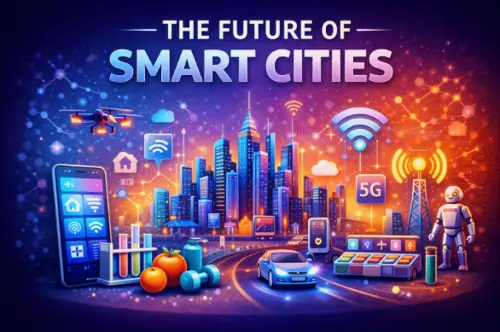
The Future of Smart Cities
The Future of Smart Cities is not about flying cars or robot mayors. It is about solving real, everyday problems using technology and data—traffic congestion, flooding, slow permits, unreliable utilities, and public safety gaps. For Filipinos, the Future of Smart Cities means shorter commutes, faster government services, better disaster response, and more transparent local governance.
In practical terms, a smart city uses digital tools to improve how a city operates and how people experience daily life. The U.S. International Trade Administration describes Philippine smart cities as urban areas leveraging technology and innovation to improve functionality, sustainability, and livability . That simple goal—better living through smarter systems—anchors the Future of Smart Cities.
What makes a city “smart” in real life
A city becomes smart when it can:
- See problems early (through sensors and reporting)
- Decide faster (through connected data systems)
- Spend wiser (through measurable indicators)
- Serve more fairly (so benefits reach all districts)
Standards also matter. ISO guidance connects indicators for city services, smart city development, and resilience planning, helping cities measure what “smart” actually improves . Measurement is crucial because the Future of Smart Cities depends on proof, not hype.
Why the Future of Smart Cities matters in the Philippines
Urban growth is accelerating
Urbanization in the Philippines continues to rise, placing pressure on infrastructure and services . As cities expand, the Future of Smart Cities becomes a strategy for managing limited space, budgets, and personnel.
Climate risks are real
Floods, typhoons, and heat waves are not abstract risks. The Future of Smart Cities must include flood monitoring, early warning systems, and resilient infrastructure planning.
Citizens expect faster services
People are used to digital banking and delivery apps. They now expect digital permits, online payments, and clear tracking. The Future of Smart Cities responds to that expectation with practical e-government tools.
Regional collaboration is growing
The ASEAN Smart Cities Network supports collaboration on smart and sustainable urban development . This regional push reinforces that the Future of Smart Cities is not isolated to one country.
Core technologies shaping the Future of Smart Cities
IoT sensors and connected infrastructure
Sensors act as the “nervous system” of a city:
- Traffic flow monitoring
- Water-level and rainfall sensors
- Air-quality tracking
- Smart streetlights
- Waste collection optimization
These tools help cities move from reacting late to responding early. The Future of Smart Cities relies on turning raw data into clear action—like adjusting traffic signals or issuing timely flood alerts.
AI for smarter city operations
Artificial intelligence can:
- Predict infrastructure breakdowns
- Optimize emergency dispatch
- Identify accident hotspots
- Improve resource allocation
The real Future of Smart Cities is often invisible. It’s AI quietly improving signal timing or scheduling maintenance before a water pipe bursts.
Digital twins for planning and disaster response
A digital twin is a virtual model of a city system used to simulate outcomes before investing real money. Research highlights city-scale digital twins integrating real-time monitoring and simulation to manage flood impacts across infrastructure . Reviews also describe digital twins as decision-support tools for urban flood risk management .
For flood-prone areas, the Future of Smart Cities may include:
- Simulating evacuation routes
- Testing drainage improvements virtually
- Modeling traffic changes before building roads
Instead of guessing, cities can test decisions digitally.
Smart mobility and transport systems
Traffic congestion is one of the most urgent daily issues in Philippine cities. The Future of Smart Cities includes:
- Adaptive traffic lights
- Real-time public transport updates
- Integrated payment systems
- Data-driven road planning
Even modest improvements in signal coordination can reduce commute times significantly. That is the practical face of the Future of Smart Cities.
Smart utilities and energy systems
Water leaks, power outages, and inefficient billing affect daily life. Smart grids and monitoring systems can detect issues faster and reduce waste.
The Future of Smart Cities will likely include:
- Leak detection sensors
- Outage monitoring dashboards
- Demand management systems
- Transparent billing platforms
These may not look glamorous, but they improve reliability and trust.
Digital government services
For many Filipinos, the clearest sign of the Future of Smart Cities is simpler government interaction:
- Online permit applications
- Digital payments
- Complaint tracking systems
- Real-time status updates
Fewer lines. Less paperwork. More transparency.
The Philippines: readiness and reality
A Philippine Institute for Development Studies paper notes that while some cities show preparedness for smart development, implementation remains uneven . That reflects the real-world challenge: the Future of Smart Cities depends not only on technology but on governance, budgeting, and coordination.
The World Bank has also analyzed smart city development from the perspective of Philippine LGUs, offering policy and implementation recommendations . These analyses reinforce that planning and institutional capacity are as important as hardware.
Risks that must be addressed
Privacy and trust
Smart systems collect data. Without clear rules and transparency, citizens may lose trust. The Future of Smart Cities must balance service improvement with privacy protection.
Cybersecurity
CISA’s cybersecurity best practices highlight the need to protect connected infrastructure and sensitive data . As more systems connect, cybersecurity becomes foundational to the Future of Smart Cities.
Vendor lock-in
Cities must avoid isolated systems that cannot integrate. Standards and interoperability planning reduce this risk .
Pilot projects that never scale
Many initiatives stall after small trials. The Future of Smart City requires measurable KPIs and long-term funding strategies to move beyond pilot stage.
What the Future of Smart Cities may look like by 2030–2040
If cities implement wisely, the Future of Smart City could mean:
- Faster flood warnings and safer evacuation routes
- Smoother traffic through adaptive signaling
- Fully digital government transactions
- Transparent public dashboards
- Faster response to emergencies
- Data-informed urban planning
Instead of dramatic futuristic visuals, the real Future of Smart City will feel like reduced stress and fewer daily frustrations.
Practical steps for Philippine cities
To build the Future of Smart City, LGUs can:
- Start with the biggest pain points (traffic, flooding, permits)
- Define measurable KPIs using recognized indicators
- Require interoperable systems
- Invest in cybersecurity early
- Scale proven solutions gradually
Small, high-impact wins build momentum.
FAQs
What is the Future of Smart Cities in simple words?
It is the next stage of urban development where cities use data and technology to improve services, resilience, and quality of life.
Will the Future of Smart Cities increase surveillance?
It can if poorly designed. Proper privacy rules and cybersecurity are essential.
How do digital twins support the Future of Smart Cities?
They simulate city systems to test flood or traffic scenarios before making real-world investments .
Why is measurement important in the Future of Smart Cities?
Standards-based indicators ensure improvements are measurable and transparent.
Final Takeaway
The Future of Smart Cities is not about flashy technology. It is about measurable improvements in daily life—shorter travel times, safer streets, faster services, and stronger disaster resilience. The path forward for the Philippines lies in practical adoption, clear metrics, strong governance, and secure systems.