

When to worry about colon cancer symptoms is when they are new, persistent (over 2–4 weeks), or worsening, especially rectal bleeding, bowel changes, abdominal pain, weight loss, or fatigue. Colon cancer can develop silently, so early screening and prompt medical evaluation are essential—particularly if symptoms persist or occur together.
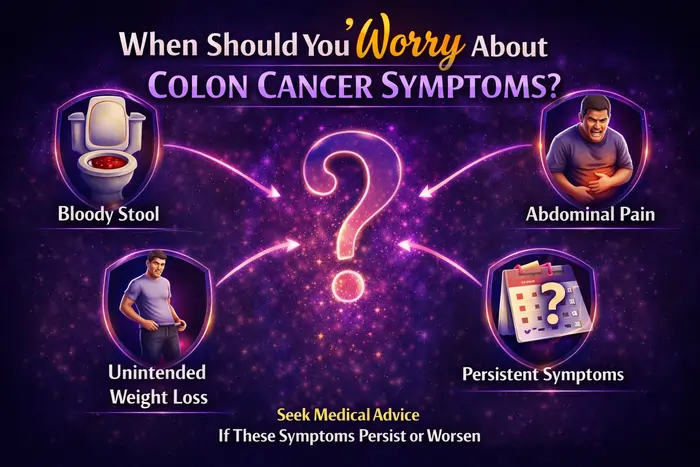
Understanding exactly when to worry about colon cancer symptoms helps you act early, get the right tests, and avoid dismissing warning signs as “just hemorrhoids” or “just something I ate.”
Understanding Colon Cancer and Why Early Detection Matters
Colon (colorectal) cancer starts in the lining of the large intestine or rectum, often as small, benign growths called polyps that can slowly turn cancerous over time. Many people have no obvious symptoms in the early stages, which is why regular screening is so important and why knowing when to worry about colon cancer symptoms can be life‑saving.
As a tumor grows, it can bleed, block the bowel, or interfere with normal digestion and absorption. This leads to visible and invisible changes in your stool, your energy levels, and sometimes your weight. The earlier colon cancer is found—ideally before it spreads outside the colon—the better the chances of simpler treatment and long‑term survival, so you never want to wait too long once you notice red‑flag signs.
Key Colon Cancer Symptoms You Should Not Ignore
Not every stomach ache or brief bout of diarrhea is dangerous, but some symptoms are clear clues that it’s time to pay attention. The more of these you have, and the longer they last, the lower your threshold should be for deciding when to worry about colon cancer symptoms and seeing a doctor.
1. Rectal bleeding and blood in the stool
Bleeding from anywhere in the digestive tract is abnormal and should never be brushed off.
- Bright red blood on the toilet paper, in the bowl, or coating the stool usually comes from the lower colon or rectum.
- Dark, tarry, or black stools can mean “hidden” blood from higher up in the intestine.
- Hemorrhoids can also cause bright red bleeding, but cancer‑related bleeding is more likely to be recurrent, persistent, or accompanied by other symptoms such as changes in bowel habits or weight loss.
Any new rectal bleeding, especially if you are over 40 or have a family history of bowel cancer, is one of the clearest moments when to worry about colon cancer symptoms and book an appointment rather than self‑diagnosing.
2. Ongoing changes in bowel habits
Your bowel pattern is your own “normal,” and sudden, lasting changes are a major warning sign.
Pay attention if you notice:
- Diarrhea that goes on for more than a few weeks, without a clear cause such as infection or medication.
- Constipation that is new for you, or a need to strain much more than usual.
- Alternating diarrhea and constipation for several weeks.
- A feeling that you cannot completely empty your bowels, or that you need to go again immediately after a bowel movement.
- Narrow, thin, or ribbon‑like stools that are different from your usual stool shape.
A brief episode of loose stool after travel or a dietary error is common and usually self‑limited. But when altered bowel habits persist for 3–4 weeks or more, that is exactly when to worry about colon cancer symptoms and ask for medical evaluation.
3. Abdominal pain, cramping, or bloating
Many people occasionally have gas or mild cramps, but colon cancer–related pain tends to be persistent or progressive.
You should be concerned if you have:
- Frequent cramping or abdominal discomfort that does not resolve with simple measures.
- Pain linked with bowel movements, especially if combined with rectal bleeding or changes in stool.
- A feeling of fullness, bloating, or pressure in the lower abdomen that keeps coming back without a known trigger.
When these patterns continue for weeks, particularly in someone over 45, this can be when to worry about colon cancer symptoms, not just irritable bowel or indigestion.
4. Unexplained weight loss
Losing weight without trying—especially if it occurs over a relatively short period—is a classic red flag.
Consider:
- Clothes fitting looser, or the scale dropping by several kilos or more without diet or exercise changes.
- Loss of appetite or feeling full quickly.
- Weight loss combined with fatigue, bleeding, or altered bowel habits.
Taken alone, small fluctuations in weight are normal, but unexplained, ongoing weight loss with gut symptoms is a clear moment when to worry about colon cancer symptoms and push for further testing.
5. Fatigue and weakness
Ongoing fatigue that doesn’t match your activity level can signal underlying issues, including anemia from chronic blood loss in the colon.
Be alert if you notice:
- Feeling tired most of the day, even after adequate sleep.
- Shortness of breath or palpitations with activities you previously tolerated easily.
- Pale skin or frequent headaches.
Fatigue has many causes, but when it occurs with rectal bleeding, changes in stool, or weight loss, that combination strongly suggests this is when to worry about colon cancer symptoms and request blood tests and possibly further investigations.
Normal Digestive Upsets vs. Concerning Symptoms
One big challenge is distinguishing common, benign gut issues from signs of something more serious. Here is a straightforward way to think about it.
Situations that are usually less concerning
You are less likely to be dealing with colon cancer when:
- Symptoms started suddenly after an obvious trigger, such as food poisoning, travel, or a one‑off eating binge.
- Mild diarrhea or cramping improves significantly in under a week.
- Rectal bleeding happens once with a very hard stool and stops once your stool softens.
- There is no ongoing weight loss, no persistent fatigue, and no family history of colorectal cancer.
Even in these cases, you can still mention symptoms at your next routine visit, but they do not necessarily mark the moment when to worry about colon cancer symptoms urgently.
Situations that should raise red flags
You should be more concerned when:
- You are 45 or older and experience new rectal bleeding or new changes in bowel habits.
- Symptoms persist beyond 3–4 weeks or are progressively worsening.
- Two or more worrying symptoms appear together—for example, bleeding plus weight loss, or bowel changes plus anemia.
- You have a strong family history of colon or rectal cancer, polyps, or hereditary syndromes.
In these scenarios, you should treat this as when to worry about colon cancer symptoms and arrange prompt medical review rather than adopting a “wait and see forever” approach.
Risk Factors and Why They Change Your Threshold for Worry
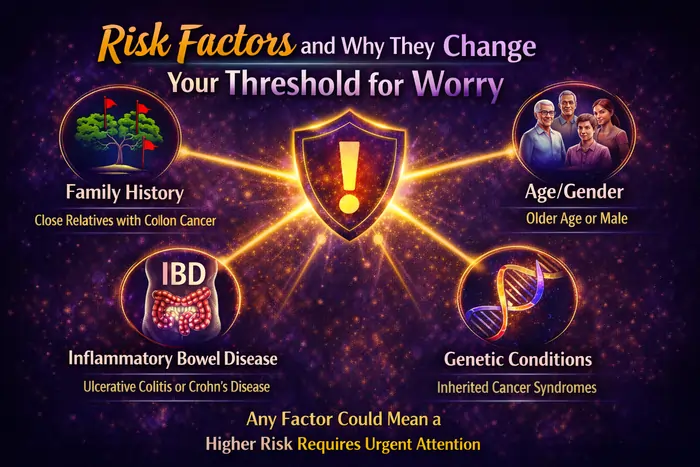
Your personal risk of colon cancer influences how quickly you should react to symptoms.
Common risk factors
You may be at higher risk if you:
- Are aged 45 or older (risk continues to rise with age).
- Have a first‑degree relative (parent, sibling, or child) with colorectal cancer or advanced colon polyps.
- Have certain inherited genetic conditions, such as Lynch syndrome or familial adenomatous polyposis.
- Live with long‑standing inflammatory bowel disease affecting the colon, like ulcerative colitis or Crohn’s disease.
- Smoke, drink heavily, are physically inactive, or have obesity.
- Eat a diet high in red and processed meats and low in fiber.
If one or more of these applies to you, your bar for when to worry about colon cancer symptoms should be lower: even mild or early symptoms deserve attention, and screening recommendations may start earlier than age 45.
Screening even without symptoms
Because colon cancer can quietly develop over years, many people are diagnosed through screening rather than symptoms. For average‑risk adults, major guidelines now recommend starting regular colorectal cancer screening at age 45, using:
- Colonoscopy, which allows direct visualization of the entire colon and removal of polyps.
- Stool‑based tests (such as FIT or stool DNA tests), which can detect hidden blood or molecular changes; abnormal results usually lead to colonoscopy.
- Other options like CT colonography in some settings.
Screening shifts your thinking from reacting only when to worry about colon cancer symptoms to a proactive strategy: catching precancerous polyps and early cancers before they cause any symptoms at all.
For more detail on screening schedules and options, you can refer to the American Cancer Society’s page on colorectal cancer screening recommendations.
Clear Action Guide: When to See a Doctor, When to Go Urgent, and When to Use the ER
To make decisions easier, it helps to categorize symptoms into routine, urgent, and emergency situations.
Routine appointment (within the next few days or weeks)
Book a standard appointment with your primary care doctor or gastroenterologist if you have, for more than 2–4 weeks:
- Changes in bowel habits (persistent diarrhea, constipation, or narrow stools).
- Mild but recurring rectal bleeding.
- Ongoing abdominal discomfort or bloating.
- Unintentional weight loss or new fatigue, even if mild.
This is the classic scenario when to worry about colon cancer symptoms enough to get evaluated soon, without necessarily needing same‑day care.
Urgent appointment (within 24–48 hours)
Try to be seen more quickly if you notice:
- Rectal bleeding plus a change in bowel habits or abdominal pain.
- Persistent bleeding over several days, even if not heavy.
- Known iron‑deficiency anemia plus any ongoing bowel symptoms.
- A palpable lump or mass in the abdomen or rectum.
In many healthcare systems, these combinations meet criteria for fast‑track or “urgent” referral for possible colorectal cancer. This is definitely a time when to worry about colon cancer symptoms and be assertive about prompt evaluation.
For a clinician‑oriented summary of urgent referral triggers, see this overview on urgent referral for suspected lower gastrointestinal cancer.
Emergency care (same day, ER or emergency department)
Go to an emergency department or call local emergency services immediately if you experience:
- Heavy rectal bleeding or large clots, or blood that doesn’t stop.
- Sudden, severe abdominal pain, especially if the abdomen is hard, swollen, or exquisitely tender.
- Vomiting plus inability to pass gas or stool, which can suggest bowel obstruction.
- Dizziness, fainting, rapid heartbeat, or signs of shock.
These are the most severe examples of when to worry about colon cancer symptoms because they can indicate complications such as perforation or major bleeding, which may be life‑threatening and require urgent treatment.
For a focused discussion of the most urgent signs, you can review this article on 10 Red Flag Symptoms That Require Immediate Medical Attention.
What to Expect When You See a Doctor
Knowing what will happen at the appointment can ease anxiety when you decide this is when to worry about colon cancer symptoms and seek help.
Medical history and physical exam
Your doctor will ask about:
- Exactly what your symptoms are, when they started, and how they have changed over time.
- Any family history of colorectal cancer, polyps, or relevant genetic conditions.
- Your diet, medications, lifestyle factors, and other health conditions.
They may also perform a physical exam, including checking your abdomen and possibly a digital rectal exam to feel for masses or blood.
Initial tests
Depending on what they find, initial tests may include:
- Blood tests to check for anemia, signs of inflammation, and overall organ function.
- Stool tests to detect hidden blood or other markers.
- Possibly imaging, such as an ultrasound or CT scan, if there is concern about obstruction or other complications.
These tests help your doctor decide whether your symptoms are likely due to benign issues or whether they cross the threshold of when to worry about colon cancer symptoms enough to justify a colonoscopy.
Colonoscopy and follow‑up
If your symptoms or test results point to a significant risk, a colonoscopy is usually the next step.
During a colonoscopy:
- A thin, flexible tube with a camera is inserted through the rectum to examine the entire colon.
- The doctor can remove polyps and take tissue samples (biopsies) from any suspicious areas.
- The procedure is typically done under sedation, so you are comfortable.
If the colonoscopy is normal, you and your doctor can focus on other possible causes of your symptoms. If polyps or cancer are found, early detection gives you a far better chance of effective treatment.
For a clear, patient‑friendly overview of colon cancer signs and what work‑up might look like, see:
- Colon cancer signs and symptoms – Colon Cancer Coalition
- Colon cancer symptoms – Johns Hopkins Medicine
- 4 colon cancer symptoms to never ignore – Houston Methodist
A Simple Self‑Assessment Framework
If you are sitting at home wondering when to worry about colon cancer symptoms, this quick mental checklist can help you decide your next step (though it does not replace professional advice):
- Duration
- Have my symptoms (bleeding, bowel changes, pain) lasted more than 2–4 weeks?
- Pattern
- Are things staying the same, getting worse, or clearly improving?
- Combination
- Do I have more than one concerning symptom—for example, bleeding and weight loss, or bowel changes and fatigue?
- Risk level
- Am I over 45, or do I have a family history of colorectal cancer, polyps, or specific genetic conditions?
- Impact on daily life
- Are these symptoms affecting my energy, work, or social life?
If you answer “yes” to several of these, that is a strong indicator that this is when to worry about colon cancer symptoms and arrange a medical appointment as soon as reasonably possible. If you have severe pain, heavy bleeding, or symptoms of shock, that’s when you skip straight to emergency care.
FAQs: When to Worry About Colon Cancer Symptoms
When should I start worrying about colon cancer symptoms?
You should be concerned when symptoms are new, persistent for more than 2–4 weeks, or getting worse—especially rectal bleeding, bowel changes, abdominal pain, weight loss, or fatigue.
What is the most common first symptom of colon cancer?
Early signs often include rectal bleeding or subtle changes in bowel habits, such as constipation, diarrhea, or thinner stools.
How long can colon cancer go unnoticed?
Colon cancer can develop slowly over several years with few or no symptoms, which is why screening is essential even if you feel well.
When is rectal bleeding an emergency?
It becomes an emergency if bleeding is heavy, continuous, or paired with dizziness, fainting, or rapid heartbeat—seek immediate care.
How can I tell if blood in my stool is from hemorrhoids or colon cancer?
Hemorrhoids usually cause bright red blood on toilet paper, while cancer-related bleeding may be persistent and accompanied by other symptoms.
Is abdominal pain always a sign of colon cancer?
No. Most abdominal pain is harmless, but it becomes concerning if persistent, worsening, or linked with other symptoms.
Can colon cancer cause constipation or diarrhea only?
Yes. Colon cancer can cause constipation, diarrhea, or both, especially if symptoms last longer than a few weeks.
What are the key risk factors for colon cancer I should know?
Major risks include age (45+), family history, genetic conditions, IBD, obesity, smoking, alcohol use, and poor diet.
Do I need to worry about symptoms if I am under 45?
Yes. While risk is lower, persistent symptoms should never be ignored, even in younger adults.
When should I get screened for colon cancer if I have no symptoms?
Most guidelines recommend starting screening at age 45, or earlier if you have higher risk.
What tests will my doctor use to check my symptoms?
Doctors may use blood tests, stool tests, imaging, and colonoscopy to evaluate symptoms and confirm diagnosis.
Is a colonoscopy always necessary if I have mild symptoms?
Not always, but it is often the most accurate test if symptoms are persistent or concerning.
Can lifestyle changes reduce my risk while I monitor symptoms?
Yes. Healthy habits like better diet, exercise, and avoiding smoking/alcohol can reduce risk but do not replace medical evaluation.
What are “red flag” colon cancer symptoms that need urgent care?
These include heavy bleeding, severe abdominal pain, bowel obstruction, vomiting, or fainting—seek emergency care immediately.
Where can I learn more about when to worry about colon cancer symptoms?
You can explore trusted resources like Cancer Council Australia and Bowel Cancer Australia for reliable guidance.