

Unusual Colon Cancer Symptoms can include persistent bloating, iron-deficiency anemia without visible bleeding, chronic fatigue, low-grade fevers, night sweats, nausea, loss of appetite, and pelvic or back pain. These symptoms often appear gradually and may be mistaken for common digestive issues, stress, or lifestyle factors, making them easy to overlook. Because colon cancer can develop silently over time, recognizing these subtle warning signs and seeking early medical evaluation and screening, such as colonoscopy, is critical for early detection and prevention.
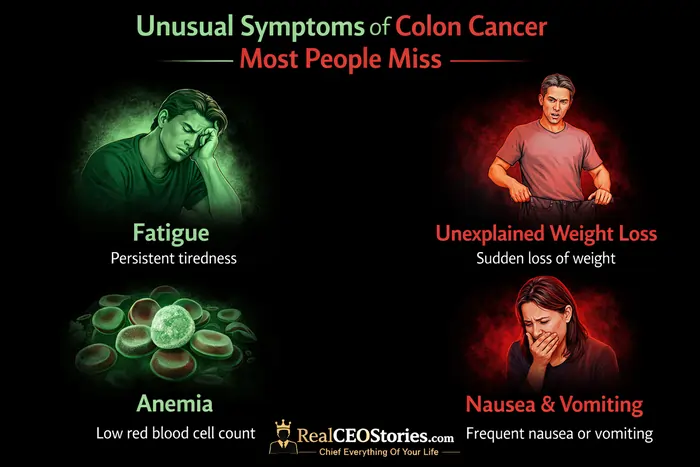
Colon cancer rarely announces itself with one big, dramatic symptom. Most of the time, it creeps in quietly, showing up as small changes in how you feel or how your body works—changes that are easy to blame on stress, aging, diet, or a busy lifestyle. That’s exactly why understanding the unusual symptoms of colon cancer most people miss can make such a difference for early detection.
Most people are familiar with classic signs like rectal bleeding, obvious blood in the stool, or long‑lasting constipation and diarrhea. But colon cancer can also cause less obvious issues such as persistent bloating, strange fatigue, unexplained fevers, or even pelvic pain, and these clues are often overlooked for months.
If you’d like a straightforward, patient‑friendly overview of the more typical warning signs first, this guide on Common Symptoms of Colon Cancer Explained Clearly is a helpful starting point before you dive deeper into the rarer, easy‑to‑miss symptoms below.
For a general medical summary of colon cancer symptoms, the Mayo Clinic colon cancer symptoms page also lists common warning signs such as changes in bowel habits, rectal bleeding, abdominal discomfort, fatigue, and unexplained weight loss.
8 Unusual Colon Cancer Symptoms
Colon cancer rarely announces itself with one big, dramatic symptom. Most of the time, it creeps in quietly, showing up as small changes in how you feel or how your body works—changes that are easy to blame on stress, aging, diet, or a busy lifestyle. That’s exactly why understanding the unusual symptoms of colon cancer most people miss can make such a difference for early detection.
Most people are familiar with classic signs like rectal bleeding, obvious blood in the stool, or long‑lasting constipation and diarrhea. But colon cancer can also cause less obvious issues such as persistent bloating, strange fatigue, unexplained fevers, or even pelvic pain, and these clues are often overlooked for months.
If you’d like a straightforward, patient‑friendly overview of the more typical warning signs first, this guide on Common Symptoms of Colon Cancer Explained Clearly is a helpful starting point before you dive deeper into the rarer, easy‑to‑miss symptoms below.
For a general medical summary of colon cancer symptoms, the Mayo Clinic colon cancer symptoms page also lists common warning signs such as changes in bowel habits, rectal bleeding, abdominal discomfort, fatigue, and unexplained weight loss.
Common vs. Unusual Symptoms (Why This Matters)
Before we dive into the “weird” or uncommon signs, it helps to quickly separate common colon cancer symptoms from the more unusual ones.
Common symptoms (the ones you often see on checklists) include:
- Ongoing changes in bowel habits (new constipation, diarrhea, or looser stools)
- Blood in the stool or rectal bleeding
- Persistent abdominal pain, cramping, or gas
- A feeling that the bowel doesn’t empty completely
- Weakness, fatigue, and unexplained weight loss
Unusual Colon Cancer Symptoms, on the other hand, don’t always scream “colon cancer” at first glance. They can include things like:
- Persistent bloating and fullness
- Subtle, unexplained iron‑deficiency anemia
- Recurrent low‑grade fevers or night sweats
- Nausea, vomiting, or loss of appetite
- Jaundice (yellowing of the skin and eyes) when the cancer has spread
- Pelvic or back pain with other bowel changes
Several oncology and GI centers now highlight these “silent” or “strange” symptoms because they’re so easy to overlook until the disease is more advanced. For a clean, authoritative list of both common and subtle red flags, check the CDC symptoms of colorectal cancer and the WHO colorectal cancer fact sheet.
For a more comprehensive symptom list that covers both classic and early warning signs, you can refer to Common Symptoms of Colon Cancer Explained Clearly. And if you want to understand how sex can influence symptom patterns, this overview of 7 Signs of Colon Cancer in Men vs Women breaks down the differences in a clear, practical way.
1. Persistent Bloating and a Constant “Full” Feeling
Bloating is incredibly common, and most of the time it’s related to food, hormones, or irritable bowel syndrome (IBS). But persistent, unexplained bloating can be one of the Unusual Colon Cancer Symptoms that people miss.
What this may look like:
- Your abdomen feels swollen or tight most days, even when you haven’t overeaten
- You feel full after only a few bites, or “stuffed” all the time
- There is a vague sense of pressure or heaviness in your belly that won’t fully go away
Growing tumors can partially block the bowel or change the way gas and stool move through your colon, causing a chronic sense of fullness and pressure. The Colon Cancer Coalition symptoms page notes bloating and abdominal discomfort as important signs, especially when they don’t resolve.
If bloating is new, ongoing, and not clearly linked to certain foods or your menstrual cycle, it deserves attention—especially if you also notice bowel changes or weight loss.
2. Unexplained Iron‑Deficiency Anemia (Without Obvious Blood)
Iron‑deficiency anemia is well‑known as a colon cancer clue, but many people don’t realize it can be the first and only sign for a while.
How it shows up:
- You feel unusually tired, weak, or short of breath doing everyday tasks
- Your skin looks paler than usual
- You feel dizzy when you stand up, or you have frequent headaches
Often, people don’t see obvious blood in their stool—even though small amounts of blood loss from a tumor may be happening inside the colon over many months. That slow bleeding quietly depletes iron stores and eventually shows up on blood tests as iron‑deficiency anemia.
The U.S. National Cancer Institute highlighted iron‑deficiency anemia as one of the key early warning signs of colorectal cancer in younger adults in its article on possible signs of colorectal cancer in younger adults. The Prevent Cancer Foundation’s early warning signs guide also lists unexplained anemia as a major red flag.
3. Recurrent Low‑Grade Fevers and Night Sweats
Most of us associate fevers and night sweats with infections, not with colon cancer. But unexplained, ongoing low‑grade fevers and sweats can be one of those “silent signs” that something more serious is going on.
Patterns to watch:
- A mild fever that keeps returning without a clear infection
- Night sweats that soak your clothes or bedding, especially if new for you
- A general feeling of being “under the weather” or flu‑like for weeks on end
These symptoms can appear because cancer affects your immune system and triggers inflammatory responses, even before the tumor is large enough to cause obvious bowel symptoms. Some oncology practices specifically list unexplained fever and night sweats as uncommon but important colon cancer warning signs. If fevers or sweats are combined with other red flags—like weight loss, fatigue, or bowel changes—they deserve prompt medical attention.
4. Nausea, Vomiting, and Loss of Appetite
Nausea and vomiting are easy to write off as a stomach bug, food poisoning, or stress—but when they become persistent, they may signal more than a simple GI upset.
What to notice:
- Nausea that lingers for days or weeks
- Vomiting episodes that recur without a clear cause
- A gradual loss of appetite or feeling full very quickly
In more advanced cases, a tumor can partially block the bowel, causing food and waste to back up and triggering nausea and vomiting. Even before a full obstruction, constant irritation and slowed movement in the colon can affect appetite and digestion.
For a general overview of how nausea, appetite loss, and early satiety can fit into colorectal cancer, see Medical News Today’s colon cancer symptoms guide.
5. Pelvic, Back, or Flank Pain That Doesn’t Add Up
We usually blame pelvic or back pain on muscles, joints, or the spine. However, persistent pelvic pain or deep lower abdominal discomfort can sometimes be linked to colorectal tumors, especially when the cancer is involving nearby tissues.
Typical situations:
- Dull pelvic or low‑back pain that doesn’t resolve with usual treatments
- Pain that coexists with bowel habit changes, rectal bleeding, or unexplained fatigue
- Discomfort that slowly worsens or feels deep inside the pelvis or lower abdomen
Texas Health’s article on silent signs of colorectal cancer notes pelvic pain as an overlooked clue when combined with other symptoms such as bloating, rectal bleeding, and weight loss. MD Anderson’s overview of top colorectal cancer symptoms also highlights abdominal pain and persistent cramps as warning signs not to ignore.
For sex‑specific examples of how this can show up differently, the article on 7 Signs of Colon Cancer in Men vs Women walks through symptom patterns to watch for in each group.
6. Strange Patterns of Fatigue That Don’t Match Your Lifestyle
Fatigue is one of the most common complaints in modern life. Work, kids, screens, and stress are easy targets to blame. But deep, ongoing fatigue that doesn’t make sense for your lifestyle can be a subtle sign of colon cancer that many people shrug off.
Red‑flag fatigue looks like:
- Feeling wiped out even after a full night’s sleep
- Struggling to do everyday activities that used to feel easy
- Needing more naps or rest than usual for weeks or months
This can be driven by anemia (from slow internal bleeding), chronic inflammation, or your body using extra energy to fight the tumor. The WHO colorectal cancer fact sheet lists persistent fatigue as a core symptom, especially when linked with weight loss and anemia. UC San Diego Health also stresses that low iron levels and ongoing tiredness are key warning signs of colorectal cancer you shouldn’t ignore.
7. Subtle Changes in Bowel Habits You Keep Explaining Away
Changes in bowel habits are technically common colon cancer symptoms, but the very early, subtle shifts areoften missed or rationalized for months.
People often say things like:
- “It must be something I ate.”
- “My stomach is just sensitive.”
- “It’s probably IBS, I’ve always had a tricky gut.”
Some “minor” changes that may still matter:
- Slightly looser or more frequent stools that never quite go back to your old normal
- A mild but persistent urge to go, even when only a small amount passes
- Occasional thin, pencil‑like stools that start showing up more often
The CDC symptom list highlights ongoing diarrhea, constipation, and the feeling that the bowel doesn’t empty all the way as key warning signs. The Colon Cancer Coalition and Cleveland Clinic both stress that persistence and change from your normal pattern are what matter most.
For a comprehensive breakdown of these more familiar warning signs, plus how they interact with rarer symptoms, see Common Symptoms of Colon Cancer Explained Clearly.
8. Unexpected Weight Loss and Changes in Appetite
Unintentional weight loss is often seen as a “big, obvious symptom,” but in reality it can sneak up slowly—and many people may even welcome it at first, especially if they’ve been trying to lose a little weight.
What to pay attention to:
- You’re losing weight without changing your diet or exercise habits
- Your clothes are looser and you can’t explain why
- You feel full faster or simply don’t feel like eating
Colon cancer and other cancers can change how your body uses energy and nutrients, decrease appetite, and cause inflammation that further affects metabolism. Moffitt Cancer Center’s list of nine colon cancer symptoms you should not ignore includes unexplained weight loss and early fullness as important clues. The WHO fact sheet echoes that sudden, unexplained weight loss is a classic warning sign.
If weight loss appears alongside symptoms like anemia, fatigue, bowel changes, or abdominal discomfort, it’s especially important to seek medical advice.
Rare but Important – Jaundice and Liver‑Related Symptoms

While not one of the “early 8,” jaundice (yellowing of the skin and eyes) can be an unusual but serious sign that colon cancer has spread to the liver.
Signs include:
- Yellowing of the skin or the whites of the eyes
- Dark urine and pale or clay‑colored stools
- Itching, nausea, or abdominal discomfort on the right side
The Cancer Treatment Centers of America colorectal cancer symptoms page notes that liver involvement can lead to jaundice, swelling, and abdominal girth changes. If you see any signs of jaundice, seek urgent evaluation.
FAQs About Unusual Colon Cancer Symptoms
What are Unusual Colon Cancer Symptoms?
Unusual Colon Cancer Symptoms include persistent bloating, unexplained anemia, fatigue, nausea, pelvic pain, and low-grade fevers, which are often overlooked or mistaken for minor issues.
Why are Unusual Colon Cancer Symptoms often missed?
They are often subtle and resemble common digestive problems, stress, or lifestyle-related issues, making them easy to ignore.
Can colon cancer cause bloating without other symptoms?
Yes, persistent bloating and a constant feeling of fullness can occur even without obvious bowel changes.
Is fatigue an early sign of colon cancer?
Yes, especially when caused by iron-deficiency anemia from slow internal bleeding.
Can colon cancer cause nausea and vomiting?
Yes, particularly when a tumor affects digestion or partially blocks the bowel.
What does unexplained anemia mean in colon cancer?
It may indicate slow internal bleeding in the colon, even if no visible blood is present.
Are fevers and night sweats linked to colon cancer?
They can be. Recurring low-grade fevers and night sweats may reflect inflammation or immune response.
Can colon cancer cause back or pelvic pain?
Yes, especially if the tumor presses on nearby tissues or organs.
How is unusual fatigue different from normal tiredness?
Cancer-related fatigue is persistent, deep, and does not improve with rest.
Can subtle bowel changes be a warning sign?
Yes, even mild but persistent changes in bowel habits can be an early indicator.
Is unexplained weight loss always a serious sign?
Not always, but unintentional weight loss without lifestyle changes should be evaluated.
Can younger adults experience unusual symptoms only?
Yes, younger individuals may show non-classic, subtle symptoms, leading to delayed diagnosis.
What is tenesmus and is it related to colon cancer?
Tenesmus is the feeling of incomplete bowel emptying, which can be linked to tumors in the rectum.
When should I see a doctor for unusual symptoms?
If symptoms last more than two to four weeks, worsen, or appear together, seek medical advice.
Can unusual symptoms appear before common symptoms?
Yes, in some cases, unusual symptoms may appear earlier than classic warning signs, making awareness crucial.