

Stage 1 colon cancer often causes few or no symptoms, sometimes only mild bowel habit changes or occasional rectal bleeding. In contrast, Stage 4 colon cancer usually brings severe, persistent symptoms such as intense abdominal pain, major weight loss, extreme fatigue, and organ‑specific signs like jaundice, chronic cough, or headaches from spread to the liver, lungs, or brain. Understanding how Stage 1 vs Stage 4 colon cancer symptoms differ can help you spot early warning signs, seek timely medical care, and appreciate why routine screening is critical even before symptoms appear.
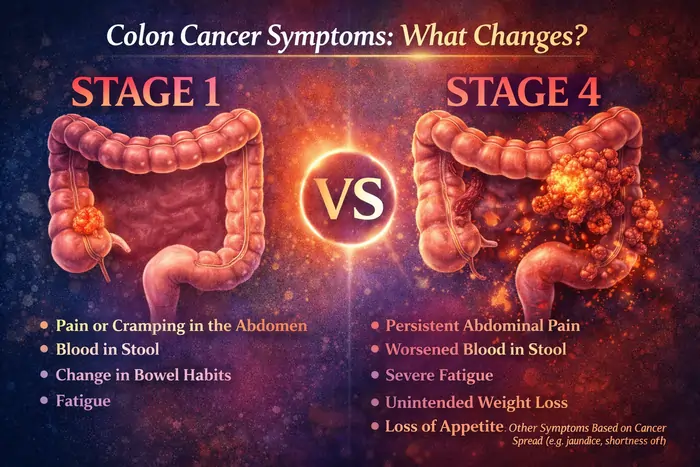
Stage 1 vs Stage 4 Colon Cancer Symptoms differ dramatically, even though they are part of the same disease process. Understanding this contrast helps you recognize early warning signs, appreciate why screening matters, and better interpret what “advanced” colon cancer really looks like, as explained in more detail in this Mayo Clinic overview of colon cancer symptoms and causes at Mayo Clinic.
Understanding Colon Cancer Stages: From Local to Advanced
Before comparing Stage 1 vs Stage 4 Colon Cancer Symptoms, it helps to understand what “stage” actually means.
Colon cancer generally progresses through several stages:
- Stage 0 (carcinoma in situ) – Abnormal cells are confined to the innermost lining of the colon.
- Stage 1 – Cancer has grown into the inner muscle layer of the colon wall but has not spread outside the colon or to lymph nodes.
- Stage 2 – Tumor has grown through the wall of the colon and may involve nearby tissues, but still no lymph node involvement.
- Stage 3 – Cancer has spread to nearby lymph nodes, yet distant organs are not involved.
- Stage 4 – Cancer has metastasized (spread) to distant organs such as the liver, lungs, brain, or bones.
In simplified terms: Stage 1 is early and localized, while Stage 4 is advanced and widely spread. This difference explains why Stage 1 vs Stage 4 Colon Cancer Symptoms can look like two very different conditions.
If you want a broader context for how symptoms look across all stages (not just 1 and 4), you can also read this longer guide on 7 Colon Cancer Symptoms by Stage: From Early to Advanced at Real CEO Stories.
Why Stage Matters for Symptoms
Symptoms are shaped by three major factors:
- Tumor Size and Location – A small tumor on the inner lining may cause no symptoms. A large tumor narrowing the colon can cause blockage.
- Depth of Invasion – The deeper the tumor grows into the colon wall and nearby tissues, the more likely it is to cause pain, bleeding, and functional problems.
- Spread to Other Organs – Once cancer reaches distant organs (like the liver or lungs), you see new symptoms directly related to those organs.
This is why Stage 1 vs Stage 4 Colon Cancer Symptoms differ in both intensity and diversity. Stage 1 is mostly about localized bowel changes. Stage 4 often involves whole‑body effects plus organ‑specific problems such as jaundice, chronic cough, or neurological issues.
Stage 1 Colon Cancer in Detail
Stage 1 colon cancer is an early stage. The tumor is limited to the inner layers of the colon wall and has not spread to lymph nodes or distant organs. Many people with Stage 1 have an excellent prognosis when it is found and treated promptly.
How Stage 1 Is Typically Found
Stage 1 is often discovered by:
- Screening colonoscopy, where a polyp or small cancer is removed and examined
- Follow‑up of mild symptoms like occasional bleeding or bowel changes
- Investigations for unexplained anemia or positive stool‑based tests
Because early disease may be silent, regular screening is crucial. Major organizations like the American Cancer Society and medical centers such as the Cleveland Clinic recommend screening around age 45 for average‑risk adults, sometimes earlier for high‑risk individuals. For more context on screening and staging, you can explore articles like colon cancer: symptoms, stages, causes, and treatment at Medical News Today, the Mayo Clinic page on colon cancer – symptoms and causes, and Colon Cancer: Symptoms, Causes & Treatment at Cleveland Clinic.
- Colon cancer overview at Medical News Today
- Colon cancer symptoms and causes at Mayo Clinic
- Colon Cancer: Symptoms, Causes & Treatment at Cleveland Clinic
(You can link to these types of resources on phrases such as colon cancer symptoms, colon cancer stages, or colon cancer screening in your published article.)
Common Stage 1 Colon Cancer Symptoms
Many people with Stage 1 colon cancer have no symptoms at all. When symptoms do appear, they’re often mild and intermittent, such as:
- Subtle change in bowel habits
- Mild constipation or diarrhea that persists beyond your usual pattern
- Slight changes in stool consistency or frequency
- Occasional rectal bleeding or blood in stool
- Small streaks of bright red blood on toilet paper
- Tiny specks of blood mixed with stool
- Vague abdominal discomfort
- Mild cramps, bloating, or gas
- Sensation that your stomach is “off” without a clear reason
- A feeling of incomplete evacuation
- Feeling like you still need to go after a bowel movement, especially if the tumor is lower in the colon
- Mild fatigue
- Sometimes from early, slow blood loss leading to mild iron‑deficiency anemia
These symptoms are easy to dismiss as “normal” digestive issues. That’s why Stage 1 vs Stage 4 Colon Cancer Symptoms are so different in terms of how alarming they feel. Stage 1 often whispers; Stage 4 frequently shouts.
Stage 4 Colon Cancer in Detail
Stage 4 colon cancer, by definition, has spread beyond the colon to distant organs. The most common sites include:
- Liver
- Lungs
- Peritoneum (lining of the abdominal cavity)
- Brain or bones (less common but very serious)
At this advanced stage, cancer affects both the colon and the organs where it has spread. That’s why Stage 4 symptoms tend to be more severe, more varied, and more systemic.
How Stage 4 Is Typically Diagnosed
Stage 4 colon cancer may be discovered when:
- Imaging tests (CT scans, MRIs, PET scans) show spread to other organs
- Blood tests reveal abnormal liver function or high tumor markers
- Patients present with severe symptoms such as jaundice, persistent cough, or neurological issues
Comprehensive cancer centers (like Moffitt Cancer Center, MD Anderson, or the American Cancer Society’s resources) often provide detailed explanations of Stage 4 symptoms and diagnostic processes, which you can naturally link to on phrases like advanced colon cancer symptoms, metastatic colon cancer, or Stage 4 colon cancer prognosis.
Common Stage 4 Colon Cancer Symptoms
Stage 4 symptoms include both local colon‑related issues and systemic or organ‑specific problems:
Local Colon Symptoms (often worse than early stages)
- Persistent or severe abdominal pain
- Can be constant or crampy
- Often localized but may radiate
- Marked change in bowel habits
- Long‑standing constipation or diarrhea
- Alternating between extremes
- Signs of bowel obstruction
- Inability to pass stool or gas
- Abdominal swelling and distension
- Severe cramping, nausea, vomiting
- More pronounced rectal bleeding
- Frequent or continuous blood in stool
- Black, tarry stools from bleeding higher in the colon
Systemic and Organ‑Specific Symptoms
- Severe fatigue and weakness
- Often due to advanced anemia and overall cancer burden
- Significant, unintentional weight loss
- Ongoing loss of weight and muscle mass (cachexia)
- Loss of appetite and early fullness
- Feeling full quickly
- Nausea or aversion to food
- Liver metastases may cause:
- Jaundice (yellowing of skin and eyes)
- Dark urine, pale stools
- Right upper abdominal pain or fullness
- Itching and nausea
- Lung metastases may cause:
- Persistent cough
- Shortness of breath
- Chest pain
- Coughing up blood
- Brain metastases may cause:
- Headaches, seizures
- Weakness on one side of the body
- Confusion, personality changes, vision problems
- Bone metastases may cause:
- Deep bone pain
- Fractures from weakened bones
- High calcium levels, which can lead to confusion, nausea, or excessive thirst
By the time colon cancer reaches Stage 4, symptoms are often impossible to ignore. This is the stark contrast at the heart of Stage 1 vs Stage 4 Colon Cancer Symptoms: early disease may be almost invisible, while late disease usually affects nearly every aspect of daily life.
Stage 1 vs Stage 4 Colon Cancer Symptoms: Side‑by‑Side Comparison
To make the differences clearer, here’s a structured comparison.
Symptom Intensity
- Stage 1
- Mild, intermittent symptoms
- Often attributed to benign causes (diet, stress, hemorrhoids)
- Sometimes completely absent
- Stage 4
- Severe, persistent, and progressively worsening symptoms
- Difficult to ignore, often disabling
- Usually involves both local and systemic problems
Bowel Habit Changes
- Stage 1
- Slight, persistent change in bowel habits
- Mild constipation or diarrhea
- Occasional narrower stools
- Stage 4
- Chronic constipation or diarrhea
- Dramatic alternations between the two
- Possible bowel obstruction with no stool or gas
Rectal Bleeding and Blood in Stool
- Stage 1
- Occasional small amounts of bright red blood
- Blood may be noticed only on toilet paper
- Microscopic bleeding often detected by stool tests
- Stage 4
- More frequent or continuous bleeding
- Dark or tarry stools if bleeding occurs higher in the colon
- Significant blood loss leading to severe anemia
Abdominal Pain and Discomfort
- Stage 1
- Mild cramps and intermittent discomfort
- Nonspecific bloating or gas
- Stage 4
- Persistent, sometimes intense abdominal pain
- Obstructive pain with severe cramping and vomiting
- Pain from tumor invasion of nearby tissues
Fatigue and Energy Levels
- Stage 1
- Mild tiredness, if any
- May be related to early anemia or stress
- Stage 4
- Profound fatigue, even at rest
- Weakness that interferes with daily activities
- Possible need for blood transfusions or hospital care
Weight and Appetite
- Stage 1
- Weight usually stable
- Appetite generally normal
- Stage 4
- Significant, unintended weight loss
- Visible muscle wasting
- Loss of appetite, early satiety, nausea
Signs of Spread (Metastasis)
- Stage 1
- No distant spread by definition
- Symptoms limited to the colon area
- Stage 4
- Liver signs: jaundice, right upper abdominal pain, dark urine
- Lung signs: chronic cough, breathlessness, chest pain
- Brain signs: headaches, seizures, confusion
- Bone signs: bone pain, fractures
This direct comparison captures the essence of Stage 1 vs Stage 4 Colon Cancer Symptoms: early is localized and often subtle, advanced is widespread and often severe.
Why Symptoms Alone Are Not Enough
It’s important to remember: you cannot reliably “stage” colon cancer by symptoms alone.
- Some Stage 1 cancers cause surprisingly bothersome symptoms if they’re in a sensitive location.
- Some Stage 4 cancers might initially appear with only a few vague complaints.
Only medical evaluation—including colonoscopy, imaging studies, and sometimes surgery—can determine the precise stage. That’s why persistent or unexplained symptoms should always be taken seriously, no matter how “mild” they seem.
When to See a Doctor
You should talk to a doctor promptly if you experience:
- Rectal bleeding or blood in stool (even if you think it’s hemorrhoids)
- New or persistent changes in bowel habits lasting more than 2–3 weeks
- Ongoing abdominal pain, cramping, or bloating
- A feeling that your bowel doesn’t completely empty
- Unexplained fatigue, low iron, or anemia on blood tests
- Unintentional weight loss or loss of appetite
You should seek emergency care if you have:
- Sudden, severe abdominal pain
- Inability to pass stool or gas
- Persistent vomiting and abdominal swelling
Remember, early evaluation doesn’t always mean cancer—it can also rule out serious problems and catch other conditions early.
Screening, Prevention, and Looking Beyond Symptoms
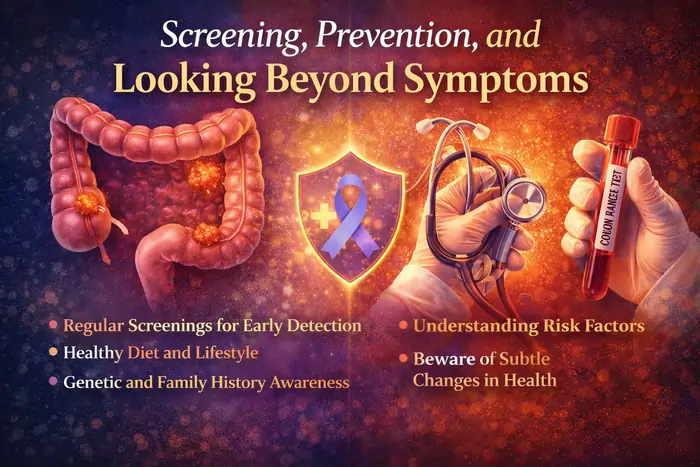
Comparing Stage 1 vs Stage 4 Colon Cancer Symptoms shows why waiting for strong symptoms is dangerous. Early cancer may whisper or say nothing at all, while late cancer often shouts—but by then, treatment is more complex.
To reduce risk and catch problems early:
- Follow recommended colon cancer screening guidelines (often starting around age 45 for average risk).
- Consider earlier screening if you have a family history of colorectal cancer or inflammatory bowel disease.
- Maintain a healthy weight, stay active, limit alcohol, and reduce processed meats for better overall colon health.
If you want a full spectrum picture—not just Stage 1 vs Stage 4 Colon Cancer Symptoms but everything in between—refer your readers to Colon Cancer Symptoms by Stage: From Early to Advanced.
This complements the current article by walking through Stage 0, Stage 1, Stage 2, Stage 3, and Stage 4 in sequence, reinforcing how symptoms gradually build and change over time.
FAQs About Stage 1 vs Stage 4 Colon Cancer Symptoms
What is the main difference between Stage 1 and Stage 4 colon cancer symptoms?
Stage 1 symptoms are often mild or absent, with subtle bowel changes or small amounts of rectal bleeding. In contrast, Stage 4 symptoms are usually severe and widespread, including intense pain, major weight loss, extreme fatigue, and signs of spread to organs like the liver or lungs.
Can Stage 1 colon cancer have no symptoms at all?
Yes. Many people with Stage 1 colon cancer feel completely normal. It is often discovered during routine screening rather than from noticeable symptoms.
What are common symptoms of Stage 1 colon cancer?
Common symptoms include mild changes in bowel habits, occasional bright red blood on toilet paper, vague abdominal cramps or bloating, and a feeling of incomplete bowel emptying—though some people notice nothing unusual.
What are the typical symptoms of Stage 4 colon cancer?
Stage 4 colon cancer can cause persistent abdominal pain, chronic bowel changes, frequent rectal bleeding, significant weight loss, extreme fatigue, and organ-related symptoms like jaundice, cough, or shortness of breath.
How do bowel habit changes differ between Stage 1 and Stage 4?
In Stage 1, changes are mild and occasional, such as slight constipation or diarrhea. In Stage 4, changes become severe, persistent, and may include bowel obstruction or alternating constipation and diarrhea.
Is rectal bleeding more serious in Stage 4 than Stage 1?
Yes. While bleeding can occur at any stage, Stage 4 bleeding tends to be more frequent and may lead to anemia. In Stage 1, it is usually mild and occasional.
How does abdominal pain change from Stage 1 to Stage 4?
Stage 1 may cause mild or occasional discomfort. In Stage 4, pain becomes more intense, persistent, and may be linked to obstruction or spread to nearby organs.
Does Stage 1 colon cancer cause weight loss?
Significant weight loss is uncommon in Stage 1. Most people maintain their weight. In Stage 4, weight loss is common due to metabolic changes and disease progression.
Why is fatigue usually worse in Stage 4 colon cancer?
Fatigue is more severe in Stage 4 due to anemia, inflammation, and the body’s increased effort to fight widespread cancer. In Stage 1, fatigue is usually mild or absent.
What symptoms suggest that colon cancer has spread to the liver?
Signs include jaundice, dark urine, pale stools, itching, right upper abdominal pain, nausea, and worsening fatigue or weight loss.
What symptoms suggest that colon cancer has spread to the lungs or brain?
Lung spread may cause persistent cough, chest pain, and breathing problems. Brain spread can lead to headaches, seizures, weakness, confusion, or vision changes.
Can I tell if I have Stage 1 vs Stage 4 colon cancer just by my symptoms?
No. Only medical tests such as colonoscopy, imaging, and biopsy can determine the stage accurately.
When should I see a doctor about possible colon cancer symptoms?
You should seek medical advice if you have persistent bowel changes, rectal bleeding, abdominal pain, fatigue, or unexplained weight loss. Severe symptoms require urgent care.
Why is screening important if Stage 1 symptoms are mild or absent?
Screening helps detect colon cancer early, even before symptoms appear, improving treatment success and survival rates.
Where can I learn more about colon cancer symptoms across all stages?
You can read a full stage-by-stage guide here: 7 Colon Cancer Symptoms by Stage: From Early to Advanced.