

How early can colon cancer symptoms appear? They can begin as subtle changes in bowel habits, rectal bleeding, and unexplained fatigue or weight loss—sometimes years before diagnosis. Many people notice new constipation or diarrhea, narrower stools, or a persistent feeling that the bowel does not empty completely. Blood in or on the stool, whether bright red or dark and tar-like, is another key early warning sign. Because some people have no obvious symptoms at first, experts stress age-appropriate screening and prompt evaluation of any new, persistent digestive changes, especially in younger adults who might otherwise dismiss them.
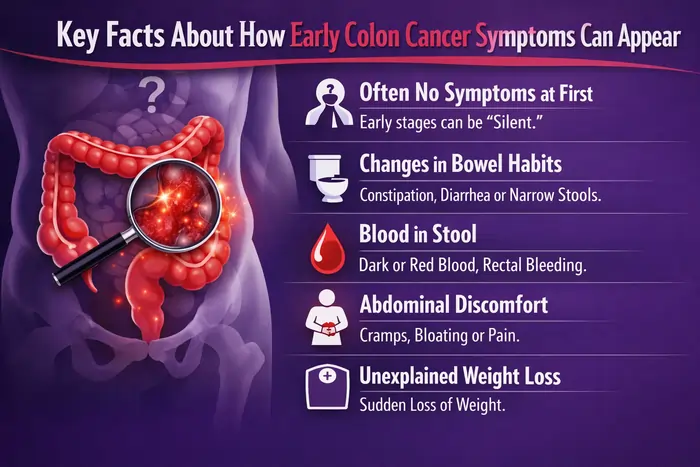
Screening tests like colonoscopy remain the gold standard for early detection, but your body often sends small signals before a diagnosis, especially through changes in bowel habits, rectal bleeding, or unexplained fatigue and weight loss. Authoritative organizations such as the Mayo Clinic and the American Cancer Society emphasize that a combination of awareness and regular screening offers the best protection.
Fact 1: The First Signs Are Often Changes in Bowel Habits
One of the most common early colon cancer symptoms is a change in how often you go to the bathroom or what your stool looks like. Instead of your usual pattern, you may notice more frequent bowel movements, constipation that is new for you, or alternating between diarrhea and constipation.
People sometimes describe “narrow” or ribbon-like stools, which can indicate that something is partially blocking the colon, and they may feel like they still need to go even right after a bowel movement. This persistent feeling that the bowel does not empty completely is a key sign highlighted by major cancer organizations.
If you want a patient-focused, real-world breakdown of the early symptoms of colon cancer, including changes in bowel habits, you can explore this detailed guide, 7 Early Symptoms of Colon Cancer You Should Never Ignore.
For more technical detail on bowel-related warning signs, you can also review the American Cancer Society’s overview of colorectal cancer signs and symptoms.
Fact 2: Blood in the Stool Can Be an Early Colon Cancer Symptom
Rectal bleeding and blood in or on the stool are among the most alarming, but also most important, early warning signs. Sometimes the blood is bright red on the toilet paper or in the bowl; other times, the stool looks darker, maroon, or tar-like because the blood has been in the digestive tract longer.
Occasional small streaks of blood can be caused by hemorrhoids or minor tears, but persistent or unexplained bleeding should never be ignored, especially when accompanied by other changes in bowel habits. Even when bleeding is not visible, slow blood loss over time can lead to iron deficiency anemia, leaving you tired and short of breath.
For a plain-language walkthrough of what are the first signs of colon cancer, including how to interpret rectal bleeding, you can review.
You can also compare those explanations with the Mayo Clinic’s medical review of colon cancer symptoms, which covers bleeding patterns and other early signs in more clinical detail.
Fact 3: Early Colon Cancer Symptoms May Be Mild or Come and Go
A tricky aspect of early-stage colon cancer is that symptoms can be intermittent. You might have a week of loose stools or cramping, feel better for a while, and assume the issue has resolved. Because these symptoms overlap with common conditions like irritable bowel syndrome (IBS), food intolerance, or minor infections, people often delay seeking medical advice.
However, when mild symptoms keep returning—such as on-and-off constipation, cramping, bloating, or occasional bleeding—this “comes and goes” pattern can still be an early signal that something structural is affecting the colon. Public health agencies stress that ongoing changes lasting more than a few weeks should be checked, even if they are not severe every day.
To learn more about how subtle or intermittent symptoms can still indicate colorectal cancer, see the CDC’s page on colorectal cancer symptoms.
Fact 4: Some People Have No Obvious Symptoms at First
Early colon cancer does not always produce clear, noticeable symptoms, especially in the earliest stages. Small polyps and early tumors can remain silent for a long time, which is why screening is recommended even for people who feel perfectly healthy.
This is particularly relevant for individuals with a family history of colorectal cancer or known genetic conditions, as well as those with long-standing inflammatory bowel disease. For these groups, routine screening is not optional; it is a proactive way to catch changes before symptoms appear, and organizations like the Colon Cancer Coalition emphasize symptoms and screening working together.
For a concise overview of why screening matters even without symptoms, you can review the Colon Cancer Coalition’s summary of signs, symptoms, and testing.
Fact 5: Systemic Symptoms Can Show Up As the Disease Progresses
As colon cancer grows or begins to bleed slowly, systemic symptoms that affect the whole body may appear. These can include unexplained weight loss without changes in diet or exercise, persistent fatigue or weakness, iron deficiency anemia detected on a blood test, and reduced appetite or a sense of fullness after small meals.
These signs often reflect chronic blood loss or the metabolic demands of a growing tumor. While they are not exclusive to colon cancer, they become more concerning when combined with bowel changes, rectal bleeding, or abdominal discomfort, so major cancer centers recommend discussing them promptly with a healthcare professional.
For a deeper dive into how systemic symptoms and anemia can be linked to colorectal cancer, readers can consult a comprehensive clinical resource such as UT MD Anderson Cancer Center’s symptom overview.
Fact 6: Early Colon Cancer Symptoms Can Appear in Younger Adults Too
Although colon cancer has traditionally been associated with older adults, more cases now occur in people under 50, including individuals in their 20s, 30s, and 40s. That means early colon cancer symptoms in young adults matter just as much as in older age groups, and younger people should not dismiss persistent red-flag signs.
In younger people, early warning signs may include rectal bleeding that is brushed off as hemorrhoids, persistent abdominal pain or cramping, ongoing changes in bowel habits, and unexplained fatigue or anemia. Because many younger adults do not expect to face colon cancer, they may delay evaluation longer, attributing symptoms to stress, diet, or minor digestive issues.
To understand this trend and the specific warning signs younger adults should watch for, you can read the National Cancer Institute’s article on possible signs of colorectal cancer in younger adults
Possible Signs of Colorectal Cancer in Younger Adults – NCI.
Fact 7: Early Detection Greatly Improves Outcomes
The timing of detection is one of the most powerful predictors of outcome in colon cancer. When colon cancer is caught at an early stage—before it has spread beyond the intestinal wall—it is often highly treatable, and survival rates are significantly higher.
Screening tests like colonoscopy, stool-based tests, and imaging can find precancerous polyps and small cancers before they cause pronounced symptoms. Removing polyps eliminates their chance to become cancer, and diagnosing cancer earlier typically means less aggressive treatment and better long-term quality of life, a message echoed by major cancer organizations.
Readers looking for a detailed discussion of screening options and timing can check the American Cancer Society’s colorectal cancer information (from which you can navigate to specific screening guidelines):
Colorectal Cancer Signs and Symptoms – American Cancer Society.
When to See a Doctor About Possible Early Colon Cancer Symptoms
Knowing the facts is most useful when it leads to action. Consider speaking with a healthcare provider if you experience any of the following, especially for more than a few weeks: new, persistent change in bowel habits (frequency, consistency, or stool shape), ongoing diarrhea or constipation not explained by diet or infection, rectal bleeding, blood in the stool, or very dark, tarry stools.
Other important triggers include persistent abdominal pain, cramping, bloating, or a feeling of fullness; unexplained weight loss or appetite changes; and persistent fatigue, weakness, or evidence of iron deficiency anemia. Your doctor can take a thorough history, perform an exam, and recommend appropriate tests, including blood work, stool tests, imaging, or endoscopic procedures such as colonoscopy to examine the inside of the colon directly.
Public guidance from organizations like the CDC and American Cancer Society consistently recommends not waiting for severe symptoms; instead, they advise seeking medical advice when symptoms are new, persistent, or worrisome.
FAQs About How Early Colon Cancer Symptoms Can Appear
What are the very first signs of colon cancer?
The earliest symptoms of colon cancer often include changes in bowel habits such as constipation, diarrhea, or alternating patterns. Some people also notice narrow stools, mild cramping, or a feeling that the bowel does not fully empty. Rectal bleeding can also appear early.
How early can colon cancer symptoms appear?
Colon cancer early symptoms can appear months or even years before diagnosis. In many cases, these signs are subtle and may come and go, making them easy to ignore at first.
Can early colon cancer have no symptoms?
Yes, early-stage colon cancer may not cause noticeable symptoms. This is why screening is important even if you feel healthy.
Are bowel habit changes always a sign of colon cancer?
No, bowel changes can be caused by diet, stress, or other conditions. However, persistent changes lasting more than a few weeks should be evaluated.
What does blood in the stool look like?
Blood may appear bright red on toilet paper or darker in the stool. In some cases, stool may look black or tar-like, indicating internal bleeding.
Can hemorrhoids and colon cancer look similar?
Yes, both can cause rectal bleeding. However, signs of colon cancer are more likely to include bowel changes, fatigue, or unexplained weight loss.
Is abdominal pain an early symptom of colon cancer?
It can be. Early pain is often mild and may feel like cramping, bloating, or ongoing discomfort that comes and goes.
Does colon cancer always cause weight loss?
No, but unexplained weight loss can be an important warning sign, especially when combined with other symptoms.
Can fatigue be an early warning sign?
Yes, fatigue may result from internal bleeding and anemia, making it one of the early symptoms of colon cancer.
Are symptoms different in men and women?
Symptoms are generally similar, though some may be mistaken for hormonal or digestive issues, especially in women.
Can young adults experience early colon cancer symptoms?
Yes, younger adults can experience the same symptoms, including rectal bleeding, bowel changes, and abdominal pain.
How long can colon cancer go unnoticed?
Colon cancer can develop over several years without clear symptoms, especially in its early stages.
When should I see a doctor?
You should seek medical advice if symptoms like bowel changes, bleeding, or abdominal pain persist for more than a few weeks.
Can lifestyle changes fix early symptoms?
Lifestyle changes may improve digestion, but they cannot treat colon cancer. Persistent symptoms should always be checked.
What tests are used to detect colon cancer early?
Common tests include blood tests, stool tests, and colonoscopy. Colonoscopy is the most effective way to detect and remove early growths.