

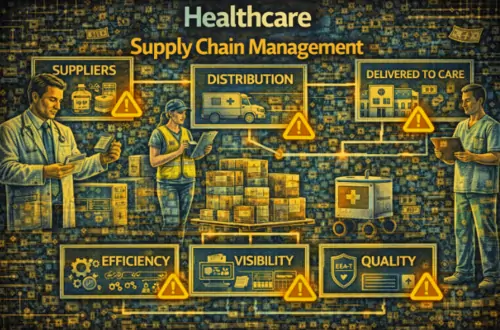
Healthcare supply systems are the silent backbone of every hospital, clinic, laboratory, and pharmacy. When they work well, patients never notice. When they fail, surgeries get delayed, medicines run out, and safety risks increase.
This guide explains how Healthcare Supply systems function, why they matter in the Philippines, and how administrators can improve reliability, reduce waste, and protect patient care.
Even if you are not a supply chain expert, understanding Healthcare Supply basics can dramatically improve operational stability.
What Is Healthcare Supply?
Healthcare Supply refers to the complete system that ensures medicines, medical devices, vaccines, PPE, and diagnostic materials are:
- Available when needed
- Stored safely
- Tracked accurately
- Purchased at sustainable cost
According to the World Health Organization, medicines supply involves selection, forecasting, procurement, storage, and distribution—an end-to-end cycle that supports continuous care. (WHO)
In simple words, Healthcare Supply makes sure the right product reaches the right patient at the right time.
Why Healthcare Supply Matters More Than Ever
Healthcare systems globally face rising demand due to aging populations and chronic diseases. When demand increases, supply complexity increases.
Without strong Healthcare Supply management:
- Stockouts interrupt treatment
- Expired medicines increase waste
- Emergency purchases raise costs
- Cold chain failures compromise product quality
- Poor tracking delays recalls
In the Philippines, geographic challenges—multiple islands, transport delays, and weather disruptions—make Healthcare Supply resilience even more important.
The Core Components of Healthcare Supply
1. Demand Forecasting
Forecasting answers a simple question:
How much of each item do we need, and when?
Good Healthcare Supply forecasting uses:
- Historical consumption data
- Seasonal trends (flu, dengue, elective surgery cycles)
- Service expansions or program changes
Weak forecasting is the root cause of most stockouts.
2. Procurement and Vendor Management
Procurement is not just buying at the lowest price. It is choosing suppliers who deliver:
- Consistent quality
- Reliable lead times
- Transparent documentation
- Stable pricing
Healthcare Supply strategies often include:
- Dual sourcing for critical items
- Clear service-level agreements
- Regular supplier performance reviews
Strong procurement prevents panic buying during shortages.
3. Inventory Management
Inventory management controls what is in stock, where it is stored, and how fast it moves.
Best practices in Healthcare Supply include:
- Setting minimum and maximum stock levels
- Following FEFO (First Expiry, First Out)
- Conducting cycle counts weekly or monthly
- Reviewing slow-moving inventory
Too much stock ties up cash. Too little stock creates risk.
Balance is the goal.
4. Storage and Warehousing
Proper storage protects product integrity.
Key elements of Healthcare Supply storage:
- Temperature monitoring
- Humidity control (where needed)
- Secure storage for controlled substances
- Clear labeling and segregation
Cold chain management is especially critical for vaccines and temperature-sensitive medicines. The CDC highlights the importance of temperature monitoring, training, and emergency planning in vaccine storage systems. (CDC)
A single temperature excursion can destroy product value.
5. Distribution and Internal Logistics
Even inside hospitals, Healthcare Supply movement must be structured.
Important practices:
- Scheduled ward replenishment
- Emergency restocking protocols
- Standardized issue documentation
- OR and ICU high-value tracking
Without structured distribution, supplies may be misplaced or undocumented.
6. Traceability and Recall Management
If a medical device or medicine is recalled, the organization must know:
- Which batch was received
- Where it was stored
- Whether it was dispensed
- Which patients may be affected
The FDA emphasizes device tracking systems to support recall effectiveness and patient notification. (FDA)
Healthcare Supply traceability protects patient safety and reduces legal risk.
Common Healthcare Supply Problems in the Philippines
Stockouts
Often caused by delayed approvals or inaccurate forecasting.
Overstock and expiry
Bulk purchasing without demand planning.
Manual tracking errors
Excel sheets across departments lead to mismatched data.
Supplier dependency
Relying on one vendor for critical products increases vulnerability.
Cold chain failures
Power outages and poor monitoring systems.
These issues are not rare. They are systemic.
The solution is disciplined Healthcare Supply governance.
Key KPIs Every Facility Should Track
Tracking performance transforms Healthcare Supply from reactive to proactive.
Essential metrics:
Stockout Rate
Percentage of time critical items are unavailable.
Inventory Turnover
How fast items are used and replaced.
Days of Inventory on Hand
Balance between too much and too little.
Expiry Rate
Financial value lost due to expiration.
Fill Rate
Supplier ability to deliver complete orders.
Procurement Cycle Time
Time from request to delivery.
Cold Chain Compliance
Percentage of time temperature remains within range.
Healthcare Supply decisions improve when measured consistently.
Technology and Digital Systems
Modern Healthcare Supplies systems rely on technology.
Basic digital tools:
- Inventory management systems
- Barcode or QR scanning
- Centralized dashboards
- Automated reorder alerts
In public health systems, electronic logistics management information systems (eLMIS) strengthen supply visibility and planning across regions.
Digital tracking reduces errors and speeds decision-making.
However, cybersecurity must also be considered. Healthcare systems are frequent targets of cyberattacks, and compromised systems can disrupt Healthcare Supplies operations.
Cost Drivers and Control Strategies
Healthcare Supplies costs rise due to:
- Emergency procurement
- Expiry waste
- Excessive SKU variety
- Poor standardization
- Supplier price variance
Cost control strategies include:
- Standardizing frequently used products
- Negotiating volume contracts
- Reducing duplicate SKUs
- Monitoring purchase price variance monthly
The goal is not the cheapest supply—it is the most reliable and efficient system.
Building a Resilient Healthcare Supply System
Resilience means surviving disruption.
Strategies include:
Safety stock for critical items
Not everything needs buffer stock—only life-saving essentials.
Dual sourcing
Two approved vendors reduce risk.
Clear substitution protocols
Approved alternatives prevent panic.
Business continuity planning
What happens during transport strikes, floods, or outbreaks?
Training and accountability
Assign clear ownership of Healthcare Supply oversight.
Facilities that treat Healthcare Supplies as a strategic function—not just a back-office task—perform better in crises.
2026 Trends in Healthcare Supply
Looking forward, Healthcare Supply systems will see:
Greater traceability requirements
Regulatory expectations continue to rise.
More automation
AI-assisted forecasting and anomaly detection.
Stronger cold chain monitoring
IoT-enabled temperature tracking.
Sustainability focus
Waste reduction and green procurement policies.
Regional distribution hubs
To reduce island-to-island delays in countries like the Philippines.
Healthcare Supplies will become more data-driven, transparent, and compliance-focused.
A Simple Action Plan for Facilities
If you manage a clinic or hospital, start with this:
- List your top 20 critical items.
- Define minimum and maximum stock levels.
- Assign one accountable supply owner.
- Track stockout rate monthly.
- Audit cold chain compliance weekly.
Small discipline changes produce big improvements in Healthcare Supply reliability.
Why Healthcare Supply Is a Patient Safety Issue
At its core, Healthcare Supplies is not about inventory—it is about care continuity.
When oxygen is available, patients breathe.
When antibiotics are stocked, infections are treated.
When vaccines are properly stored, communities are protected.
Every Healthcare Supply decision ultimately impacts human lives.
That is why leadership attention matters.
FAQs
What is Healthcare Supply in simple terms?
It is the system that ensures medical products are available, stored safely, tracked properly, and delivered efficiently.
Why do hospitals experience stockouts?
Poor forecasting, supplier delays, slow approvals, and lack of backup vendors are common causes.
How can facilities prevent expired medicines?
Use FEFO rotation, set proper stock levels, and monitor slow-moving items regularly.
Why is cold chain important?
Temperature-sensitive products can lose effectiveness if stored incorrectly, risking patient safety.
Do small clinics need digital inventory systems?
While Excel can work early, digital systems improve accuracy, reduce waste, and strengthen control as operations grow.