

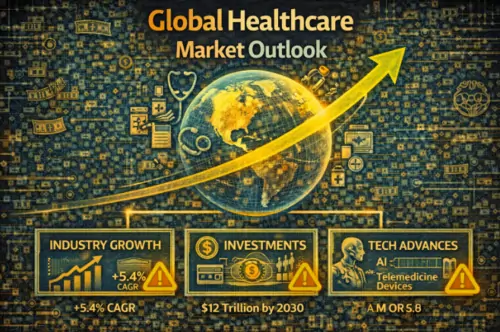
The global healthcare market includes hospitals and clinics, medicines, medical devices, diagnostics, insurance/payers, digital health tools, and home-based care. When people talk about the “Global Healthcare Market Outlook,” they’re asking: what’s growing, what’s struggling, and what changes next.
For Filipino readers, this outlook matters in practical ways:
- which healthcare jobs will be in demand locally and abroad
- why healthcare costs keep rising
- where new services will appear (telehealth, home care, diagnostics)
- which healthcare segments attract investment and innovation
A simple truth shapes the global outlook: people are living longer, chronic disease is increasing, and health systems are trying to deliver more care with limited staff and rising costs.
What’s driving global healthcare growth
Aging populations
WHO highlights the rapid pace of population ageing and notes that by 2050, 80% of older people will live in low- and middle-income countries.
That matters because older adults typically need:
- more regular checkups
- long-term medication
- chronic disease monitoring
- rehab and support services
Chronic disease and lifestyle risks
As more people live with long-term conditions, demand increases for:
- primary care and specialist care
- diagnostics and monitoring
- long-term medications
- home-based support
(For business and policy leaders, this is one reason prevention and better chronic care management keep getting attention.)
Cost pressure is reshaping care settings
Health systems are shifting care away from expensive hospital settings when safe to do so—toward outpatient clinics, ambulatory surgery centers, and home-based care. This “lower-acuity care expansion” is explicitly called out in healthcare outlook commentary for 2026.
Workforce shortages
Workforce shortages are now a major constraint on growth. A European Commission/OECD update on Health at a Glance: Europe 2024 emphasizes the urgent need to address health workforce shortages.
Even outside Europe, the same pattern shows up globally: demand grows faster than staffing.
The biggest segments to watch through 2026 and beyond
Provider services: hospitals, clinics, outpatient care
What’s changing:
- more outpatient procedures
- more care coordination across settings
- more pressure on margins due to staffing costs and supply costs
What’s likely to grow:
- outpatient and day procedures
- primary care access models
- care navigation and patient experience improvements
Pharmaceuticals and biotech
Key themes:
- continued growth in specialty drugs and biologics
- pressure from pricing, reimbursement changes, and “patent cliffs” (when blockbuster drugs lose exclusivity)
- stronger demand for therapies tied to aging-related conditions
Medical devices and diagnostics
Growth drivers:
- imaging and minimally invasive procedures
- point-of-care testing (faster diagnostics closer to patients)
- monitoring tools supporting chronic care
Digital health and health IT
Digital health is maturing from “apps everywhere” into clearer categories (digital diagnostics, digital therapeutics, digital care models, consumer apps).
Common focus areas:
- electronic health records modernization
- workflow automation (documentation, scheduling, billing support)
- AI support in clinical workflows
- cybersecurity and privacy controls
Home healthcare and long-term care
Aging and cost pressure push more care into the home. Governments and providers are redesigning home-care programs in different countries; Australia’s Support at Home reforms (launched in late 2025) show how policy can accelerate in-home care models at scale.
For Asia-Pacific—including the Philippines—home care demand also rises because families often prefer aging-in-place when possible.
Technology trends shaping the global outlook
AI becomes a workflow tool, not a magic button
Healthcare leaders are increasingly focused on practical AI: documentation support, triage assistance, imaging support, and operational planning. Executive outlook reporting highlights broad pressure to improve productivity and performance while meeting consumer expectations.
Remote monitoring and telehealth evolve
Remote patient monitoring (RPM) grows because it supports chronic care, reduces unnecessary visits, and enables earlier intervention. Market research summaries consistently cite chronic disease burden, aging, and telehealth expansion as drivers.
For Filipino families, RPM tools can be especially useful when:
- travel time is high
- seniors need regular vitals checks
- follow-ups are hard to schedule
Interoperability and data quality matter more
More systems must “talk to each other” (labs, clinics, hospitals, payers). The competitive advantage shifts from “who has the most tools” to “who has clean data and usable workflows.”
Cybersecurity becomes non-negotiable
As healthcare digitizes, downtime and data exposure risks rise. This pushes spending toward:
- security controls
- identity access management
- system resilience and incident response
Healthcare financing and payment trends
Value focus grows, but cost pressure stays
Many systems experiment with “value-based” approaches (paying for outcomes, not just volume), while still dealing with:
- inflation in supplies and labor
- hospital capacity constraints
- large backlogs and rising demand
OECD’s Health at a Glance 2025 compiles indicators on health spending, resources, and performance—useful for tracking how these pressures show up across countries.
Consumer behavior shifts
People increasingly expect:
- convenient access
- transparent pricing
- digital scheduling and results
- service-quality experiences similar to other industries
What the global outlook means for Filipinos
Students and early-career professionals
Future-proof lanes often sit at the intersection of healthcare + systems:
- nursing and allied health (still high demand globally)
- health informatics and analytics
- cybersecurity for healthcare
- medical device support and diagnostics
- care coordination and patient navigation
Workforce shortages are an ongoing theme in major health system reporting.
Entrepreneurs and operators
High-opportunity spaces (especially in emerging markets):
- affordable diagnostics access
- chronic care support programs
- home healthcare coordination and caregiver training
- clinic operations software that actually reduces admin time
Investors and business decision-makers
Watch for:
- outpatient expansion and consolidation trends
- digital health shifting toward clearer categories and stronger evidence requirements
- staffing constraints as a growth ceiling
Everyday families
What you may feel:
- more telehealth options
- more home-based care services
- continued cost pressure (especially for meds and diagnostics)
- more digital paperwork (portals, e-prescriptions, digital results)
How to track the Global Healthcare Market Outlook reliably
Use a small set of trustworthy sources and check them quarterly:
- WHO for aging and major public health drivers
- OECD Health at a Glance for comparable system indicators
- Major healthcare outlooks from established research organizations for executive priorities and operating pressures
- Specialty reports for digital health segmentation and maturity
A good habit: don’t chase forecasts alone—track drivers (aging, staffing, inflation, adoption) and constraints (workforce, cybersecurity, reimbursement).
FAQs
What is included in the global healthcare market?
Provider services (hospitals/clinics), pharma/biotech, devices/diagnostics, payers/insurance, digital health, and home/long-term care.
Which segments are growing fastest?
Often digital health (more mature categories now), home-based care, outpatient care models, diagnostics/monitoring tools, and specialty medicines—driven by aging and chronic disease.
Is digital health still growing after the pandemic?
Yes, but it’s shifting from “lots of apps” to clearer segments like digital diagnostics and digital care models, with higher expectations for evidence and outcomes.
Why is healthcare getting more expensive?
Aging populations, chronic disease burden, staff shortages, and the cost of new technologies and treatments all push spending upward.
What healthcare careers are most resilient?
Roles tied to direct care (nursing/allied health) plus system roles (health IT, data, cybersecurity, operations) tend to stay in demand as systems modernize.