

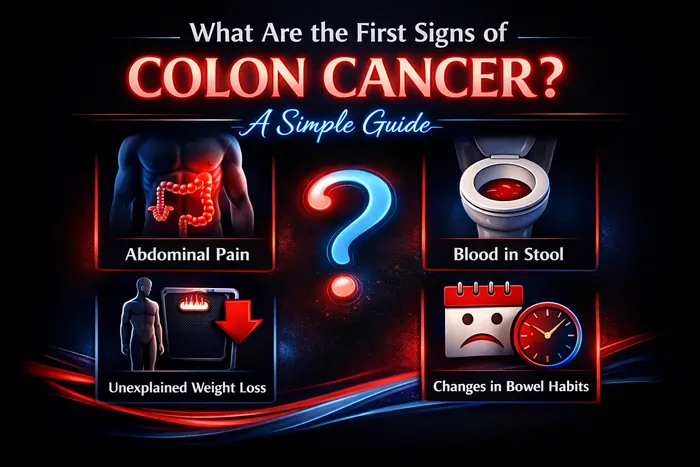
First Signs of Colon Cancer often begins with subtle changes in your body that are easy to overlook. The first warning signs may include new bowel habit changes, rectal bleeding, abdominal pain or bloating, unexplained weight loss, ongoing fatigue, narrow or ribbon‑like stools, and a constant feeling that your bowel doesn’t empty completely. Not every symptom means cancer, but persistent or worsening changes—especially when you notice more than one—should prompt a visit to a doctor so you can discuss testing and early screening options as soon as possible.
If you want a deeper follow‑up after this overview, you can explore a more detailed list in 7 Early Symptoms of Colon Cancer You Should Never Ignore.
Below Are the Earliest Indicators of Colon Cancer:
1. Changes in Bowel Habits
One of the earliest and most common signs is a noticeable change in how you use the bathroom. This does not mean one odd day of diarrhea after a heavy meal; it means a new pattern that sticks around.
You might notice:
- Going more often or less often than usual
- New or persistent diarrhea
- Constipation that doesn’t improve with fibre, water, or simple remedies
- A new pattern of alternating between diarrhea and constipation
While conditions like irritable bowel syndrome can cause similar issues, any change that lasts more than about two weeks—especially if it is new for you—warrants a conversation with your doctor.
2. Rectal Bleeding or Blood in the Stool
Seeing blood when you go to the toilet is one of the most important warning first signs of colon cancer. Sometimes it appears as bright red blood on the toilet paper or in the bowl. Other times it may show up as darker streaks mixed with stool, or stool that looks black and tar‑like.
Hemorrhoids and small tears can cause bleeding, but it is risky to assume that is the cause without being checked. Even a single episode of unexplained rectal bleeding is worth mentioning to a healthcare professional, especially if it happens again or comes with other symptoms.
For a more in‑depth look at how these and other early signs cluster together, see:
7 Early Symptoms of Colon Cancer You Should Never Ignore
3. Abdominal Pain, Cramps, or Bloating
Early colon cancer can cause vague but persistent belly discomfort. Tumours can irritate the lining of the bowel or partially block the movement of stool and gas, leading to:
- Cramping that keeps coming back
- Bloating or a feeling of fullness that isn’t clearly tied to big meals
- Gas pains that seem more frequent or intense than usual
Occasional mild discomfort is very common, but pain that is new, lasts for weeks, or is getting worse—especially together with bowel changes or bleeding—should not be ignored.
Trusted medical centres emphasise abdominal pain and bloating as recognised colon cancer symptoms. You can check their symptom lists for additional context Mayo Clinic – Colon cancer symptoms
Cleveland Clinic – Colon/colorectal cancer overview
4. Unexplained Weight Loss
Another early sign is unintentional weight loss—losing weight without trying. This can happen even if you are eating your usual foods and your activity level hasn’t changed much.
Doctors often consider it concerning if you lose more than about 5% of your body weight over 6–12 months for no obvious reason. Colon cancer can drive weight loss by:
- Changing how your body uses and burns energy
- Reducing appetite due to chronic discomfort or inflammation
- Causing fatigue that makes you less active
Unexplained weight loss is a general “red flag” symptom in many cancers, so it is important to bring up, especially when it appears alongside bowel changes or bleeding.
5. Ongoing Fatigue or Weakness
Many people with colon cancer describe a deep, ongoing tiredness that sleep does not fix. This cancer‑related fatigue can feel like:
- Persistent exhaustion, even after a full night’s rest
- Shortness of breath or dizziness with light activity
- A general lack of strength or stamina
In colon cancer, this often happens because of slow, internal blood loss from a tumour, which can lead to iron‑deficiency anemia. If you feel unusually exhausted for weeks and basic lifestyle changes do not help, this is a sign to talk to your doctor and consider blood tests.
You can read more about anemia and first signs of colon cancer here National Cancer Institute – Possible signs of colorectal cancer in younger adults
6. Narrow or Ribbon‑Like Stools
Stool shape can change for many reasons, but consistently narrow, thin, or ribbon‑like stools are worth attention. A growth inside the colon can narrow the passageway, causing stool to change shape as it squeezes past.
It is especially important to pay attention if:
- Your stools are regularly thinner than usual for several weeks
- Stool looks pencil‑thin or ribbon‑like
- These changes appear together with bleeding or a feeling of incomplete emptying
Occasional changes—after certain foods, illness, or short‑term stress—are common, but a new, consistent pattern should be discussed with a healthcare professional.
7. Feeling That Your Bowel Doesn’t Empty Completely
A subtle first signs of colon cancer is the sensation that you still need to go even after you’ve just used the bathroom. This feeling, called tenesmus, can make you feel like there is always more stool to pass.
This can happen when:
- A tumour or growth in the rectum or lower colon takes up space
- Inflammation or irritation triggers repeated urges to defecate
If you notice yourself making multiple trips to the toilet with only small amounts of stool and a constant “unfinished” feeling, it is time to bring this up with your doctor.
How Early Can These Signs Appear?
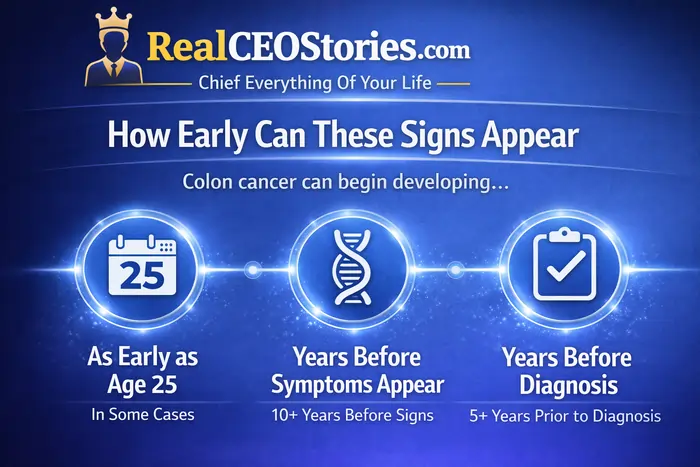
Colon cancer usually develops slowly, beginning as small polyps that can take years to become cancerous. That means symptoms may appear months or even years before a diagnosis, especially in younger adults. Some people report rectal bleeding, abdominal pain, or unexplained anemia long before anyone suspects cancer.
For a focused look at timing—how long colon cancer can go unnoticed and when symptoms tend to show up—see How Early Can Colon Cancer Symptoms Appear?
When Should You See a Doctor?
Not every concerning first signs of colon cancer means you have cancer. Many common issues—such as infections, irritable bowel syndrome, or hemorrhoids—can mimic early colon cancer symptoms. The key difference is persistence and combination. You should contact a healthcare provider if you notice:
- Any rectal bleeding or blood in your stool, even once
- A change in bowel habits that lasts longer than two weeks
- Persistent abdominal pain, cramping, or bloating that doesn’t improve
- Unexplained weight loss or ongoing fatigue
Straightforward checklists of when to seek help are available here CDC – Colorectal cancer symptoms
American Cancer Society – Signs and symptoms of colon cancer.
If you recognize more than one of these early signs in yourself, especially together, book an appointment as soon as you can. Keeping a short symptom diary (what you feel, when it happens, and how often) can help your doctor decide whether you need tests like stool checks, blood work, or a colonoscopy.
For a more detailed, symptom‑by‑symptom breakdown after this simple guide, you can continue with 7 Early Symptoms of Colon Cancer You Should Never Ignore
15 FAQs About the First Signs of Colon Cancer
What are the very first signs of colon cancer?
Early signs often include changes in bowel habits, rectal bleeding, abdominal discomfort, unexplained weight loss, fatigue, narrow stools, and a feeling of incomplete bowel emptying.
How do I know if my bowel changes are serious?
Bowel changes are more concerning when they are new for you, last longer than two weeks, or come with bleeding, pain, or weight loss, rather than settling on their own.
Is one episode of rectal bleeding enough to see a doctor?
Yes. Even a single unexplained episode of blood in or on your stool should be discussed with a healthcare professional, especially if it recurs.
Can early colon cancer cause diarrhea or constipation only?
Yes. Some people notice persistent diarrhea, ongoing constipation, or a new pattern of alternating between the two as one of their first warning signs.
What does abdominal pain from early colon cancer feel like?
It often shows up as cramping, bloating, or a dull, nagging ache that lasts for weeks or keeps coming back, sometimes with gas and bowel changes.
Why is unexplained weight loss considered a red flag?
Unintentional weight loss can mean your body is using extra energy, losing appetite, or reacting to chronic inflammation, all of which can happen with a growing tumour.
How is fatigue related to the first signs of colon cancer?
Early colon cancers may bleed slowly, leading to iron-deficiency anemia, which causes deep fatigue, weakness, and sometimes shortness of breath during normal activities.
What do narrow or ribbon-like stools indicate?
Consistently thin or pencil-like stools may suggest a narrowing inside the colon, sometimes caused by a growth that partially blocks the passage.
What is the “feeling of incomplete emptying” and why is it important?
This sensation, called tenesmus, feels like you still need to have a bowel movement right after going and can be an early sign of tumours or inflammation in the rectum or lower colon.
Can early colon cancer have no symptoms at all?
Yes. Some people have no obvious symptoms in the earliest stages, which is why routine screening is crucial even if you feel well.
How early can colon cancer symptoms appear before diagnosis?
Symptoms can appear months or even years before a diagnosis because polyps and tumours usually grow slowly. Learn more in How Early Can Colon Cancer Symptoms Appear?
Are the first signs of colon cancer different in younger adults?
In people under 50, key first signs often include rectal bleeding, abdominal pain, persistent diarrhea, and unexplained anemia, which are sometimes misattributed to stress or hemorrhoids.
When should I see a doctor about possible early signs?
See a doctor if symptoms such as bowel changes, bleeding, persistent pain, weight loss, or fatigue last longer than two weeks or keep returning.
Do these first signs always mean I have colon cancer?
No. Many early signs are caused by noncancerous conditions, but the only way to know for sure is to get a proper evaluation and, if needed, screening tests like a colonoscopy or stool test.
What should I track before my appointment?
Note your symptoms, how long they’ve been happening, how often, stool changes, any bleeding, pain level, weight changes, and energy levels so your doctor has a clear picture.