

Early Symptoms of Colon cancer often develops slowly and silently, but it usually leaves early warning signs you should never ignore. These include persistent changes in bowel habits, rectal bleeding, abdominal pain or bloating, unexplained weight loss, ongoing fatigue, narrow or ribbon‑like stools, and a constant feeling that your bowel doesn’t empty completely. Not every symptom means cancer, but new or persistent changes—especially when you notice more than one—should prompt a visit to a doctor so you can discuss testing and screening options as soon as possible.
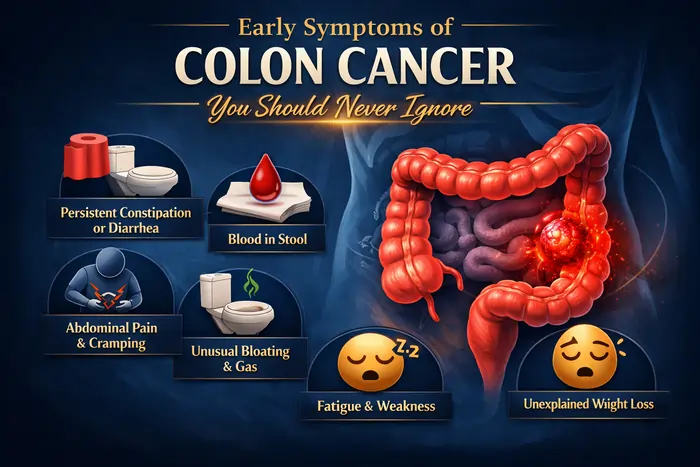
Colon cancer often develops slowly and quietly, but it almost always leaves clues along the way. Recognising early symptoms—and acting on them—can dramatically improve the chances of finding the disease at a stage when treatment is most effective. For a medical overview of key warning signs, you can review the Mayo Clinic guide to colon cancer symptoms or the American Cancer Society’s signs and symptoms of colon cancer. If you want a simple, patient‑friendly overview first, you can start with this guide on what the first signs of colon cancer are: What Are the First Signs of Colon Cancer? A Simple Guide.
Below are seven early symptoms of colon cancer you should never ignore, how they show up, and why they matter.
1. Persistent Changes in Bowel Habits
One of the most common early signals is a change in your normal bowel pattern that lasts more than a couple of weeks. This may mean going more or less often than usual, new or ongoing diarrhea, or constipation that doesn’t respond to hydration, fibre, or over‑the‑counter remedies. Authoritative lists of these changes are available from the CDC’s colorectal cancer symptoms page and the Cleveland Clinic’s colon cancer overview.
Warning patterns include:
- Diarrhea that lasts several days with no clear cause such as infection
- Constipation lasting longer than two weeks
- A new pattern of alternating diarrhea and constipation
- A frequent feeling that you still need to go, even after a bowel movement
While many things can upset your digestion temporarily, persistent changes—especially when they are new for you—deserve medical attention.
2. Rectal Bleeding or Blood in the Stool
Seeing blood where it shouldn’t be is one of the most important red flags. Bright red blood on the toilet paper, in the bowl, or on the surface of the stool often comes from the lower bowel or rectum, while darker blood or black, tar‑like stool may indicate bleeding higher in the digestive tract. You can read more about how rectal bleeding relates to colorectal cancer risk in this overview from the National Cancer Institute.
Even a single episode of rectal bleeding should not automatically be blamed on hemorrhoids. It may still be benign, but only a healthcare professional can safely sort out the cause with an exam and, if needed, tests.
3. Abdominal Pain, Cramps, or Bloating
Persistent belly discomfort is another early warning sign that can be easy to dismiss. Tumours can irritate the lining of the colon or partially block the passage of stool and gas, causing pressure and pain. The MD Anderson guide to colon cancer symptoms and the Cancer Center’s symptom overview both include ongoing abdominal pain, cramping, and bloating as common complaints.
You might notice:
- New or worsening cramping that lasts for weeks or keeps returning
- Bloating or a feeling of fullness not clearly tied to large meals
- Gas pains that are more frequent or more intense than usual
Occasional mild discomfort is common, but pain that keeps coming back, becomes more severe, or combines with other symptoms like bleeding or bowel changes should be checked.
4. Unexplained Weight Loss
Unintentional weight loss—losing weight without trying—is a classic warning sign across many cancers, including colon cancer. Doctors often see it as concerning when you lose more than about 5% of your body weight over 6–12 months without changing your diet or activity level. This is highlighted in resources like the World Health Organization fact sheet on colorectal cancer and the American Cancer Society’s colorectal cancer overview.
Colon cancer can contribute to weight loss by altering how your body uses energy, reducing appetite due to chronic inflammation or discomfort, and driving fatigue that leads to less activity. If the scale is dropping and you cannot explain why, it is important to mention this to your doctor, especially if you also have digestive symptoms.
5. Ongoing Fatigue or Weakness
Cancer‑related fatigue feels different from simply being tired after a long day. It tends to be deep, persistent, and not fully relieved by rest or sleep. In colon cancer, ongoing blood loss from a tumour can lead to iron‑deficiency anemia, which further reduces energy. You can read more about the link between anemia and colorectal cancer in the NCI’s discussion of warning signs in younger adults.
Concerning signs include:
- Feeling exhausted even after a full night’s sleep
- Shortness of breath or dizziness with light activity
- General weakness or reduced stamina without another clear cause
If you feel unusually drained for weeks and basic lifestyle changes don’t help, this is worth a medical work‑up—especially when fatigue appears alongside other symptoms listed here.
6. Narrow, Thin, or Ribbon‑Like Stools
Stool shape can be another subtle clue. A tumour that narrows the inside of the colon may cause stool to become consistently thinner as it passes by. The Colon Cancer Coalition’s symptom guide specifically mentions changes in stool calibre, including narrowing, as a warning sign.
You may notice that:
- Stools are regularly narrower than usual over several weeks
- Stool looks pencil‑thin or ribbon‑like
- Shape changes occur together with urgency or a feeling of incomplete emptying
Diet and minor illnesses can affect stool shape occasionally, but sustained changes in width or form, particularly when they are new, should be discussed with your healthcare provider.
7. Feeling That Your Bowel Never Fully Empties
A lingering sensation that you still need to have a bowel movement right after going—called tenesmus—can be another early hint. This often feels like constant pressure in the rectum or a nagging urge to return to the bathroom, even when little or nothing comes out. The Cleveland Clinic’s colon cancer page notes this “feeling that the bowel doesn’t empty completely” as a typical symptom.
This can happen when a tumour in the rectum or lower colon takes up space, making it feel like there is always stool waiting to pass, or when inflammation irritates the bowel lining. If you find yourself making multiple trips to the toilet with only small amounts of stool and a sense that you never fully “finish,” it is time to bring this up with a clinician.
How Early Can These Symptoms Appear?
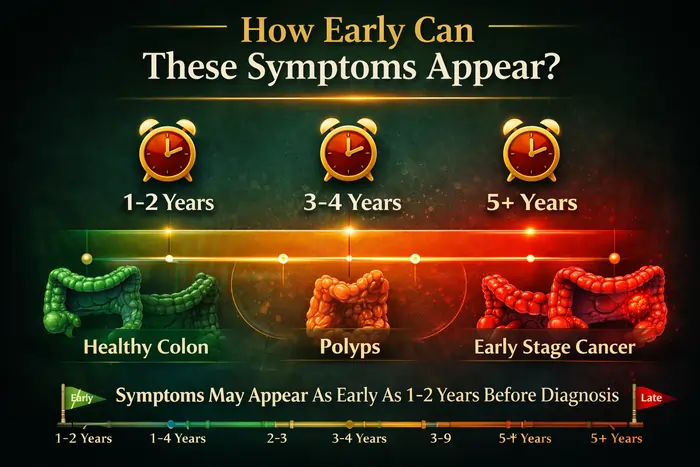
Early Symptoms of Colon Cancer usually develops over many years, starting as small polyps that slowly change, which means symptoms can appear months or even years before a formal diagnosis. In some people—especially younger adults—red flags like rectal bleeding, unexplained anemia, abdominal pain, or persistent changes in bowel habits may be present long before anyone suspects cancer. The National Cancer Institute has highlighted how these patterns are increasingly recognised in people under 50.
For a deeper dive into timing, patterns, and how long Early Symptoms of Colon Cancer can go unnoticed, you can read: How Early Can Colon Cancer Symptoms Appear?. This resource breaks down how early different symptoms tend to show up and why they are sometimes missed.
When to See a Doctor
Many of these symptoms can be caused by conditions other than cancer, such as infections, irritable bowel syndrome, or hemorrhoids. The problem is that relying on assumptions alone can delay a crucial diagnosis. You should contact a healthcare provider if you notice:
- Any rectal bleeding or blood in your stool, even once
- A change in bowel habits that lasts longer than two weeks
- Persistent abdominal pain, cramping, or bloating that doesn’t improve
- Unexplained weight loss or ongoing fatigue
You can also review the CDC’s guidance on when to talk to your doctor about colorectal cancer symptoms and the NHS bowel cancer symptoms page for additional perspective.
If you recognise several of these signs in yourself, especially together, make an appointment as soon as you can and be direct about your concerns. Keeping a brief symptom log (what happens, how often, and for how long) can help your doctor decide which tests or screenings to recommend.
FAQs about early symptoms of colon cancer
What are the Early Symptoms of Colon Cancer?
The earliest signs often include changes in bowel habits, rectal bleeding, abdominal discomfort, unexplained weight loss, fatigue, narrow stools, and a feeling of incomplete bowel emptying.
Should I worry about colon cancer if I have constipation or diarrhea?
Occasional constipation or diarrhea is common, but persistent changes lasting more than two weeks—especially if they are new for you—should be checked by a healthcare professional.
Is rectal bleeding always a sign of Early Symptoms of Colon Cancer?
No, rectal bleeding can come from hemorrhoids or other benign conditions, but any new blood in or on your stool should be evaluated rather than assumed to be harmless.
What does abdominal pain from colon cancer feel like?
It may feel like cramping, bloating, or a dull, persistent ache that doesn’t go away or keeps coming back, sometimes along with changes in bowel habits.
Why is unexplained weight loss a red flag for Early Symptoms of Colon Cancer?
Unintentional weight loss can signal that your body is using extra energy, losing appetite, or experiencing chronic inflammation related to a tumour.
How is fatigue linked to Early Symptoms of Colon Cancer?
Colon tumours can cause slow internal bleeding, leading to iron‑deficiency anemia, which triggers ongoing fatigue, weakness, and sometimes shortness of breath.
What do narrow or ribbon‑like stools mean?
Consistently thin or pencil‑like stools may indicate a narrowing inside the colon, sometimes caused by a growth that partially blocks the bowel.
What is the feeling of incomplete bowel emptying?
This sensation, called tenesmus, feels like a constant urge to pass stool even after going, and can be linked to tumours or inflammation in the rectum or lower colon.
Can you have early colon cancer without any symptoms?
Yes, some people have no noticeable symptoms in the early stages, which is why routine screening is so important, even if you feel well.
How early can colon cancer symptoms appear?
Symptoms can appear months or even years before a diagnosis because polyps and tumours usually grow slowly, giving a long window for detection if warning signs are recognised.
Are Early Symptoms of Colon Cancer different in younger adults?
In younger adults, rectal bleeding, abdominal pain, persistent diarrhea, and unexplained anemia are key red flag symptoms that should not be ignored or dismissed as “just stress.”
When should I see a doctor about possible colon cancer symptoms?
You should see a doctor if symptoms like bowel changes, bleeding, pain, weight loss, or fatigue last longer than two weeks or keep returning.
Can diet alone cause the same symptoms as colon cancer?
Diet can trigger temporary changes in stool and digestion, but ongoing symptoms—especially with bleeding, weight loss, or fatigue—need medical evaluation, not just dietary tweaks.
Do Early Symptoms of Colon Cancer always mean I have cancer?
No, many early symptoms are caused by noncancerous conditions, but the only way to know for sure is to have a proper assessment and, if recommended, screening tests.
What should I track before talking to my doctor?
Keep a brief log of symptoms, frequency, duration, stool changes, bleeding episodes, pain level, weight changes, and energy levels to give your doctor a clear picture.