

Common symptoms of colon cancer include changes in bowel habits, rectal bleeding, blood in stool, persistent diarrhea or constipation, unexplained weight loss, fatigue, and abdominal pain or bloating. These colon cancer symptoms can appear subtly and often develop over months or even years, frequently going unnoticed in early stages. Because many early signs of colon cancer mimic common digestive issues, early screening, including colonoscopy, and prompt medical evaluation are essential for early detection and prevention of colorectal cancer.
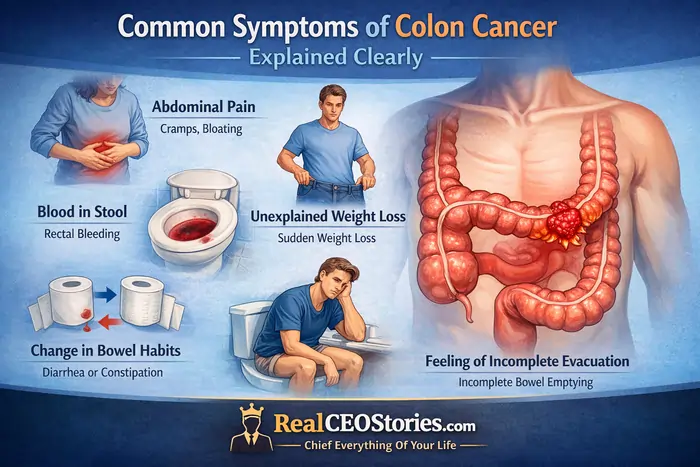
Colon cancer often starts silently, but there are a number of warning signs you can watch for in your day‑to‑day life. Understanding these common symptoms clearly—and knowing when they matter—is one of the simplest ways to protect yourself and the people you care about.
What Colon Cancer Is
Colon cancer begins in the large intestine (colon), usually starting as small, noncancerous growths called polyps that slowly turn into cancer over years. Because this process is so gradual, many people feel completely well in the early stages.
The colon’s job is to absorb water and nutrients and move waste along toward the rectum. When abnormal cells in the colon grow out of control, they can interfere with how your bowels work, bleed, or spread to other parts of the body.
If you want a deeper, patient‑friendly overview of colon cancer, the American Cancer Society explains how it develops, is staged, and treated in easy‑to‑read language. You can explore their colon cancer information here: colon and rectal cancer basics.
Why Common Symptoms of Colon Cancer Matter (And Why They Can Be Confusing)
One of the most important things to understand is that colon cancer symptoms are often subtle or mistaken for everyday digestive issues.
Two key realities:
- Many people have no symptoms at all in the early stages, which is why regular screening (like colonoscopy) is so important.
- When symptoms do appear, they can look like hemorrhoids, irritable bowel syndrome, food poisoning, or a stomach bug.
Because of this overlap, you should not try to “self‑diagnose” colon cancer based on symptoms alone. Instead, use symptoms as a signal to talk to a healthcare provider, especially if they are new, persistent, or getting worse. The CDC offers a clear explanation of why even mild but lasting bowel changes should be checked: colorectal cancer symptoms.
If you are interested in how symptoms can look slightly different depending on sex, you can also read about the key signs of colon cancer in men vs women, including hormonal and anatomical factors that may influence how early warning signs show up.
Changes in Bowel Habits
One of the most common early clues of colon cancer is a noticeable, ongoing change in how often or how easily you move your bowels.
Typical changes include:
- Diarrhea that lasts for more than a few days without a clear cause.
- Constipation that is new for you, more frequent, or harder to treat.
- Alternating bouts of diarrhea and constipation, especially if this is a new pattern.
- A feeling that you still need to have a bowel movement even after you’ve just gone to the toilet (often called “tenesmus”).
These symptoms occur because a tumor can partially block the inside of the colon, changing how stool moves through. The Mayo Clinic has a straightforward list of common bowel changes that may signal colon cancer: colon cancer symptoms and causes.
Changes in Stool Appearance
Your stool itself can give important clues. Paying attention to how it looks is uncomfortable for many people, but it can literally be life‑saving.
Signs to look for:
- Narrow, pencil‑thin, or ribbon‑like stools, which may occur when a tumor narrows the colon’s inner space.
- Ongoing loose or watery stools without an obvious cause like infection or diet.
- Mucus in the stool, sometimes seen with inflammatory bowel issues but also possible with tumors.
Not every change in stool shape is cancer, but if your “normal” suddenly changes and stays that way, it’s worth a medical visit. Cancer‑focused centers like City of Hope give more details on how stool changes can relate to colorectal cancer: colorectal cancer stools and symptoms.
If you want to go deeper into lesser‑known warning signs that often fly under the radar, you can also explore some of the more unusual symptoms of colon cancer most people miss, such as subtle changes in digestion or discomfort that many people simply attribute to stress or diet.
Rectal Bleeding and Blood in the Stool
Bleeding is one of the best‑known symptoms of colon cancer—and also one of the easiest to ignore or misinterpret.
You might notice:
- Bright red blood on the toilet paper or on the surface of the stool (often from the lower colon or rectum).
- Dark brown or black, tar‑like stools, which may indicate blood that has been digested from higher up in the colon.
- Occasional streaks of blood mixed with stool.
Hemorrhoids and small tears (anal fissures) can also cause bright red bleeding, but you should never assume that’s the cause—especially if you are over 40 or the bleeding keeps coming back. The American Cancer Society breaks down the different ways blood can appear and why it needs evaluation: signs and symptoms of colon cancer.
Abdominal Pain, Bloating, and Cramps
Many people with colon cancer experience some form of ongoing abdominal discomfort. This can range from a dull, nagging ache to more noticeable cramping.
Typical patterns include:
- Cramping or pain that doesn’t fully go away, or keeps coming back in the same area.
- Bloating or a persistent feeling of fullness, even after small meals.
- Gas pain that feels different from your usual indigestion.
As a tumor grows, it can partially block the intestine, stretching the bowel wall and causing pain or cramping. The University of Kansas Cancer Center explains how cramping, bloating, and swelling in the abdomen can be important warning signs: colorectal cancer symptoms and risks.
Feeling Like You Never Completely Empty
Another subtle but important symptom is the sensation that your bowel never quite empties.
You might notice:
- Frequent urges to rush to the toilet, but only pass a small amount.
- A constant “pressure” or “fullness” in the rectal area.
- A nagging feeling that something is still there even after a bowel movement.
This happens because a growth in the lower colon or rectum can interfere with normal emptying and irritate the bowel lining. Cancer‑specific resources like Cancer Treatment Centers of America provide more detail about these early, often overlooked sensations: early colorectal cancer warning signs.
For a more nuanced look at how these sensations and other subtle indicators might differ for men and women, you can also review this breakdown of 7 signs of colon cancer in men and women, which discusses sex‑specific factors that may delay or change how symptoms present.
Unexplained Weight Loss
Losing weight without trying is a red flag symptom for many types of cancer, including colon cancer.
Important points:
- This usually means losing more than a few kilograms over several months without changing your diet or exercise.
- Cancer cells use up energy and can change how your body processes nutrients, leading to weight loss.
- Tumors can also reduce your appetite or make you feel full faster, further lowering your calorie intake.
If you notice your clothes becoming looser or your weight dropping steadily for no clear reason, it’s time for a check‑up. Medical News Today has a helpful explanation of how weight loss can show up with colon cancer and other conditions colon cancer symptoms and signs.
Ongoing Fatigue and Weakness
Fatigue in colon cancer often isn’t just “being tired.” It is a deep, ongoing sense of exhaustion that doesn’t improve with rest.
Common reasons this happens include:
- Slow, chronic blood loss from the tumor, which can lead to iron‑deficiency anemia.
- Your body using extra energy to fight the cancer.
- Poor appetite, pain, and sleep disruption compounding the exhaustion.
You might feel short of breath with mild exertion, dizzy, or unable to concentrate, all signs that anemia could be present. The U.S. National Cancer Institute recently highlighted iron‑deficiency anemia and fatigue as key early warning signs in younger adults warning signs of colorectal cancer in younger adults.
Iron-Deficiency Anemia
Iron‑deficiency anemia isn’t something you can see directly, but it’s often picked up on routine blood tests and can be a critical clue for colon cancer.
How it connects:
- Tumors in the colon can ooze small amounts of blood over time, which you might not notice in your stool.
- This slow blood loss depletes your iron stores, leading to anemia.
- Anemia then causes symptoms such as pale skin, shortness of breath, chest discomfort with exertion, and profound fatigue.
If your doctor tells you that you have iron‑deficiency anemia without an obvious cause (such as heavy menstrual periods), they may investigate your digestive tract, including the colon, as a potential source of blood loss. Again, the NCI’s blog provides a readable breakdown colorectal cancer warning signs study.
When Symptoms Become Emergencies
Sometimes, colon cancer is first discovered because of an acute emergency. While these situations are less common, it’s important to recognize them and seek urgent care.
Emergency red flags include:
- Severe, sudden abdominal pain with a hard, swollen belly.
- Being unable to pass gas or have a bowel movement at all, which may signal a complete bowel obstruction.
- Persistent vomiting, especially if you also have abdominal pain and constipation.
- Signs of heavy bleeding, such as passing large amounts of dark or bright‑red blood, feeling faint, or having a very fast heartbeat.
These can indicate a dangerously blocked bowel or significant internal bleeding and require immediate evaluation in an emergency department. Cleveland Clinic outlines how obstruction and other complications may appear in colon cancer colon cancer symptoms and complications.
Symptoms in Younger Adults
Colon cancer has traditionally been seen as a disease of older people, but cases in younger adults (under 50) are rising worldwide.
In younger people, key warning signs include:
- Ongoing abdominal pain or cramping that persists or worsens.
- Rectal bleeding that is repeatedly dismissed as hemorrhoids.
- Persistent diarrhea without a clear cause.
- Iron‑deficiency anemia picked up on blood tests.
Unfortunately, younger adults are more likely to have their symptoms attributed to benign issues at first, which can delay diagnosis. The National Cancer Institute emphasizes the importance of taking these symptoms seriously, even in people in their 20s, 30s, and 40s younger adult colorectal cancer warning signs.
If you’re interested in how certain red flags may be overlooked or misread—especially in busy younger adults juggling work, family, and stress—this overview of 8 unusual colon cancer symptoms can be a useful add‑on resource to share.
Screening vs. Symptoms: Why Both Matter
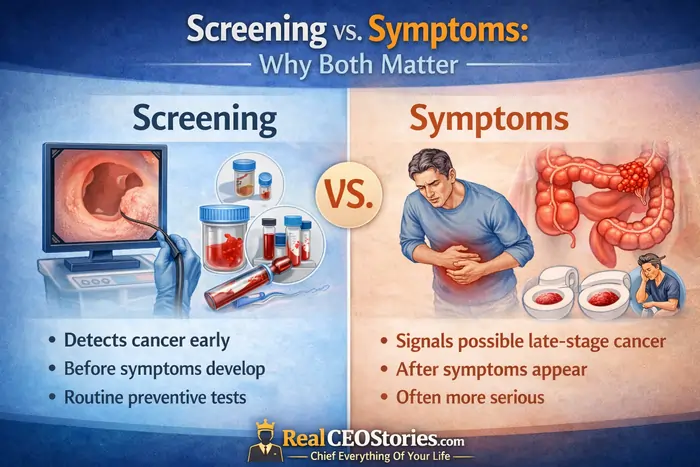
Relying on symptoms alone is not enough, because colon cancer can grow quietly for years. That’s why screening and symptom awareness must go hand in hand.
Key points:
- Screening tests like colonoscopy can find and remove polyps before they turn into cancer.
- Many guidelines now recommend starting routine screening at age 45 for people at average risk, sometimes earlier if you have risk factors like family history or inflammatory bowel disease.
- Even if you are up to date with screening, you should still see a doctor if new symptoms appear between tests.
The American College of Gastroenterology provides accessible education materials about the benefits of colonoscopy and when to start screening colorectal cancer screening information. The American Cancer Society also has up‑to‑date screening guideline summaries here ACS colorectal screening guidelines.
When to See a Doctor
As a rule of thumb, you should speak with a healthcare provider if you notice any of the following and they persist for more than a couple of weeks:
- Blood in or on your stool, or dark, tar‑like stools.
- A clear, ongoing change in your usual bowel habits or stool appearance.
- New, unexplained abdominal pain, bloating, or cramping that doesn’t settle.
- Unexplained weight loss or a noticeable drop in appetite.
- Persistent fatigue, weakness, or shortness of breath that is new for you.
You do not need to have all of these symptoms to justify a visit. Even one of them, if it is new and ongoing, is enough reason to book an appointment. Healthline offers a consumer‑friendly guide on when symptoms should prompt medical evaluation: colon cancer overview and symptoms.
Frequently Asked Questions
What are the earliest signs of colon cancer?
Early signs include changes in bowel habits, blood in stool, fatigue, and abdominal discomfort, though some people may have no symptoms initially.
How early can colon cancer symptoms appear?
Symptoms can appear years after polyps develop, but often remain subtle or unnoticed in early stages.
Can colon cancer have no symptoms?
Yes, many cases are asymptomatic early on, which is why screening is essential.
Is blood in stool always colon cancer?
No, it can also be caused by hemorrhoids or infections, but it should always be checked by a doctor.
What does colon cancer stool look like?
It may appear narrow, dark, tar-like, or contain visible blood.
Does colon cancer cause pain early?
Not always. Pain usually appears later, though mild cramping or bloating can occur early.
How long do symptoms last before diagnosis?
Symptoms can persist for weeks to months, often worsening over time.
Can young adults get colon cancer?
Yes, cases in people under 50 are increasing globally.
What causes colon cancer symptoms?
Symptoms occur when tumors affect bowel function or cause bleeding.
Is fatigue a sign of colon cancer?
Yes, especially when linked to iron-deficiency anemia from internal bleeding.
When should I see a doctor?
If symptoms last more than two weeks or worsen, seek medical advice.
Can colon cancer be detected early?
Yes, through screening tests like colonoscopy, even before symptoms appear.
Is weight loss a symptom of colon cancer?
Yes, unexplained weight loss is a common warning sign.
What is the most common symptom?
A persistent change in bowel habits is one of the most common early signs.
Can symptoms come and go?
Yes, symptoms may appear intermittently, making them easy to ignore.