

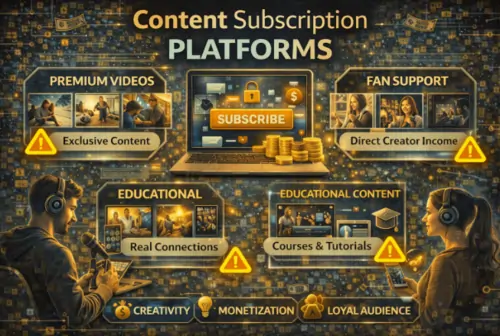
Content subscription platforms are tools that let creators and brands earn recurring revenue by charging audiences for access to content, community, or perks.
In 2026, they matter more than ever because social media reach is unpredictable, ad rates fluctuate, and audiences are drowning in low-effort content. Many creators are shifting to subscriptions to build steadier income and a direct relationship with fans.
If you’re building for a Filipino audience, the opportunity is real—but so are the challenges: price sensitivity, churn, platform fees, and payment method limitations.
What content subscription platforms are
A content subscription platform is any system where people pay regularly (monthly or yearly) for:
- Exclusive content (articles, videos, podcasts)
- Early access to content drops
- Ad-free versions
- Community access (Discord, chat groups, live calls)
- Downloads (templates, checklists, resources)
- Direct access (Q&A, office hours, coaching)
Subscriptions are not just a payment button. They’re a relationship model: people stay when they trust you, understand the value, and feel like they belong.
Membership vs subscription vs paywall
Membership
Often tiered (basic/premium/VIP) and includes community + perks.
Subscription
Usually pay-to-access content (newsletter, library, private feed).
Paywall
A gate on a site or publication that blocks content unless you pay (often used by media brands).
In practice, many creators combine all three.
Why content subscription platforms are growing in 2026
Predictable income beats algorithm stress
When your income depends only on reach, platform changes can crush your revenue. Subscriptions give recurring income you can plan around.
Audience fatigue is real
As AI-generated “content flood” increases, people are more willing to pay for creators they trust and content that feels curated and human.
Platforms are making subscription tooling more normal
The subscription habit is now standard across media (newsletters), entertainment (video), and communities (membership spaces).
Better payment infrastructure
Global audiences (including OFWs) can pay via cards and international payment rails more easily than before, which supports creator subscriptions.
The main types of content subscription platforms
Creator membership platforms
These are built for creators to run tiers, perks, and community. The most recognized example is Patreon.
What’s changing in 2026: platform economics and policies matter a lot. Patreon announced a pricing overhaul effective August 2025 that consolidates plans into a standard take rate for new creators, which media outlets reported as a fee increase for many newcomers.
Practical use cases:
- Bonus episodes (podcast)
- Behind-the-scenes posts
- Member-only livestreams
- Paid community + perks
Paid newsletter platforms
Paid newsletters are still strong in 2026 because they’re “owned channel” adjacent: email is a direct line to the audience, not just a feed.
Substack remains a major name here. Substack explains its fee structure on its own help page (and notes changes to billing fees for certain creators over time).
Practical use cases:
- Weekly industry briefings
- Career or business insights for a niche
- Local guides for PH audiences (prices, commuting tips, local context)
- Curated research roundups
Video and course subscriptions
This category includes course libraries, paid video hubs, and hybrid “course + community” subscriptions.
Best for:
- coaches, educators, fitness creators
- technical training
- language learning
- premium tutorials with structured progression
Key success factor: a “start here” path. A video vault without structure feels overwhelming and drives churn.
Podcast subscriptions
Podcast subscriptions typically offer:
- ad-free listening
- bonus episodes
- early access
- private RSS feeds or in-app locked episodes
Podcasts are trust engines. People pay when they feel a bond and the paid content is clearly better than the free feed.
Community-first subscriptions
Some subscriptions are primarily community access:
- Discord/Slack communities
- accountability groups
- live events, calls, AMAs, and peer networking
This works especially well for Filipino audiences when the community has a clear purpose (job hunting, freelancing, fitness accountability, sports analysis groups). Community alone can beat content alone, because belonging is sticky.
Platform-owned subscriptions
Some big platforms offer native subscription features. The upside is discovery; the downside is dependency. Policies, eligibility, and fees can change—and creators don’t always own the customer relationship.
A real-world example of platform policy risk: reporting in 2026 highlighted Apple’s subscription billing mandate affecting Patreon creators on certain legacy billing models, showing how external platform rules can ripple into creator earnings and operations.
Subscription models that work best now
Tiered memberships
This is the most common and flexible structure.
- Starter tier: affordable access to core value
- Mid tier: deeper content + community
- Premium tier: direct access (monthly call, feedback, coaching)
For the Philippines, many creators succeed by adding a lower “supporter” tier and letting the premium tier carry the business.
Freemium funnel
Give strong free content publicly, then put the deeper layer behind a paywall:
Free = awareness and proof
Paid = structure, depth, access, templates, community
This aligns well with search discovery and “helpful content” expectations: people can evaluate you before paying.
Bundles and collaborations
Some creators bundle multiple newsletters or creators together. Bundles help reduce churn because the subscriber gets variety and higher perceived value.
Annual plans
Annual subscriptions reduce churn and stabilize cash flow. Offer a small discount for yearly payment.
Cohort membership
A “start date” model:
- new members join as a batch
- weekly sessions
- built-in accountability
This works well for learning, fitness, and group transformations.
What subscribers actually want
Most people don’t pay for “content.” They pay for outcomes:
Save time
Curated research beats endless scrolling.
Learn a skill
Step-by-step paths beat random tips.
Get access
Direct Q&A, community, or behind-the-scenes.
Belong
A community that feels safe and aligned.
Trust
Especially when AI content is everywhere, subscribers want creators with a clear voice, real experience, and proof.
How to choose the right platform
Choose based on your format and your audience’s behavior.
Your content type
Writing-heavy
Paid newsletter platform or paywalled site.
Audio-heavy
Podcast subscriptions or membership platform.
Video-heavy
Video/course subscription platform.
Community-heavy
Community-first subscription with events.
Hybrid
Many creators combine: paid newsletter + Discord + occasional video workshops.
Payments your audience can use
For Filipino audiences, friction matters:
- some users don’t have credit cards
- OFWs usually have easier access to cards
- local payment methods may vary by platform
If most of your buyers are in the Philippines, test payment friction early. If your buyers are global (OFW, international niche), card-based subscription platforms can work well.
Ownership vs discovery
If you want stability:
- prioritize owning your email list
- minimize reliance on algorithms
If you want growth:
- use social platforms for top-of-funnel
- move your best fans into subscription
Fees and policy risk
Platform fees can be percentage-based, and those percentages matter as you scale. Substack’s fee structure is publicly documented by Substack itself, and Patreon’s pricing changes have been publicly reported, making it important to plan for fees rather than being surprised later.
The Philippines angle
Price sensitivity without racing to the bottom
A practical approach for PH audiences:
- keep an affordable entry tier
- make the premium tier worth it through access and structure
Instead of charging ultra-low prices, increase value:
- monthly “starter pack”
- templates and scripts
- live Q&A
- clear learning path
Taglish and local context increase retention
People stay subscribed when content feels like it was made for them:
- peso-based examples
- PH workplace and school realities
- local tools and local constraints
Community converts better than pure paywall
Filipino audiences are relationship-driven. If your subscription includes community access with real interaction, churn tends to drop.
Risks and challenges to plan for
Churn
People cancel quickly if they don’t see immediate value. Fix with onboarding and a “start here” path.
Creator burnout
Subscriptions require consistency. Build a repeatable content system (templates, recurring segments).
Platform changes
Fees and policies can shift, as seen in recent Patreon pricing and policy-related changes reported in the media.
Piracy and sharing
Assume some leaks will happen. Focus on community, access, and ongoing value, not just static files.
Support workload
Subscribers expect responsiveness. Set clear boundaries and response times.
A friendly strategy
If you want subscription growth that lasts, build it like helpful content:
Helpful-first marketing
Publish free content that proves you can help.
Clear positioning
One audience, one promise. Example: “Career scripts for Filipino fresh grads” is clearer than “life advice.”
Experience and evidence
Use your own case studies, screenshots, step-by-step methods, and transparent results.
Credibility for facts
When you share factual claims (finance, health, legal-ish topics), cite sources and avoid exaggeration.
Systemized publishing
Pick a schedule you can maintain:
- weekly deep issue
- one monthly live Q&A
- one monthly resource drop
Retention beats virality
A subscription business is won by consistency and trust, not one viral post.
A simple 30-day launch plan
Week 1
Pick a niche, promise, and subscription offer (what people get every month).
Week 2
Build:
- landing page
- tier structure
- onboarding welcome message
- first 2–4 pieces of “starter content”
Week 3
Pre-sell to a warm audience:
- personal network
- email list
- social followers who already trust you
Week 4
Launch and improve:
- ask members what they want
- create a “start here” guide
- track churn reasons and fix them fast
FAQs
Do I need a big audience to start?
No. Subscriptions work best with trust and clarity. A small audience that values your niche can outperform a large general audience.
Is a paid newsletter still worth it in 2026?
Yes, especially for niche topics and curated insights. Substack’s continued presence and fee documentation indicate paid newsletters remain a core subscription model.
How do I reduce churn?
Improve onboarding, deliver a predictable schedule, and add “access value” (community, Q&A, feedback) so members feel ongoing benefits.
What should I charge in the Philippines?
Start with an entry tier that feels affordable locally, then add a premium tier that includes access, structure, and community—so your business doesn’t rely on low pricing alone.
What’s the biggest risk with content subscription platforms?
Platform dependence and policy changes. Recent reporting around Patreon’s pricing overhaul and external policy pressures shows why creators should plan for platform risk.