

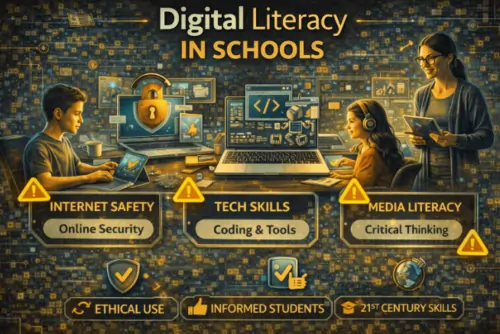
Digital literacy in schools is no longer optional. In 2026, students are learning, socializing, researching, and even solving homework problems online. That means schools must teach not just how to use devices—but how to think critically, stay safe, and act responsibly in digital environments.
For Filipino students, digital literacy is especially important in a mobile-first country where social media, messaging apps, and online platforms are deeply integrated into daily life. Whether in public or private schools, digital literacy in schools helps students become confident, capable, and responsible digital citizens.
This guide explains what digital literacy really means, why it matters today, how it benefits students, and how schools in the Philippines can implement it effectively—even with limited resources.
What Digital Literacy in Schools Really Means
Digital literacy in schools goes beyond knowing how to open a laptop or create a slideshow. It includes several interconnected skills:
1. Basic Digital Skills
- Typing and file management
- Using productivity tools (documents, spreadsheets, slides)
- Uploading assignments
- Navigating online platforms
These foundational skills allow students to participate fully in modern classrooms.
2. Information and Media Literacy
Students must learn how to:
- Identify credible sources
- Detect misinformation
- Understand bias and clickbait
- Cross-check information
In the Philippines, Media and Information Literacy (MIL) is already part of the Senior High School curriculum under DepEd, helping students analyze media and information sources critically.
3. Online Safety and Privacy
Digital literacy in schools must include:
- Creating strong passwords
- Recognizing phishing scams
- Protecting personal data
- Understanding digital footprints
Students need to know that what they post online can stay there permanently.
4. Digital Citizenship
Students should understand:
- Respectful communication online
- The impact of cyberbullying
- Ethical sharing of content
- Basic copyright and plagiarism rules
Digital literacy in schools helps shape responsible online behavior early.
5. AI Literacy
With AI tools becoming more common, students need to learn:
- What AI can and cannot do
- How to verify AI-generated information
- When AI use is acceptable in schoolwork
AI should support thinking—not replace it.
Why Digital Literacy in Schools Is Critical in 2026
1. Misinformation Is Everywhere
Students consume content from TikTok, YouTube, Facebook, and messaging apps daily. Without critical thinking skills, they may believe false information.
Digital literacy in schools trains students to ask:
- Who created this content?
- What evidence supports it?
- Is there another trusted source confirming it?
2. Cyberbullying Is a Real Risk
Online harassment can deeply affect mental health. Teaching digital citizenship helps students understand consequences and empathy.
3. Online Scams Target Young Users
From fake giveaways to suspicious links, students are vulnerable if they do not understand warning signs.
4. Workforce Preparation
Modern careers require:
- Digital communication
- Online collaboration
- Data organization
- Research skills
Digital literacy in schools prepares students for future employment, especially in a country with a strong BPO and remote workforce sector.
Benefits of Digital Literacy in Schools
The benefits go beyond technology.
Stronger Academic Performance
Students who know how to research properly produce higher-quality assignments.
Improved Critical Thinking
Instead of memorizing information, students analyze and evaluate it.
Greater Online Safety
Students become less likely to fall for scams or spread misinformation.
Increased Confidence
Comfort with technology builds self-confidence in both academic and professional environments.
Career Advantage
Employers increasingly value digital competence. Students trained early have a competitive edge.
Challenges in the Philippines
While digital literacy in schools is essential, challenges remain.
Limited Infrastructure
Some public schools lack sufficient devices or reliable internet.
Shared Devices at Home
Many households share one smartphone or computer among multiple family members.
Teacher Training Gaps
Not all teachers receive consistent digital upskilling.
Urban-Rural Divide
Internet speed and access vary widely across regions.
Despite these challenges, digital literacy can still be integrated creatively using blended methods and practical routines.
Practical Strategies for Schools
Digital literacy in schools does not require expensive tools. It requires consistency and smart planning.
Integrate Across Subjects
Digital literacy should not be limited to ICT classes.
Examples:
- English: Analyze online articles for credibility.
- Araling Panlipunan: Discuss propaganda and media bias.
- Science: Verify online claims using evidence.
Teach Simple Verification Habits
Introduce a “3-check rule”:
- Check the author.
- Check the date.
- Check another reliable source.
This builds lifelong habits.
Use Realistic Scenarios
Instead of lectures, present situations:
- A friend sends a suspicious link. What do you do?
- A viral post claims something shocking. How do you verify it?
Practical exercises work better than theory alone.
Establish Clear Digital Policies
Schools should have:
- Clear rules about AI use
- Anti-cyberbullying procedures
- Privacy guidelines
Consistency builds culture.
The Role of Teachers
Teachers play a central role in digital literacy in schools.
Effective teachers:
- Model responsible online behavior
- Cite sources in their materials
- Encourage critical discussion
- Stay updated with digital trends
Professional development programs should support teachers in improving digital competence.
The Role of Parents
Parents are partners in digital literacy.
Simple actions include:
- Talking to children about online content
- Setting healthy screen-time boundaries
- Teaching privacy awareness
- Monitoring online behavior without over-control
Digital literacy in schools works best when home and school reinforce each other.
Digital Literacy and AI in the Classroom
AI tools are here to stay.
Schools should:
- Teach students to verify AI responses
- Encourage AI as a brainstorming tool
- Require students to explain their reasoning
Students should understand that AI can generate text—but cannot replace understanding.
The Future of Digital Literacy in Schools
Looking ahead, digital literacy in schools will likely include:
- Earlier coding and computational thinking
- Stronger media literacy components
- Deeper cybersecurity education
- Clear AI ethics guidelines
- Blended learning models
As technology evolves, digital literacy must evolve with it.
FAQs
What is digital literacy in schools?
It is the ability to use, evaluate, and create digital content safely and responsibly in educational settings.
Why is digital literacy important for Filipino students?
It protects students from misinformation and scams while preparing them for modern careers.
At what age should digital literacy be taught?
Basic safety and device skills can start in elementary school, expanding to research and AI literacy in higher grades.
How can schools improve digital literacy with limited internet?
By teaching offline verification habits, integrating lessons across subjects, and using shared-device rotations.
Is AI part of digital literacy?
Yes. Understanding AI tools and their limits is now a key component of digital literacy in schools.