

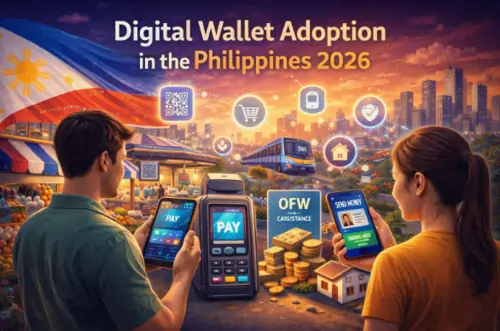
Digital Wallet Adoption
Digital Wallet Adoption is one of the biggest “quiet shifts” in the Philippines. You feel it when you see a QR code on a sari-sari store counter, when friends send money instantly instead of meeting up, or when you pay bills without lining up at a payment center.
But Digital Wallet Adoption isn’t just about convenience. It affects financial inclusion, consumer protection, small business growth, and even how scams spread. This guide explains Digital Wallet Adoption in plain English for Filipino students, investors, and everyday readers.
What is a digital wallet?
A digital wallet is a mobile app that lets you store funds or connect payment sources so you can:
- send and receive money (P2P transfers)
- pay merchants using QR codes
- pay bills and buy load
- receive salaries or remittances (depending on provider features)
In short: it turns your phone into a payment tool.
Why Digital Wallet Adoption is rising fast in the Philippines
The Philippines is becoming more cash-lite, and the data supports it.
BSP’s 2024 Report on E-payments Measurement found digital retail payments reached 57.4% of total transaction volume (and exceeded the country’s 2024 target), showing steady growth in digital behavior.
That matters because Digital Wallet Adoption tends to grow faster when:
- people already trust digital payments
- merchants accept QR payments widely
- transfers happen instantly and reliably
The biggest drivers of Digital Wallet Adoption
1) Interoperability through QR Ph
One reason Digital Wallet Adoption accelerates is when “different wallets and banks can talk to each other.”
BSP’s QR Ph policy aims to make QR payments interoperable—so merchants don’t need to display many QR codes and customers don’t need the same provider as the merchant.
This reduces friction, especially for small merchants.
2) Real-time transfers through InstaPay rails
Many wallet experiences feel instant because of real-time transfer infrastructure. BancNet describes InstaPay as a real-time fund transfer service available 24/7 between participating BSP-supervised banks and non-bank e-money issuers through apps and e-wallets.
When transfers are fast and predictable, Digital Wallet Adoption becomes a habit.
3) Smartphone-first behavior
Filipinos are mobile-first. When daily life already happens on the phone (messages, shopping, work), wallet usage becomes a natural add-on.
4) Merchant acceptance (especially SMEs)
Digital Wallet Adoption grows when people can use wallets in real places: groceries, food stalls, salons, clinics, and transport. For small businesses, QR payments can also reduce cash handling and make sales tracking easier.
5) Policy push + ecosystem building
BSP’s Digital Payments Transformation Roadmap (2020–2023) set a clear direction: strengthen preference for digital payments by converting 50% of retail payment volume into digital form.
Clear targets help align banks, wallets, and merchants around shared outcomes.
What Digital Wallet Adoption looks like in daily Filipino life
As Digital Wallet Adoption grows, you’ll see more of these patterns:
- “Scan to pay” becoming normal (not special)
- bills paid in-app instead of over-the-counter
- cash used mainly as backup or for very small purchases
- more salary-to-account flows and instant transfers to family members
- small merchants shifting to QR for speed and convenience
The future is less “cashless” and more “cash-lite with digital as default.”
Benefits of Digital Wallet Adoption
Convenience and speed
No need for exact change. Less ATM trips. Faster person-to-person transfers.
Better recordkeeping
Transaction histories help:
- students track allowance spending
- workers track expenses
- micro-business owners reconcile daily sales
Inclusion potential
Digital Wallet Adoption can help onboard people who find traditional banking intimidating—especially when wallets offer simple user flows. But inclusion only works if access and safety are handled well.
The biggest barriers slowing Digital Wallet Adoption
Even with strong growth, adoption is not equal everywhere.
Connectivity and device access
Some communities still face unreliable internet or limited device availability. Digital Wallet Adoption can’t expand fully without infrastructure support.
Digital literacy
People may have smartphones but still struggle with:
- PIN and account safety
- scam detection
- understanding fees and transaction steps
Trust and dispute resolution
When users fear scams or cannot easily resolve errors, they return to cash.
Fees and merchant friction
If fees feel unpredictable (or onboarding feels complicated), small merchants may stick to cash.
Security: the “make or break” factor for Digital Wallet Adoption
As wallets grow, scams grow too. The future of Digital Wallet Adoption depends on trust.
Practical safety habits for Filipinos:
- never share OTPs (even if the message looks official)
- use a strong PIN and phone lock
- enable transaction alerts
- keep savings separate from your spending wallet
- set transaction limits when possible
A cash-lite future only works when people feel protected.
The next phase of Digital Wallet Adoption
Here’s what’s likely to matter more next than “which app is biggest”:
1) Better interoperability
QR Ph is designed to reduce fragmented QR systems and improve efficiency across providers.
The more seamless this becomes, the easier it is for wallets to serve more merchants and users.
2) Stronger fraud prevention and faster recovery paths
Digital Wallet Adoption will deepen as platforms and regulators improve:
- scam detection
- reporting tools
- account recovery support
- clearer consumer protections
3) Offline and low-connectivity support
To truly reach rural communities, Digital Wallet Adoption needs solutions that work better under poor connectivity conditions.
4) Deeper integration with government and services
When fees, permits, and collections become easier digitally, wallets become more useful in everyday life—not only for shopping.
Investor lens: what signals strong Digital Wallet Adoption
If you’re an investor looking at this space, Digital-Wallet Adoption typically strengthens when a product shows:
- high repeat usage (not promo-driven spikes)
- strong merchant retention
- low fraud and fast dispute handling
- interoperability alignment (rails + standards)
- sustainable unit economics (not only incentives)
Themes adjacent to Digital Wallet Adoption that often grow:
- identity verification
- fraud prevention tooling
- SME merchant software
- payment infrastructure and compliance systems
FAQs
What does “Digital Wallet Adoption” mean?
It means more people and businesses are using digital wallets for transfers, QR payments, and daily transactions instead of relying mostly on cash.
How digital is the Philippines today?
BSP’s 2024 measurement found digital retail payments reached 57.4% of transaction volume, exceeding the national target range for the year.
Why does QR Ph matter for adoption?
Because it aims to make QR payments interoperable, reducing the need for multiple QR codes and the requirement that merchants and customers use the same provider.
Are digital wallets safe?
They can be safe, but scams are real. Safety depends on platform controls and user habits like protecting OTPs and enabling alerts.
What happens if the system goes down?
Outages can disrupt payments, which is why many people keep cash as a backup in a cash-lite economy.
Bottom line
Digital-Wallet Adoption in the Philippines is already strong and measurable, supported by increasing digital payment share and interoperability efforts like QR Ph. The next wave won’t be won by hype—it will be won by trust, security, reliability, and inclusion, especially outside major urban centers.