

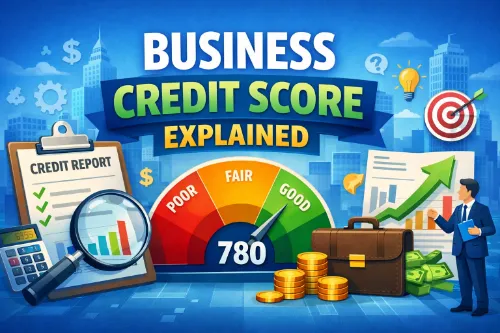
A business credit score is a numerical snapshot of your company’s creditworthiness that lenders, suppliers, and insurers use to decide whether to work with you and on what terms. Understanding how business credit scores work—and how to improve them—can unlock better financing, lower costs, and more growth opportunities for your company.
What Is a Business Credit Score?
A business credit score is a number that summarizes how reliably your company handles its financial obligations, usually on a scale from 0 to 100 where higher scores signal lower risk. It functions like a financial report card for your business, reflecting your payment behavior, debt levels, and public records such as liens or bankruptcies.
Unlike personal credit, which focuses on you as an individual, business credit scores are tied to your company and are visible to banks, vendors, landlords, and even potential partners. For a clear overview of what business credit scores are and how they work, this Investopedia business credit score explainer is a helpful primer.
Why Your Business Credit Score Matters
Your business credit score directly influences how much you can borrow, the interest rates you pay, and the trade terms suppliers are willing to offer. A strong score can translate into better loan approvals, higher credit limits, more favorable payment terms, and even lower insurance premiums.
On the flip side, a weak business credit score can limit access to funding, increase borrowing costs, and make it harder to negotiate with key suppliers. Pathward describes a business credit score as your company’s “financial report card,” underlining how widely it is used to judge risk in its guide on business credit scores explained.
If you want a quick, high‑level explanation of what a business credit score is and why it matters, Xero’s business credit score guide is a practical starting point.
How Business Credit Scores Work
Different credit bureaus use different models, so your company may have multiple business credit scores. Common providers include Dun & Bradstreet, Experian Business, and Equifax Business, each with their own scoring ranges and algorithms.
In many systems, general business credit scores range from 0 to 100, with higher numbers indicating lower risk. For example, Experian’s business credit score and Dun & Bradstreet’s PAYDEX score both use 0–100 scales, where 80 or above generally signals strong, reliable payment behavior. The Bankrate guide on what a business credit score is and how it works explains these ranges and what they mean for small businesses.
Key Business Credit Scoring Models
Each bureau looks at risk in slightly different ways. Understanding the main business credit scoring models helps you interpret your reports and focus your improvement efforts.
- Dun & Bradstreet PAYDEX: Typically ranges from 0 to 100 and is heavily based on how quickly you pay your bills relative to terms.
- Experian Business Credit Score: Also often uses a 0–100 scale, with higher scores representing lower default risk.
- Equifax Business Credit Scores: Equifax uses several scores, including a Payment Index (0–100), a Credit Risk Score (101–992), and a Business Failure Score (1000–1880).
Pathward’s article on business credit scores explained summarizes these model ranges in a simple table. The Chase resource on what a business credit score is and why it matters also breaks down how these different scores are used in lending decisions.
Business Credit vs Personal Credit
Your business and personal credit profiles are separate but sometimes interconnected, especially for newer or smaller businesses. Personal scores typically range from 300 to 850 and are tied to your Social Security number, while most business credit score ranges use a 0–100‑style scale and are tied to your business identifiers like your EIN and registration details.
Lenders may check both your business and personal credit, particularly if your company is young or you provide a personal guarantee. Xero’s guide on business credit score vs personal credit explains the distinctions in identification, scoring models, and information used.
What Factors Influence Your Business Credit Score?
While each bureau’s formula is proprietary, several core factors tend to shape your business credit score. Knowing these inputs makes it easier to manage your score proactively, and Nav’s article on the factors that influence business credit scores is a useful deep dive.
1. Payment History
Payment history is usually the single most important factor in your business credit score. Bureaus track how often you pay vendors, lenders, and suppliers on time, late, or early, and whether you’ve had accounts sent to collections.
Consistently paying on time—or even early—can significantly boost your score, while chronic late payments will drag it down. Bill.com’s guide to business credit scores for small business owners emphasizes how powerful a clean payment record can be.
2. Credit Utilization and Debt Levels
Credit utilization describes how much of your available credit you are using at any given time. High utilization—maxing out credit lines or regularly running close to limits—can signal higher risk to lenders and may hurt your score.
Bureaus also consider your total debt relative to assets and equity. Nav’s explainer on the factors that influence business credit scores highlights credit utilization as a key driver alongside payment history.
3. Length of Credit History and Company Age
The longer your business has been operating and the longer you have maintained active accounts, the more data credit bureaus have to evaluate your reliability. Younger businesses with short histories may be seen as riskier simply because there is less information available.
Bill.com notes in its business credit scores guide that years in business and maintaining longstanding credit lines are both positive signals for your business credit score.
4. Public Records and Legal Issues
Negative public records such as tax liens, judgments, and bankruptcies can severely harm your business credit score. Legal or regulatory problems also raise red flags because they suggest operational or financial instability.
Swoop Funding’s guide on business credit scores explained lists legal problems and regulatory issues as key components in many scoring models.
5. Company Size and Industry
Larger, more established businesses often score higher because they are perceived as more stable and diversified. Industry also matters; sectors with higher failure rates, such as restaurants and certain types of retail, may be treated as inherently riskier.
Rippling’s full guide to what is a good business credit score explains how lenders use industry classification codes and size metrics to fine‑tune their risk assessments.
How to Check Your Business Credit Score
Unlike personal credit, business credit reports are not always free by default, but you can access them directly from major bureaus or through third‑party platforms. It is good practice to review your business credit reports at least once or twice a year—or more often if you are preparing for a major financing event.
Xero’s business credit score guide walks through how to find your business credit reports and what to look for in them. Nav’s article on factors that influence business credit scores also discusses tools that help monitor your scores over time.
Benefits of a Strong Business Credit Score
Maintaining a strong business credit score does more than just help you get loans approved. It can improve virtually every financial relationship your company has.
According to Fulton Bank’s list of ways to improve your small business credit rating, benefits of a high score include:
- Easier approval for financing and larger credit lines.
- Lower interest rates and better repayment terms from lenders.
- More favorable trade terms from suppliers and vendors.
- A stronger reputation with partners and investors, sometimes including lower insurance costs.
The Chase resource on what a business credit score is and why it matters similarly notes that strong scores open up opportunities that require good credit, such as government contracts or large corporate supply agreements.
Practical Ways to Improve Your Business Credit Score
Improving your business credit score is usually about consistent, disciplined financial behavior over time. Here are practical steps you can start taking right away, drawn from sources like Fulton Bank, Xero, Nav, and CRIF High Mark.
1. Separate Personal and Business Finances
Establishing your business as a distinct legal and financial entity helps build its own credit profile.
Key actions include:
- Forming an LLC or corporation, if appropriate for your situation.
- Obtaining an Employer Identification Number (EIN).
- Opening a dedicated business bank account and using it for all business income and expenses.
Fulton Bank’s guide to improving your small business credit rating and Xero’s article on tips to improve your business credit score both stress the importance of this separation.
2. Open Accounts That Report to Business Credit Bureaus
Not all lenders and vendors report payment history to business credit bureaus, so choose partners that do. Opening a business credit card, vendor accounts, or trade lines that report and then using them responsibly will help you build a track record.
Xero’s business credit score tips suggest starting with a business bank account and credit card that report to major bureaus.
3. Pay All Bills on Time (or Early)
Consistent on‑time payment is one of the fastest ways to move your score in the right direction. Set up reminders, automate recurring payments where possible, and avoid letting invoices slip past due dates.
The British Business Bank’s guide on nine ways to improve your business credit score highlights on‑time payment as the top habit to master. Xero’s business credit score improvement tips also point out that early payment can sometimes boost your score even more.
4. Keep Credit Utilization Low
Try not to max out your credit cards or lines of credit; instead, aim to keep utilization at a modest percentage of your available limit. Paying down balances regularly and asking for limit increases when justified by cash flow can help improve your utilization ratio.
Nav’s article on factors that influence business credit scores explains how high utilization suggests financial strain and can reduce your score.
5. Monitor Your Business Credit Reports for Errors
Monitoring your business credit report is essential because it can contain mistakes, such as outdated balances, misreported late payments, or even signs of fraud. Reviewing your reports periodically lets you spot and dispute errors before they do long‑term damage.
CRIF High Mark’s guide on ways a small business can improve its business credit score emphasizes regular report reviews and proactive correction of inaccuracies.
6. Build a Long-Term Credit History
Your score benefits from responsible use of credit over several years. That means keeping older accounts open, avoiding frequent credit applications you do not need, and maintaining stable relationships with lenders and suppliers.
Bill.com notes in its business credit scores guide that years in business and the length of your credit history are both significant factors in how bureaus rate your company.
How Long Does It Take to See Improvements?
There is no fixed timeline, but many businesses see incremental improvements in their credit scores within months of consistent on‑time payments and lower utilization. Larger changes, especially after serious negative events like liens or bankruptcies, may take years of steady behavior to fully recover.
CRIF High Mark explains in its article on improving business credit scores that once underlying issues—such as late payments or errors—are addressed, a business credit rank can improve automatically over subsequent reporting cycles.
Putting “Business Credit Score Explained” Into Practice
Understanding your business credit score is the first step; using that knowledge to shape your financial habits is where the real value lies. Start by checking your current scores, reviewing the underlying reports for accuracy, and identifying the main factors holding your score back with tools recommended in Xero’s business credit score guide and Nav’s business credit factors explainer.
From there, focus on a few core habits: separate your business finances, work with vendors who report to bureaus, pay every bill on time, and keep balances comfortably below your limits. For a concise summary of what business credit scores are, how they are calculated, and what lenders consider “good”, Rippling’s guide to good business credit scores is a useful reference.
As you apply these principles, resources like the Investopedia business credit score explainer and Xero’s guide on how to check and improve your business credit score can help you monitor progress and keep your business moving toward stronger, more affordable access to capital.