

ENT doctors in Sydney diagnose and treat nose and sinus conditions including chronic sinusitis, nasal obstruction, nasal polyps, and sinus headaches. Common treatment approaches include medical management (intranasal corticosteroids, saline irrigation, antibiotics) and endoscopic sinus surgery (FESS) for patients who do not respond to initial therapies. Patients should obtain a GP referral before consulting an ENT specialist in Sydney. Nasal endoscopy is the standard diagnostic procedure used by ENT doctors in Sydney to examine the sinus cavities and nasal passages.

Key Takeaways
- When to see an ENT doctor: Symptoms lasting more than 12 weeks (chronic sinusitis), recurrent sinus infections (4+ per year), nasal obstruction not improving with sprays, or loss of smell.
- Diagnosis involves nasal endoscopy: A small camera passed through the nostril – takes 1-2 minutes, mild discomfort only.
- Treatment ladder: Medical management first (sprays, rinses, antibiotics). Surgery (FESS) only if medical therapy fails.
- GP referral is required for Medicare rebates and specialist appointments in Sydney.
- Red flags (seek urgent care): Sudden severe headache, fever with stiff neck, vision changes, or symptoms after head injury.
Disclaimer: This information is for educational purposes only and does not constitute medical advice. Individual results vary. Please consult a qualified health practitioner for personal advice about your condition.
Introduction
Nose and sinus conditions affect thousands of people across Sydney each year. Symptoms such as facial pressure, nasal congestion, post-nasal drip, and reduced sense of smell can significantly impact quality of life, sleep, and daily productivity.
In the Sydney area, specialists known as ENT doctors (ear, nose, and throat specialists) are registered medical practitioners with advanced training in otolaryngology – head and neck surgery. They diagnose and manage conditions ranging from chronic sinusitis to nasal polyps, nasal obstruction, and sinus headaches.
This educational guide provides factual information about common nose and sinus conditions, what to expect during an ENT consultation, diagnostic procedures including nasal endoscopy, and treatment approaches that may be discussed with your doctor.
What Is an ENT Doctor?
An ENT doctor (otolaryngologist) is a medical specialist who diagnoses and treats conditions affecting the:
- Ears (hearing loss, ear infections, tinnitus, vertigo)
- Nose (sinusitis, nasal obstruction, allergies, nasal polyps)
- Throat (swallowing disorders, voice problems, tonsillitis)
- Head and neck (thyroid conditions, neck lumps, salivary gland disorders)
In Australia, ENT specialists complete medical school followed by a minimum of five to seven years of supervised specialist training. They must hold Fellowship of the Royal Australasian College of Surgeons (FRACS) in Otolaryngology – Head and Neck Surgery and be registered with the Medical Board of Australia.
The Royal Australasian College of Surgeons oversees ENT surgical training and sets professional standards for specialist practice in Australia and New Zealand.
When Should You See an ENT Doctor for Nose and Sinus Problems?
Our specialists in the Sydney area see patients for a wide range of nose and sinus concerns. You may benefit from seeing an ENT specialist if you experience:
- Sinus infection symptoms lasting more than 12 weeks (chronic sinusitis)
- Recurrent acute sinusitis (four or more episodes per year)
- Nasal obstruction that does not improve with nasal sprays or allergy medications
- Nasal polyps causing breathing difficulties or loss of smell
- Facial pain or pressure localized around the cheeks, eyes, or forehead
- Frequent nosebleeds that are difficult to control
- Reduced or complete loss of sense of smell (hyposmia or anosmia)
- Snoring or sleep apnoea related to nasal blockage
Many patients first see their general practitioner (GP) for initial assessment. The GP may prescribe medical treatments such as intranasal corticosteroids, saline irrigation, or a short course of antibiotics. If symptoms persist despite appropriate medical therapy, the GP will typically provide a referral to an ENT doctor.
Sydney-specific note: Spring pollen counts in Sydney can reach high levels, particularly in the western suburbs. Patients with allergic sinusitis often experience worsening symptoms between September and November. Humidity changes in summer can also trigger sinus congestion.
The Australian Society of Otolaryngology Head and Neck Surgery provides additional patient information about ENT conditions and specialist care in Australia.
What to Bring to Your ENT Consultation (Checklist)
Before your first appointment, gather the following items:
- ☐ GP referral letter (required for Medicare rebate)
- ☐ Previous CT scans or X-rays (on USB, CD, or film)
- ☐ List of current medications (including nasal sprays and over-the-counter products)
- ☐ List of drug allergies
- ☐ Medicare card and private health insurance details (if applicable)
- ☐ Relevant previous test results (allergy tests, blood tests)
- ☐ Pen and paper (to take notes during the consultation)
Common Nose and Sinus Conditions Treated by ENT Specialists
1. Chronic Sinusitis
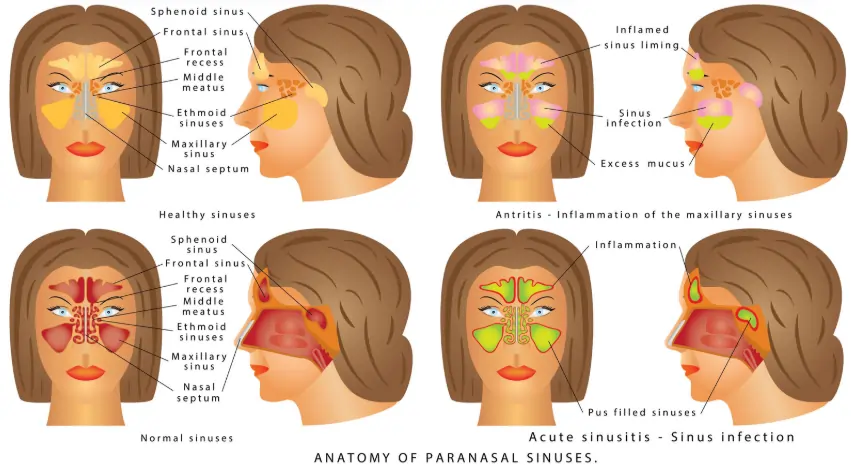
Chronic sinusitis is inflammation of the sinus cavities that persists for 12 weeks or longer, even with treatment. The sinuses are air-filled spaces located behind the forehead (frontal sinuses), cheeks (maxillary sinuses), eyes (ethmoid sinuses), and deep behind the nose (sphenoid sinuses).
Symptoms of chronic sinusitis include:
- Nasal congestion or blockage
- Thick, discoloured nasal discharge (yellow or green)
- Facial pressure or pain around the eyes, cheeks, or forehead
- Post-nasal drip (mucus draining down the back of the throat)
- Reduced sense of smell (hyposmia)
- Cough, particularly at night
- Bad breath (halitosis)
- Ear fullness or pressure
Causes may include bacterial infection, nasal polyps, a deviated nasal septum, allergies, immune system disorders, or aspirin-exacerbated respiratory disease (AERD) . ENT doctors diagnose chronic sinusitis through nasal endoscopy (a small camera passed through the nostril) and sometimes CT scan of the sinuses.
Treatment options discussed with patients include:
- Medical management: Saline rinses, intranasal corticosteroid sprays, prolonged antibiotic courses (3-4 weeks), or short courses of oral steroids
- Functional endoscopic sinus surgery (FESS): Recommended for patients who do not improve with medical therapy alone
For more detailed information, read our guide: Chronic Sinusitis: Causes, Symptoms, and Treatment Options
2. Nasal Obstruction
Nasal obstruction refers to difficulty breathing through one or both nostrils. It may be constant or intermittent and can affect sleep, exercise tolerance, and overall quality of life.
Common causes of nasal obstruction include:
- Deviated nasal septum: The wall between the nostrils is bent to one side (present from birth or resulting from injury)
- Inferior turbinate hypertrophy: Enlargement of the bony structures inside the nose
- Nasal polyps: Soft, non-cancerous growths
- Allergic rhinitis: Inflammation caused by allergens such as pollen or dust mites
- Adenoid hypertrophy: Enlarged adenoids (more common in children)
- Nasal valve collapse: Weakness in the side wall of the nose
ENT doctors in Sydney assess nasal obstruction through a thorough history and nasal endoscopy. Treatment may include medical therapy (nasal steroid sprays, antihistamines, decongestants) or surgical procedures such as septoplasty (straightening the septum) or turbinate reduction.
For more detailed information, read our guide: Nasal Obstruction: When to See an ENT Doctor
3. Nasal Polyps
Nasal polyps are soft, painless, non-cancerous growths that develop on the lining of the nasal passages or sinuses. They result from chronic inflammation and are often associated with:
- Asthma (present in 20-40% of patients with nasal polyps)
- Allergic rhinitis
- Aspirin-exacerbated respiratory disease (AERD)
- Cystic fibrosis (less common, primarily in children)
- Allergic fungal sinusitis
Symptoms of nasal polyps include:
- Persistent nasal congestion
- Reduced sense of smell or taste (one of the earliest symptoms)
- Nasal obstruction
- Post-nasal drip
- Facial pressure
- Snoring or sleep apnoea
- Nasal voice (hyponasal speech)
ENT doctors in Sydney diagnose nasal polyps through nasal endoscopy or CT scan. Treatment begins with medical management (nasal steroid sprays, oral steroids, or biologic medications such as dupilumab). For large polyps causing significant obstruction, endoscopic polypectomy (surgical removal) may be recommended.
For more detailed information, read our guide: Nasal Polyps: Symptoms, Diagnosis, and Treatment Approaches
4. Sinus Headaches and Facial Pain
Not all facial pain or headaches originate from the sinuses. Sinus headaches are less common than many people believe. True sinus headache involves:
- Pain localized to the sinus areas (forehead, cheeks, behind the eyes)
- Simultaneous nasal congestion or discharge
- Symptoms worsening with bending forward or lying down
- Accompanying fever or purulent nasal discharge (in acute sinusitis)
Many patients diagnosed with “sinus headaches” actually have migraine or tension-type headaches. Studies suggest that up to 80% of self-diagnosed sinus headaches are actually migraines. ENT doctors in Sydney help distinguish between these conditions through careful history and nasal endoscopy.
⚠️ Red Flags: When to Seek Urgent Medical Care
If you or a family member experience any of the following symptoms, seek immediate medical attention (emergency department or call 000):
- Sudden, severe headache (“thunderclap” headache)
- Headache with fever and stiff neck
- Headache after head injury
- Vision changes (double vision, blurred vision, vision loss)
- Facial swelling spreading to the eye (periorbital oedema)
- Confusion or change in mental state
- Weakness or numbness on one side of the body
For more detailed information, read our guide: Sinus Headaches and Facial Pain: Causes and Diagnosis
5. Endoscopic Sinus Surgery (FESS)
Functional endoscopic sinus surgery (FESS) is a surgical procedure used to treat chronic sinusitis and nasal polyps that do not respond to medical therapy. The surgeon uses a small camera (endoscope) and specialized instruments to:
- Open blocked sinus drainage pathways
- Remove nasal polyps
- Clear infected material from the sinus cavities
- Enlarge narrow sinus ostia (openings)
- Improve ventilation of the sinuses
FESS is performed under general anaesthesia (the patient is asleep). The procedure typically takes one to three hours depending on the extent of disease.
FESS Recovery Timeline
| Time Period | What to Expect |
|---|---|
| Day 1-3 | Rest at home. Mild to moderate discomfort managed with pain relief. Nasal saline rinses begin (3-4 times daily). Avoid nose blowing. |
| Day 4-7 | Gradual return to light activities. Some blood-tinged discharge is normal. Continue saline rinses. |
| Week 2 | Most patients return to work. First follow-up appointment (ENT doctor cleans nasal passages). |
| Week 3-4 | Normal activities (except heavy lifting). Breathing improves. |
| Week 6 | Full healing of sinus passages. Sense of smell may continue improving for 3-6 months. |
Risks of FESS (discussed with patients before surgery) include bleeding, infection, changes in sense of smell, cerebrospinal fluid leak (rare, <1%), and (very rarely) injury to the eye or brain base. Your ENT doctor will explain these risks in detail during the consent process.
For more detailed information, read our guide: Endoscopic Sinus Surgery (FESS): Information for Patients
What to Expect During an ENT Consultation in Sydney
If you receive a GP referral to an ENT doctor, here is what typically happens during your first consultation:
Step 1: Medical history review (10-15 minutes)
The ENT doctor asks about:
- Your symptoms (duration, severity, triggers, pattern)
- Previous treatments (nasal sprays, antibiotics, previous surgeries)
- Past medical history (asthma, allergies, immune disorders, cystic fibrosis)
- Medications and drug allergies
- Smoking history and occupational exposures
Step 2: Physical examination (5-10 minutes)
The doctor examines your nose, face, ears, and throat. This usually includes nasal endoscopy – a thin, flexible tube with a camera and light passed gently through the nostril. The procedure takes one to two minutes and may cause mild discomfort but is not painful.
Step 3: Discussion of findings (5-10 minutes)
The doctor explains what the examination shows and discusses possible diagnoses.
Step 4: Treatment planning (5-10 minutes)
Depending on the diagnosis, the doctor may recommend:
- Continued medical management (prescriptions, saline rinses, allergy management)
- Further investigations (CT scan, allergy testing, smell testing)
- Surgical referral (if medical therapy fails or polyps are large)
Step 5: Follow-up
The doctor schedules a follow-up appointment to review progress or discuss test results.
Cost and Insurance Information
Costs for ENT consultations and procedures in Sydney vary depending on several factors:
| Service | Public Hospital | Private Hospital (with insurance) | Private Hospital (no insurance) |
|---|---|---|---|
| Initial consultation | Covered by Medicare (waiting list applies) | Gap payment varies ($50-$200 out-of-pocket) | $200-$400 |
| CT sinus scan | Covered by Medicare | Covered by Medicare | $150-$300 |
| Endoscopic sinus surgery | Covered by Medicare (long waiting list, often 6-12 months) | Gap payment depends on insurance level ($500-$3,000 out-of-pocket) | $5,000-$10,000 |
Important notes:
- A GP referral is required for Medicare rebates (not just for the appointment itself). Without a valid referral, you pay the full fee.
- Private health insurance (hospital cover) typically covers most of the surgical fee, but excesses and gaps apply. Check with your insurer before booking surgery.
- St Vincent’s Clinic, St George Private, and Hunters Hill Private are private hospitals. Patients without private insurance can still be seen but will pay the full private fee.
About Dr. Brett Leavers
Dr. Brett Leavers is a registered medical practitioner in Sydney. He holds:
- MBBS (Hons) – Bachelor of Medicine, Bachelor of Surgery with Honours
- FRACS (ORL-HNS) – Fellowship of the Royal Australasian College of Surgeons in Otolaryngology – Head and Neck Surgery
Dr. Brett Leavers has experience in diagnosing and treating nose and sinus conditions including chronic sinusitis, nasal obstruction, nasal polyps, and sinus headaches. He practises at the following locations in Sydney:
- St Vincent’s Clinic, Darlinghurst
- St George Private Hospital, Kogarah
- Hunters Hill Private Hospital, Rozelle
For specific medical advice about your condition, please book a consultation with Dr. Brett Leavers or another qualified ENT specialist.
Frequently Asked Questions (FAQs)
General FAQs
- What conditions do ENT doctors in Sydney treat for nose and sinus problems?
ENT doctors in Sydney treat chronic sinusitis, nasal obstruction, nasal polyps, sinus headaches, recurrent sinus infections, loss of smell, and allergic rhinitis. - Do I need a referral to see an ENT doctor in Sydney?
Yes. Most ENT specialists in Sydney require a referral from a general practitioner (GP) to book an initial consultation. Medicare rebates also require a valid referral. - How long does a typical ENT consultation take?
Initial consultations usually take 20 to 30 minutes. Follow-up appointments are generally shorter, around 10 to 15 minutes. - Can children see an ENT doctor for sinus problems?
Yes. ENT doctors in Sydney treat both children and adults. Common paediatric nose conditions include enlarged adenoids, recurrent sinus infections, and nasal obstruction. - How often should I use saline nasal rinses?
For chronic sinusitis, ENT doctors typically recommend saline rinses twice daily. After sinus surgery, rinses may be recommended three to four times daily for several weeks.
Diagnostic FAQs
- What is nasal endoscopy?
Nasal endoscopy is a procedure where a thin, flexible tube with a camera is passed through the nostril to examine the nasal passages and sinus openings. It takes one to two minutes. - How do ENT doctors diagnose nasal obstruction?
ENT doctors use nasal endoscopy to examine the nasal passages and identify the cause of obstruction, such as a deviated septum or enlarged turbinates. - What is a CT scan of the sinuses?
A CT scan of the sinuses is a specialized X-ray that provides detailed images of the sinus cavities, nasal passages, and surrounding bones. It is used to plan surgery or diagnose complicated sinusitis. - What is the difference between a sinus headache and a migraine?
True sinus headaches involve nasal congestion and facial pressure. Migraines may cause facial pain but typically do not include nasal discharge. An ENT doctor can help distinguish between them using nasal endoscopy. - What is post-nasal drip?
Post-nasal drip is the sensation of mucus draining from the nose down the back of the throat. It can cause coughing, throat clearing, sore throat, and a feeling of a lump in the throat.
Treatment & Surgery FAQs
- Can chronic sinusitis be treated without surgery?
Yes. Many patients improve with medical management including saline rinses, nasal steroid sprays, prolonged antibiotics (3-4 weeks), or short courses of oral steroids. - What is the recovery time after endoscopic sinus surgery?
Most patients return to work within 5 to 7 days. Full healing of the sinus passages takes approximately 4 to 6 weeks. Sense of smell may take three to six months to improve. - Is endoscopic sinus surgery painful?
The surgery is performed under general anaesthesia, so there is no pain during the procedure. Mild to moderate discomfort during the first week of recovery is normal and managed with pain relief medication. - What is the success rate of endoscopic sinus surgery?
Studies show that 80-90% of patients with chronic sinusitis experience significant improvement in symptoms after FESS. Success rates vary depending on the underlying cause (polyps vs. infection). - Can nasal polyps come back after removal?
Yes. Nasal polyps have a recurrence rate of approximately 40% within five years, particularly in patients with asthma, aspirin sensitivity, or AERD. Ongoing medical therapy reduces recurrence risk. - What is balloon sinuplasty?
Balloon sinuplasty is a procedure that uses a small balloon to open blocked sinus passages without removing tissue. Some ENT doctors in Sydney offer this for selected patients with chronic sinusitis.
Costs & Logistics FAQs
- How much does an ENT consultation cost in Sydney?
Private consultation fees typically range from $200 to $400. Medicare rebates cover approximately $80-$120 of this cost if you have a valid GP referral. - Does Medicare cover endoscopic sinus surgery?
Medicare covers sinus surgery in public hospitals (waiting lists apply). In private hospitals, Medicare covers a portion, but patients pay a gap fee depending on their private health insurance level. - Is a GP referral required for Medicare rebates?
Yes. A valid GP referral is required for both consultation and surgery Medicare rebates. Referrals are valid for 12 months. - When should I seek emergency care for sinus symptoms?
Seek emergency care if you have sudden, severe headache, fever with stiff neck, vision changes, double vision, confusion, facial swelling spreading to the eye, or symptoms after head injury.
Summary
ENT doctors in Sydney provide diagnosis and treatment for patients with nose and sinus conditions including chronic sinusitis, nasal obstruction, nasal polyps, and sinus headaches. Diagnosis typically involves nasal endoscopy, and treatment ranges from medical management (nasal sprays, saline rinses, antibiotics) to endoscopic sinus surgery (FESS) for patients who do not improve with initial therapies.
For specific medical advice about your condition, please consult a qualified ENT specialist such as Dr. Brett Leavers or another registered ENT doctor.