

Introduction
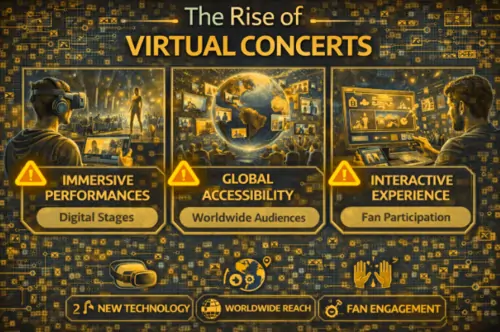
The rise of virtual concerts is transforming the music industry by redefining how artists perform and how fans experience live entertainment. What once required a physical venue and thousands of attendees can now take place in a digital environment where millions of viewers participate simultaneously from around the world.
Advances in streaming technology, virtual reality (VR), augmented reality (AR), and interactive platforms have made it possible for artists to host immersive online concerts that connect with global audiences. This shift gained momentum during the COVID-19 pandemic when live events were restricted and artists turned to digital platforms to continue performing.
Today, virtual concerts are no longer a temporary alternative to live events. Instead, they have become a permanent part of the modern music landscape, opening new opportunities for musicians, event organizers, and fans alike.
What Are Virtual Concerts?
Virtual concerts are live music performances that take place in digital environments and are streamed online to audiences across the globe. Unlike traditional concerts that require physical attendance, virtual concerts allow fans to participate from their homes using computers, smartphones, or VR headsets.
These events often incorporate advanced technologies such as:
- live streaming platforms
- virtual reality (VR) environments
- augmented reality (AR) visual effects
- interactive chat features
- digital avatars and virtual stages
Through these technologies, virtual concerts aim to replicate or even enhance the experience of a traditional live performance.
How Virtual Concerts Became Popular
The rise of virtual concerts accelerated significantly during the global pandemic when live events were canceled worldwide. Artists began experimenting with live streaming performances to maintain connections with their fans.
During this period, platforms such as YouTube, Twitch, and gaming environments hosted large-scale digital concerts that attracted millions of viewers.
As audiences became more comfortable with digital entertainment, the format quickly gained popularity. The market for virtual concert platforms has continued to grow, driven by immersive technologies and evolving consumer preferences.
Benefits of Virtual Concerts for Artists
Virtual concerts provide several advantages for musicians and event organizers.
Global Audience Reach
One of the biggest benefits of virtual concerts is the ability to reach a worldwide audience. Artists can perform for fans across multiple countries without the logistical challenges of international tours.
New Revenue Opportunities
Virtual concerts create new income streams through ticket sales, digital merchandise, sponsorships, and online donations. Some events also integrate digital collectibles such as NFTs or exclusive content.
Creative Performance Experiences
Digital environments allow artists to experiment with visual effects, virtual stages, and storytelling elements that may not be possible in traditional venues.
These advantages are helping many musicians integrate virtual concerts into their long-term strategies.
Benefits for Fans and Audiences
Fans also benefit from the rise of virtual concerts in several ways.
Accessibility
Virtual concerts allow fans who may not be able to travel or afford expensive tickets to experience live music events.
Interactive Experiences
Many virtual events include live chat, fan voting, digital meet-and-greets, and other interactive features that make audiences feel more connected to performers.
Convenience
Instead of traveling to a venue, fans can watch concerts from their homes while still enjoying high-quality audio and video.
These factors have made virtual concerts particularly popular among younger, digitally connected audiences.
Technology Behind Virtual Concerts
The growth of virtual concerts is closely linked to advances in technology.
Live Streaming Platforms
Streaming services such as YouTube Live, Twitch, and specialized concert platforms allow artists to broadcast performances to large audiences in real time.
Virtual Reality and Augmented Reality
VR and AR technologies create immersive concert environments where fans can feel as though they are inside a digital venue.
High-Speed Internet and 5G
Faster internet speeds enable high-quality video streaming and real-time interaction between performers and audiences.
Together, these technologies are shaping the future of digital entertainment.
Hybrid Concerts: The Future of Live Music
Many industry experts believe that hybrid concerts will become the standard in the future. These events combine traditional in-person performances with virtual streaming options.
For example, fans who attend the venue experience the show physically, while global audiences watch online through digital platforms.
Hybrid models allow artists to expand their reach while maintaining the unique atmosphere of live performances.
Challenges Facing Virtual Concerts
Despite their popularity, virtual concerts still face several challenges.
Technical Issues
Poor internet connections, streaming glitches, or server overload can disrupt live events.
Monetization Challenges
While virtual concerts can generate revenue, some artists struggle to match the profits of traditional touring.
Limited Physical Atmosphere
The energy of a live crowd is difficult to replicate in a virtual environment.
Even with these challenges, technological improvements continue to enhance the quality and reliability of virtual performances.
The Future of Virtual Concerts
The rise of virtual concerts represents a major shift in the music industry. As technologies such as artificial intelligence, VR, and the metaverse continue to evolve, virtual concerts are expected to become even more immersive and interactive.
Industry forecasts suggest that the virtual concert platform market will continue expanding rapidly as digital entertainment becomes more integrated into everyday life.
Rather than replacing traditional concerts, virtual events are likely to complement them, giving fans more ways to experience music and artists more opportunities to reach their audiences.
Conclusion
The rise of virtual concerts demonstrates how technology is reshaping the music industry. What began as a response to global restrictions has evolved into a powerful new form of entertainment.
Virtual concerts allow artists to connect with global audiences, experiment with creative digital experiences, and explore new revenue opportunities. At the same time, fans gain more accessible and interactive ways to enjoy live performances.
As digital technology continues to advance, virtual concerts will likely remain an important part of the future of music.
FAQ
What are virtual concerts?
Virtual concerts are live music performances that take place online and are streamed to audiences through digital platforms such as YouTube, Twitch, or virtual reality environments.
Why have virtual concerts become popular?
Virtual concerts became popular due to the growth of streaming technology and restrictions on live events during the COVID-19 pandemic, which encouraged artists to perform online.
Can virtual concerts replace traditional concerts?
Virtual concerts are unlikely to replace traditional concerts entirely. Instead, many experts believe hybrid events that combine physical and virtual audiences will become more common.
What technologies power virtual concerts?
Virtual concerts use technologies such as live streaming platforms, virtual reality, augmented reality, high-speed internet, and interactive chat systems.
Are virtual concerts profitable for artists?
Yes. Virtual concerts can generate revenue through ticket sales, sponsorships, digital merchandise, and exclusive fan experiences.