

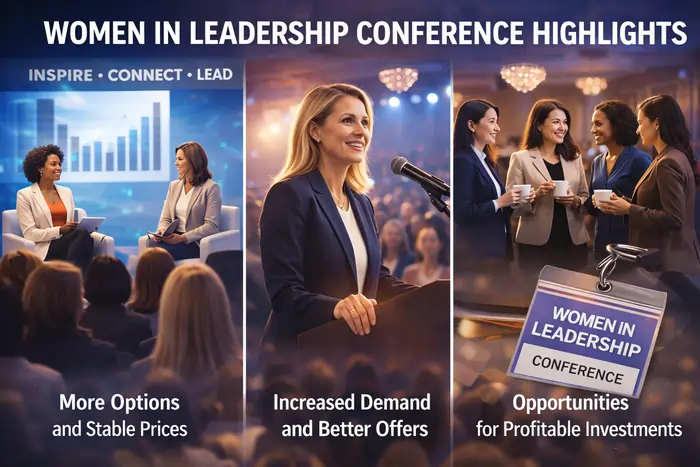
The Women in Leadership Conference brought together executives, emerging leaders, entrepreneurs, and change-makers to share stories, sharpen skills, and build a stronger global community of women in positions of influence. Across keynotes, panels, and workshops, the event highlighted resilience, inclusive leadership, and the power of collective action as essential themes for the next generation of women leaders.
Women in Leadership Conference Highlights: Key Moments, Lessons, and Takeaways
This year’s Women in Leadership Conference gathered participants from business, government, education, nonprofits, and startups for several days of inspiration and practical learning. Whether you joined in person or followed the conversation online, the program showcased women who are leading transformative change in their organizations and communities.
Events like the Women in Leadership Summit 2025 – UN Women Australia, the Women in Leadership Summit in Sydney, and the Women’s Empowerment & Leadership Summit all echo this momentum, emphasizing that developing women leaders is now a business, social, and economic imperative. In that spirit, the conference you’re reading about focused on stories, skills, and strategies that women can use immediately in their own leadership journeys.
Setting the Stage – Theme and Purpose of the Conference
The overarching theme—similar to UN Women’s “Stronger Together: Leading with Resilience” or the Leadership Institute’s focus on stepping up, speaking out, and leading with authenticity—framed the conference as both a celebration and a call to action. The goal was clear: equip women with the tools, confidence, and community they need to drive meaningful change in their workplaces and sectors.
The program reflected a broad cross-section of roles and regions, echoing the International Leadership Association’s early Women and Leadership conferences that emphasized “building, bridging, and blazing pathways for women and leadership.” Participants ranged from senior executives and public sector leaders to startup founders and early‑career professionals, mirroring the diversity that global reports like McKinsey’s Women in the Workplace say is still missing at many leadership tables.
Inspiring Keynotes – Stories from Women at the Top
Opening Keynote: Breaking Barriers in Leadership
The opening keynote set the tone with a candid story from a woman who rose through male‑dominated environments to lead at scale. Her journey echoed the themes described in Fluxx’s piece “Leadership Conferences for Women: Breaking Barriers, Building Power”—battling subtle bias, finding allies, and learning to take up space without apology.
Key messages included:
- Own your narrative. Instead of shrinking achievements, the speaker urged women to articulate their impact clearly, a point that aligns with the entrepreneurial confidence discussed in entrepreneur traits.
- Seek sponsors, not just mentors. She emphasized that career‑defining opportunities often come from sponsors who are willing to advocate for you in rooms you’re not in.
- Treat your career like a lean experiment. Borrowing from startup thinking, she encouraged attendees to test hypotheses, iterate, and treat missteps as data—an approach you’ll recognize from the lean startup model.
Closing Keynote: Redefining What Leadership Looks Like
The closing keynote looked forward, echoing the “Empowering Global Entrepreneurs & Leadership for Tomorrow” theme at events like the Women’s Empowerment & Leadership Summit. Rather than framing leadership as a solo act at the top, the speaker championed inclusive, distributed leadership, where women use influence at every level to shape culture and outcomes.
She left the audience with three practical challenges:
- Redefine leadership success to include wellbeing, community impact, and ethical decision‑making, not just titles and KPIs.
- Commit to at least one low‑cost, high‑impact initiative in the next 90 days—such as launching a peer mentoring circle or proposing a small process improvement—drawing on ideas similar to those in low-cost business ideas.
- Use your influence to open doors for others, recognizing that collective advancement is a competitive advantage, a point reinforced in competitive advantage.
Powerful Panels – Real Conversations About Women in Leadership
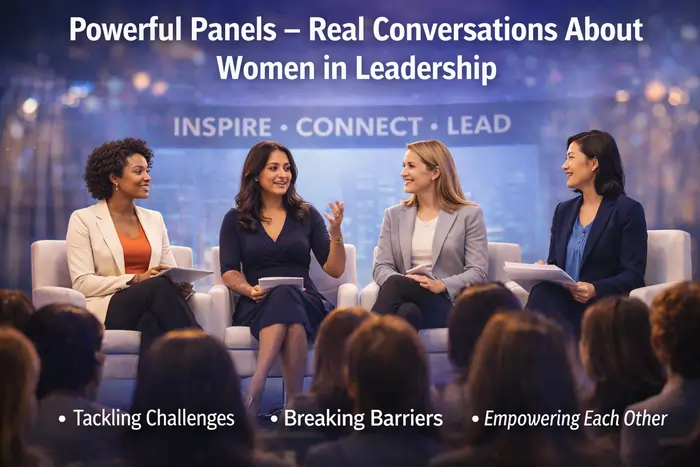
Panel on Career Progression and Breaking the Glass Ceiling
One of the most popular sessions was a panel on career progression and “breaking the glass ceiling,” which mirrored topics covered in Rice University’s Women in Leadership Conference. Executives discussed the difference between working hard and being seen, and how visibility, sponsorship, and strategic risk‑taking shaped their trajectories.
Standout insights included:
- Ask for stretch roles even when you don’t meet 100% of the criteria; panelists pointed to research showing that over‑qualification is rarely required for men to step up.
- Document your results rigorously—much like a founder tracks metrics in a profit and loss guide—so performance conversations are anchored in evidence, not perception.
- Build cross‑functional networks, not just within your immediate team, to increase the number of decision‑makers who know your work.
Panel on Diversity, Equity, and Inclusion (DEI)
Another panel focused on DEI, echoing the public‑sector emphasis seen at Ireland’s Public Sector Women in Leadership Conference and events like Shaping the Future of Women in Leadership. Speakers from corporate, government, and nonprofit organizations shared how they’re embedding inclusion into strategy rather than treating it as a side project.
Key points:
- DEI must be tied to business outcomes and governance, not just HR metrics, which aligns with arguments in Forbes’ “Why Women Leaders Will Play an Essential Role in 2025 and Beyond”.
- Leaders should benchmark against data such as the Women in the Workplace report to understand pipeline leaks and unequal experiences.
- Executive teams need to sponsor women into P&L roles and innovation projects—areas where future CEOs are often groomed.
Community and Public Sector Leadership
A third panel highlighted women in community and public sector leadership, similar to Women in Community Leadership and national networks like Women in Leadership – Shaping the Future. Speakers discussed constraints such as tighter budgets, public scrutiny, and policy complexity, but also the outsized impact that inclusive public services and community programs can have.
Their message was clear: leadership isn’t confined to the C‑suite. Women driving change in schools, local government, and NGOs are redefining what effective, compassionate, and data‑informed leadership looks like on the ground.
Skills, Confidence, and Leadership Development Workshops
Building Confidence and Executive Presence
Workshop tracks focused on confidence and executive presence gave attendees practical tools for showing up powerfully in high‑stakes situations. Many of the techniques—storytelling frameworks, breathing exercises, and stance work—echoed content from leadership institutes and coaching resources like Powerful Panels’ female leadership questions, which help women prepare for visible roles.
Participants were encouraged to:
- Rehearse key messages in advance, just as founders practice pitches, and to borrow from lean startup model thinking by iterating on their communication after each major presentation.
- Use values‑based stories to connect with stakeholders, aligning with traits such as authenticity and courage discussed in entrepreneur traits.
- Challenge internal narratives of imposter syndrome by anchoring confidence in real achievements and feedback.
Strategic Leadership, Influence, and Decision-Making
Other workshops were dedicated to strategic thinking and influence. Drawing on case studies similar to those shared at the Women In Leadership Summit in Sydney, facilitators walked through tools such as stakeholder mapping, scenario planning, and data‑driven storytelling.
Attendees left with:
- A clearer view of where they can create competitive advantage in their roles, echoing the strategic focus in competitive advantage.
- An understanding of how macro trends such as digital transformation and AI in global markets—explored in AI in global markets—will shape leadership challenges they must be ready for.
- Practical frameworks for making decisions under uncertainty, including when to experiment, when to double down, and when to exit initiatives.
Mentorship, Networking, and Sponsorship
Many participants cited mentorship and networking workshops as a highlight, which aligns with the emphasis on community at events like Women Unlimited Leadership Summit and UN Women’s Stronger Together: Leading with Resilience.
Sessions covered:
- How to build a personal advisory board of mentors, peers, and sponsors.
- Ways to create small, recurring peer groups that function like mastermind circles or internal communities of practice.
- The importance of reciprocity—giving as well as receiving support—to strengthen networks and model inclusive leadership.
Networking, Community, and Moments Between Sessions
Beyond formal sessions, the conference’s networking and informal moments were where many attendees said the “real magic” happened. Structured events like roundtables and speed networking mirrored formats used in programs such as the Empowered Leader Program, which celebrate cohort‑based leadership journeys.
Highlights included:
- Sector‑specific meetups—for example, women in tech, finance, public service, and healthcare—similar in spirit to Fluxx’s focus on healthcare business conferences as incubators for women in medicine and health leadership.
- Story circles where women shared pivotal career moments, echoing the personal narratives highlighted in Susan Madsen’s global community of women leaders.
- Commitment walls and pledge cards, where attendees wrote specific actions they would take post‑event, from mentoring one younger colleague to pitching a new initiative.
These interactions reinforced the message that leadership is not developed in isolation; it emerges from community, experimentation, and shared accountability.
Key Conference Takeaways for Aspiring and Current Women Leaders
Mindset Shifts and Personal Growth
Across the keynotes, panels, and workshops, several recurring mindset shifts emerged:
- From perfectionism to progress. Speakers urged women to move away from needing every box ticked before acting, echoing both startup experimentation and the need to take calculated risks described in entrepreneur traits.
- From self‑doubt to evidence‑based confidence. Women were encouraged to track their results like a business tracks its profit and loss guide, making their value visible to themselves and others.
- From solo striving to collective leadership. The idea that “we rise by lifting others”—central in UN Women’s Stronger Together theme and Fluxx’s emphasis on collective power—was a consistent thread.
Practical Actions to Implement After the Conference
Speakers and facilitators stressed the importance of turning inspiration into action within 30–90 days. Suggested next steps included:
- Audit your current projects and identify where you can create outsized competitive advantage for your organization, using frameworks like those in competitive advantage.
- Schedule monthly check‑ins with a mentor or peer group, and treat that time as non‑negotiable development—not a “nice to have.”
- Pitch a small, low‑cost experiment—for example, a pilot flexible‑work initiative, a DEI listening session, or a new customer‑focused process—drawing on principles from low-cost business ideas and the lean startup model.
By reframing growth as a series of experiments, women can lower the psychological barrier to taking bold steps while still safeguarding their careers and reputations.
Why Women in Leadership Conferences Matter More Than Ever
Global data shows that while there has been progress, women—especially women of color—remain underrepresented in senior leadership and face ongoing barriers such as biased promotion processes, unequal access to sponsorship, and heavier loads of unpaid work. McKinsey’s Women in the Workplace report warns that without intentional action, the pipeline to senior roles may stall or even reverse.
Women’s leadership conferences directly address these challenges by:
- Creating dedicated spaces for women to develop skills, build networks, and recharge, as highlighted in Fluxx’s “Leadership Conferences for Women: Breaking Barriers, Building Power”.
- Elevating role models like those profiled by the International Leadership Association and Susan Madsen’s global community, showing diverse paths into leadership.
- Providing a platform for cross‑sector collaboration where women in business, government, academia, and civil society share solutions to shared problems.
As UN Women Australia notes in its Women in Leadership Summit 2025 program, resilience and community are no longer optional; they are core leadership capabilities in a world facing overlapping crises.
Women in leadership conferences are more than inspiring events; they are engines of collective strategy and change. By combining data‑driven insight (from sources like the Women in the Workplace report), practical frameworks (such as the lean startup model and profit and loss guide), and deeply human stories of courage and collaboration, they give women concrete tools to lead more effectively and more sustainably.
Whether you’re an aspiring leader, a seasoned executive, or an ally, the highlights from this year’s Women in Leadership Conference offer both inspiration and a roadmap: experiment like a founder, track your impact like a CFO, cultivate traits like those in entrepreneur traits, and use your leadership to expand opportunities for the women coming after you.