

The Airline Flight Cancellations Surge in 2026 is being driven by a sharp spike in jet fuel prices and emerging fuel shortages, forcing airlines worldwide to cut routes, raise fares, and tighten capacity. This industry turbulence is flowing through to passengers in the form of higher ticket prices, more frequent disruptions, and reduced travel options, while also hurting airline profits and increasing the cost of everyday goods that rely on aviation-linked supply chains.
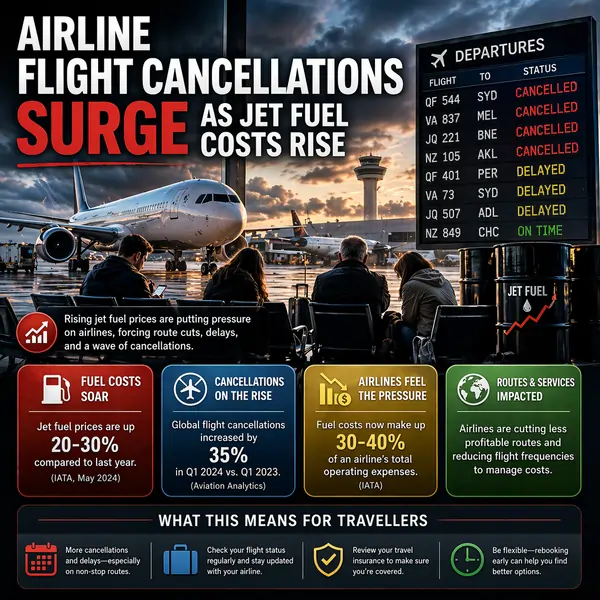
Airlines worldwide are facing a perfect storm as jet fuel prices more than double, causing an Airline Flight Cancellations Surge that is disrupting travel, straining airline finances, and pushing fares sharply higher. The current wave of cancellations is closely tied to a global jet fuel squeeze and broader geopolitical instability, reshaping how passengers, airlines, and investors think about air travel.
Jet Fuel Prices and the Airline Flight Cancellations Surge
The Airline Flight Cancellations Surge is being driven by a combination of rapidly rising jet fuel prices and emerging regional fuel shortages. In many markets, jet fuel costs have climbed far faster than general inflation, instantly increasing operating costs for airlines that already operate on thin margins.
Recent reports show that airlines are starting to cancel flights as they face jet fuel shortages and rising prices, with carriers trimming schedules particularly on marginal and short‑haul routes where higher fuel costs make operations uneconomic. At the same time, NBC News has warned that a global jet fuel shortage is raising the cost of air travel and reducing flight schedules as airlines struggle to secure sufficient fuel at workable prices. Commodity market analysis confirms that soaring jet fuel prices are hitting the global aviation market, with some benchmarks up more than 100 per cent in a short period.
When fuel, which normally accounts for roughly a quarter of an airline’s operating costs, suddenly doubles in price, many otherwise viable routes quickly slip into the red. Airlines can raise fares only so far before demand starts to crack, so in the near term, cutting flights is often the fastest way to contain losses.
Why Airlines Are Canceling Flights Instead of Just Raising Prices
The Airline Flight Cancellations Surge is not simply a matter of poor planning or lingering post‑pandemic chaos; it reflects hard economic constraints. Fuel costs are a variable expense that rise with each additional flight. When those costs spike, airlines have three main levers:
- Raise fares and add surcharges
- Cut capacity by canceling flights or reducing frequencies
- Pursue efficiency gains and rely on fuel hedging where available
Coverage showing that airlines are canceling flights as they face jet fuel shortages and rising prices highlights that many carriers have already pushed prices higher but can’t simply pass on the entire fuel increase without losing passengers. Meanwhile, analysis explaining that a global jet fuel shortage is raising the cost of air travel makes it clear that in some locations there simply isn’t enough fuel to maintain the previously planned flying, regardless of fare levels.
Faced with both cost and supply constraints, airlines prioritise their most profitable routes—often major long‑haul and business‑heavy services—and cut back on leisure‑focused flights, secondary cities, and off‑peak frequencies. That is why many travellers are seeing sudden cancellations on routes that used to be reliable.
Where Airline Flight Cancellations Are Surging Most
Although the Airline Flight Cancellations Surge is global, its impact varies by region.
North America
In North America, airlines benefit from significant domestic refining capacity, but they remain exposed to global price trends and supply disruptions. Investor‑focused analysis of U.S. airline disruptions, flight cancellations and delays and their impact on investors shows U.S. carriers trimming weaker routes and warning that higher fuel costs will hit profits.
For passengers, real‑time tracking tools highlight the scale of disruption. Dashboards offering live airline flight cancellations info and statistics reveal daily patterns of cancellations and delays, with spikes whenever fuel constraints overlap with storms, staffing issues, or air‑traffic control bottlenecks.
Europe
European airlines, many of which rely heavily on imported refined products, are grappling with both cost and supply pressures. Coverage that airlines cancel flights as disruptions spread across global travel describes carriers across the continent cutting frequencies and consolidating flights to conserve fuel and protect yields.
Airport‑focused reports on flight cancellations as fuel prices soar have highlighted major hubs such as London, where passengers are encountering unexpected cancellations and longer queues as airlines pare back their schedules.
Asia‑Pacific and Emerging Markets
In the Asia‑Pacific region, the Airline Flight Cancellations Surge is unfolding alongside regulatory and policy changes. For example, Indonesia has explicitly responded to fuel cost pressures, with government‑approved fare changes described in coverage that Indonesia raises jet fuel surcharge and flight ticket prices as oil soars. That move allows airlines to increase domestic ticket prices within regulated bands to reflect higher fuel costs.
Elsewhere in the region, some carriers have temporarily suspended or reduced domestic and regional routes where fuel supply is tight, or where higher fuel costs make thinner routes uneconomic at prevailing fare levels.
How Jet Fuel Costs Are Reshaping Airline Strategies
The Airline Flight Cancellations Surge is one visible symptom of deeper strategic shifts in the industry.
1. Aggressive Fare Increases and Surcharges
Airlines are increasingly explicit that higher fares are a direct response to fuel costs. Travel‑industry coverage of global airlines increasing ticket prices amid rising fuel costs documents widespread base‑fare rises and the return or expansion of fuel surcharges on international, and in some cases domestic, flights.
At the same time, reporting that United Airlines raises bag fees by $10 as jet fuel prices surge shows carriers lifting ancillary fees, such as baggage and seat‑selection charges, to capture more revenue without making headline fares look prohibitively high.
2. Network Restructuring and Route Cuts
Strategic route planning is shifting as airlines respond to the Airline Flight Cancellations Surge. Carriers are pruning less profitable routes, consolidating frequencies, and redeploying aircraft to markets where demand is strongest.
Articles on airlines cancel flights as disruptions spread across global travel explain how carriers are focusing more on trunk routes and hub‑and‑spoke patterns that maximise load factors and revenue per seat. In parallel, analysis of price hikes and outlook cuts as fuel costs surge highlights how airlines are scaling back growth plans and revising financial guidance as fuel price assumptions are adjusted higher.
3. Fuel Hedging, Efficiency, and Fleet Renewal
Airlines that hedged a significant share of fuel consumption before the latest spike are partially shielded, but hedging is never complete, and protection rolls off over time. This environment is pushing airlines to accelerate efficiency measures—lighter cabins, optimised flight paths, single‑engine taxiing, and stricter fuel‑planning discipline.
Industry commentary such as How airlines are responding to surging fuel prices notes that higher fuel prices also strengthen the business case for investing in newer, more efficient aircraft and sustainable aviation fuels, even as they cause short‑term financial pain and operational disruption.
Passenger Experience During the Airline Flight Cancellations Surge
For travellers, the Airline Flight Cancellations Surge is felt through higher prices, more frequent disruptions, and greater uncertainty.
Higher Fares and Fewer Deals
The combination of fuel surcharges and base‑fare increases, described in reports that global airlines increase ticket prices amid rising fuel costs, is pushing average ticket prices higher across many markets. PBS has reported that jet fuel prices and airfares are rising, but U.S. airlines say travellers are still booking flights, especially on long‑haul routes where alternatives are limited.
Discount windows and promotional fares have become narrower as airlines manage capacity carefully. Passengers who delay bookings may find that prices escalate faster than they expect.
More Cancellations and Operational Turbulence
Travellers are also experiencing more last‑minute changes. Historical data shows that flight cancellations are surging and some airports have been hit far harder than others, underlining how weather, staffing issues and fuel pressures interact to disrupt operations.
Passengers can monitor the Airline Flight Cancellations Surge in real time through tools such as FlightAware, which provides live airline flight cancellations info and statistics so that travellers can see which airports and carriers are under the most pressure on any given day.
Regional Policy and Fare Changes
In some regulated markets, governments are adjusting fare and surcharge rules to help airlines cope with higher fuel costs. Coverage of Indonesia raising jet fuel surcharges and flight ticket prices as oil soars is one example of regulators explicitly acknowledging that fares must rise for airlines to remain viable in a high‑fuel‑price environment.
Similar policy moves may appear elsewhere, particularly where domestic fares are tightly regulated, adding another layer of complexity for travellers trying to predict future prices.
How the Airline Flight Cancellations Surge Affects Investors and the Wider Economy
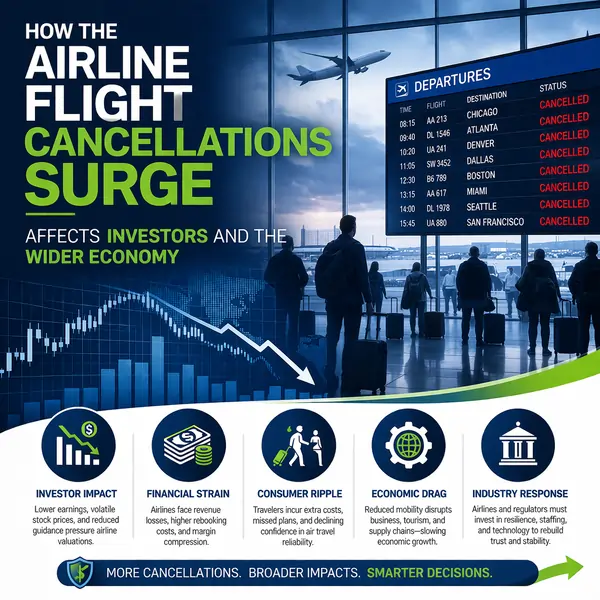
The Airline Flight Cancellations Surge has implications far beyond airports.
Airline Earnings, Valuations, and Risk
Investor‑focused analysis of U.S. airline disruptions, flight cancellations and delays and their impact on investors highlights how sustained disruption and higher fuel bills can erode margins and damage brand trust. When airlines are forced to cancel flights and cut capacity while fuel costs remain elevated, revenue growth can stall even as expenses climb.
Articles explaining that a global jet fuel shortage is raising the cost of air travel and BBC’s warning that a surge in jet fuel prices could push up air fares both underscore the risk that earnings forecasts may need to be revised downward if fuel markets stay volatile.
Tourism, Trade, and Business Activity
Higher fares and reduced connectivity can slow tourism and business travel, especially for price‑sensitive segments. Longer‑term coverage showing that flight disruptions have surged significantly over recent years points to a broader pattern of travel instability that affects hotels, conferences, and local economies in tourism‑dependent regions.
For export‑oriented economies, more expensive and less reliable air freight can increase costs for high‑value, time‑sensitive shipments. While belly‑hold cargo and dedicated freighters have somewhat different economics, both are ultimately influenced by fuel prices and network decisions driven by the current crisis.
Practical Tips for Travellers During the Airline Flight Cancellations Surge
If you’re planning to fly during this period, a few practical strategies can help you cope with the Airline Flight Cancellations Surge:
- Book with flexibility: Prioritise tickets with reasonable change or cancellation policies, even at a slightly higher price.
- Avoid tight connections: Build extra time into itineraries, especially when connecting through hubs in regions affected by fuel shortages or geopolitical tensions.
- Monitor flight status closely: Use airline apps and third‑party tools providing live airline flight cancellations info and statistics to track changes and rebook quickly when necessary.
- Consider insurance: Look for travel insurance that covers cancellations, delays, and missed connections.
- Stay open to alternatives: In some cases, nearby airports, different routings, or alternative modes of transport can offer more reliable options.
These steps cannot eliminate disruption, but they can reduce your risk and give you more options if your plans are affected.
Conclusion
The Airline Flight Cancellations Surge is the visible face of a deeper fuel‑price and supply shock that is reshaping global aviation. Airlines are canceling flights, raising fares, and restructuring networks as jet fuel costs surge and supplies tighten, and these pressures are likely to influence travel patterns, pricing, and investment decisions for months to come.
For travellers, this means higher prices and more uncertainty. For airlines and investors, it underscores the importance of risk management, strategic flexibility, and long‑term investment in fuel efficiency and alternative fuels. The impact of high fuel costs is not limited to aviation either; it is also pushing up everyday prices on the ground, from fast food to classic takeaway staples.
If you want to see how this plays out for consumers, you can read 7 Things to Know About McDonald’s Australia Menu and Prices in 2026 for a snapshot of how a major fast‑food chain is adjusting, and Fuel Crisis Drives Up Fish and Chips Prices Ahead of Good Friday for a look at how a traditional Aussie favourite is being squeezed by the same fuel‑driven cost pressures.
Frequently Asked Questions About the Airline Flight Cancellations Surge
What is the Airline Flight Cancellations Surge?
The Airline Flight Cancellations Surge refers to a sharp increase in global flight cancellations caused by rising jet fuel costs, fuel shortages, and operational pressures like staffing and air-traffic constraints.
Why are airlines canceling flights instead of just raising fares?
While fares have increased, there is a limit to what passengers will pay. When routes become unprofitable or fuel supply is tight, airlines cancel or consolidate flights rather than operate at a loss.
How do rising jet fuel prices cause cancellations?
Jet fuel is a major airline expense. When prices surge, less profitable routes—especially short-haul or off-peak flights—are cut to reduce costs and fuel usage.
Which routes are most at risk?
- Low-demand short-haul routes
- Off-peak flights
- Secondary airport services
Airlines tend to protect major high-demand routes and reduce weaker ones.
Are some regions affected more than others?
Yes. Regions that are fuel-import dependent or facing geopolitical risks often see higher cancellation rates and tighter schedules.
How is this affecting ticket prices?
Passengers are seeing:
- Higher base fares
- Fuel surcharges
- Increased add-on fees (baggage, seats)
Overall, total travel costs are rising significantly.
How can travellers reduce the risk of disruption?
- Book flexible tickets
- Choose early-day flights
- Avoid tight connections
- Use airline apps for real-time updates
- Consider travel insurance
Are budget airlines more affected?
Low-cost carriers often have thin profit margins, making them more sensitive to fuel spikes, though some offset this with fuel hedging and simpler operations.
How does this affect frequent flyers?
Frequent flyers may face:
- Fewer flight options
- Limited reward seat availability
- Crowded flights
But may also receive compensation, bonus points, or status perks during disruptions.
Is this a short-term issue?
The surge is linked to current fuel price spikes, but impacts may persist if fuel markets remain unstable. Some airline changes could become long-term adjustments.
How does this impact tourism and local economies?
Fewer flights can lead to:
- Reduced tourism
- Lower hotel occupancy
- Economic slowdowns in travel-dependent areas
What does this mean for airline investors?
Investors face:
- Profit pressure from high fuel costs
- Reduced capacity and demand uncertainty
- Possible capital raising or consolidation
Are airlines taking long-term action?
Yes, including:
- Investing in fuel-efficient aircraft
- Exploring sustainable aviation fuels
- Improving fuel-saving operations
- Using hedging strategies
How does this affect everyday prices?
Higher aviation and fuel costs also increase prices of goods, especially those relying on air freight and global supply chains, impacting everyday consumer spending.
Will things return to normal?
If fuel prices stabilise, cancellations should ease, but the industry may retain:
- Higher fares
- Adjusted flight networks
- Stricter efficiency measures